Artwork
Vajradhara, Nairatmya, and Mahasiddhas Virupa and Kanha
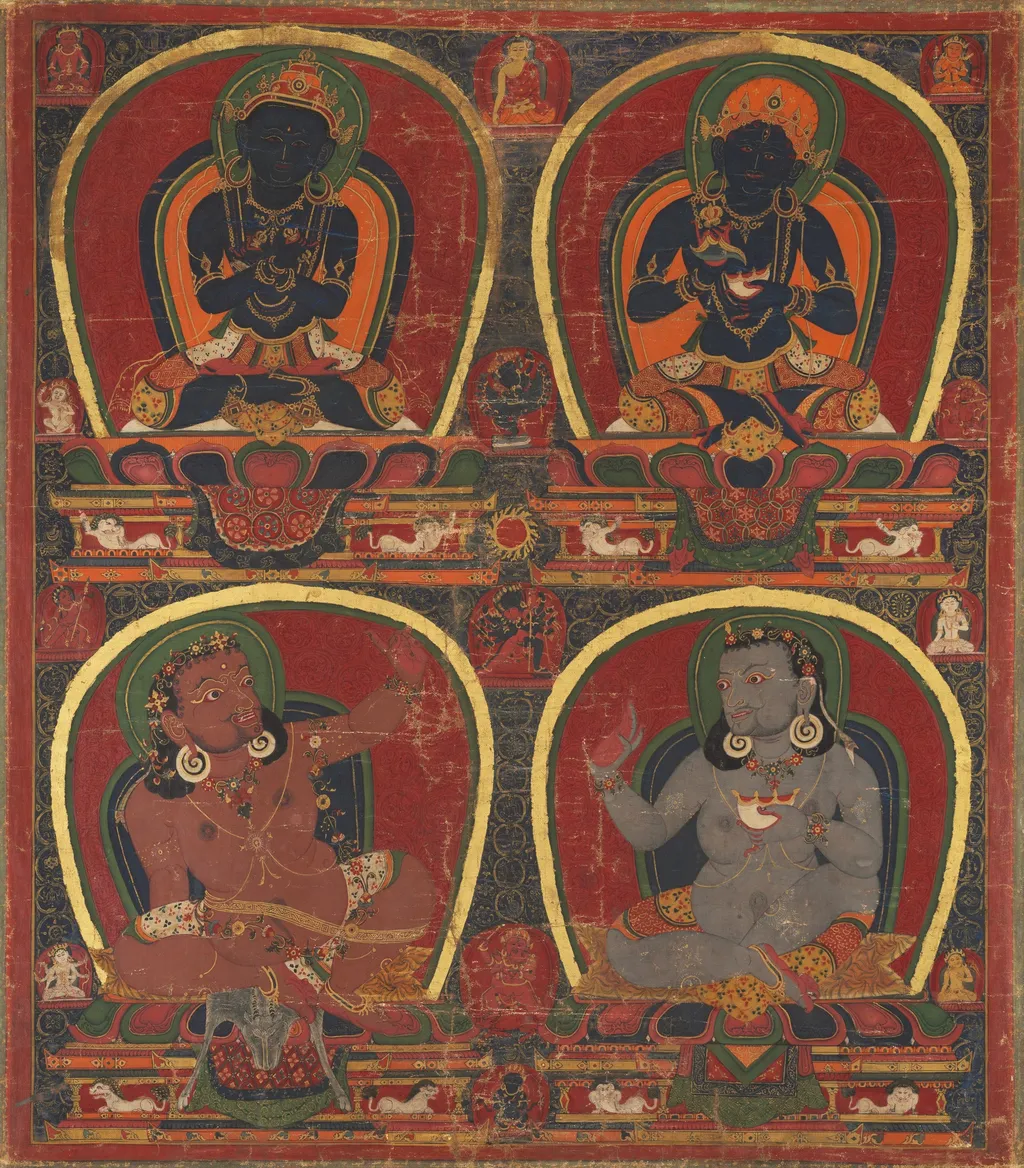
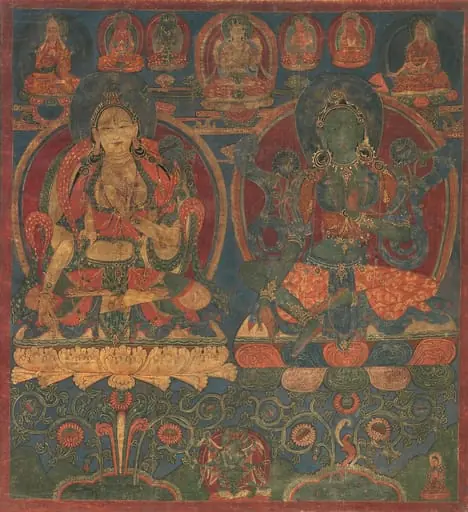
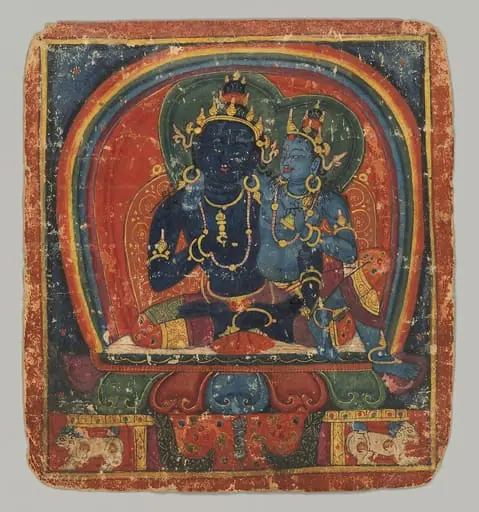
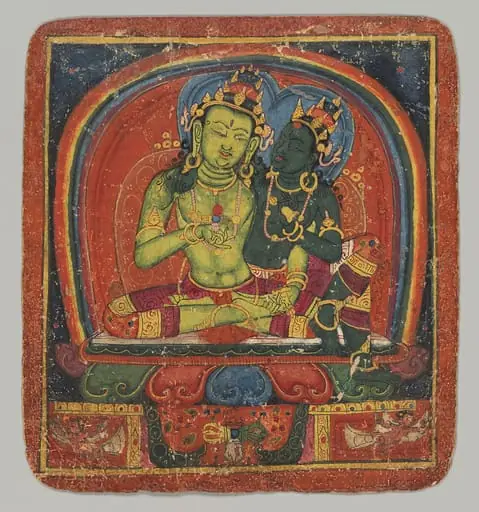
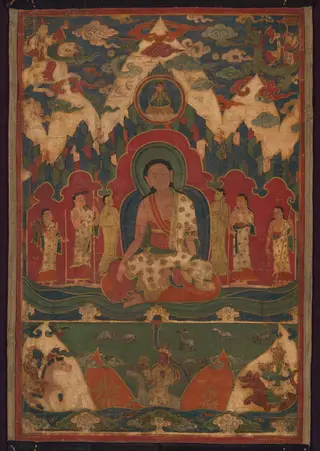
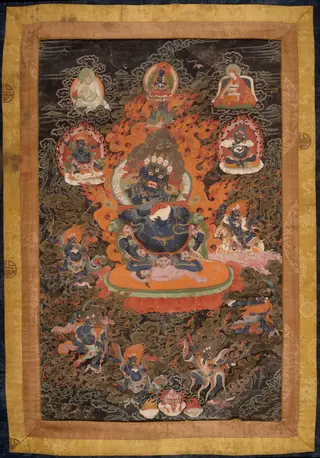
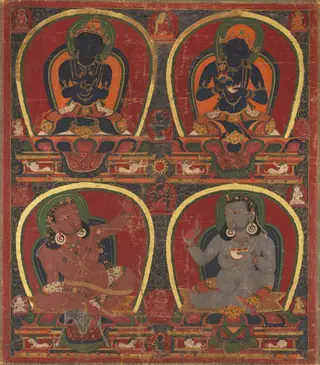
Vajradhara, Nairatmya, and Mahasiddhas Virupa and Kanha is an unspecified painting. It dates from 1450 and is held in the collection of the Cleveland Museum of Art. This painting depicts four robed figures, each enclosed within a vibrant circular frame of red, gold, and black.
About this work
Subject & Meaning
The composition therefore expresses the doctrinal theme of enlightened activity manifested through these supreme beings.
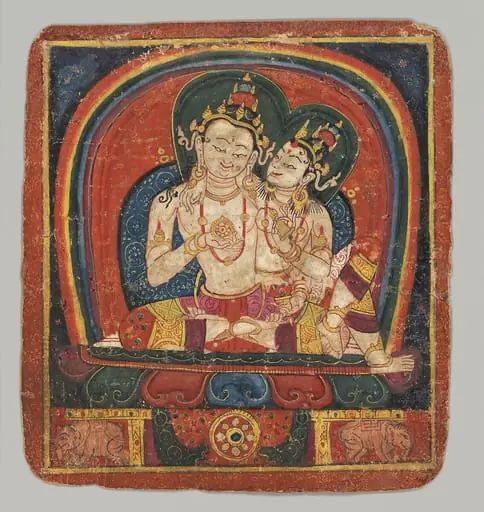
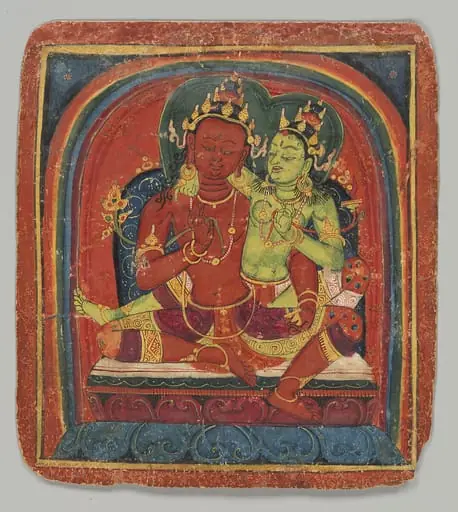
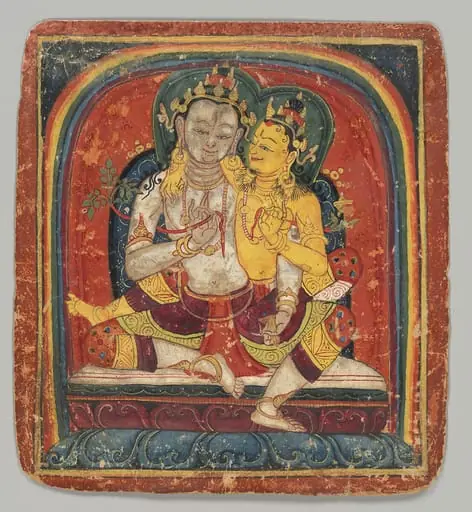
The painting shows the celestial Buddha Vajradhara together with the goddess Nairatmya and the two mahasiddhas Virupa and Kanha, figures drawn from Tibetan Buddhist tantric iconography. As a religious work dated to 1450 and held by the Cleveland Museum of Art, it belongs to the tradition of Himalayan Buddhist painting in which these deities embody the union of wisdom and activity. Vajradhara's vajra and lotus attribute, Nairatmya's graceful posture, and the dynamic poses of Virupa and Kanha convey the esoteric teachings of the secret mantra tradition. The composition therefore expresses the doctrinal theme of enlightened activity manifested through these supreme beings.
History & Provenance
The painting is dated to circa 1450 and is catalogued by the Cleveland Museum of Art, which places its inception within the mid-fifteenth century. It entered the Cleveland Museum of Art as accession 1960.206, indicating acquisition in 1960, though the prior ownership history before that date is not documented. No information is provided regarding a commission or the original context of creation beyond the attributed date and religious genre. No exhibition history is recorded in the cited documentation.
Context
This 15th-century religious painting is held by the Cleveland Museum of Art. Its creation in 1450 and classification as a religious painting place it within the early Tibetan Buddhist visual tradition of the mid-15th century. The piece exemplifies the iconographic pairing of a primordial Buddha with celebrated mahasiddhas, reflecting the devotional focus of Himalayan art during this period.
As an anonymous work in a museum collection, it provides a concrete example for scholars examining the stylistic and functional characteristics of religious paintings from this era.
Overview
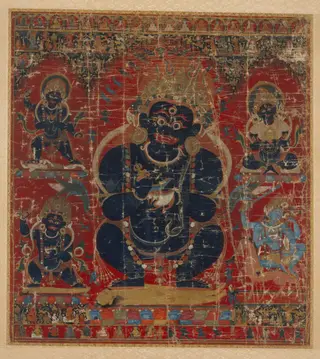
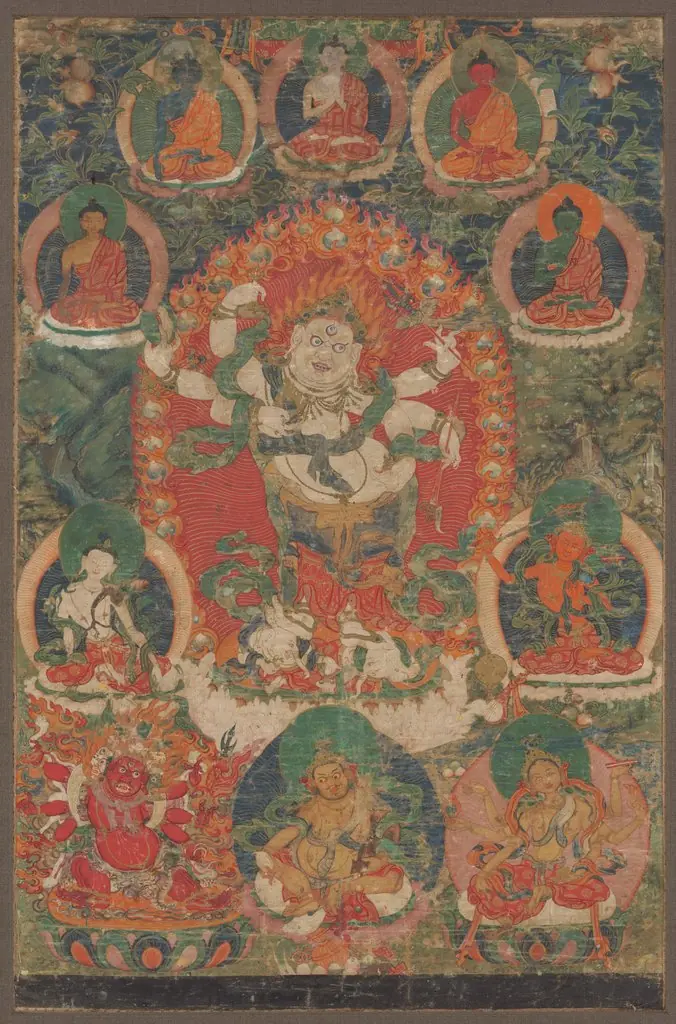
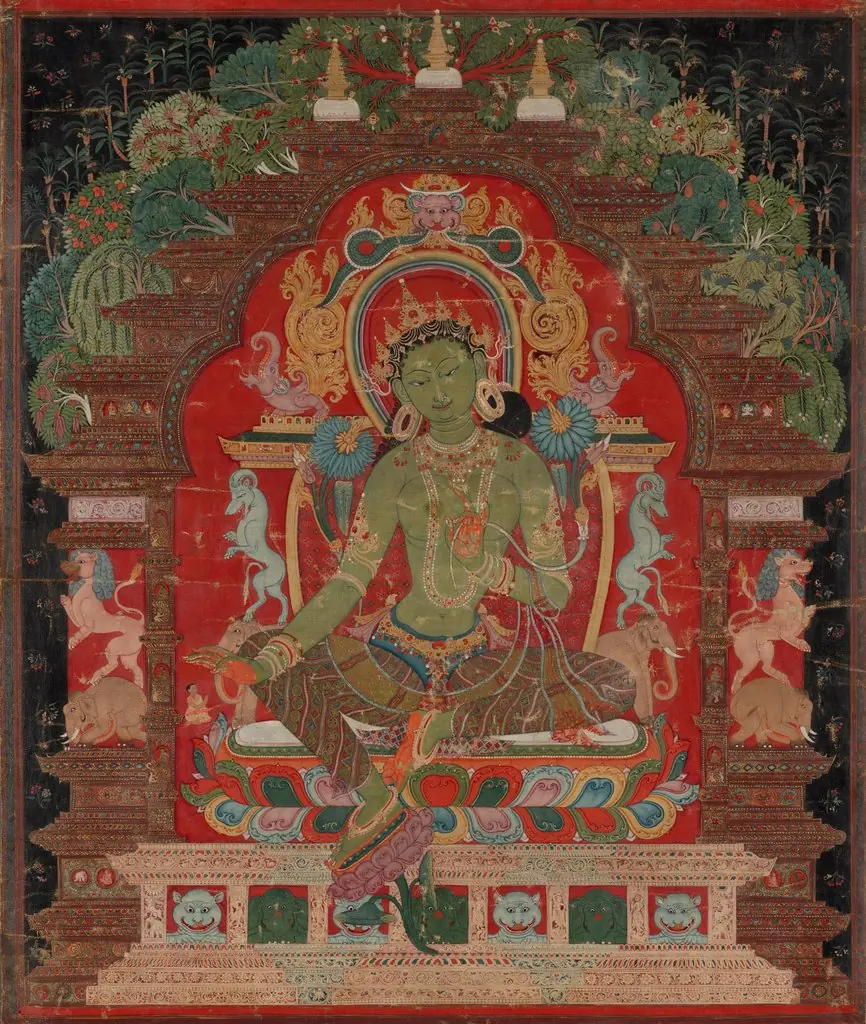
This painting depicts four robed figures, each enclosed within a vibrant circular frame of red, gold, and black. The composition arranges these figures, identified as Vajradhara, Nairatmya, and the Mahasiddhas Virupa and Kanha, against a dark ground. The overall arrangement emphasizes their individual presence while contributing to a unified visual narrative.
Technique & Style
The artist employs a striking palette of bold colors, particularly red and gold, which define the figures and their circular enclosures. Strong, precise outlines delineate each form, creating a clear separation from the dark background and enhancing their visual prominence. The space between the main figures is adorned with delicate golden patterns and small white animal motifs, adding intricate detail and texture to the overall composition.
Artist & collection