Artwork
Virgin and Child
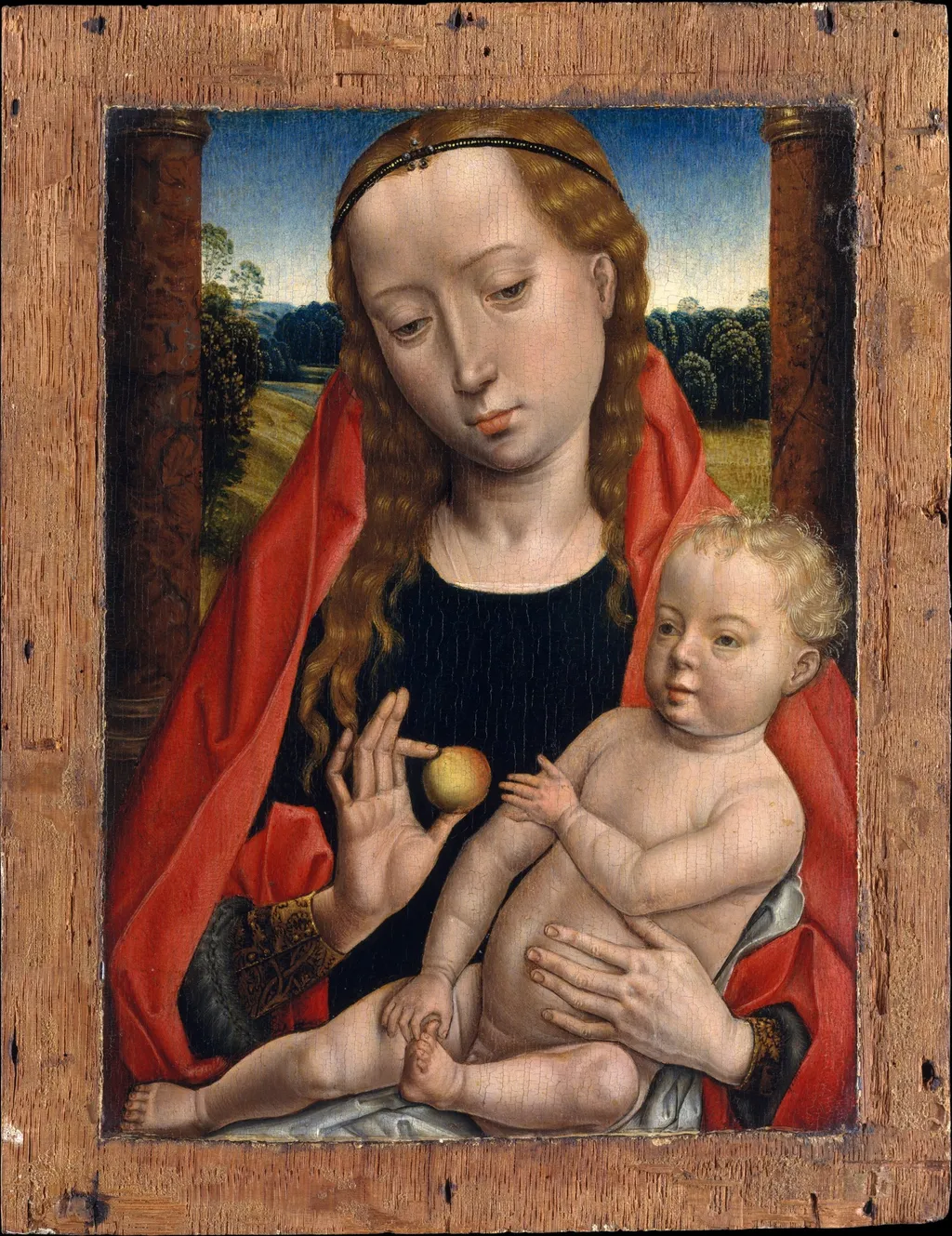
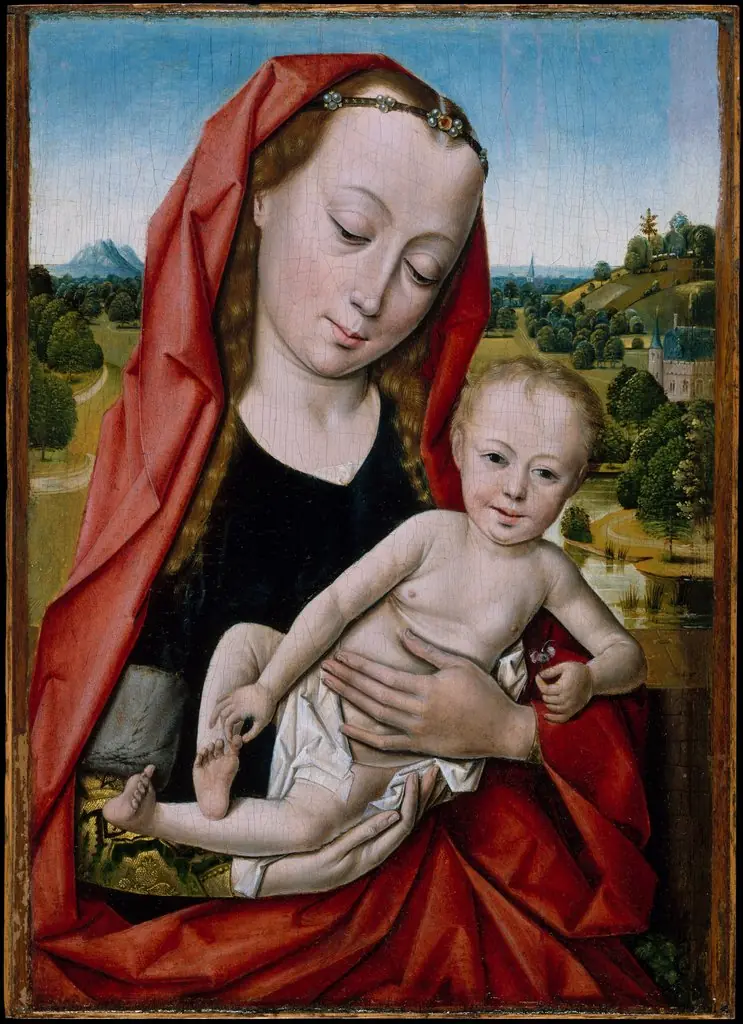
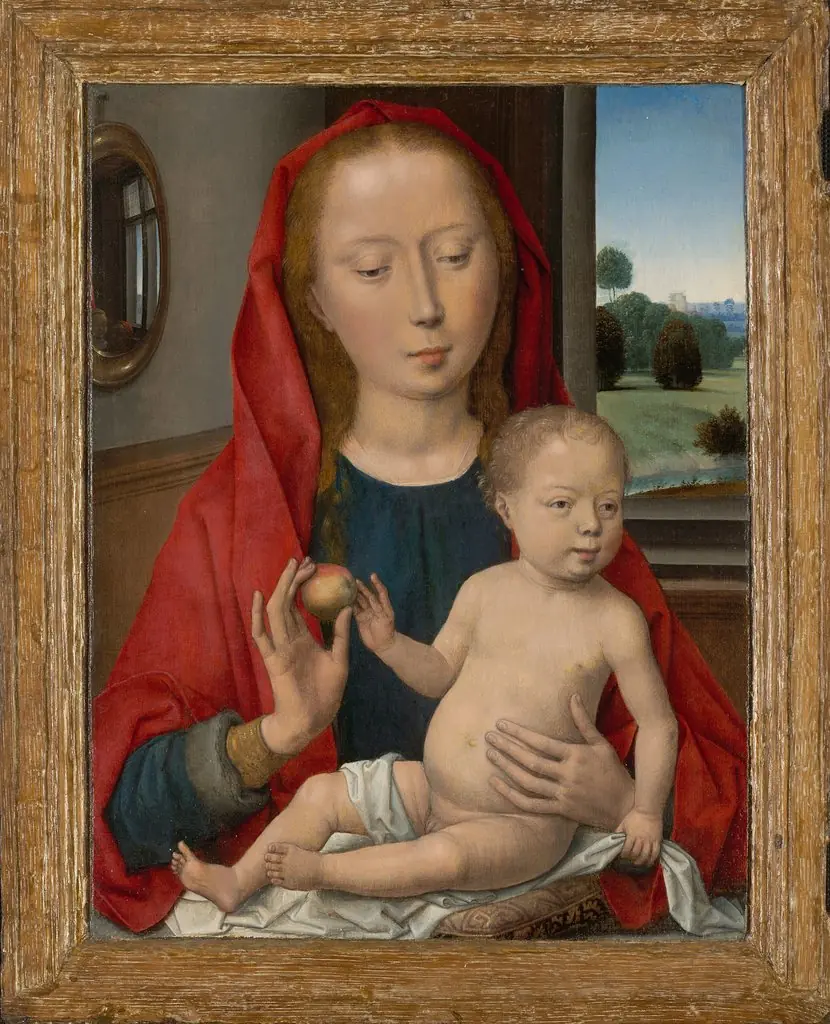
Virgin and Child is an oil painting. It dates from 1496 and is held in the collection of the Metropolitan Museum of Art.
About this work
Subject & Meaning
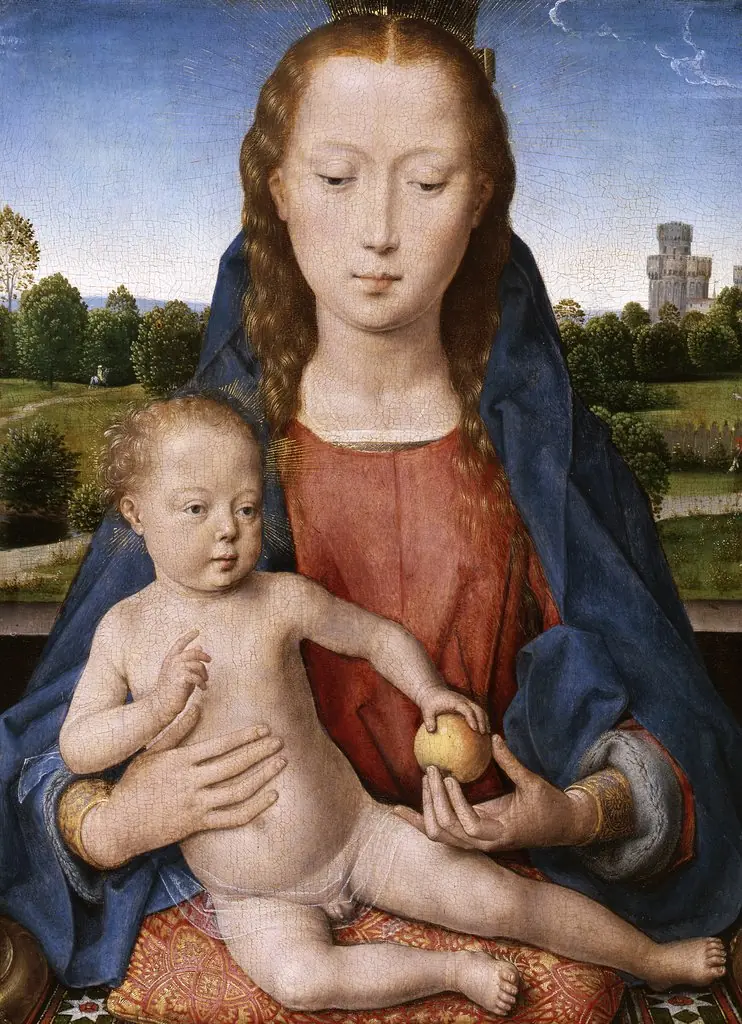
The apple, alongside the intimate interaction between mother and child, underscores themes of innocence, salvation, and the Incarnation.
The subject depicted in the Virgin and Child centers on the Madonna and Child, a conventional representation in Christian iconography featuring the Virgin Mary holding the Christ Child. The work incorporates traditional symbols, including an apple held by the Christ Child, which alludes to the Fall of Man and Christ’s role as the new Adam destined to redeem humanity. The apple, alongside the intimate interaction between mother and child, underscores themes of innocence, salvation, and the Incarnation.
As part of Early Netherlandish painting, the composition reflects the period’s emphasis on devotional imagery, employing naturalistic detail to evoke spiritual contemplation and emotional connection. The religious genre and movement affiliation situate the work within the broader context of late medieval Christian art, where such depictions served as focal points for veneration and theological reflection.
Technique & Style
The work is executed in oil paint on a single oak panel, consistent with Northern European practice of the late fifteenth century. Handling shows fine, layered brushwork typical of Early Netherlandish technique, with translucent glazes that build luminous flesh tones and delicate drapery folds. Mary’s face and the Christ Child’s features are rendered with smooth transitions, while the gilded brocade of her mantle is indicated by fine incised lines over gold leaf.
The apple held by the Child appears sculptural, modeled with subtle light and shadow. The panel retains original engaged frame elements, and the surface shows localized losses and minor abrasion typical of its age; no structural deformations are recorded.
History & Provenance
Created circa 1490, the painting Virgin and Child is attributed to the Workshop of Hans Memling and executed in oil on a wood panel. The work's ownership history traces back to Richard von Kaufmann, followed by René Jacques della Faille de Waerloos, and later Jules Bache. It was subsequently acquired by the Metropolitan Museum of Art, which currently houses the piece.
The attribution places the creation within the Early Netherlandish painting movement, reflecting the stylistic characteristics of the late 15th century. The panel measures 27.3 by 21 centimeters. While the specific commission details remain unrecorded in the available data, the work entered major public and private collections before reaching its current institutional home, having been featured in exhibitions such as the Exhibition of Belgian Medieval Art and From Van Eyck to Bruegel.
Context
Attributed to the workshop of Hans Memling and dated to 1490, this small devotional panel belongs to the broader tradition of Early Netherlandish painting, a movement characterized by meticulous oil technique on wood and intimate religious imagery. The work is classified as a Madonna and Child composition, a devotional genre that flourished in the Low Countries during the late fifteenth century. Its provenance traces through several prominent collectors, including Richard von Kaufmann, René Jacques della Faille de Waerloos, and Jules Bache, before entering the Metropolitan Museum of Art.
The painting has been included in major exhibitions surveying Flemish and Early Netherlandish art, such as the Kunsthistorische Ausstellung, Exhibition of Belgian Medieval Art, Flemish Primitives, and From Van Eyck to Bruegel: Early Netherlandish Painting in The Metropolitan Museum of Art, situating it within the scholarly discourse on Memling and his workshop's contribution to the period.
Legacy
The Virgin and Child, dated to circa 1490 and attributed to the Workshop of Hans Memling, has been recognized as an exemplar of Early Netherlandish painting, a fact reflected in its inclusion in major exhibitions such as the Kunsthistorische Ausstellung, the Exhibition of Belgian Medieval Art, Masterpieces of Art: European Paintings and Sculpture from 1300–1800, Flemish Primitives, the Bache Collection show, and retrospectives on Memling and Gerard David. Its provenance, passing through the hands of collectors like Jules Bache, René Jacques della Faille de Waerloos, and Richard von Kaufmann before entering the Metropolitan Museum of Art, has further bolstered its reputation, ensuring continual scholarly and public attention.
Overview
This painting, titled Virgin and Child, is rendered on wood and depicts a quiet, intimate scene. It portrays the Virgin Mary holding the Christ Child against a tranquil landscape of trees and a blue sky. The composition emphasizes a tender interaction between the two figures, creating an atmosphere of peace and serenity. The artist uses light and shadow to give the central figures a sense of presence.
Artist & collection