Artwork
Virgin of the Rocks
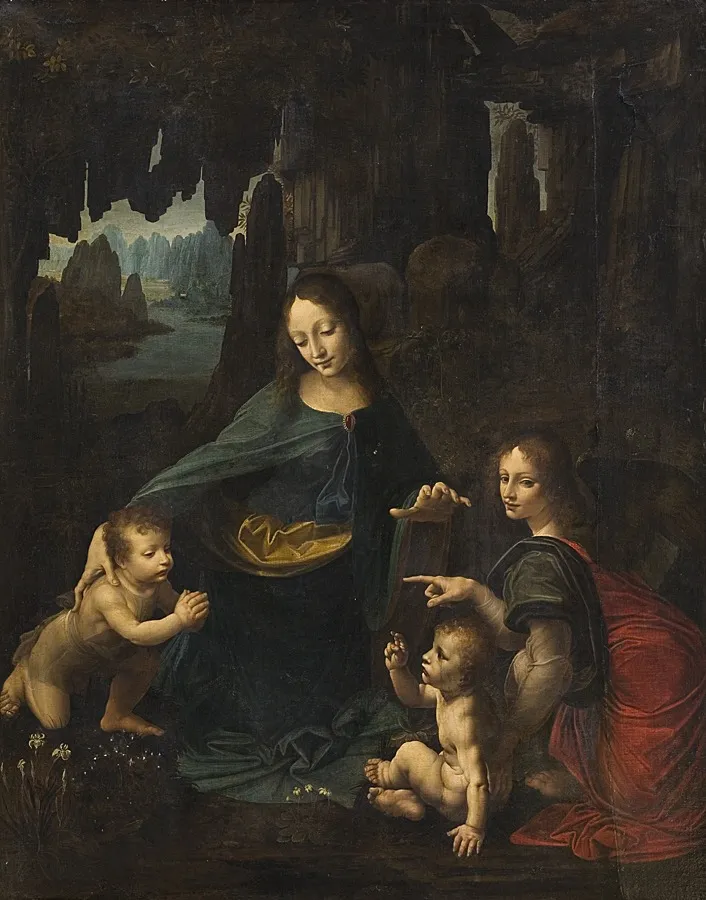
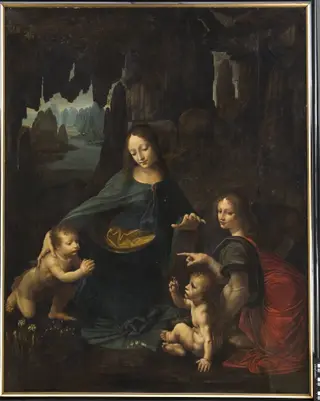
Virgin of the Rocks is an oil painting. It dates from 1650 and is held in the collection of the Statens Museum for Kunst.
About this work
Subject & Meaning
As a copy held in the Statens Museum for Kunst, the piece represents the enduring influence of Leonardo's specific arrangement of these holy figures.
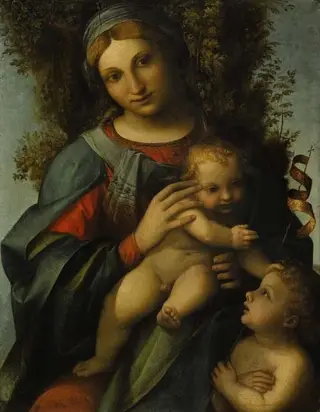
This 1650 oil painting on canvas depicts the Madonna and Child, serving as a later interpretation based on Leonardo da Vinci's original composition known as the Virgin of the Rocks. The work falls within the genre of religious art and adheres to the iconographic traditions of the Italian Renaissance movement. Its primary subject matter focuses on the Virgin Mary and the Christ Child, replicating the sacred narrative established by the earlier masterpiece.
As a copy held in the Statens Museum for Kunst, the piece represents the enduring influence of Leonardo's specific arrangement of these holy figures.
Technique & Style
The work is an oil painting executed on canvas, reflecting the material and technical practices of 17th-century European art. Its composition follows the compositional innovations of the Italian Renaissance, particularly the use of pyramidal arrangement and chiaroscuro to model figures in space. The handling of light and shadow contributes to a sculptural quality in the depiction of Mary and the infant Christ, aligning with formal conventions of religious imagery.
The painting’s condition and support structure are consistent with its age, though specific conservation details are not provided in the sources.
History & Provenance
The painting titled Virgin of the Rocks, dated 1650, is held in the collection of the Statens Museum for Kunst in Copenhagen. It is cataloged under the inventory number KMS3238. This work is an oil painting on canvas that depicts the Madonna and Child and is considered a copy or version based on the original by Leonardo da Vinci.
The museum's records identify it as a religious art piece from the Italian Renaissance movement. No specific exhibition history is detailed in the provided sources.
Legacy
The later influence of Virgin of the Rocks extends through its role as a model for religious paintings that echo Leonardo da Vinci's compositional innovations. The Statens Museum for Kunst holds a later version that directly references Leonardo's original, demonstrating how the motif was adapted by subsequent artists. Its presence in museum collections underscores a sustained scholarly and curatorial interest in the work's theological and aesthetic resonance.
Overview
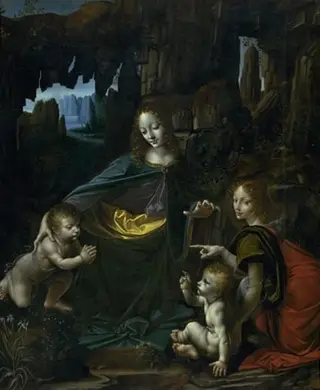
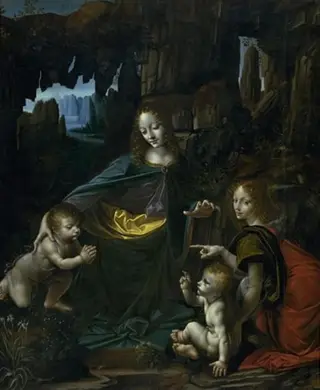
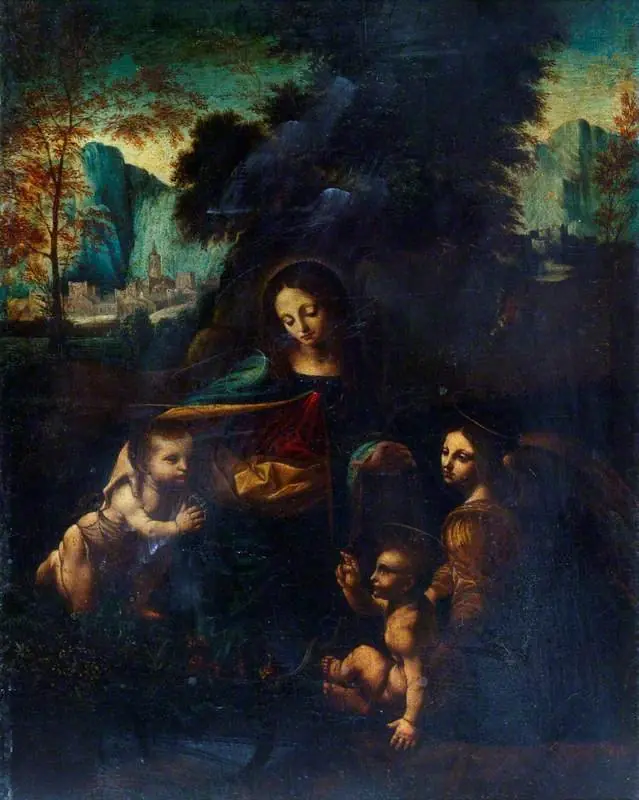
The work presents a tranquil grouping in a rugged setting: the Virgin Mary seated on a stone ledge, clothed in a blue mantle, with the infant Christ standing nearby and a kneeling youth, traditionally identified as John the Baptist. Beyond them, a distant landscape unfolds, marked by towering rocks and a body of water, establishing a serene yet dramatic atmosphere.
Context
Set within the tradition of devotional imagery, the scene reflects the Renaissance interest in naturalistic landscapes as settings for sacred narratives. The use of a rocky grotto aligns with contemporary iconography that situates holy figures in liminal spaces, bridging the earthly and the divine through a harmonious integration of figure and environment.
Artist & collection

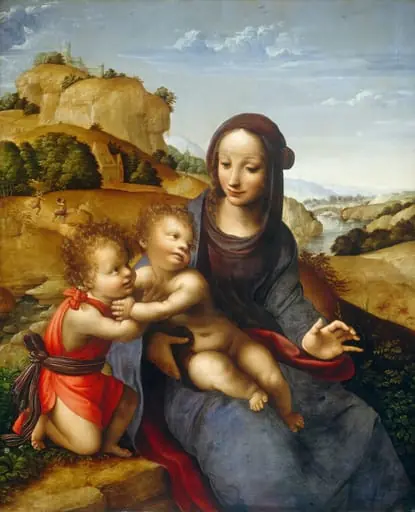 Madonna and Child with the Infant Saint John
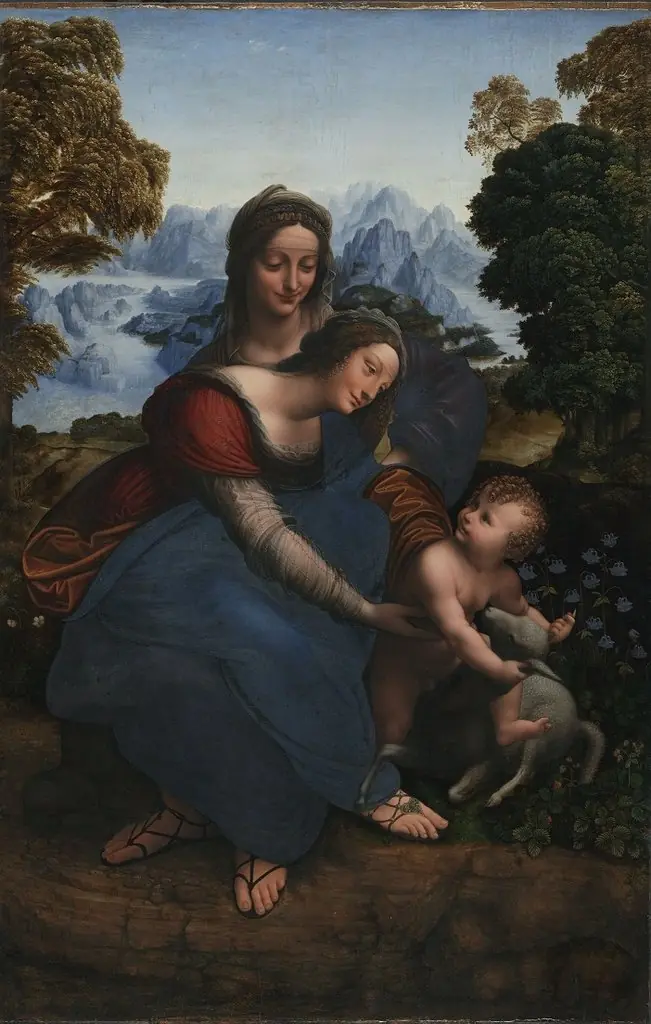 Madonna and Child with Saint Anne in a Landscape
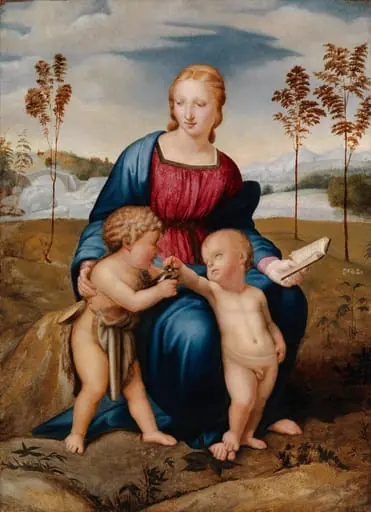 Madonna del Cardellino, kopio Rafaelin (Raffaello Sanzio) mukaan
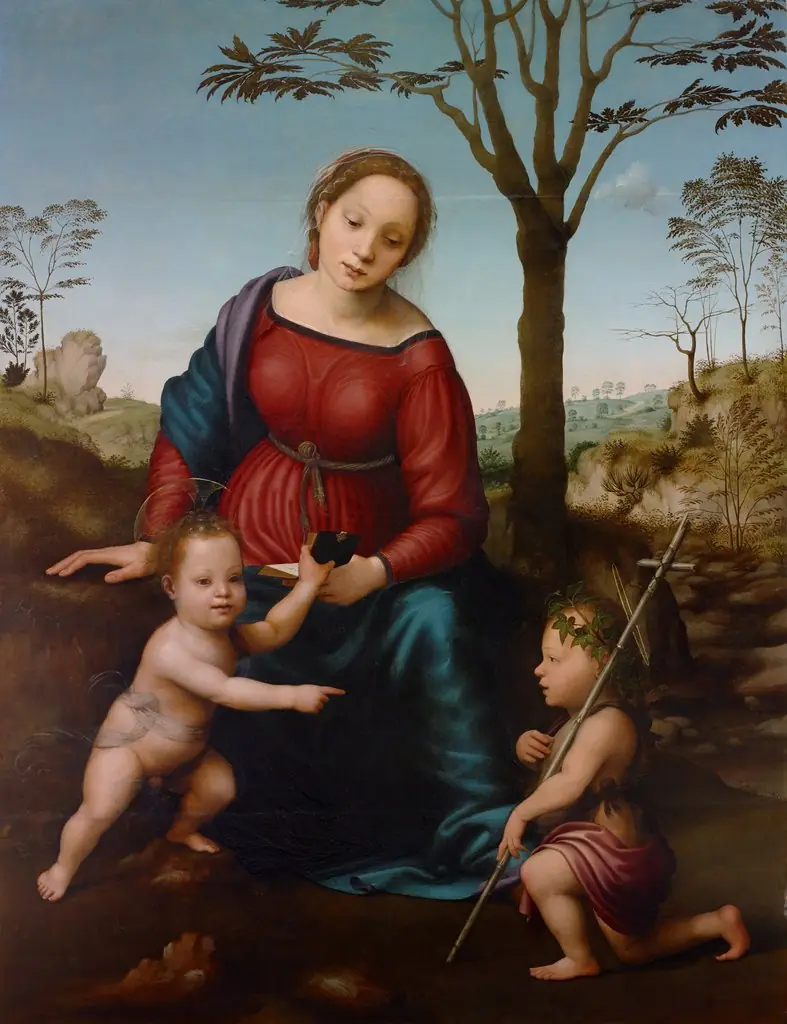 Madonna and Child Seated in a Landscape with Saint John the Baptist
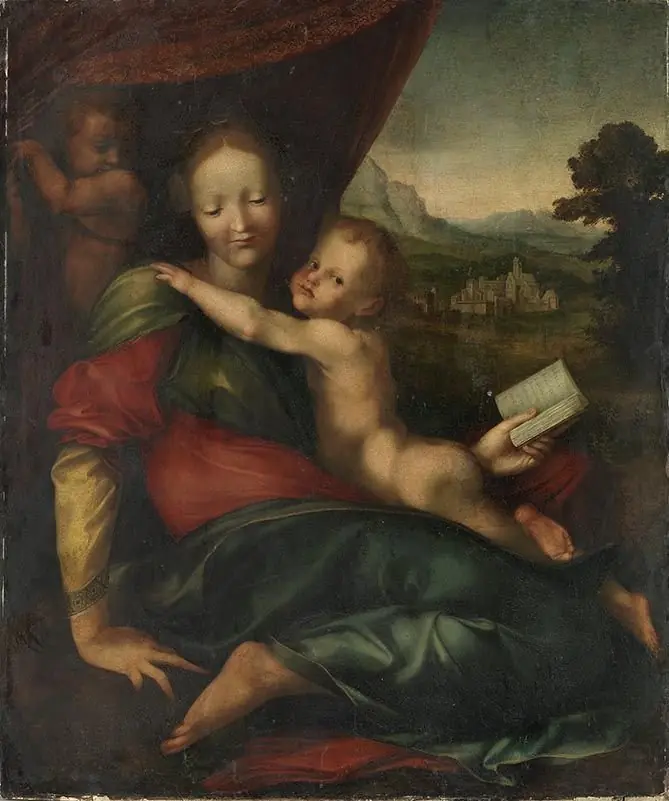 Mary with child and Saint John
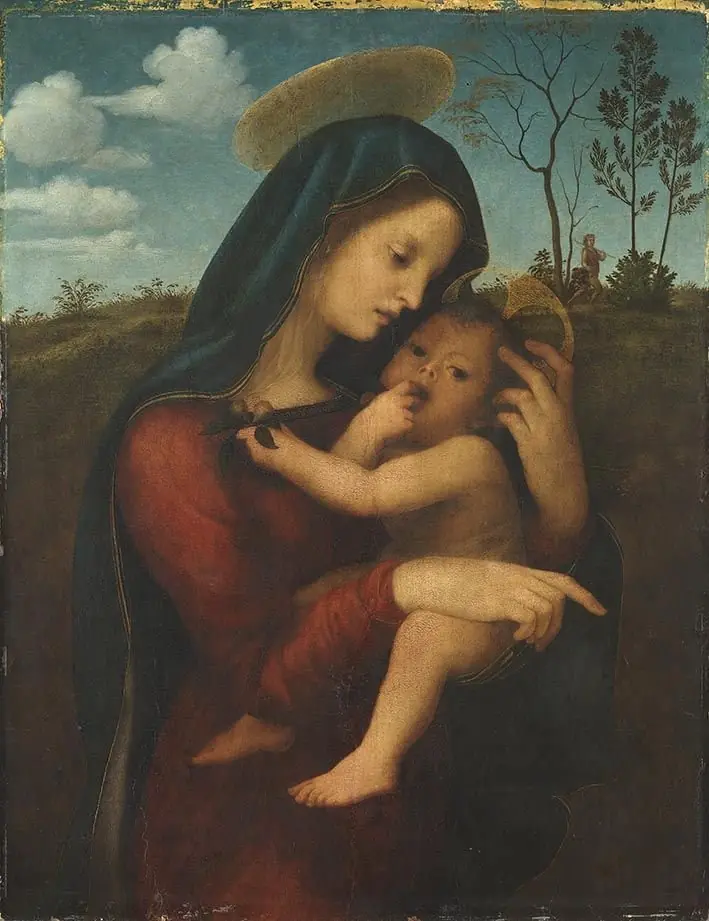 Madonna with Christ-child
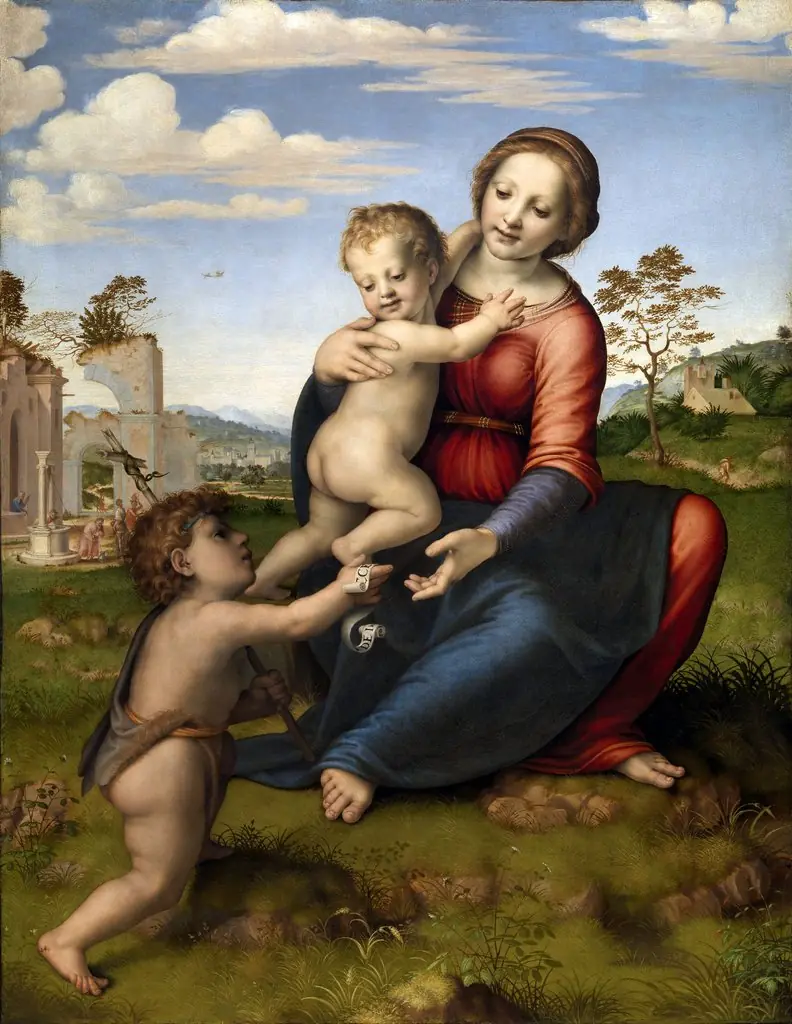 Madonna of the Well or Madonna and Child with the young St. John the Baptist
 Madonna and Child with infant St John the Baptist