Artwork
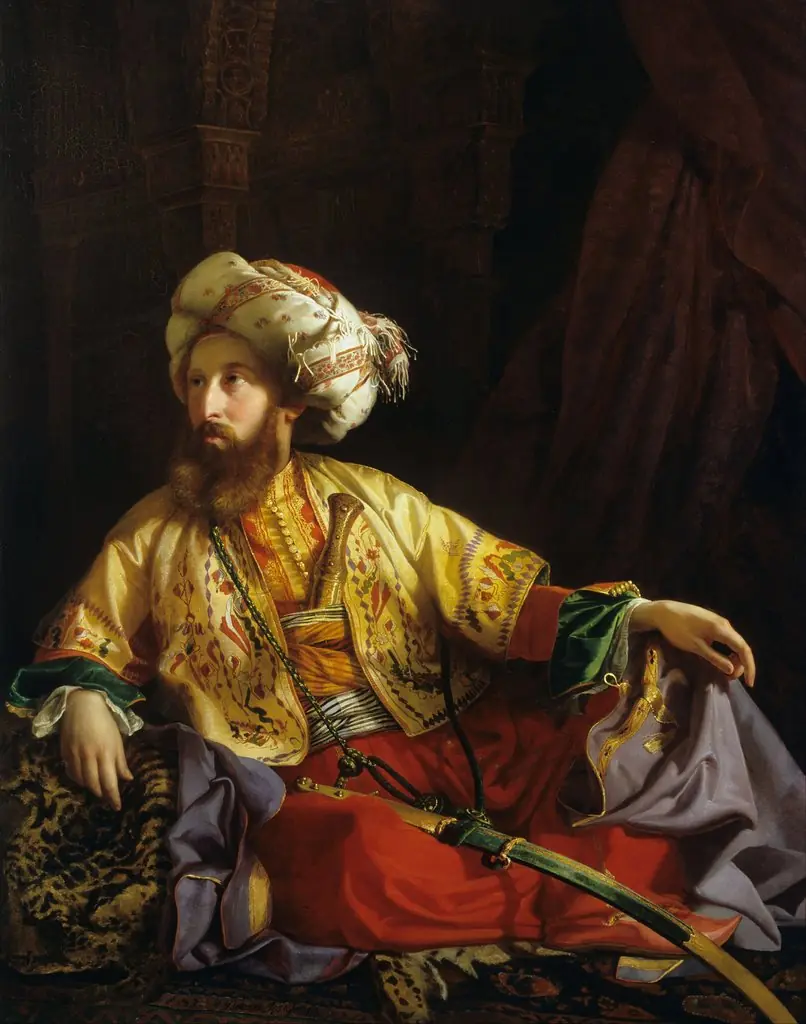
Western Gentleman in Oriental Costume
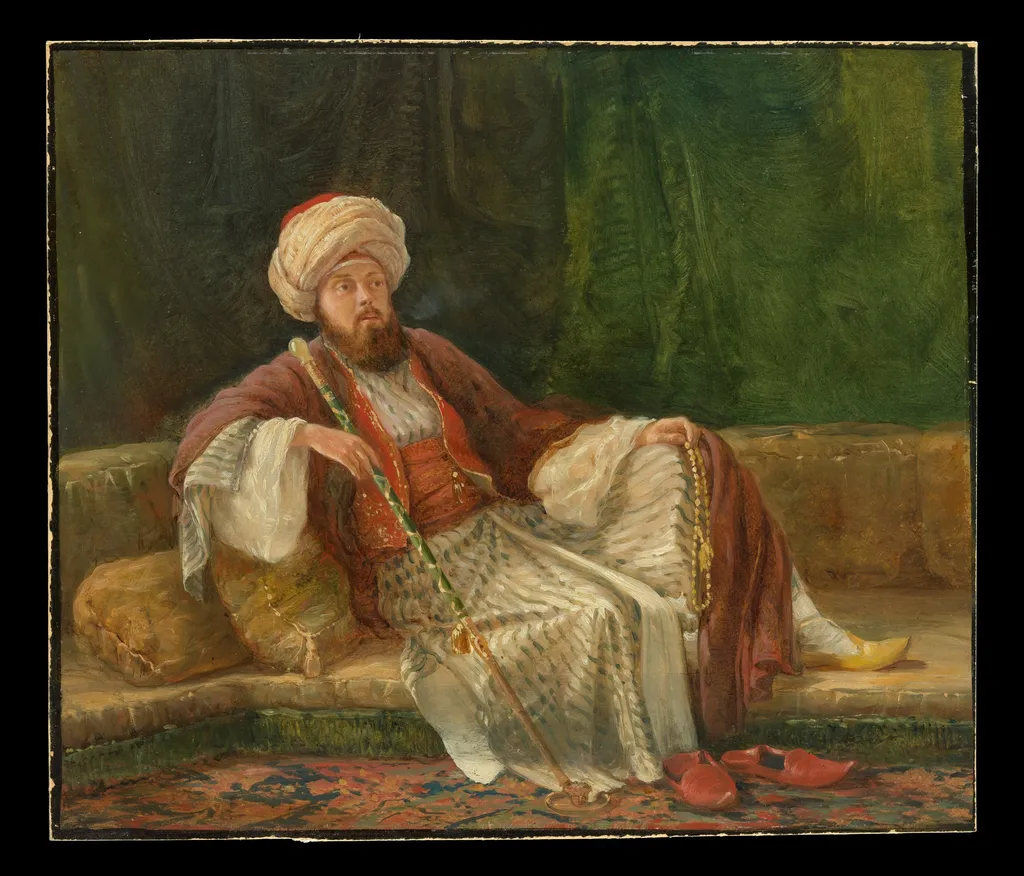
Western Gentleman in Oriental Costume is an oil painting. It dates from 1842 and is held in the collection of the Metropolitan Museum of Art.
About this work
History & Provenance
While the identity of the sitter and the original patron are not recorded in the available sources, the painting's creation is firmly dated to 1842.
The oil-on-canvas portrait titled Western Gentleman in Oriental Costume was created in 1842 by a British painter and falls within the genre of Orientalist portraiture, depicting a man in costume. It measures 15.2 by 22.9 cm. While the identity of the sitter and the original patron are not recorded in the available sources, the painting's creation is firmly dated to 1842. The work is held by the Metropolitan Museum of Art, New York, where it is catalogued as accession number 1975.1.212, having entered the museum in 1975.
The provenance chain prior to its acquisition and any exhibition history are not documented in the provided records.
Overview
This oil painting, titled "Western Gentleman in Oriental Costume," presents a figure in a relaxed pose, adorned in elaborate attire. The work captures a man reclining on a richly decorated couch, his gaze directed outward. The artist employs a vibrant palette and detailed rendering to depict the subject's distinctive dress and the surrounding environment, inviting contemplation of identity and cultural representation.
Subject & Meaning
The central figure is depicted in a theatrical "Oriental" ensemble, featuring a red and white turban, a patterned white robe, and a red vest. He holds an ornate cane, while red shoes and a beaded necklace complete his attire. This portrayal reflects a prevalent fascination in Western art with exoticism and the appropriation of non-Western aesthetics, often without direct engagement with the cultures themselves.
Technique & Style
The artist's application of oil paint is characterized by both chiaroscuro and impasto. Chiaroscuro, the strong contrast between light and shadow, enhances the three-dimensionality of the figure and drapery, creating a dramatic effect. Meanwhile, impasto, the thick layering of paint, lends tactile texture to the surfaces, particularly evident in the intricate patterns of the costume and the vibrant rug, drawing the viewer's eye to these details.
Artist & collection

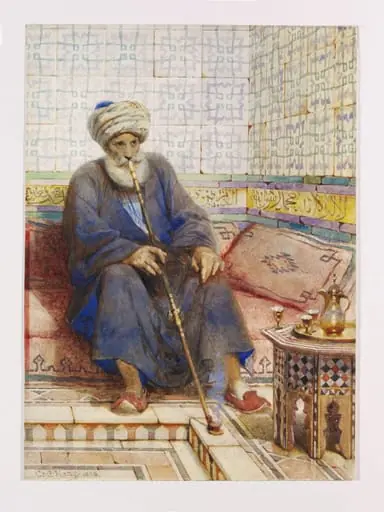 Abu Daood, Shaikh of the Coptic Quarter, in Cairo
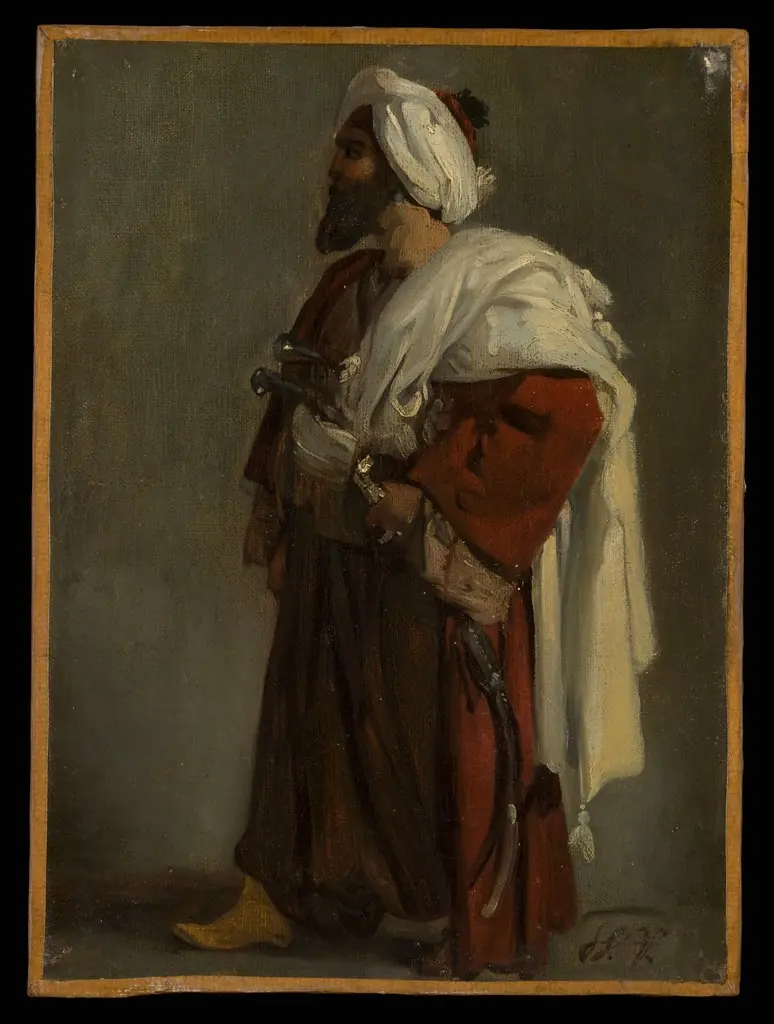 Arab Warrior
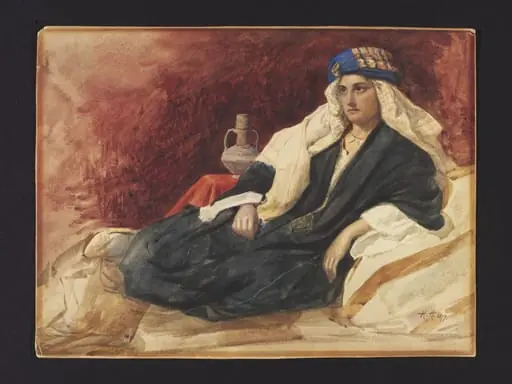 Young Person in Arab dress
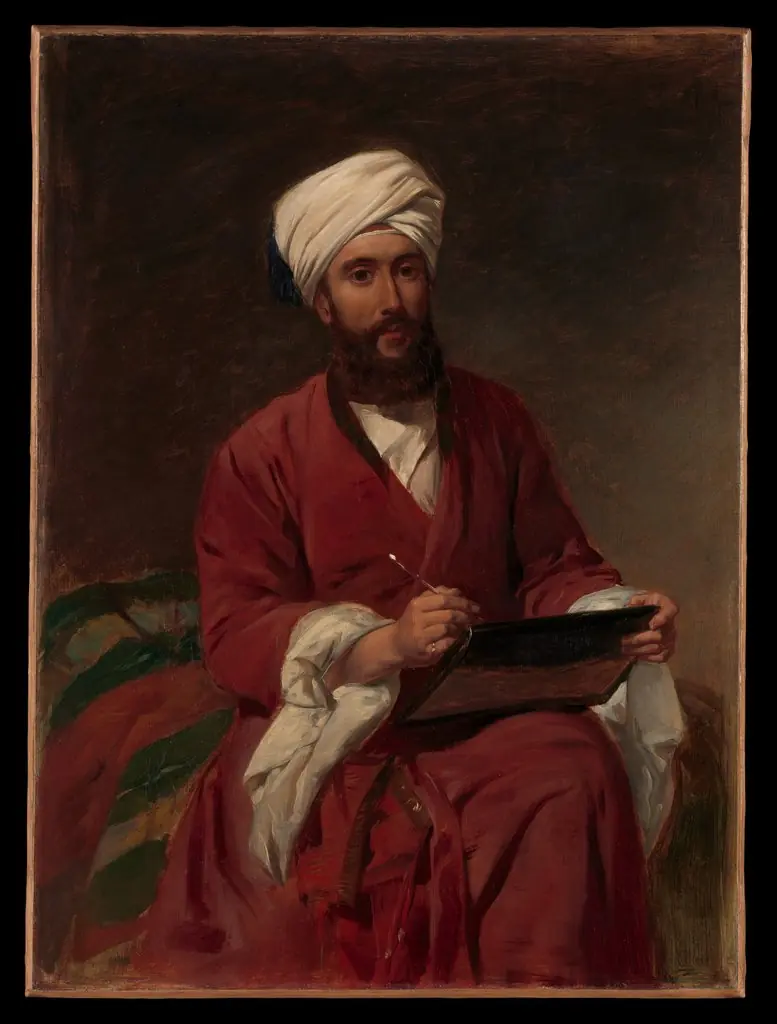 William Edward Dighton (1822–1853) in Middle Eastern Dress
 Emir of Lebanon
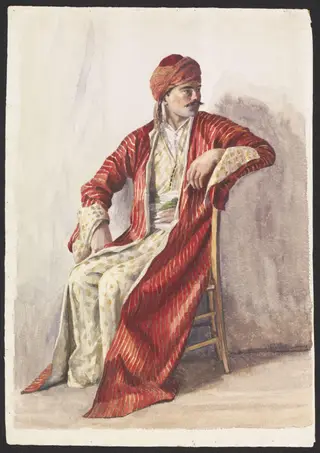 Portrait, full-length, facing right, of a Man in Arab dress, possibly smoking a cheroot
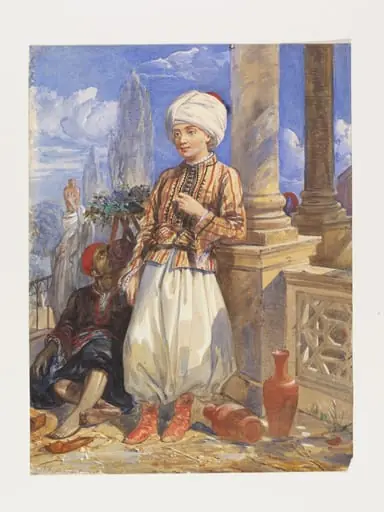 Turkish Boy with Attendant
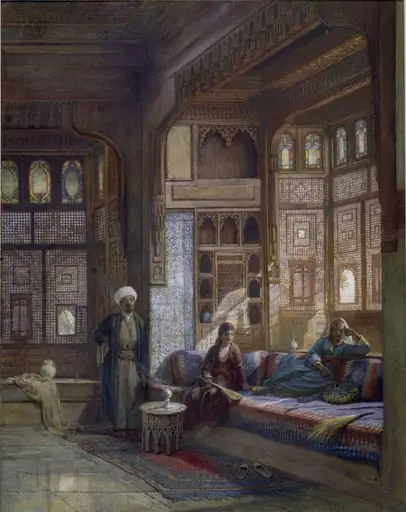 A room in the house of Shayk Sadat, Cairo
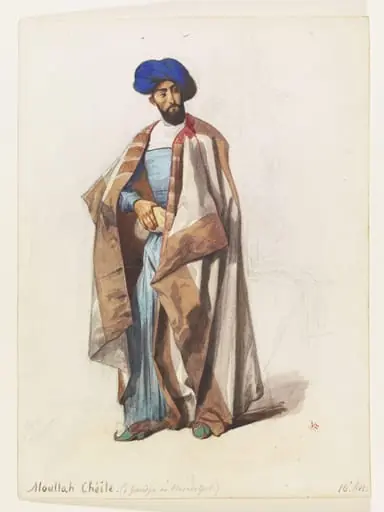 Moullah Chéite - (à Gandjà ou Elisavetopol.)