Artwork
東海道五十三次 池鯉鮒 首夏馬市|Chiriu, Station No. 40
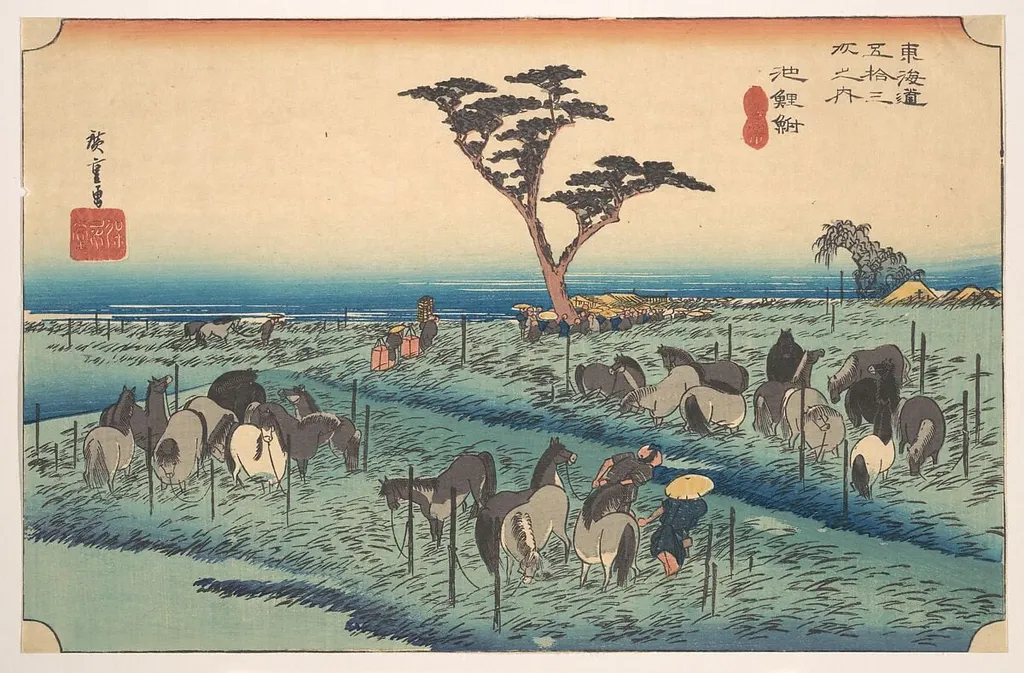
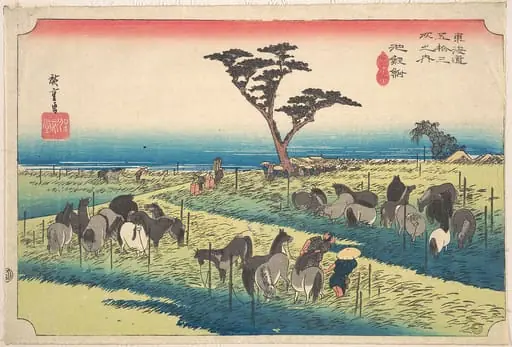
東海道五十三次 池鯉鮒 首夏馬市|Chiriu, Station No. 40 is an ink print by the Romanticist artist Utagawa Hiroshige. It dates from 1834 and is held in the collection of the Metropolitan Museum of Art. This woodblock print, 'Chiriu, Station No.
- Accession no.
- JP1876
- Credit line
- H. O. Havemeyer Collection, Bequest of Mrs. H. O. Havemeyer, 1929
About this work
Overview
This woodblock print, 'Chiriu, Station No. 40', is part of Utagawa Hiroshige's 'The Fifty-three Stations of the Tōkaidō' series, created around 1834. It depicts Chiriu Station along the Tōkaidō road.
Subject & Meaning
The print shows a serene scene of horses grazing in a field behind a wooden fence, with people nearby. The image captures the local character and travel culture of the region, highlighting the activities at Chiriu Station during a particular season.
Technique & Style
Hiroshige employed bold outlines and flat colors to create a clean and legible composition. The varied colors of the horses and the calm poses of the people contribute to a lively yet orderly atmosphere.
Artist & collection
Artist
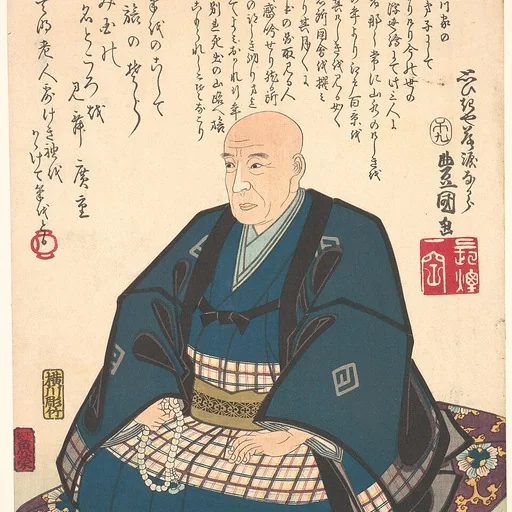
Utagawa Hiroshige (歌川 広重) or Andō Hiroshige (安藤 広重), born Andō Tokutarō (安藤 徳太郎; 1797 – 12 October 1858), was a Japanese ukiyo-e artist, considered the last great master of that tradition.