Artwork
東海道五十三次 二川 猿ヶ馬場|Futagawa
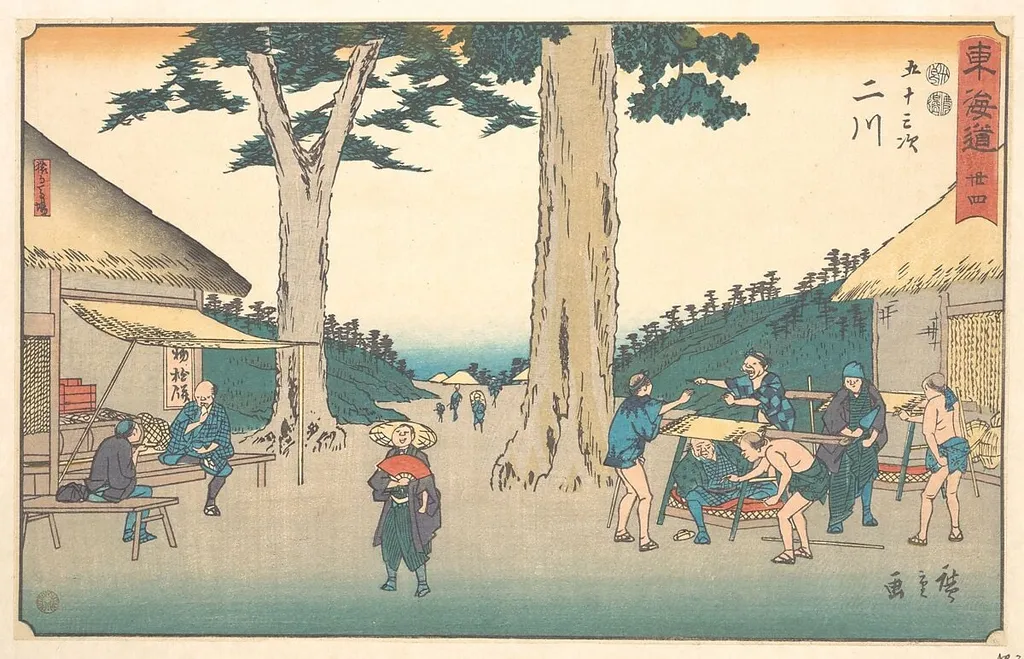
東海道五十三次 二川 猿ヶ馬場|Futagawa is an ink print by the Romanticist artist Utagawa Hiroshige. It dates from 1840 and is held in the collection of the Metropolitan Museum of Art.
- Accession no.
- JP784
About this work
Overview
Created around 1840 by Utagawa Hiroshige, this woodblock print is one of fifty-three scenes in the series The Fifty-three Stations of the Tōkaidō.
Created around 1840 by Utagawa Hiroshige, this woodblock print is one of fifty-three scenes in the series The Fifty-three Stations of the Tōkaidō. It captures a resting point along the major highway linking Edo and Kyoto. Rendered in ink and color on paper, the work exemplifies Hiroshige’s shift from traditional ukiyo-e subjects to serene, detailed landscapes, emphasizing the rhythm of travel and daily life rather than urban spectacle.
Subject & Meaning
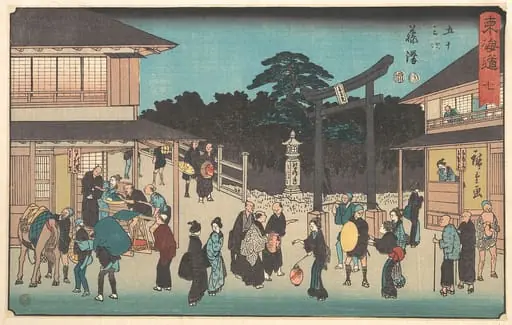
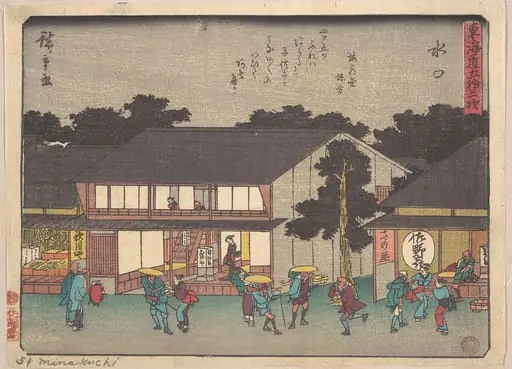
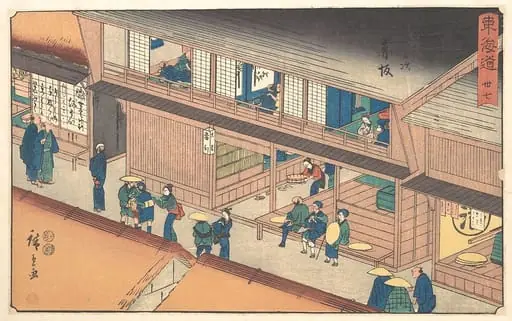
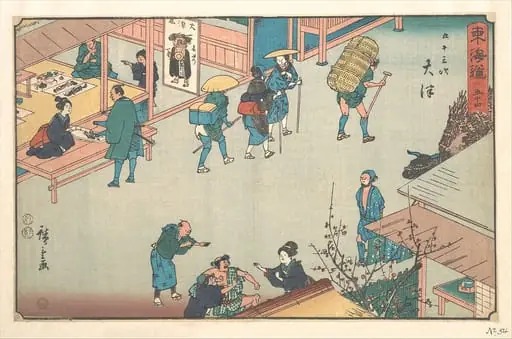
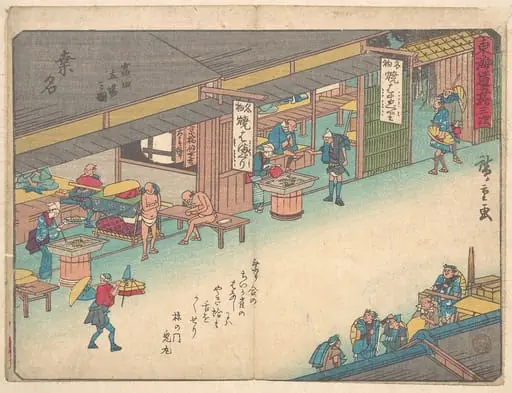
The scene portrays a quiet pause in a journey, with travelers grouped at a roadside station. Some rest under shelter, others attend to luggage or animals, while a woman passes between them with a bundle. The presence of grazing cattle and the varied postures suggest a moment of ordinary transit, not grand ceremony.
The composition invites contemplation of the quiet endurance of travel, a recurring theme in Hiroshige’s depiction of the Tōkaidō.
Technique & Style
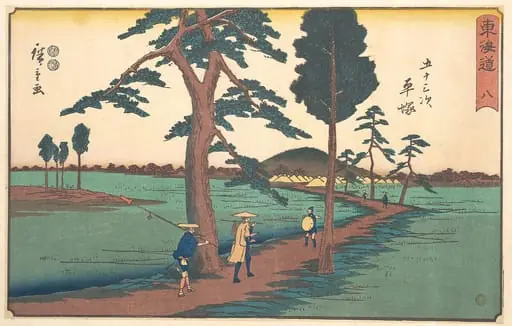
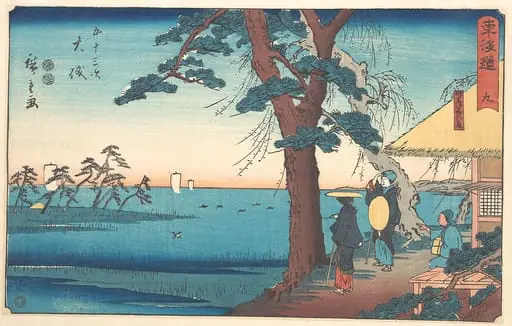
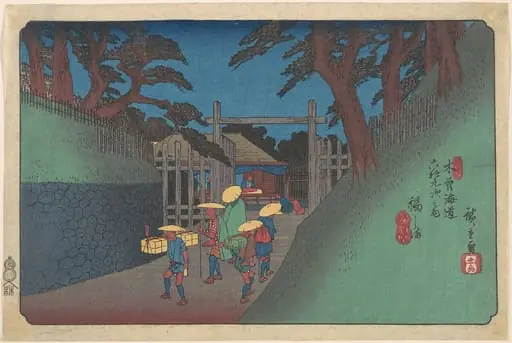
Hiroshige employs flat, even areas of color and precise outlines to structure the composition, creating clarity without excessive detail. The horizontal format guides the viewer’s eye across the scene, reinforcing the sense of a continuous journey. Atmospheric elements like the tall trees framing the edges and the subtle gradations in sky and ground add depth, while the restrained palette maintains a calm, observational tone characteristic of his mature style.
History & Provenance
Produced during the peak of Hiroshige’s career, this print was part of a commercially successful series commissioned by the publisher Hoeidō. The Tōkaidō prints were widely distributed, appealing to both travelers and urban dwellers fascinated by distant places. Though original impressions are now rare, the series’ popularity ensured its preservation in collections across Japan and the West, cementing its role in the global reception of Japanese printmaking.
Context
The Tōkaidō was the most traveled route in Edo-period Japan, used by merchants, pilgrims, and samurai. Hiroshige’s series responded to a growing public interest in travel and regional identity. Unlike earlier ukiyo-e focused on courtesans or actors, these landscapes reflected a broader cultural curiosity about the nation’s geography and the lives of ordinary people along its roads, aligning with the era’s rising literacy and mobility.
Legacy
Hiroshige’s Tōkaidō series influenced later Western artists, including the Impressionists, through its compositional clarity and emphasis on natural light and seasonal mood. The Futagawa print, like others in the set, helped redefine printmaking as a vehicle for poetic observation rather than mere illustration. Its enduring presence in museum collections underscores its role in shaping global perceptions of Japanese visual culture in the 19th century.
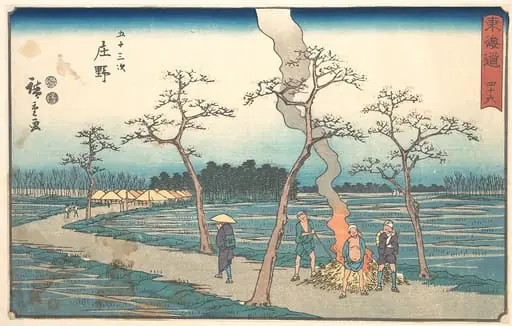
Artist & collection
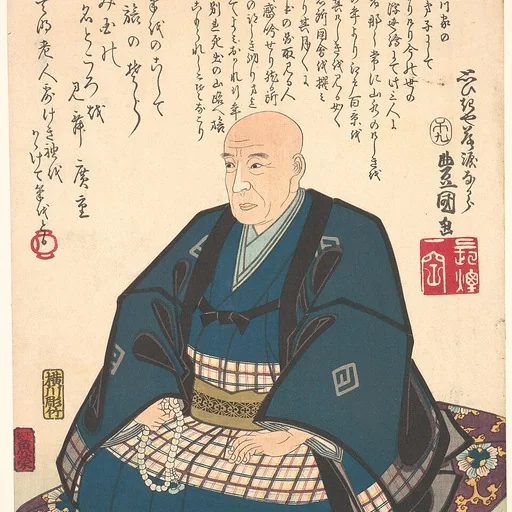
Artist
Utagawa Hiroshige (歌川 広重) or Andō Hiroshige (安藤 広重), born Andō Tokutarō (安藤 徳太郎; 1797 – 12 October 1858), was a Japanese ukiyo-e artist, considered the last great master of that tradition.