Artwork
東海道五十三次 箱根 夜中松明とり|Hakone
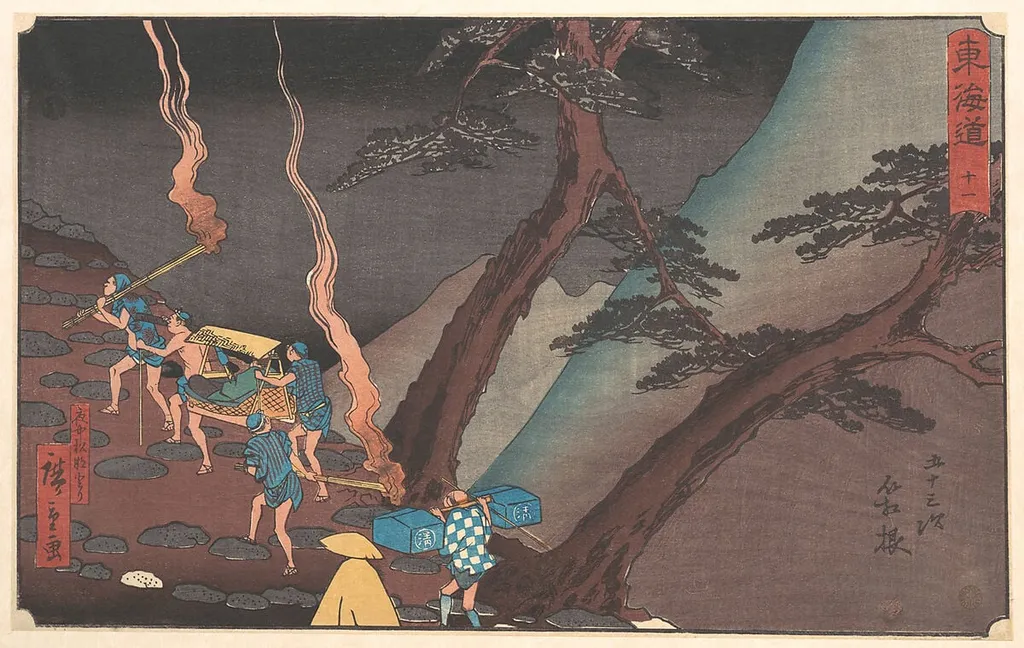
東海道五十三次 箱根 夜中松明とり|Hakone is an ink print by the Romanticist artist Utagawa Hiroshige. It dates from 1848 and is held in the collection of the Metropolitan Museum of Art.
- Accession no.
- JP761
About this work
Overview
Utagawa Hiroshige's Hakone is a woodblock print from his Fifty-three Stations of the Tōkaidō series, created around 1848. Characteristic of the series, it is executed in ink and color on paper in a horizontal format.
Subject & Meaning
The print captures a nighttime scene of five travelers on a winding forest path near Hakone, a station along the historic Tōkaidō road. One traveler ignites a torch, while others navigate the rocky trail with bundles and lanterns, set against a tumultuous sky.
Technique & Style
Hiroshige employs bold outlines and flat colors to heighten dramatic effect. The interplay of torchlight, flickering shadows, and a swirling stormy sky imbues the scene with tension and dynamism, showcasing his mastery of atmospheric depiction.
History & Provenance
Created in the late Edo period, Hakone reflects Hiroshige's departure from ukiyo-e's typical urban themes, instead emphasizing landscapes along the Tōkaidō. The exact provenance of this specific print is not detailed here.
Context
Part of The Fifty-three Stations of the Tōkaidō, Hakone contributes to a broader thematic exploration of Japan's historic trade and travel route, contrasting with the prevalent urban entertainment focus of contemporary ukiyo-e.
Artist & collection
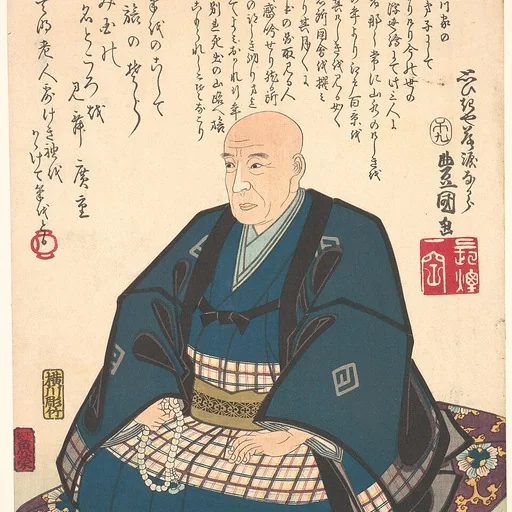
Artist
Utagawa Hiroshige (歌川 広重) or Andō Hiroshige (安藤 広重), born Andō Tokutarō (安藤 徳太郎; 1797 – 12 October 1858), was a Japanese ukiyo-e artist, considered the last great master of that tradition.