Artwork
東海道五十三次 日阪 倭園琴桜|Nissaka; Sayo no Naka Yama, pass in the Bayo Mountains
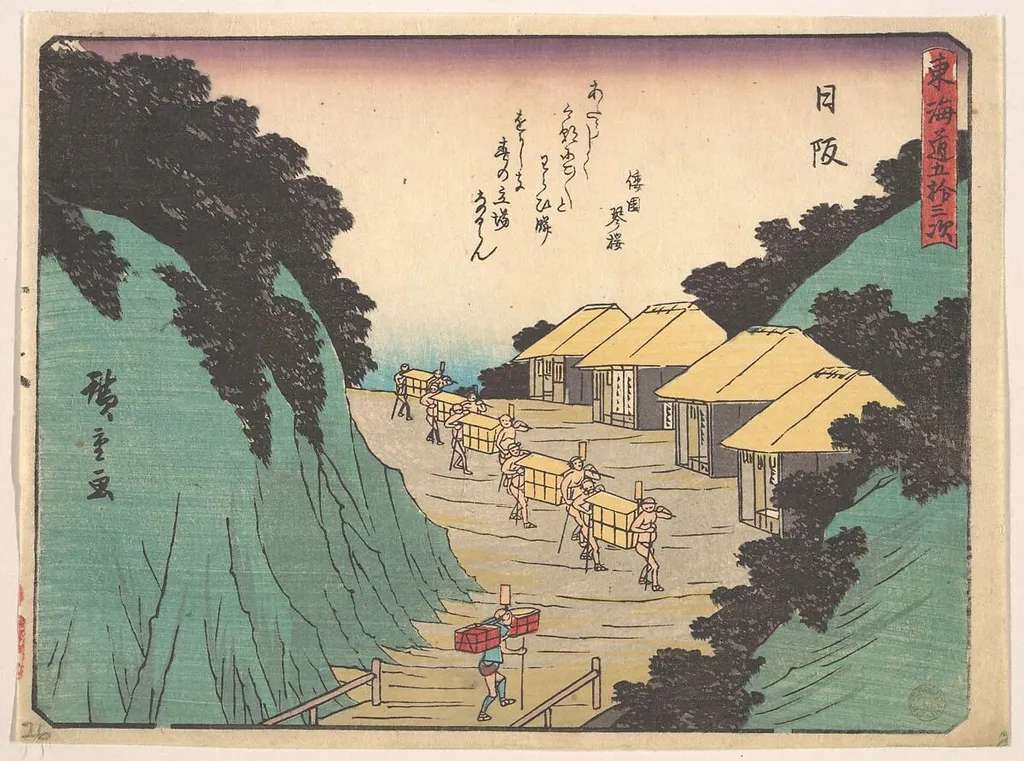
東海道五十三次 日阪 倭園琴桜|Nissaka; Sayo no Naka Yama, pass in the Bayo Mountains is an ink print by the Romanticist artist Utagawa Hiroshige. It dates from 1838 and is held in the collection of the Metropolitan Museum of Art.
About this work
Overview
This woodblock print is one of fifty-three scenes from Utagawa Hiroshige’s series depicting the Tōkaidō, the main road connecting Edo and Kyoto.
This woodblock print is one of fifty-three scenes from Utagawa Hiroshige’s series depicting the Tōkaidō, the main road connecting Edo and Kyoto. Created around 1838, it captures a quiet mountain pass known as Nissaka, part of the Bayo Mountains. Unlike typical ukiyo-e subjects centered on urban life, Hiroshige focused on the natural and rural landscapes travelers encountered along the route, emphasizing atmosphere over action.
Subject & Meaning
The scene portrays a modest village nestled in a steep mountain pass, with travelers moving along a winding path, carrying goods or walking with quiet purpose. Thatched-roof dwellings and dense trees frame the composition, suggesting a pause in a longer journey. The absence of dramatic events underscores the rhythm of daily travel, reflecting the quiet dignity of ordinary life on a major thoroughfare during the Edo period.
Technique & Style
Hiroshige employed fine woodblock carving and hand-coloring to achieve subtle gradations of ink and pigment. Deep greens, muted yellows, and earthy browns define the landscape, while pale blue skies and soft mist suggest atmospheric depth. Bold, wavy tree branches contrast with the delicate rendering of distant hills, creating a sense of spatial recession. The composition balances stillness and movement, guiding the viewer’s eye along the path into the distance.
History & Provenance
Produced during Hiroshige’s most active period, this print was part of a commercially successful series commissioned by the publisher Hoeidō. It was widely distributed as a travel souvenir, appealing to both commoners and elites interested in the Tōkaidō’s scenic stations. Original impressions from this edition are rare today, preserved in museum collections and private holdings across Japan and the West.
Context
The Tōkaidō was a vital artery of Edo-period Japan, used by daimyō, merchants, pilgrims, and officials. Hiroshige’s series emerged during a time of growing domestic travel and print culture. By focusing on landscapes rather than courtesans or actors, he redefined ukiyo-e’s scope, aligning it with a broader appreciation for nature and place, influenced by both traditional Japanese aesthetics and emerging travel literature.
Legacy
Hiroshige’s Tōkaidō series influenced later generations of artists, including Western Impressionists who admired his compositional clarity and use of perspective. The quiet, observational tone of prints like this one helped shift perceptions of Japanese art from decorative to deeply evocative. Today, the series remains a key reference for understanding how landscape and travel were visualized in 19th-century Japan.
Artist & collection
Artist
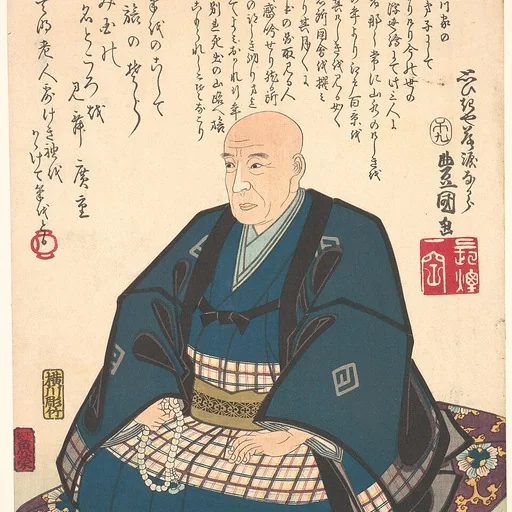
Utagawa Hiroshige (歌川 広重) or Andō Hiroshige (安藤 広重), born Andō Tokutarō (安藤 徳太郎; 1797 – 12 October 1858), was a Japanese ukiyo-e artist, considered the last great master of that tradition.

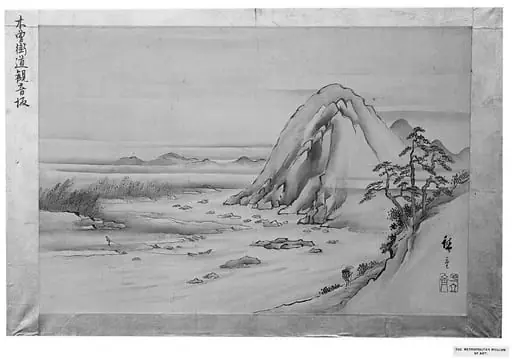
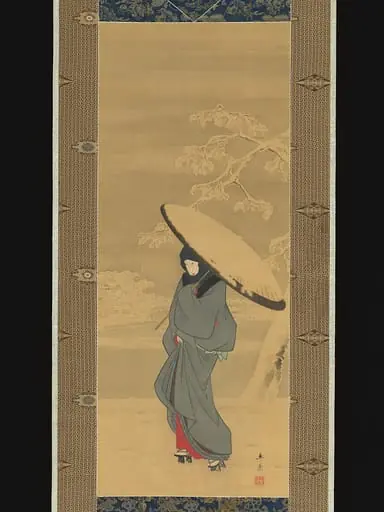
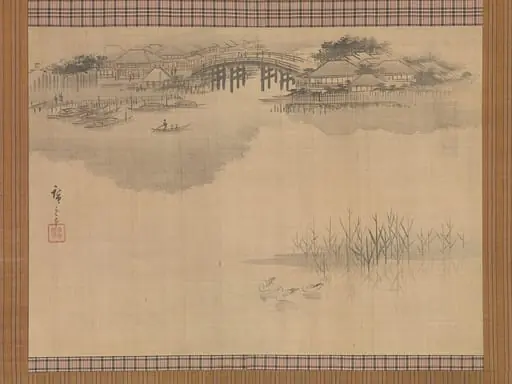
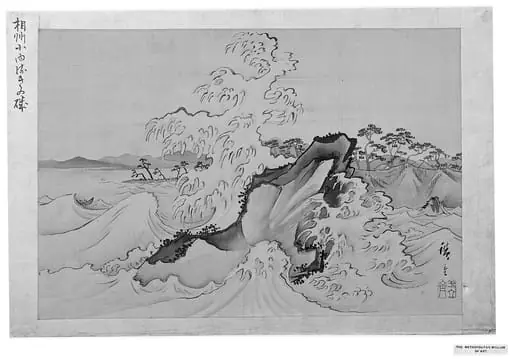
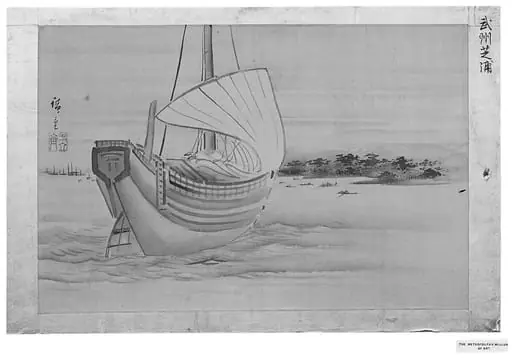
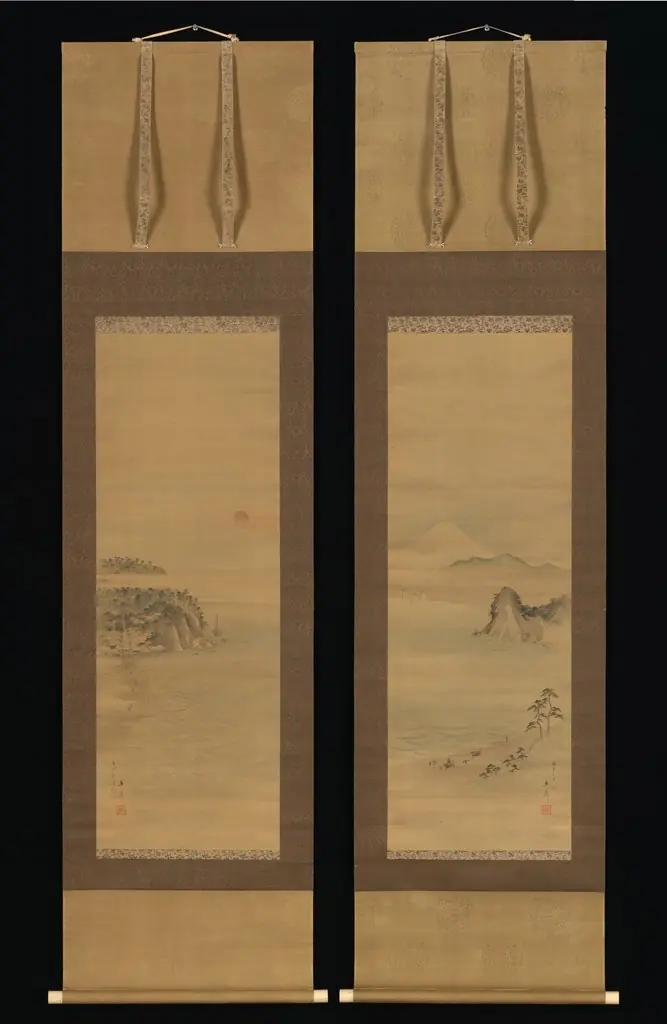
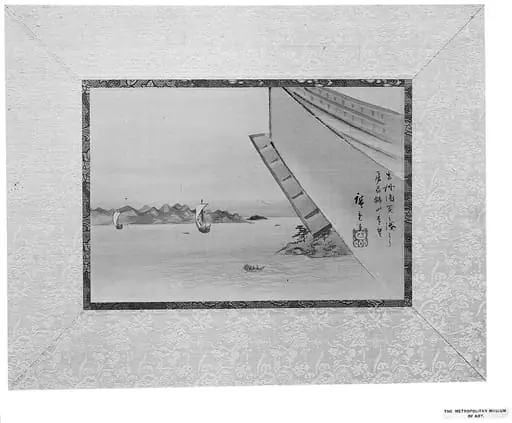
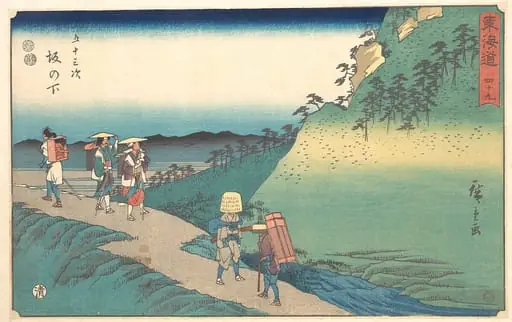
- 東海道五十三次 坂の下|Saka no Shita
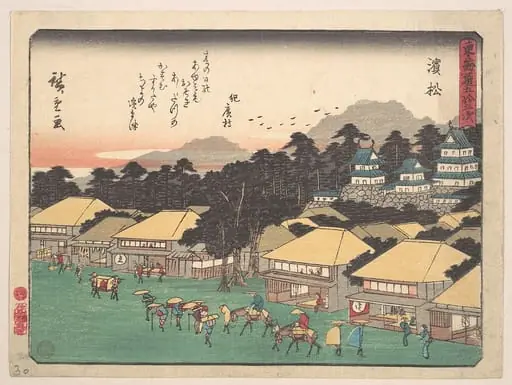 東海道五十三次 浜松|Hamamatsu
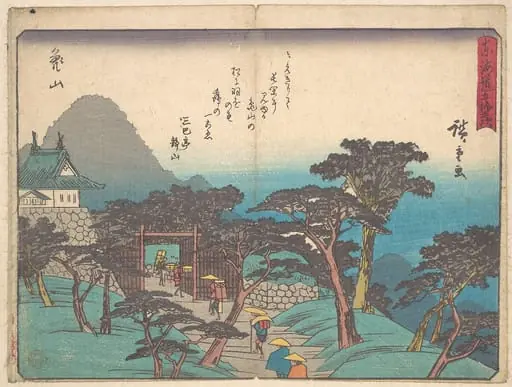 東海道五十三次 亀山|Kameyama
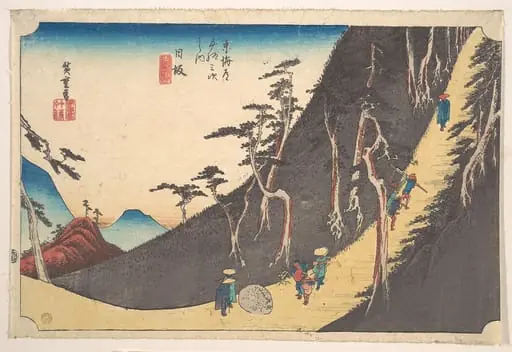 東海道五十三次之内 日坂 佐夜の中山|Nissaka, Sayo Nakayama
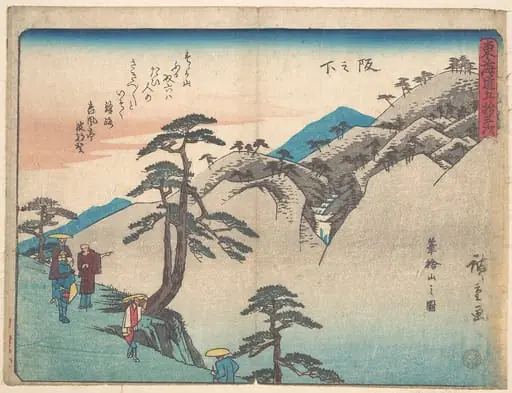 東海道五十三次 坂下|Saka-no-shita
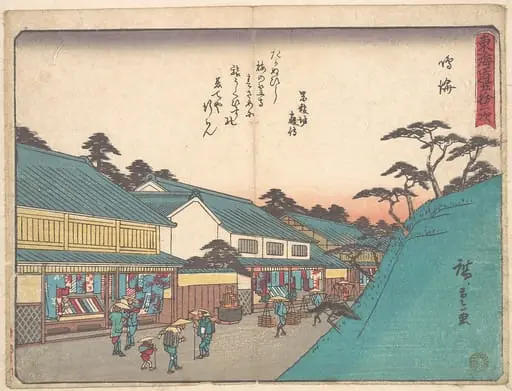 東海道五十三次 鳴海|Narumi
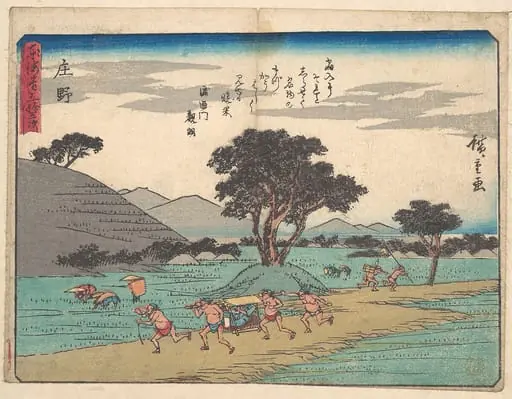 東海道五十三次 庄野|Shono
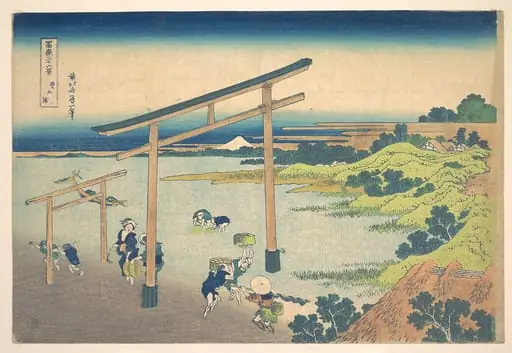 冨嶽三十六景 登戸浦|Noboto Bay (Noboto no ura), from the series Thirty-six Views of Mount Fuji (Fugaku sanjūrokkei)
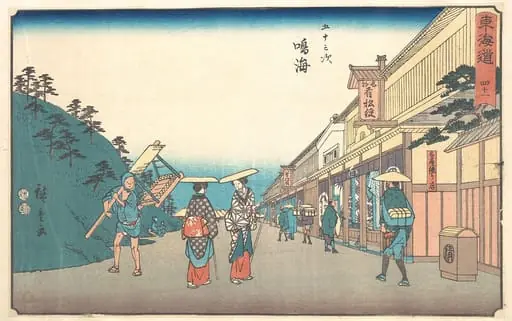 東海道五十三次 鳴海 名産絞り店|Narumi
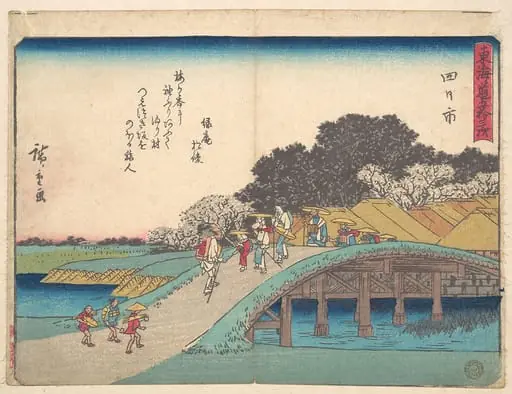 東海道五十三次 四日市|Yokkaichi