Artwork
The Seconda Macchina for the Chinea of 1760: A Chinoiserie Pavilion
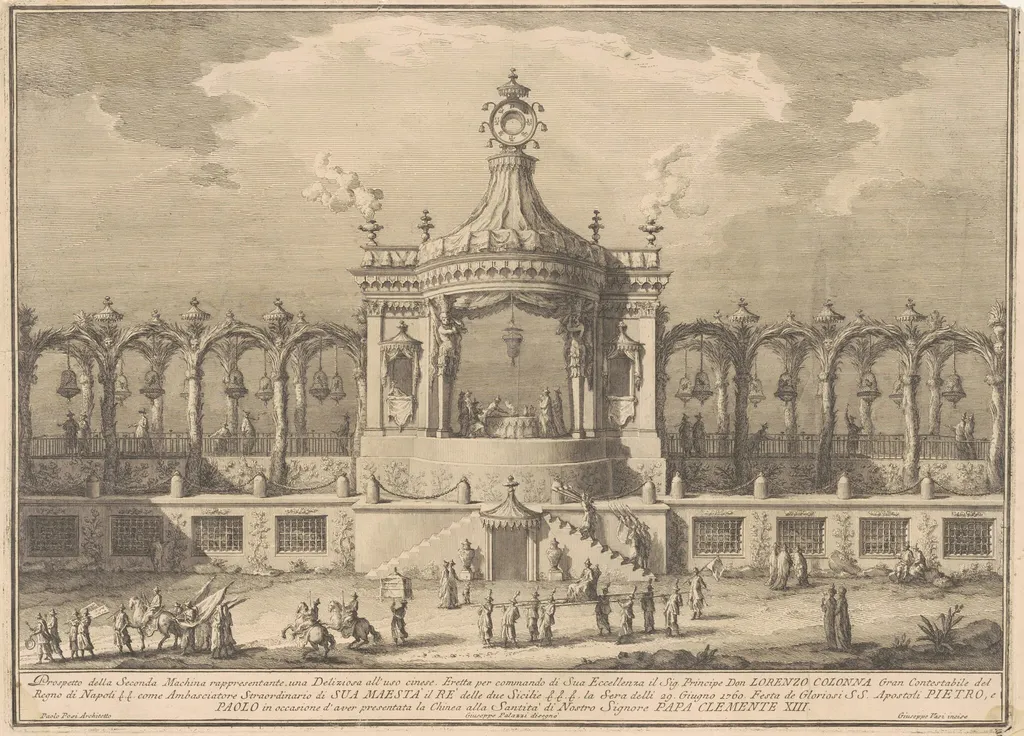
The Seconda Macchina for the Chinea of 1760: A Chinoiserie Pavilion is an ink print by the Romanticist artist Giuseppe Vasi. It dates from 1760 and is held in the collection of the National Gallery of Art.
- Inscription
- Inscribed:Lettered LL: "Paolo Posi Architetto" Lettered LC: "Giueppe Palazzi disegno'" Lettered LR: "Giuseppe Vasi incise" Lettered LC: "Prospetto della Seconda Machina rappresentante una Deliziosa all'uso cinese ... la sera delli 29 Giugno 1760... CLEMENTE XIII"
About this work
The text at the bottom says this was made for a special event in 1760, mixing European and Chinese styles.
This drawing shows a fancy stage set built to look like a Chinese-style pavilion. It’s got tall arches, fake trees, and a big roof with a lantern. People in old clothes are walking around, some on horseback, while others stand near the building.
Inside the pavilion, a few figures sit under a canopy, and there’s a small stage area with steps.
The text at the bottom says this was made for a special event in 1760, mixing European and Chinese styles. The artist used lines to create shadows and details, making it look almost three-dimensional.
Check out how this was made using the technique: etching.
Overview
Giuseppe Vasi’s 1760 etching, titled The Seconda Macchina for the Chinea of 1760: A Chinoiserie Pavilion, records a temporary theatrical set erected for the annual Chinea procession in Rome. The image captures a fanciful, Chinese‑inspired pavilion that functioned as a stage for the ceremonial display.
Subject & Meaning
The composition depicts a fabricated pavilion with soaring arches, ornamental trees, and a lantern‑topped roof, populated by figures in period dress, riders on horseback, and attendants gathered around the structure. The scene reflects the 18th‑century fascination with exotic motifs, merging European festivity with imagined Chinese architecture.
Technique & Style
Executed in fine line etching, Vasi renders depth through cross‑hatching and varied line weight, giving the pavilion a three‑dimensional illusion. The delicate shading delineates architectural details, foliage, and the crowd, while the overall style aligns with the Rococo taste for elaborate, theatrical scenography.
History & Provenance
Created specifically for the 1760 Chinea, a diplomatic tribute from the Kingdom of Naples to the Pope, the print served as a visual record of the event’s elaborate set design. The work remains attributed to Vasi, a noted Roman vedutista, and is documented in several 18th‑century print collections.
Context
The Chinea procession, a yearly display of military and ceremonial splendor, often incorporated temporary structures that showcased contemporary artistic trends. Vasi’s depiction illustrates how chinoiserie, a fashionable European interpretation of East Asian aesthetics, was employed to enhance the spectacle’s visual impact.
Legacy
While the pavilion itself was dismantled after the festivities, Vasi’s etching preserves the fleeting architecture, offering scholars insight into the interplay of cultural appropriation and public celebration in mid‑century Rome.
Own this work as a print
Artist & collection

 The Seconda Macchina for the Chinea of 1766: A Theater for Athletic Games
 The Prima Macchina for the Chinea of 1765: The Garden of the Hesperides
 The Prima Macchina for the Chinea of 1769: A "Deliziosa"
 The Prima Macchina for the Chinea of 1767: A Triumphal Arch with the Farnese Hercules
 The Seconda Macchina for the Chinea of 1759: A "Deliziosa" with a Bacchanal
 The Seconda Macchina for the Chinea of 1762: A Kiosk, or Pleasure-House in Ottoman Style
 The Seconda Macchina for the Chinea of 1763: The Grape Harvest
 The Seconda Macchina for the Chinea of 1776: A Palace with a Loggia for the Lottery Draw
- The Seconda Macchina for the Chinea of 1773: The Preparation of Theriac in Venice
 The Seconda Macchina for the Chinea of 1765: A Decorated Building with Cockaigne Poles
 The Prima Macchina for the Chinea of 1772: A Building Dedicated to Chinese Philosophy
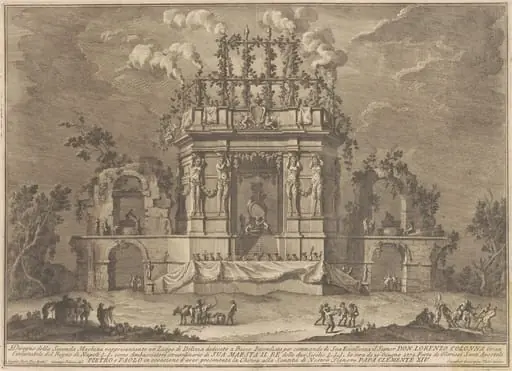 The Seconda Macchina for the Chinea of 1771: A Pleasure Palace Dedicated to Bacchus
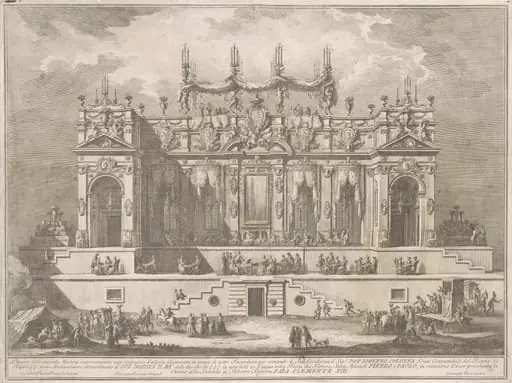 The Seconda Macchina for the Chinea of 1764: A Magnificent Gallery Illuminated at Night
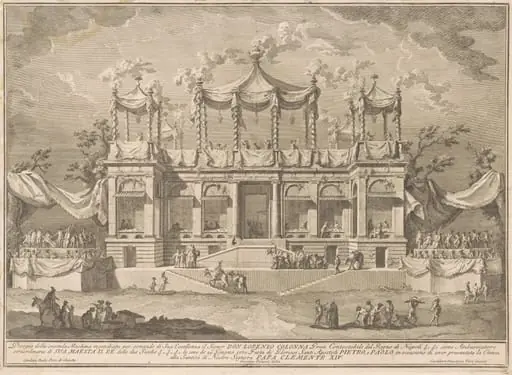 The Seconda Macchina for the Chinea of 1770: The Fish Market Portico
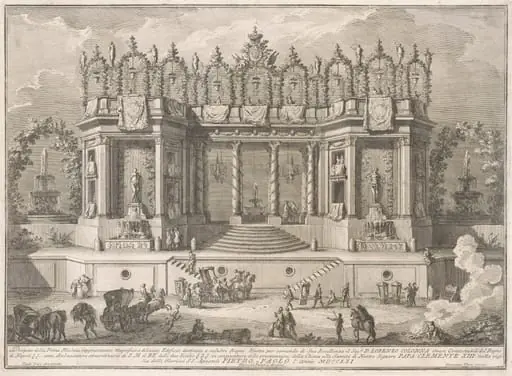 The Prima Macchina for the Chinea of 1761: The Salubrious Baths
 The Prima Macchina for the Chinea of 1770: An Roman Building for Commerce
 The Prima Macchina for the Chinea of 1771: The Temple of Asclepius
 The Prima Macchina for the Chinea of 1764: A Capitol Building
 The Prima Macchina for the Chinea of 1771: The Temple of Asclepius
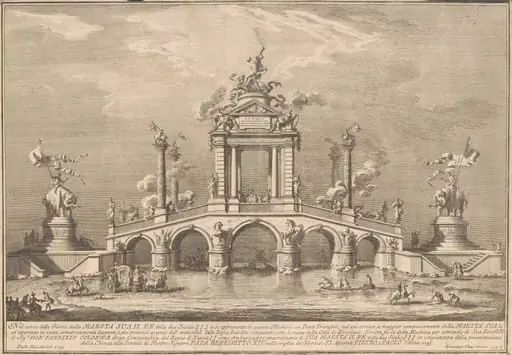 The Prima Macchina for the Chinea of 1755: A Triumphal Bridge with Antiquities from Herculaneum