Artwork
The Seconda Macchina for the Chinea of 1763: The Grape Harvest
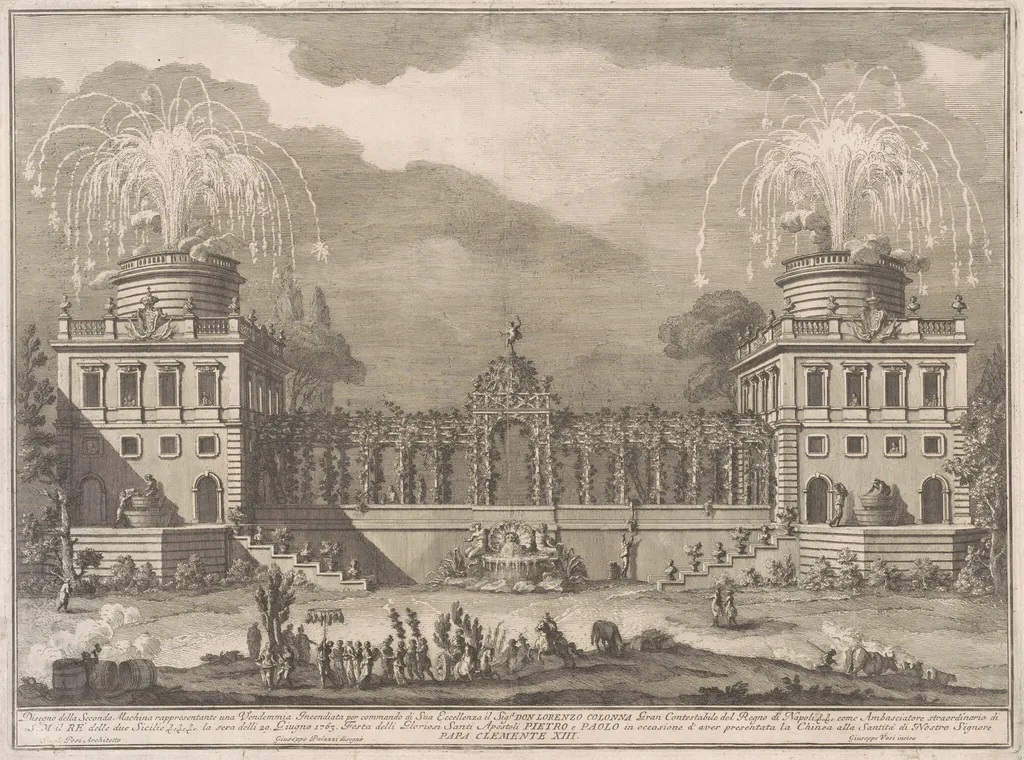
The Seconda Macchina for the Chinea of 1763: The Grape Harvest is an ink print by the Romanticist artist Giuseppe Vasi. It dates from 1763 and is held in the collection of the National Gallery of Art.
- Inscription
- Inscribed:Lettered LL: "Paolo Posi Architetto" Lettered LC: "Giuseppe Palazzi disegno'" Lettered LR: "Giuseppe Vasi incise" Lettered LC, below image: "Disegno della Seconda Machina rappresentante una Vendemmia ... la sera delli 29 Giugno 1763 ...CLEMENTE XIII"
About this work
In the center, a long row of trees lines a walkway, and below that, a fountain sprays water high into the air.
This print shows a grand, symmetrical garden with two tall buildings at either side. In the center, a long row of trees lines a walkway, and below that, a fountain sprays water high into the air. People in the distance tend to vines and grapes, while others work near a small stage with statues. The sky is dramatic, with clouds and fireworks lighting up the scene.
The text at the bottom explains this was made for a special harvest festival in 1763. The artist used shading to create depth, making the scene look almost three-dimensional.
Next, check out the technique: etching to see how artists like this made detailed prints.
Overview
The Seconda Macchina for the Chinea of 1763: The Grape Harvest is an etching created by Giuseppe Vasi in 1763.
Subject & Meaning
The print depicts a symmetrical garden with buildings, a fountain, and people tending to grapevines, commemorating a harvest festival. The scene is set against a dramatic sky with clouds and fireworks.
Technique & Style
Vasi used etching to achieve detailed shading, creating a sense of depth and three-dimensionality in the scene.
Own this work as a print
Artist & collection

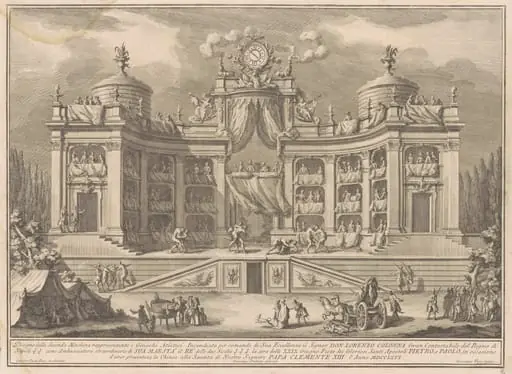 The Seconda Macchina for the Chinea of 1766: A Theater for Athletic Games
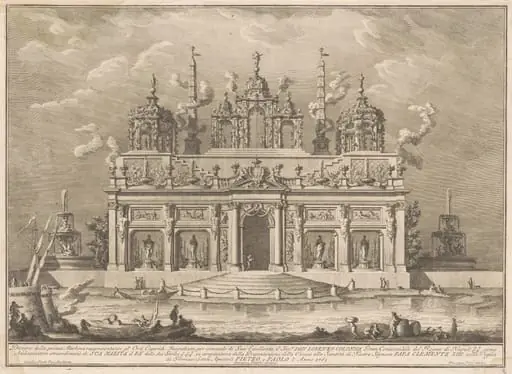 The Prima Macchina for the Chinea of 1765: The Garden of the Hesperides
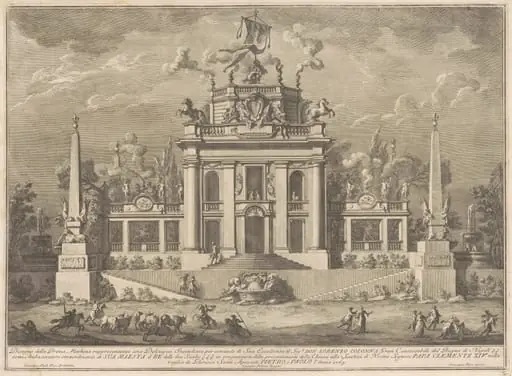 The Prima Macchina for the Chinea of 1769: A "Deliziosa"
 The Seconda Macchina for the Chinea of 1760: A Chinoiserie Pavilion
 The Prima Macchina for the Chinea of 1767: A Triumphal Arch with the Farnese Hercules
 The Seconda Macchina for the Chinea of 1759: A "Deliziosa" with a Bacchanal
 The Seconda Macchina for the Chinea of 1762: A Kiosk, or Pleasure-House in Ottoman Style
 The Seconda Macchina for the Chinea of 1776: A Palace with a Loggia for the Lottery Draw
 The Seconda Macchina for the Chinea of 1755: A Royal Hunting Lodge
 The Seconda Macchina for the Chinea of 1755: A Royal Hunting Lodge
 The Seconda Macchina for the Chinea of 1770: The Fish Market Portico
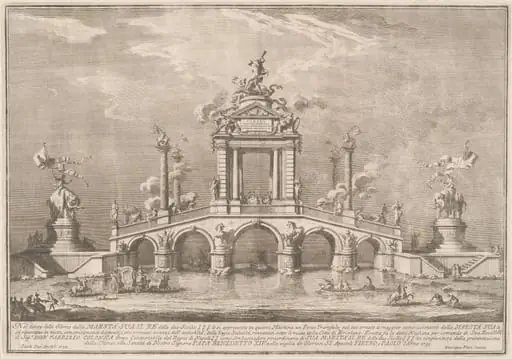 The Prima Macchina for the Chinea of 1755: A Triumphal Bridge with Antiquities from Herculaneum
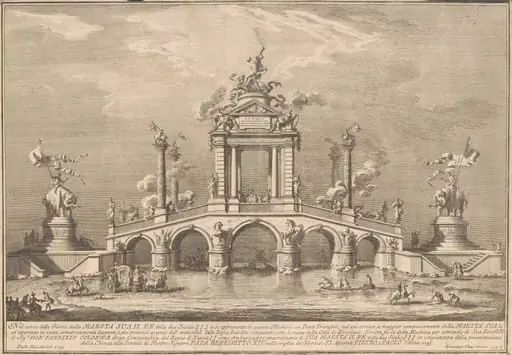 The Prima Macchina for the Chinea of 1755: A Triumphal Bridge with Antiquities from Herculaneum
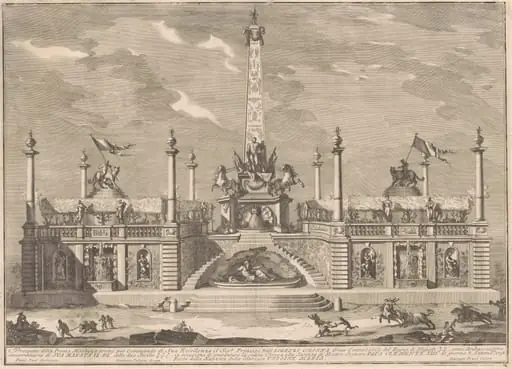 The Prima Macchina for the Chinea of 1758: A "Deliziosa" with Hanging Gardens
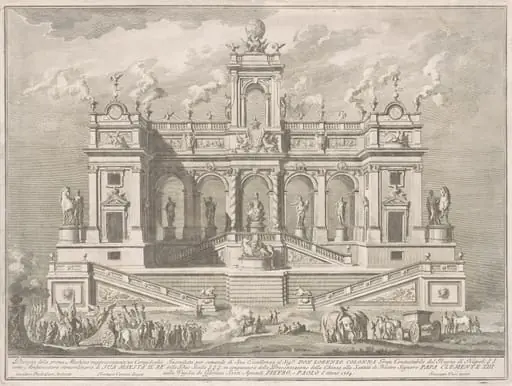 The Prima Macchina for the Chinea of 1764: A Capitol Building
 The Prima Macchina for the Chinea of 1771: The Temple of Asclepius
 The Seconda Macchina for the Chinea of 1771: A Pleasure Palace Dedicated to Bacchus