Artwork
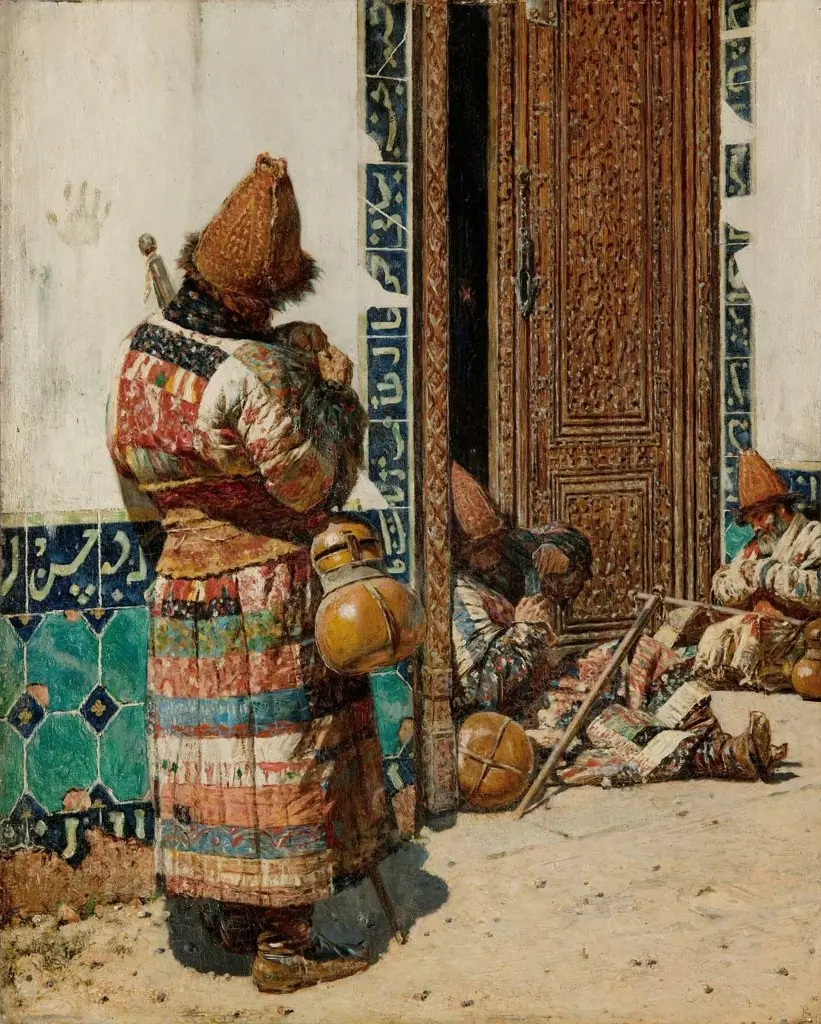
Dervishes in Festive Dress. Tashkent
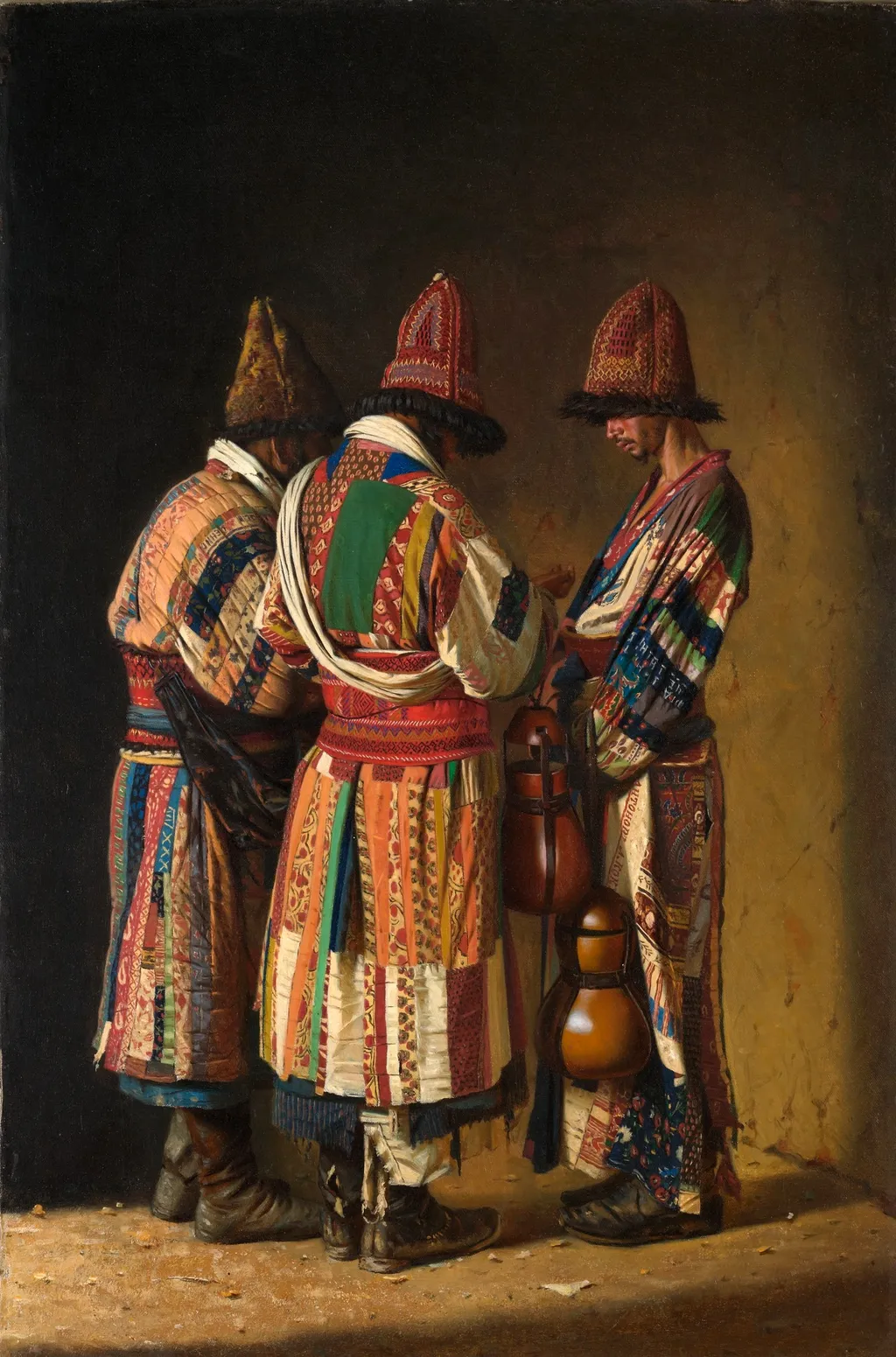
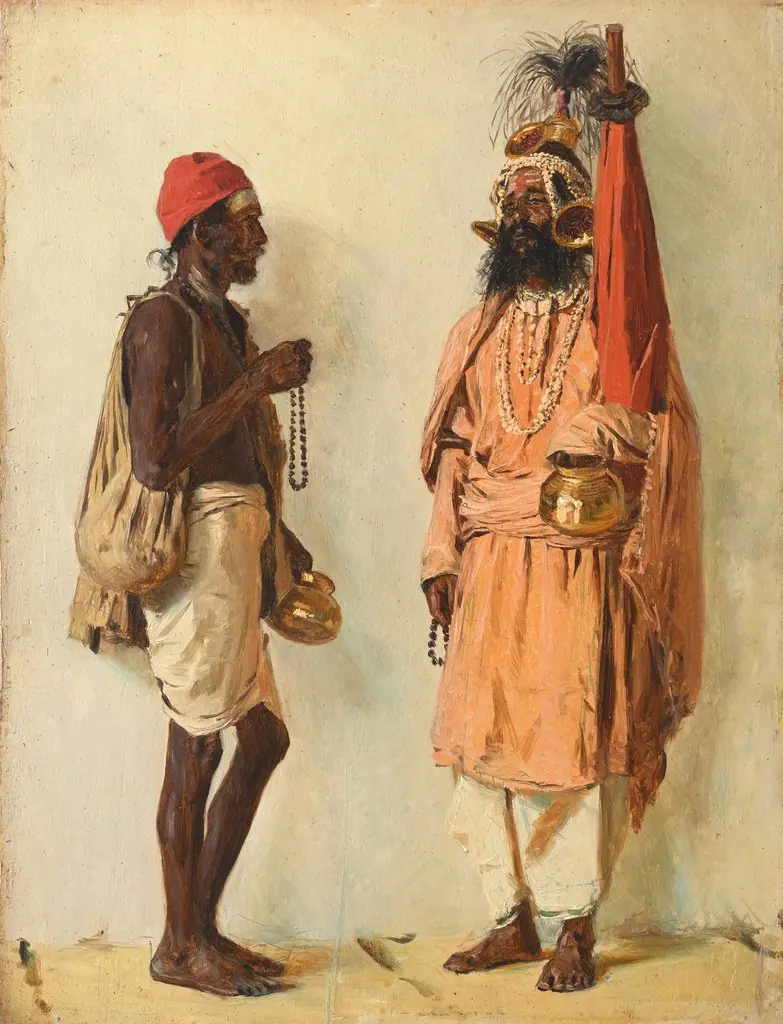
Dervishes in Festive Dress. Tashkent is an oil painting by the Realist artist Vasily Vereshchagin. It dates from 1870 and is held in the collection of the Tretyakov Gallery.
About this work
Overview
Painted in 1870 by Russian artist Vasily Vereshchagin, this oil-on-canvas work captures a quiet moment among dervishes in Tashkent.
Painted in 1870 by Russian artist Vasily Vereshchagin, this oil-on-canvas work captures a quiet moment among dervishes in Tashkent. Part of Vereshchagin’s broader engagement with Central Asian cultures during his travels, the painting reflects his commitment to observational realism rather than romanticized exoticism. It is held in the Tretyakov Gallery’s collection, where it contributes to a body of work documenting life beyond imperial Russia.
Subject & Meaning
The painting portrays three dervishes standing in a row, facing right, their backs turned to the viewer. Their ceremonial robes, richly patterned in red, blue, green, and yellow, suggest ritual significance, while their stillness implies introspection or quiet communion. The absence of overt action or narrative context invites contemplation of spiritual practice, grounded in the dignity of everyday religious life rather than theatrical spectacle.
Technique & Style
Vereshchagin employs a restrained palette for the background, using warm earth tones to subtly recede behind the figures’ vivid garments. The textures of the robes are rendered with careful brushwork, emphasizing intricate embroidery and fabric folds without hyperdetail. Light falls evenly across the scene, avoiding dramatic contrast, reinforcing the painting’s calm, observational tone characteristic of his realist approach.
History & Provenance
Created during Vereshchagin’s journey through Russian Central Asia in the late 1860s, the painting emerged from his firsthand encounters with local communities. It was acquired by Pavel Tretyakov for his growing collection of Russian art, reflecting a growing interest in ethnographic subjects within national galleries. The work has remained in the Tretyakov Gallery since its acquisition, with no documented changes in ownership.
Context
Vereshchagin painted this during a period when Russian imperial expansion brought increased contact with Central Asian cultures. Unlike many contemporaries who depicted the region through a lens of conquest or exoticism, he sought to record daily life with neutrality. This work aligns with his broader effort to present non-Russian peoples not as subjects of empire, but as individuals within their own cultural frameworks.
Legacy
Though less known than his war scenes, this painting exemplifies Vereshchagin’s dedication to visual ethnography. It stands as a quiet counterpoint to imperial narratives, offering a respectful glimpse into Sufi practice in 19th-century Tashkent. Its inclusion in the Tretyakov Gallery underscores its role in shaping Russian art’s engagement with cultural diversity beyond its borders.
Own this work as a print
Artist & collection
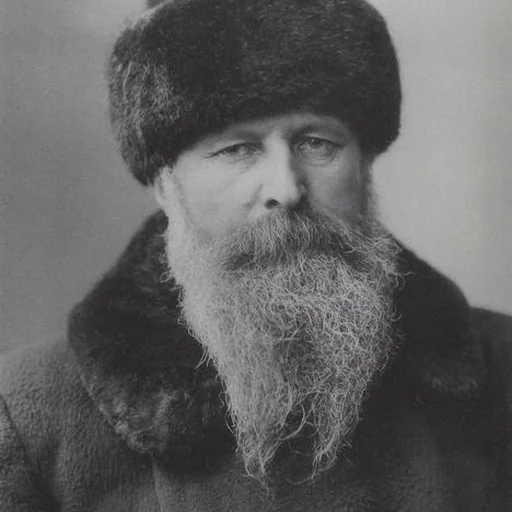
Artist
Vasily Vasilyevich Vereshchagin (Russian: Васи́лий Васи́льевич Вереща́гин; 26 October 1842 – 13 April 1904) was a Russian painter, war artist, and traveller.