Artwork
Air
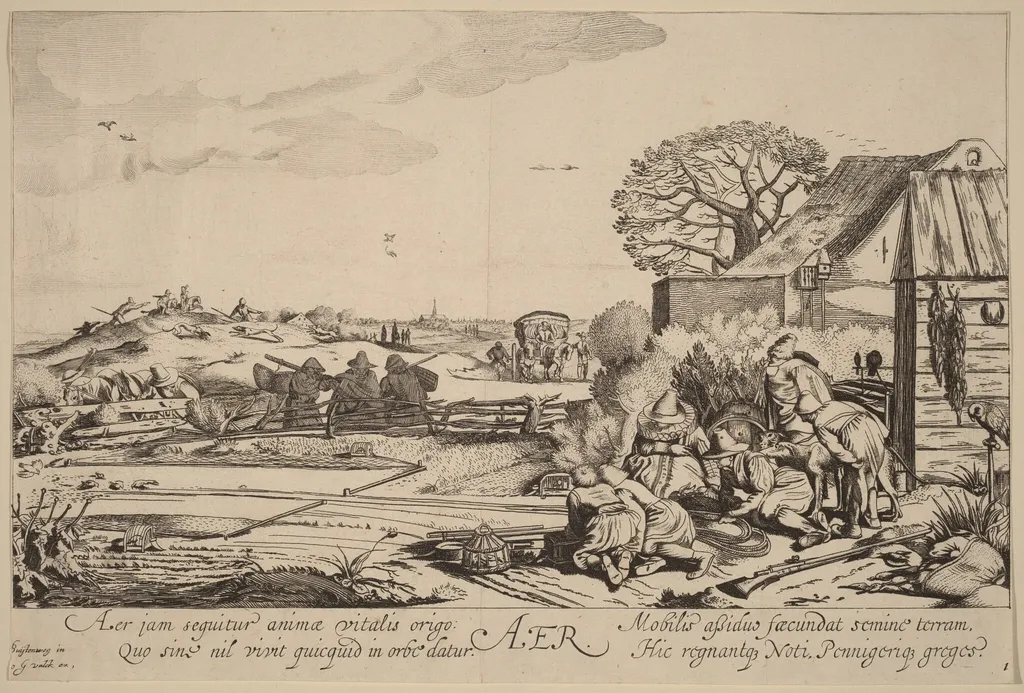
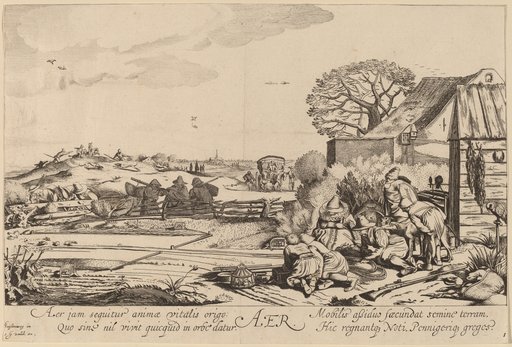
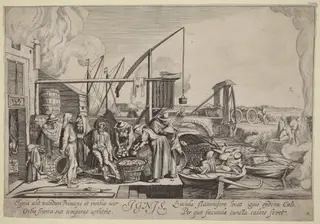
Air is an ink print by the Renaissance artist Velde, Jan van de, II. It dates from 1617 and is held in the collection of the National Gallery of Art.
About this work
Overview
His work in etching emphasized quiet observation over dramatic narrative, aligning with broader trends in Northern European print culture of the period.
Jan van de Velde the Younger produced the etching Air in 1617, part of a series exploring the classical elements. A printmaker and painter active during the Dutch Golden Age, he came from a family of artists and specialized in landscapes and rural scenes. His work in etching emphasized quiet observation over dramatic narrative, aligning with broader trends in Northern European print culture of the period.
Subject & Meaning
The scene depicts a tranquil rural moment: figures gather near a small fire, one seated, another standing, surrounded by gentle hills and scattered trees. Birds in flight suggest movement within stillness. The composition avoids grandeur, instead honoring everyday life in the countryside.
The title Air may allude to the atmosphere of the moment, light, open, and unforced, rather than a literal representation of the element.
Technique & Style
Van de Velde employed fine, controlled etching lines to render texture and depth with subtlety. The muted palette of browns and greens, achieved through ink tonality rather than color, enhances the quiet mood. Details in clothing, foliage, and terrain are rendered with precision but without embellishment.
The composition’s balance and restrained line work reflect a deliberate, observational approach characteristic of Dutch printmaking at the time.
History & Provenance
Created in 1617, Air belongs to an early phase of Van de Velde’s career, before his move to Amsterdam. It was likely produced for a niche market of collectors interested in landscape prints. The work survives in several institutional collections, though its early ownership records remain sparse. Its survival reflects the growing appreciation for small-scale, naturalistic prints among Dutch urban elites.
Context
In early 17th-century Holland, landscape and genre scenes gained prominence as subjects worthy of artistic attention. Van de Velde’s work emerged alongside other printmakers who turned away from religious or mythological themes toward the observable world. His etchings contributed to a visual culture that valued quietude, local detail, and the dignity of ordinary life in the Dutch countryside.
Legacy
Though less widely known than contemporaries like Rembrandt, Van de Velde’s etchings influenced later generations of Dutch printmakers through their emphasis on naturalism and compositional restraint. Air exemplifies a quiet, enduring strand of Dutch art that prioritized atmosphere over spectacle. His family’s multi-generational practice helped sustain printmaking as a respected artistic discipline throughout the century.
Own this work as a print
Artist & collection
Artist
Jan van de Velde the younger (1593 – c. 1 November 1641) was a Dutch Golden Age painter and printmaker, mostly of animal, landscape and still-life subjects. He was the son of Jan van de Velde the Elder and the father of…

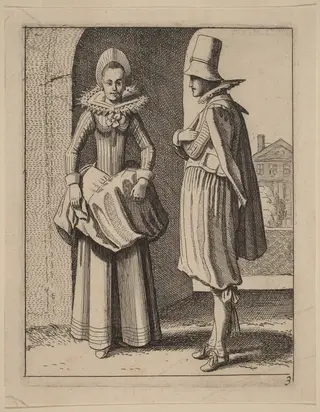
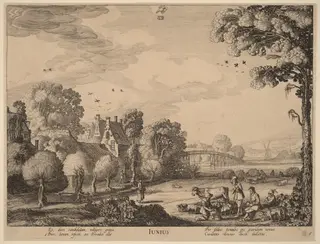
- Lakeside Village with Herdsmen
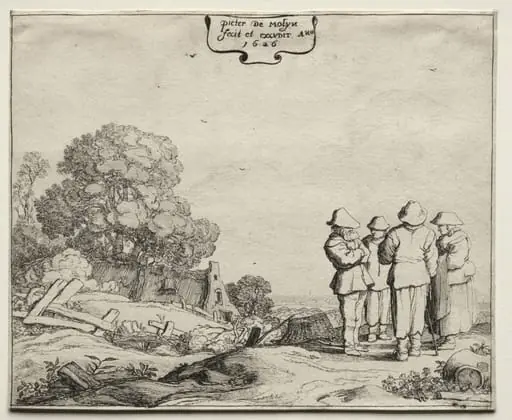 Landscape with Four Peasants Conversing
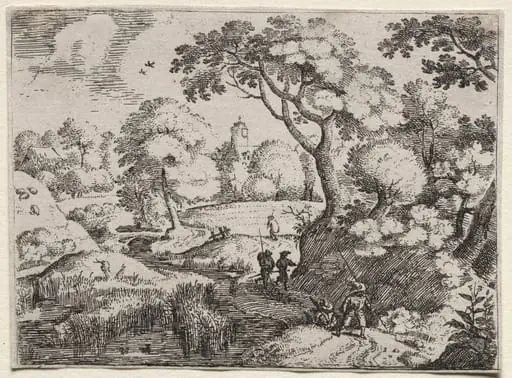 Six Landscapes: Path Between Swamp and Wooded Bank
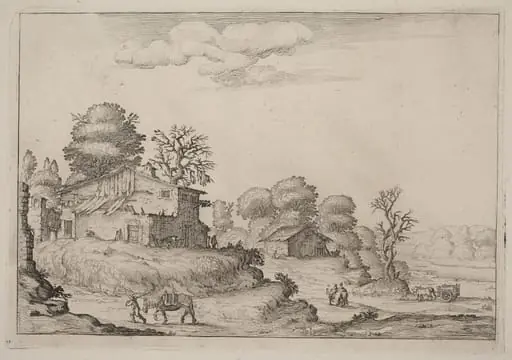 Rustic Landscape with Peasants and Horses
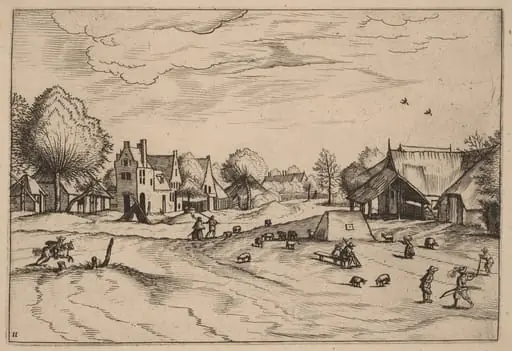 Country Village with Sheep and Sitting Shepherd
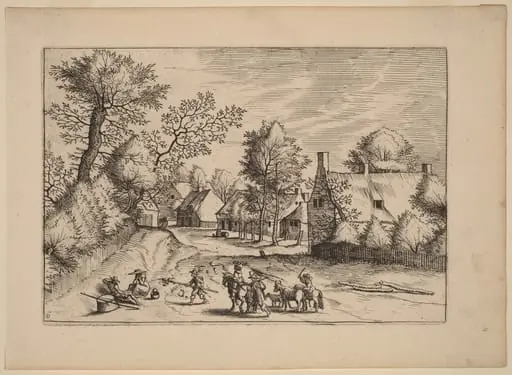 Village Road
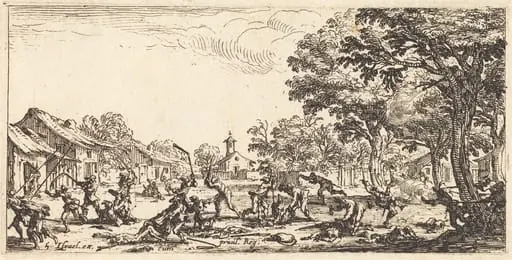 The Peasants' Revenge
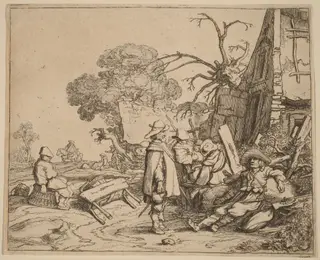 Soldier Receiving an Order from a Sitting Officer
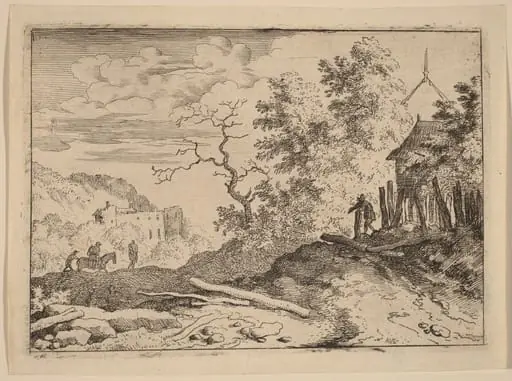 Hut with the Remains of a Hedge
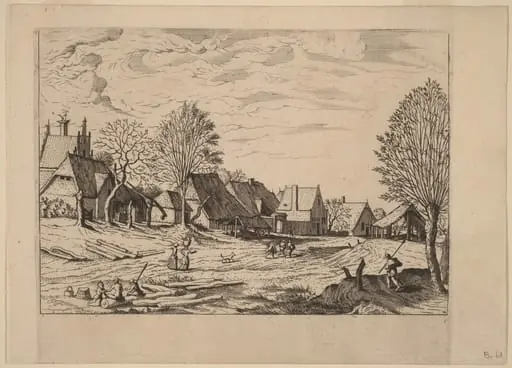 Village Street
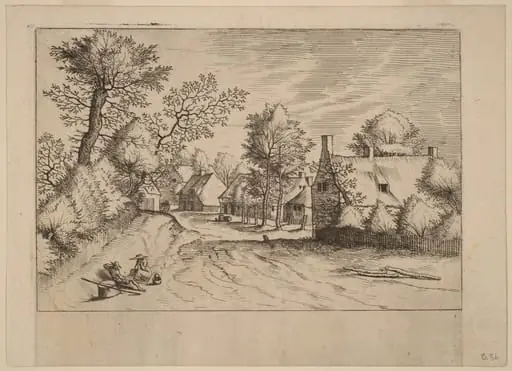 Village Road
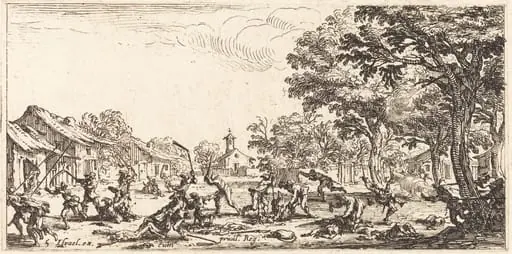 The Peasants' Revenge