Artist
Velde, Jan van de, II
Kingdom of the Netherlands
Velde, Jan van de, II is a Kingdom of the Netherlands Baroque artist. 54 works are cataloged here, principally at National Gallery of Art.
Jan van de Velde the younger (1593 – c. 1 November 1641) was a Dutch Golden Age painter and printmaker, mostly of animal, landscape and still-life subjects. He was the son of Jan van de Velde the Elder and the father of the still life painter Jan Jansz van de Velde.
Overview
Jan van de Velde the younger (1593, c. 1 November 1641) was a Dutch Golden Age painter, draftsman, and printmaker whose prolific output in etching and engraving established him as one of the most productive graphic artists of Haarlem in the early seventeenth century. Born in either Rotterdam or Delft to the Antwerp calligrapher Jan van de Velde the Elder, he trained under the engraver Jacob Matham before entering the Haarlem Guild of St. Luke in 1614. While he produced paintings of animals, landscapes, and still lifes, his reputation rests primarily on his prints, which number in the hundreds and span portraits, genre scenes, allegories, and book illustrations. He was also the father of Jan van de Velde III, a still life painter whom he taught, and his work influenced major contemporaries including Rembrandt.
Biography & dates
Jan van de Velde was born in 1593 in Rotterdam or Delft to Jan van de Velde the Elder, a calligrapher from Antwerp who had relocated to the northern Netherlands in 1592 to escape religious persecution, and Maijcken Van Bracht from Turnhout. He was raised in Rotterdam and in 1613 was apprenticed to the engraver Jacob Matham in Haarlem. The following year, 1614, he became a member of the Haarlem Guild of St. Luke. Within the next three years he produced over one hundred prints, an extraordinary rate of production that placed him among the most active artists in the city.
In 1616 he executed a series of 26 landscape drawings of Haarlem, which he later expanded to 60 prints. He may have traveled to Italy in 1617, and by 1618 he was documented in Enkhuizen, where he married Styntje Frederixdr. From 1635 he served as a commissioner of the guild, but his traces disappear after 1636 until he resurfaced in Enkhuizen, where he lived until his death around 1 November 1641. He was buried in Enkhuizen on 4 November 1641.
Style & movement
Van de Velde worked across multiple genres QS genres, but his most significant contribution lay in printmaking, particularly etching. He was among the earliest Dutch artists to experiment with the etching technique, alongside Esaias van de Velde and Willem Pietersz. Buytewech, seeking new tonal effects and atmospheric qualities in landscape prints. To achieve this, they abandoned long contour lines in favor of small strokes and dots. His graphic work encompassed portraits, landscapes, allegories, contemporary life scenes, and book illustrations for descriptive texts, poetry, fables, and song collections. The French source credits him with being among the first to experiment with aquatint, a tonal etching method, though this claim requires qualification and the technique was later developed more fully by Jean-Baptiste Le Prince in France. In his later career he also produced prints after designs by other artists, including Frans Hals, Pieter de Molyn, and Pieter Jansz Saenredam.
Major works
Van de Velde's most significant project was his series of Haarlem views, begun in 1616 with 26 landscape prints and expanded three decades later to 60 prints. The majority of these are preserved in the North Holland Archives. The series proved commercially successful, as evidenced by a 1674 advertisement in the Haarlems Dagblad offering 36 folio copper plates and three sketchbooks by Jan van de Velde for sale following the death of his publisher Passchier van Wesbusch. His print catalogue numbers approximately five hundred works. The North Holland Archives also hold a few prints from a related series of 12 local landscapes by Esaias van de Velde, suggesting possible collaboration between the two working on this project.
Influences & students
Van de Velde received his training from Jacob Matham in Haarlem, entering his workshop in 1613. His own work was influenced by Rembrandt van Rijn, and in turn his graphic style influenced other masters in the landscape genre. The exact nature of his relationship to Esaias van de Velde has been debated: some sources, following Houbraken, describe them as brothers, while other scholars, including John Denison Champlin, identify Esaias as his cousin. The Dutch Encyclopedia now considers it more likely that they were cousins rather than brothers. Van de Velde was also not related to the family of Willem van de Velde the Elder, despite occasional claims to the contrary. He taught his own son, Jan van de Velde III (1620-1662), who became a still life painter. The French source notes that he trained several pupils, though their names are not specified.
Legacy
Van de Velde's posthumous reputation rests on his extraordinary productivity as a printmaker and his role in advancing etching techniques in the Dutch Golden Age. His works are held in numerous museums across Europe and the United States. The 1883 catalogue of his oeuvre by Johan Philip van der Kellen and Daniel Franken remains a foundational reference. His works have been discussed in major exhibition contexts, including The Metropolitan Museum of Art's "Vermeer and The Delft School" exhibition catalogue. The 1674 sale of his publisher's stock indicates continued commercial interest in his plates decades after his death.
Works by Velde, Jan van de, II
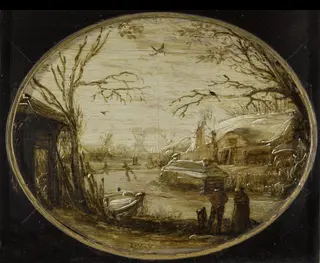 Winter landscape
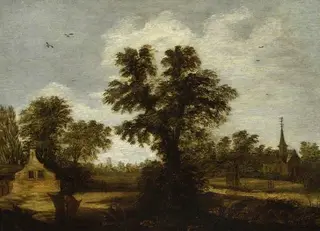 Landscape
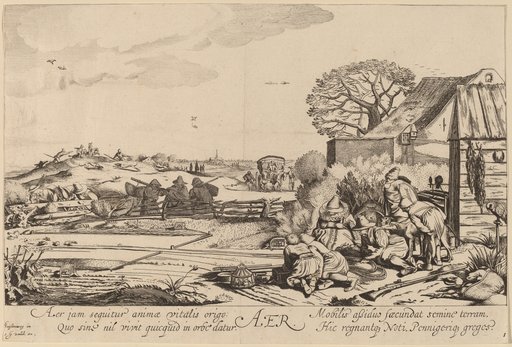
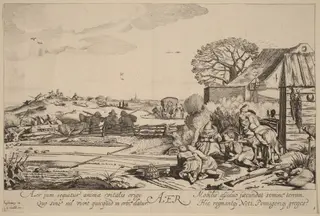 Air
Air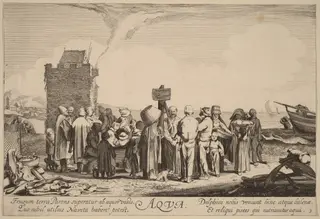 Water
Water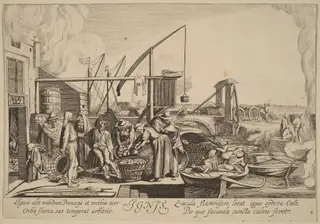 Fire
Fire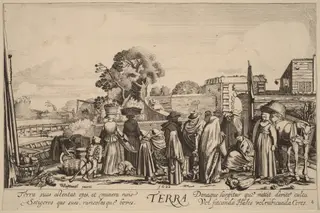 Earth
Earth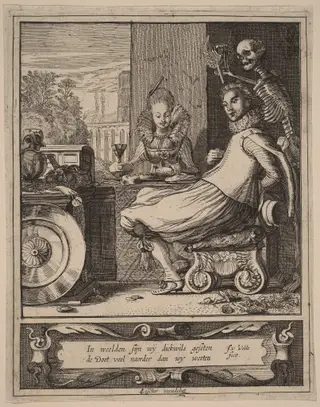 Death Taking a Couple by Surprise
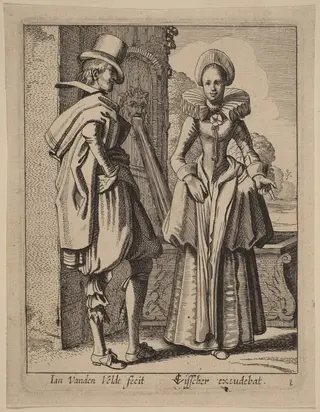 Two Figures in Costume
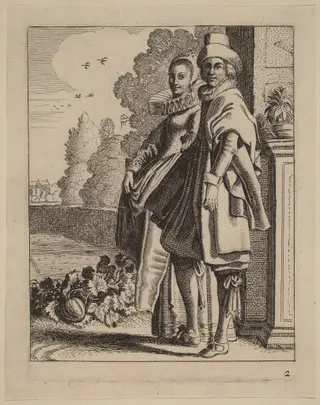 Two Figures in Costume
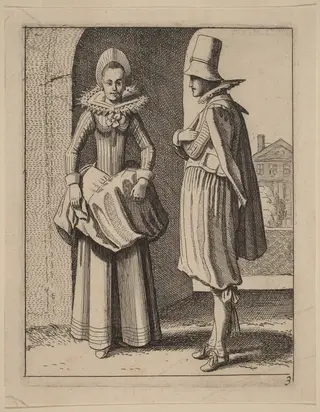 Two Figures in Costume
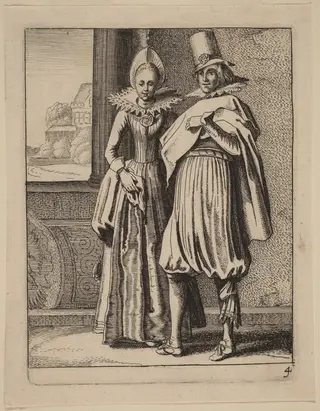 Two Figures in Costume
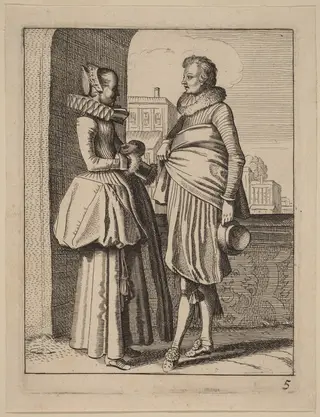 Two Figures in Costume
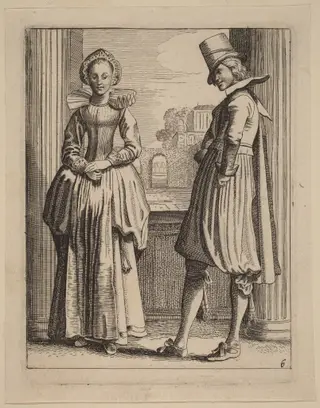 Two Figures in Costume
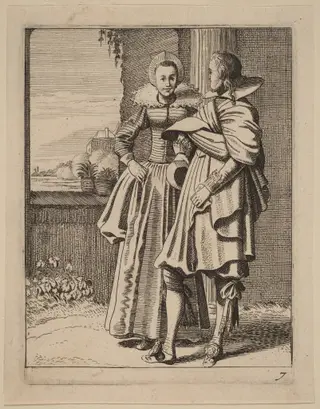 Two Figures in Costume
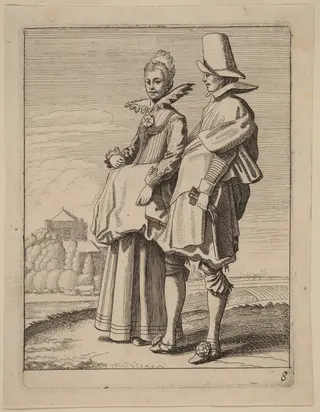 Two Figures in Costume
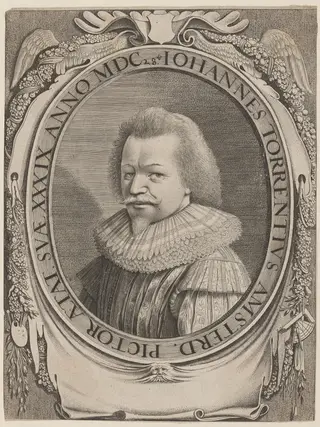 Johannes Torrentius, Dutch Painter
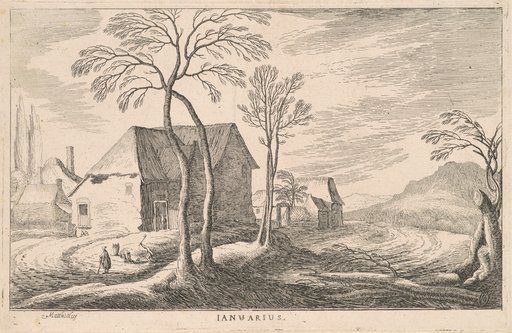
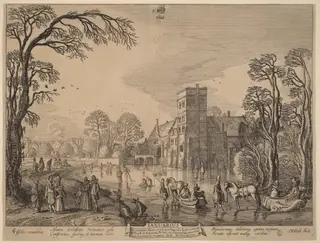 January
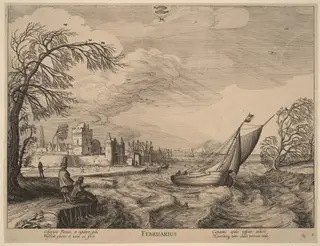 February
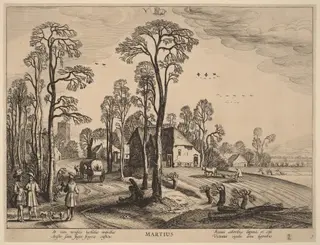 March
March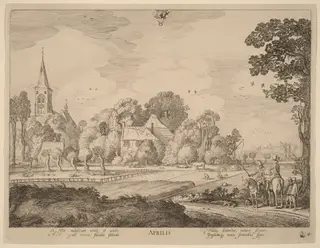 April
April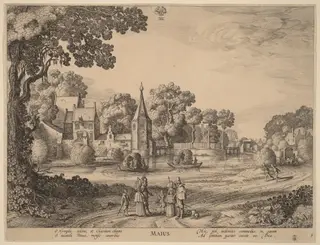 May
May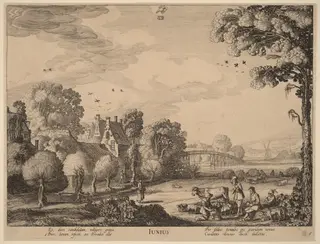 June
June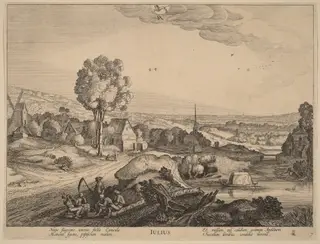 July
July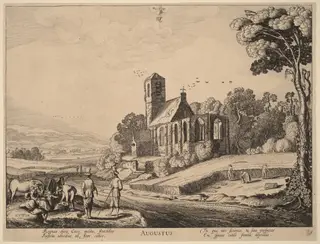 August
54 works in the catalog · 24 shown
Collections represented


Artists in a similar vein