Artwork
April
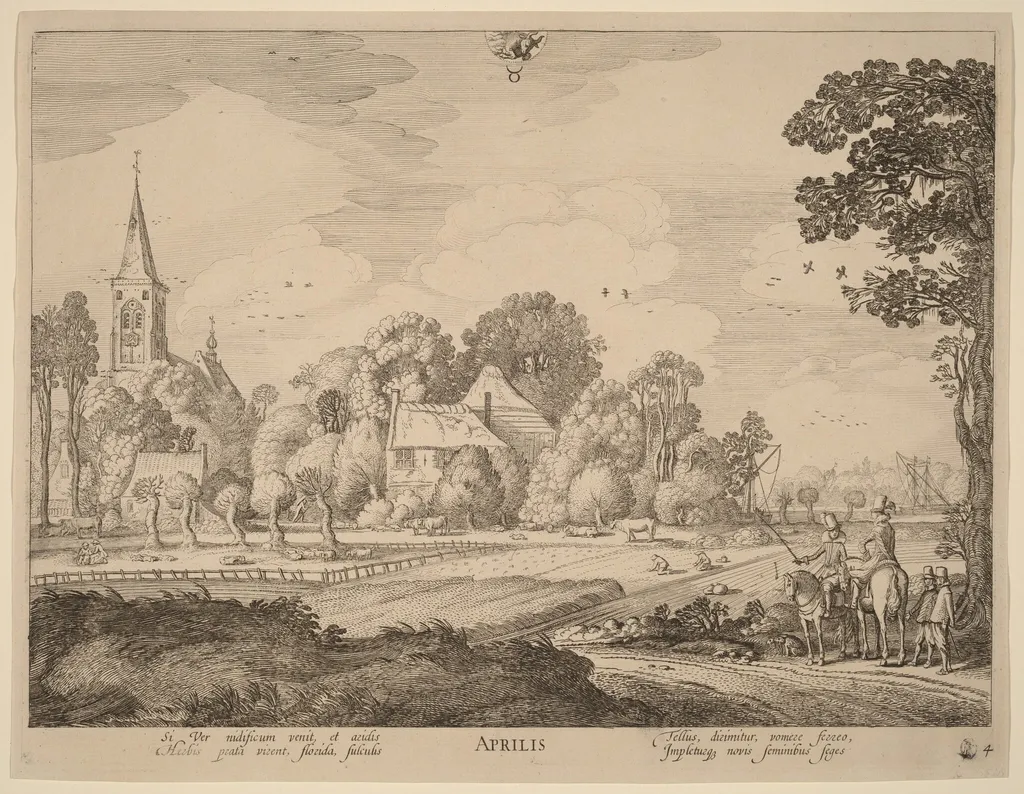
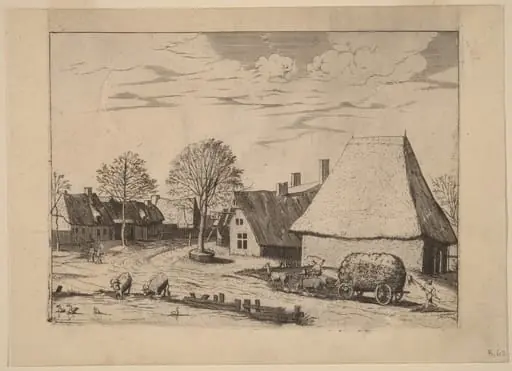
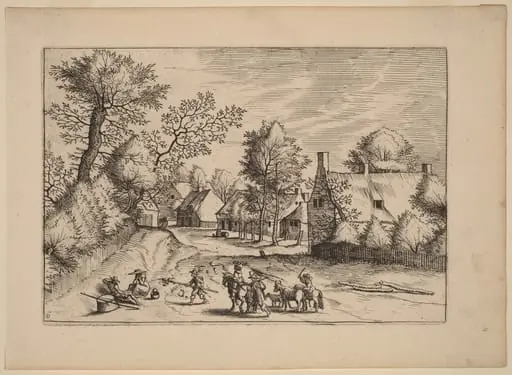
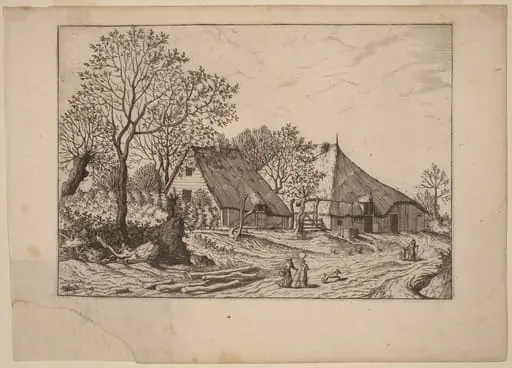
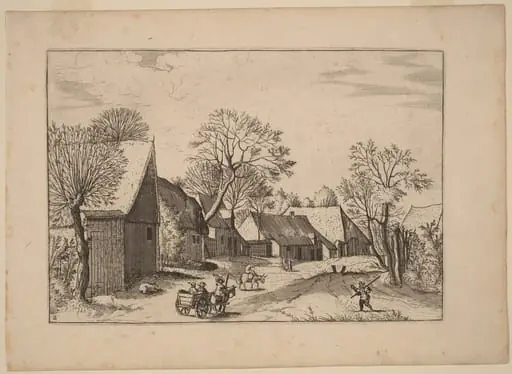
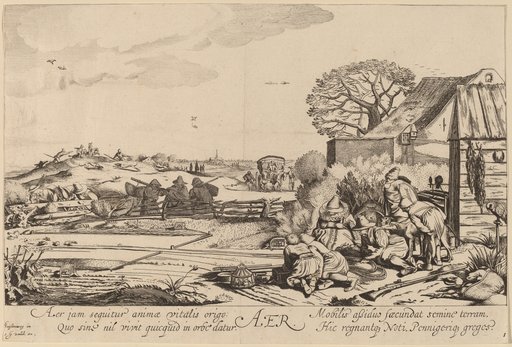
April is an ink print by the Renaissance artist Velde, Jan van de, II. It dates from 1617 and is held in the collection of the National Gallery of Art.
About this work
Overview
Jan van de Velde the Younger produced the etching April in 1617 as part of a monthly series.
Jan van de Velde the Younger produced the etching April in 1617 as part of a monthly series. A Dutch artist active during the Golden Age, he specialized in landscapes and genre scenes, inheriting his artistic lineage from his father and later passing it to his son. This print, rendered in fine linear detail, captures a rural riverside setting with quiet precision, reflecting the seasonal theme through everyday activity rather than symbolic imagery.
Subject & Meaning
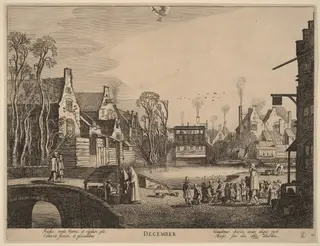
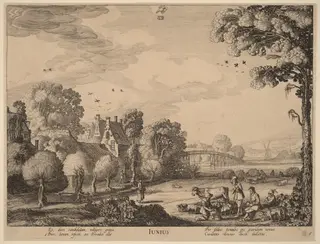
The scene depicts a tranquil village beside a river in early spring. Figures walk along a path, fish from the bank, and tend to a small boat, suggesting seasonal labor or leisure. A church steeple rises above clustered dwellings, anchoring the composition in community life.
The Latin inscription identifies the month, positioning the image within a calendrical cycle, likely intended as a visual calendar for domestic or scholarly use.
Technique & Style
Van de Velde employed fine, controlled etching lines to model form and atmosphere. The texture of foliage, water, and stone is suggested through delicate hatching and crosshatching, creating depth without heavy shading. The composition balances foreground activity with distant architecture, using atmospheric perspective to recede the landscape. The monochrome palette emphasizes tonal gradation, characteristic of Dutch printmaking of the period.
History & Provenance
Created in 1617, April belongs to a now-dispersed series of twelve etchings representing the months. While the full set’s original patronage is undocumented, such series were circulated among collectors and used as decorative or educational tools. The print survives in multiple institutional collections, indicating its early circulation and enduring interest among connoisseurs of Dutch graphic art.
Context
In early 17th-century Holland, printed series depicting the seasons or labors of the months were popular, aligning with humanist interests in order and nature. Van de Velde’s work reflects this trend, drawing from Flemish and Dutch traditions of landscape printmaking. Unlike allegorical representations, his approach favors observed reality, mirroring the period’s growing emphasis on empirical detail and daily life.
Legacy
Van de Velde’s April exemplifies the quiet realism that defined Dutch print culture. Though less celebrated than contemporaries like Rembrandt, his technical finesse influenced later generations of etchers. The monthly series, while not widely known today, contributed to the normalization of landscape and genre subjects in print, helping shift artistic focus from religious narrative to secular observation.
Own this work as a print
Artist & collection
Artist
Jan van de Velde the younger (1593 – c. 1 November 1641) was a Dutch Golden Age painter and printmaker, mostly of animal, landscape and still-life subjects. He was the son of Jan van de Velde the Elder and the father of…