Artwork
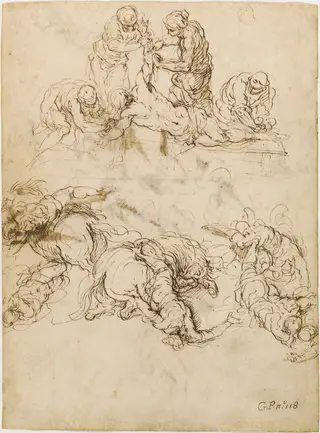
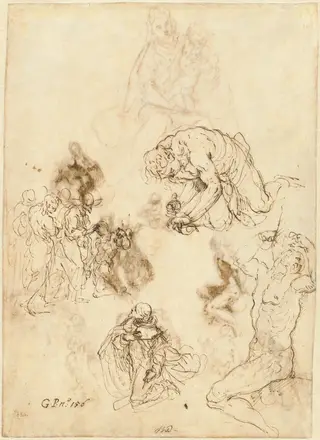
Studies for Judith and Holofernes, David and Goliath, The Finding of Moses, and Others [recto]
![Studies for Judith and Holofernes, David and Goliath, The Finding of Moses, and Others [recto], by Veronese, ink, 1582](https://artifactworldgallery.com/img/veronese--studies-for-judith-and-holofernes-david-and-goliath-the-find--e7509a7c8dd48fbb-w1024.webp)
Studies for Judith and Holofernes, David and Goliath, The Finding of Moses, and Others [recto] is an ink drawing by the Renaissance artist Veronese. It dates from 1582 and is held in the collection of the National Gallery of Art.
- Inscription
- Inscribed:recto: inscribed at upper left in pen and brown ink in the hand of Marcantonio Gandini: Al molto Mag[nifi]co S[igno]r Paulo/Caliari Veronese comp[ar]e et/S[igno]r/mio col[endissi]mo/Venezia/con un rotolo di br[accia] 12 1/2 Ratta gottonata nera/A S. Samuel presso la fabrica/nova da ca mozenigo; in another hand at upper center, upside down: P:no:44; at upper right in pen and brown ink: una Giudite ch[e] talia la testa Aholofe; upper center in pen and brown ink: Per[?] un prespio; center right in pen and brown ink: Nano;c L //in pen and brown ink at left (to the left of a standing female figure): per Lazzaro [?]; verso:inscribed at top in the hand of Marcantonio Gandini: Mag[nifi]co S[igno]r Comp[ar]e/Mando a V[ostra] S[ignoria] li br[accia] 12 1/2 rassa, la/quale credo piacerà à cui/deve adoperarla; se in altro posso servirla ella mi comandi/et di core la saluto. Di trivigi a 18 7[em]bre 1582. D[i] V[ostra] S[ignoria]/Comp[are] aff[etuossissi]mo/+3/REMI Marc Ant[oni]o Gandino/pro 50 stampa a la sua spesa 100 folli che/sarano Carte 50. In another hand at lower left in brown ink: Paolo Veronese
- Markings
- Marked:recto: Emile Wauters (Lugt 911)
About this work
Overview
Created around 1582, this drawing by Paolo Veronese serves as a preparatory study for several biblical narratives, including the episodes of Judith and Holofernes, David and Goliath, and the Finding of Moses. Executed on laid paper with pen, brown ink and a brown wash, the sheet records the artist’s rapid compositional experiments before committing to a final painting.
Subject & Meaning
By arranging these motifs together, Veronese explored narrative dynamics and emotional intensity across varied scriptural themes.
The sketch juxtaposes fragments of three distinct stories: a figure brandishing a sword suggests Judith’s decisive moment; a clustered group surrounding a fallen form evokes the aftermath of David’s triumph over Goliath; and a gathering near a child hints at the discovery of the infant Moses. By arranging these motifs together, Veronese explored narrative dynamics and emotional intensity across varied scriptural themes.
Technique & Style
Veronese employed loose, gestural lines and swift hatching to map out poses and spatial relationships. The brown ink, diluted to a wash, creates tonal variation reminiscent of tea‑stained paper, while the pen work captures fleeting gestures. Marginal annotations, likely identifying each study, reveal a working process that prioritizes spontaneity over finish.
History & Provenance
The drawing originates from Veronese’s late Florentine period, a time when he was preparing large‑scale commissions for Venetian patrons. Though the sheet is unsigned, stylistic analysis and the dating to c.1582 align it with other known preparatory materials from his workshop. Its survival on laid paper suggests it was retained as a reference rather than discarded after the final paintings were completed.
Context
In the late sixteenth century, artists routinely produced multiple sketches to resolve compositional challenges for complex biblical scenes. Veronese’s approach reflects the broader practice of using quick studies to experiment with figure interaction, lighting, and narrative focus before executing the monumental canvases that would adorn churches and palaces.
Legacy
While not a finished artwork, the drawing offers insight into Veronese’s creative methodology and his capacity to synthesize diverse biblical episodes within a single preparatory sheet. It remains a valuable resource for scholars examining the artist’s draftsmanship and the iterative nature of Renaissance workshop practices.
![Studies for the Raising of Lazarus and Other Compositions [verso]](https://artifactworldgallery.com/img/veronese--studies-for-the-raising-of-lazarus-and-other-compositions-ve--f0c658fb1c49844f-w320.webp)
Own this work as a print
Artist & collection


 The Martyrdom of Saint Bartholomew; The Conversion of Saint Paul
 Studies of Christ Healing the Blind Man, Saint Philip Benizzi, and Saint Sebastian
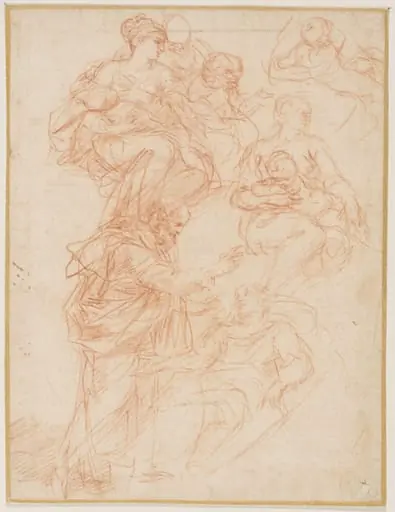 St Peter healing the lame man
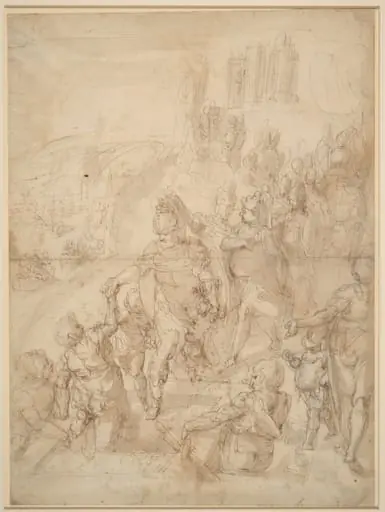 The Embarkation of Aeneas from the Ceraunian Headland
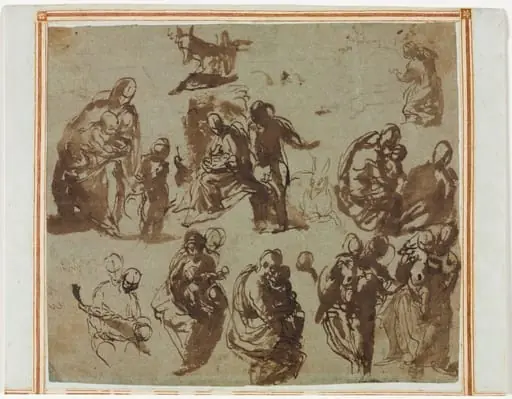 Various Sketches of the Madonna and Child (recto)
![Various Sketches of the Madonna and Child (recto); Architectural Studies (verso) [partially visible on recto], by Paolo Veronese](https://artifactworldgallery.com/img/paolo-veronese--various-sketches-of-the-madonna-and-child-recto-architectura--90586edfc8e8efd5-w320.webp) Various Sketches of the Madonna and Child (recto); Architectural Studies (verso) [partially visible on recto]
Various Sketches of the Madonna and Child (recto); Architectural Studies (verso) [partially visible on recto]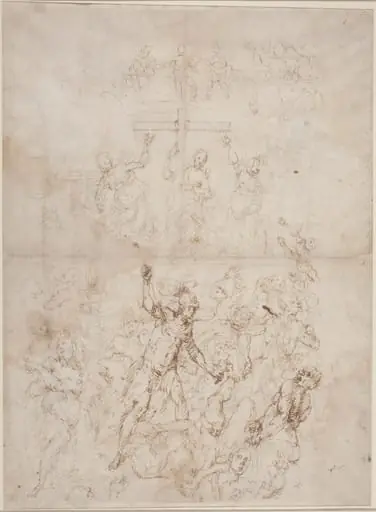 The Last Judgment
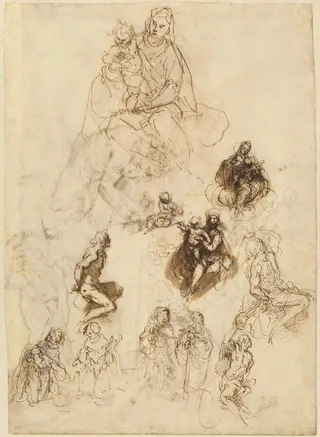 Studies of the Virgin and Child with Saints
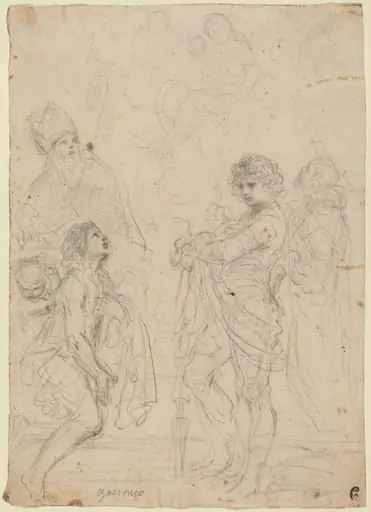 Madonna and Child with Saints Gimignano, John the Baptist, George and Peter Martyr
![Presentation of the Virgin in the Temple [verso], by Antonio Zanchi](https://artifactworldgallery.com/img/antonio-zanchi--presentation-of-the-virgin-in-the-temple-verso--450080eaf8685583-w320.webp) Presentation of the Virgin in the Temple [verso]
Presentation of the Virgin in the Temple [verso]