Artwork
Battle of the Lapiths and Centaurs
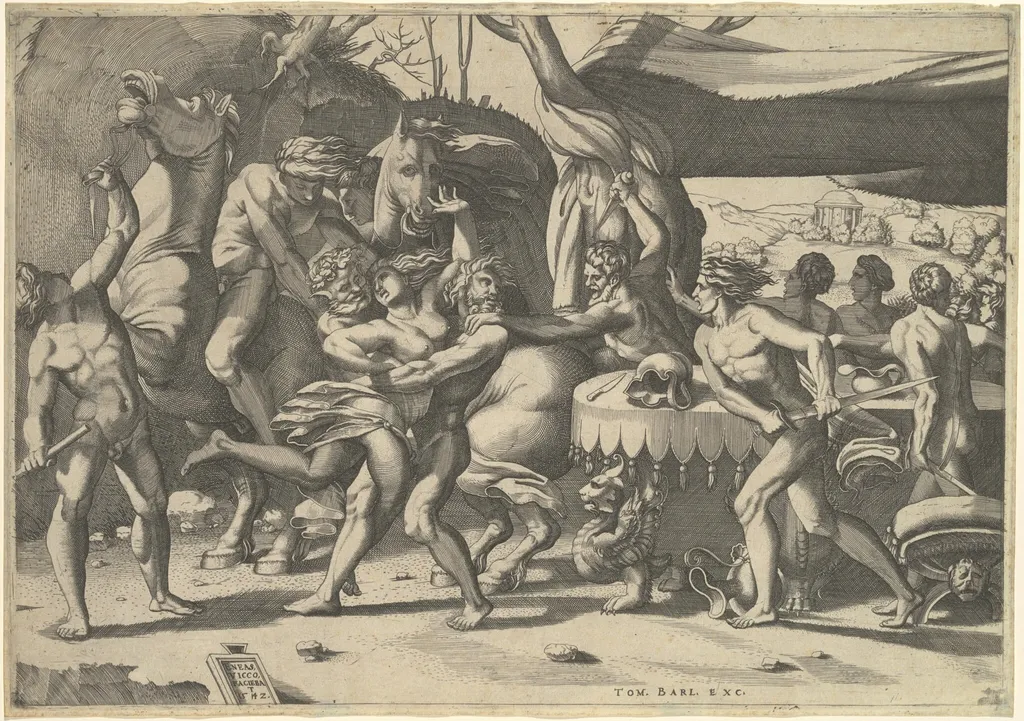
Battle of the Lapiths and Centaurs is an ink print by the Renaissance artist Enea Vico. It dates from 1542 and is held in the collection of the National Gallery of Art.
- Inscription
- Inscribed:lower left in image: ENEAS. / VICCO. / FACIEBA / T / 1542. ; lower right in plate: TOM. BARL. EXC.
About this work
Overview
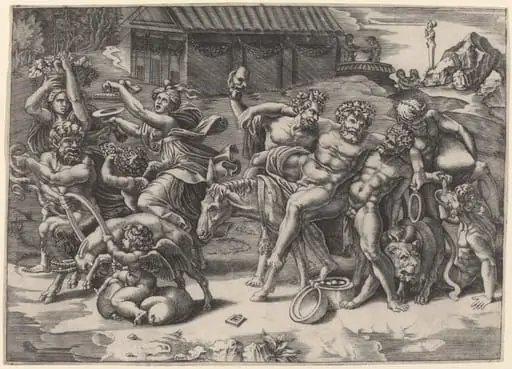
Enea Vico’s 1542 engraving, Battle of the Lapiths and Centaurs, presents a tumultuous clash between mythic centaurs and human warriors. Executed on laid paper, the print captures a dense, wooded battlefield where figures wield swords, shields, and spears amid a tangle of trees and rocks. The composition is dominated by vigorous movement and a stark contrast of human and animal forms.
Subject & Meaning
The scene draws on the classical myth of the Lapiths’ fight with the invading centaurs, a narrative traditionally used to symbolize the struggle between civilization and barbarism. Vico’s depiction emphasizes the chaos of combat, highlighting the physicality of both sides and suggesting a moral dichotomy between ordered human society and untamed bestial forces.
Technique & Style
Vico employs fine cross‑hatching and intricate line work to render texture, depth, and the play of light across the figures. The engraving’s meticulous detailing of musculature, armor, and foliage creates a three‑dimensional effect on the flat surface of laid paper. His handling of line conveys both the kinetic energy of the battle and the atmospheric density of the forest setting.
History & Provenance
Created in Vico’s early career while he was active in Parma and later Ferrara, the print reflects his reputation for adapting classical motifs. The work entered the National Gallery of Art in Washington, where it remains part of the museum’s collection of 16th‑century Italian prints. Vico died in Ferrara in 1567.
Context
Vico worked for prominent patrons such as Cosimo I de’ Medici and Alfonso II, Duke of Ferrara, producing engravings that often echoed antique paintings. This piece aligns with the Renaissance revival of mythological subjects and the period’s interest in translating monumental narrative scenes into portable, reproducible formats for elite collectors.
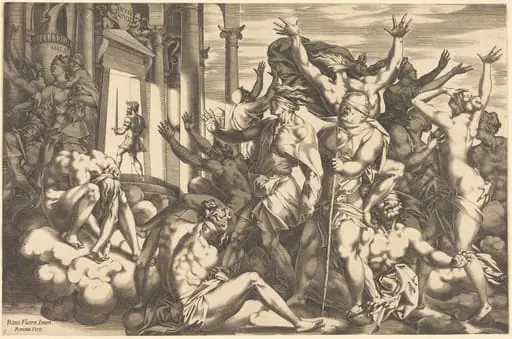
Own this work as a print
Artist & collection

Artist
Enea Vico (29 January 1523 – 18 August 1567) was an Italian engraver. Vico was born in Parma. He specialized in grotesque engravings based on antique paintings. Vico made engravings for Cosimo I de' Medici, Grand Duke…

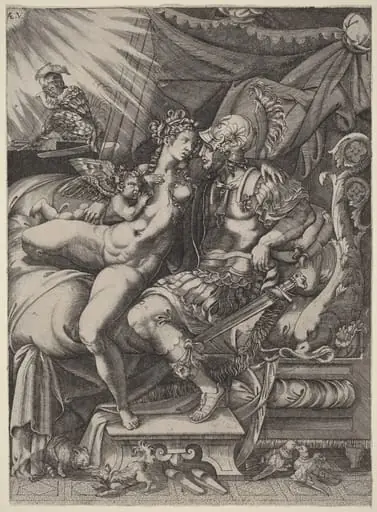 The Loves of Mars and Venus
![Fragments from Ancient Cameos in the Grimani Collection [Plate I], by Enea Vico](https://artifactworldgallery.com/img/enea-vico--fragments-from-ancient-cameos-in-the-grimani-collection-plat--1f564c058ab46ade-w320.webp) Fragments from Ancient Cameos in the Grimani Collection [Plate I]
Fragments from Ancient Cameos in the Grimani Collection [Plate I]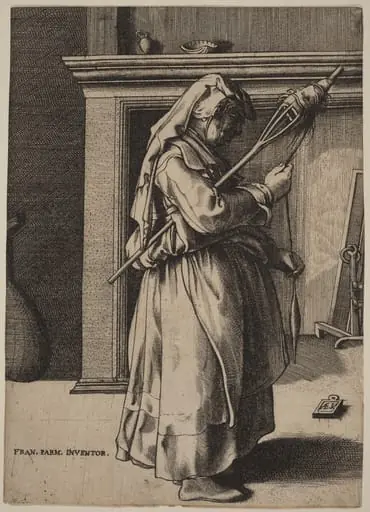 Old Woman with a Distaff
![Fragments from Ancient Cameos in the Grimani Collection [Plate II], by Enea Vico](https://artifactworldgallery.com/img/enea-vico--fragments-from-ancient-cameos-in-the-grimani-collection-plat--6333de7ba7491db7-w320.webp) Fragments from Ancient Cameos in the Grimani Collection [Plate II]
Fragments from Ancient Cameos in the Grimani Collection [Plate II]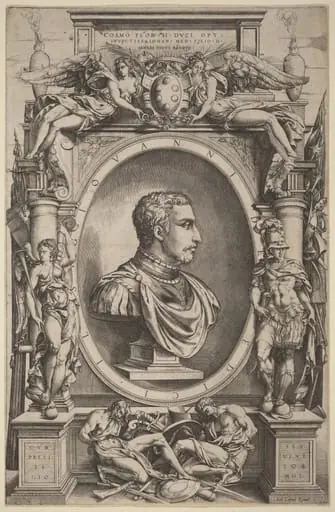 Giovanni de' Medici
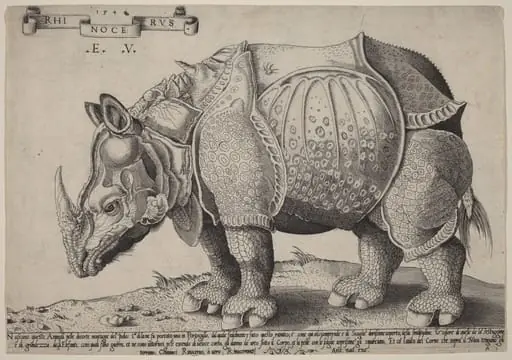 Rhinoceros
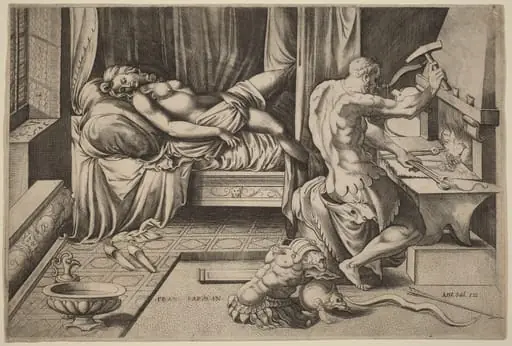 Venus Reclining with Vulcan at His Forge
![Fragments from Ancient Cameos in the Grimani Collection [Plate III], by Enea Vico](https://artifactworldgallery.com/img/enea-vico--fragments-from-ancient-cameos-in-the-grimani-collection-plat--bf2c0f15852500f8-w320.webp) Fragments from Ancient Cameos in the Grimani Collection [Plate III]
Fragments from Ancient Cameos in the Grimani Collection [Plate III]