Artwork
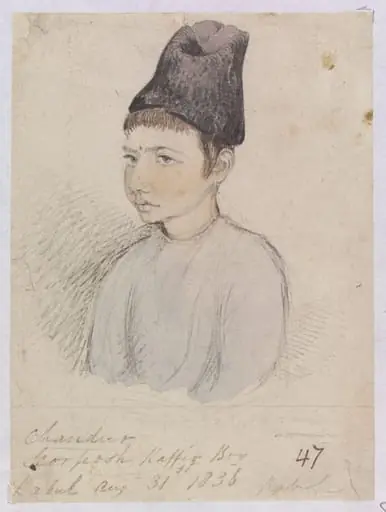
Kaffir Slave Kabul
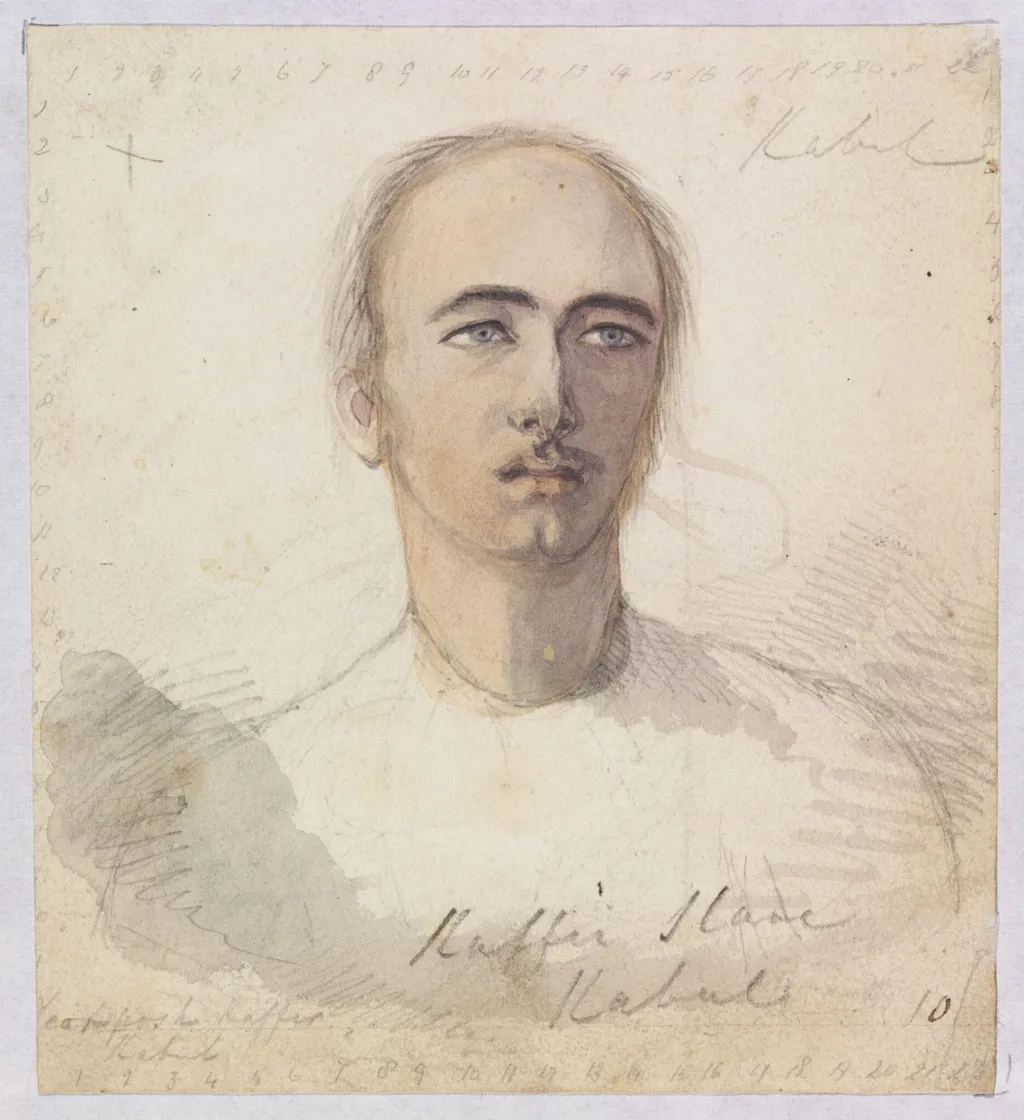
Kaffir Slave Kabul is a watercolor work on paper by the British Romanticist artist Godfrey Thomas Vigne. It dates from 1836 and is held in the collection of the Victoria and Albert Museum.
About this work
Overview
Kaffir Slave Kabul is a watercolour drawing by Godfrey Thomas Vigne, depicting a man from the Siyahposh division of the Kafirs, a group from the historic region of Kafiristan in the Hindukush.
Subject & Meaning
The subject is a profile portrait of a man with short hair and a plain white collar, representing a member of a pre-Islamic religious group that was forcibly converted to Islam in 1896. The term 'Kafir' reflects their pre-conversion identity.
Technique & Style
The artwork features soft watercolours, with varying levels of detail, from sketchy to smooth. The background is minimal, focusing attention on the subject's features.
History & Provenance
The drawing was created by Vigne, who later published a related narrative in 1840. The piece was acquired in 1971 from the artist's great-nephew and is now part of a collection that includes related works.
Own this work as a print
Artist & collection


![GW. [Sir John Gardner Wilkinson], by Godfrey Thomas Vigne](https://artifactworldgallery.com/img/godfrey-thomas-vigne--gw-sir-john-gardner-wilkinson--64a60946dbe35509-w320.webp)