Artwork
Pope Pius VII (1742-1823)
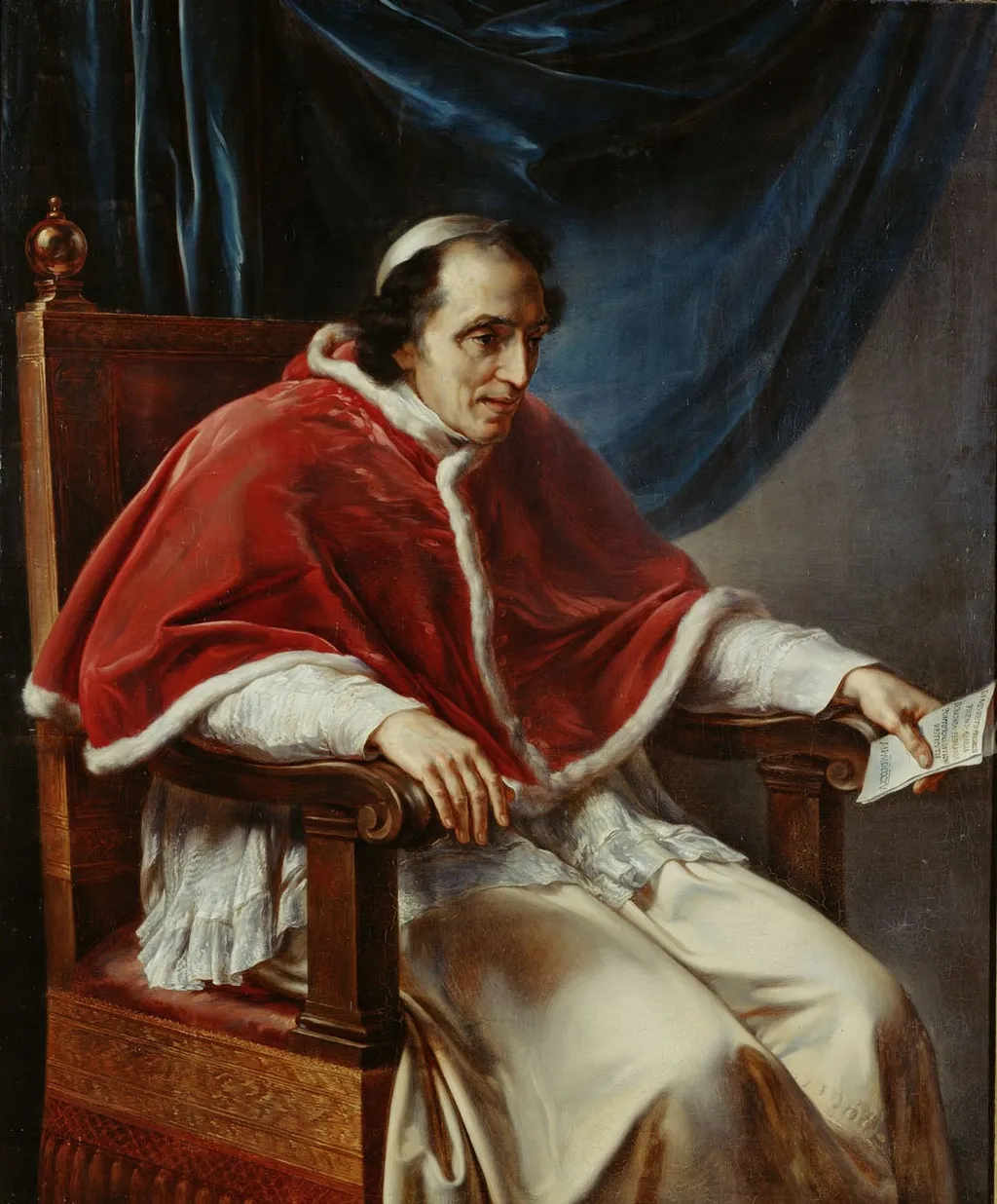
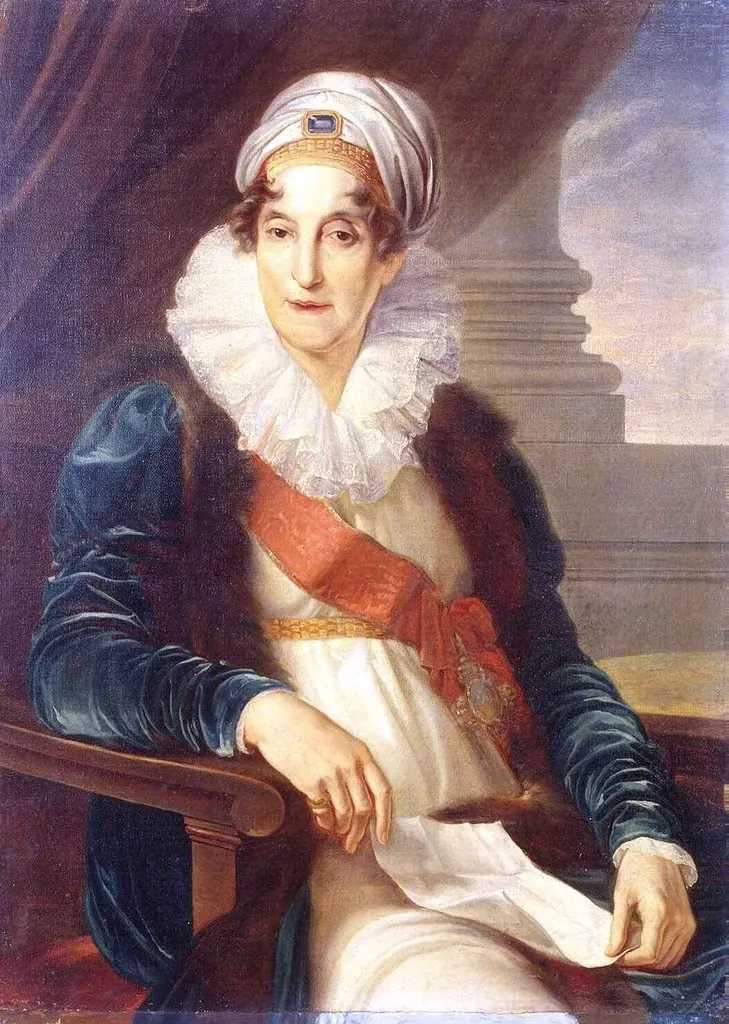
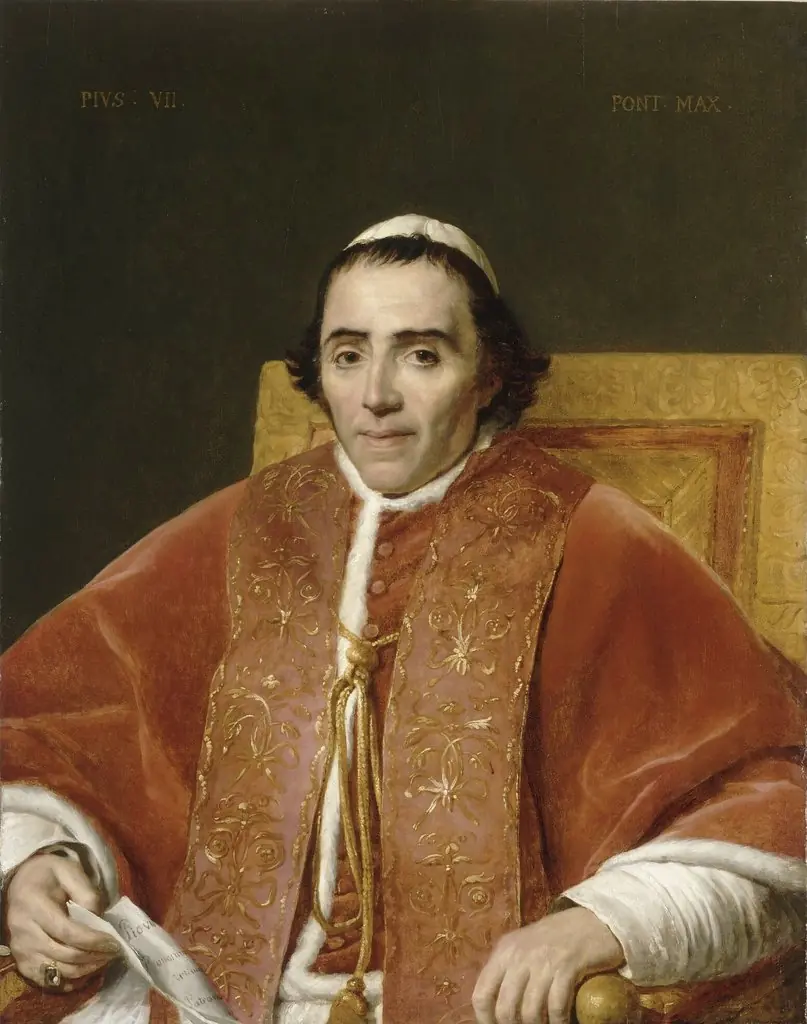
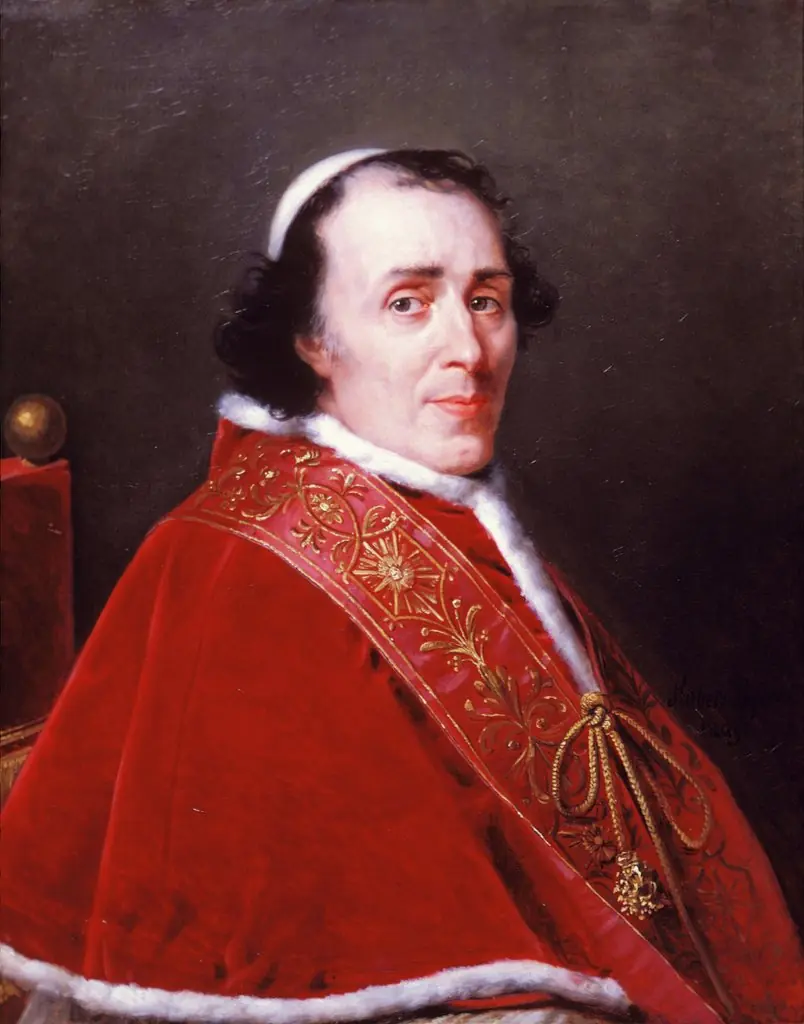
Pope Pius VII (1742-1823) is an oil painting by the Neoclassicist artist Vincenzo Camuccini. It dates from 1814 and is held in the collection of the Kunsthistorisches Museum.
About this work
Pope Pius VII sits in this formal portrait by Vincenzo Camuccini. The oil painting shows the pope in robes, done in 1814. Pius had just come back to Rome after years locked up in France by Napoleon.
He refused to let Napoleon divorce his wife. That made the French emperor angry enough to jail the pope.
Look up the subject: Pius VII.
Subject & Meaning
The subject's presence in the work symbolizes his resilience and refusal to grant the French emperor a divorce from Josephine, an act that led to his captivity.
The painting depicts Pope Pius VII, the pontiff who reigned from 1800 to 1823, capturing him shortly after his return to Rome following imprisonment by Napoleon in France. The subject's presence in the work symbolizes his resilience and refusal to grant the French emperor a divorce from Josephine, an act that led to his captivity. Executed in the Neoclassical style by Vincenzo Camuccini, the portrait presents the Pope as a central figure of restored authority amidst the political upheaval of the era.
While the work is a formal likeness, it serves as a visual testament to the Pope's endurance during the Napoleonic conflicts.
Technique & Style
Executed in 1814, this portrait utilizes oil paint applied to a canvas support. The work measures 137 cm in height and 112.5 cm in width. Stylistically, the piece is identified with the Neoclassical movement, reflecting the artistic training of its creator, Vincenzo Camuccini.
While the painting is recognized as a leading example of Roman portraiture from this period, later critical analysis has compared it unfavorably to Thomas Lawrence's 1819 depiction of the same subject, describing Camuccini's effort as less magisterial. Despite this critical perspective, historical accounts note that Lawrence himself held a more complimentary view of Camuccini's work at the time of its creation.
History & Provenance
Vincenzo Camuccini executed this oil-on-canvas portrait of Pope Pius VII in Rome, with sources citing the creation date as either 1814 or 1815. The work depicts the pontiff shortly after his return to Rome following imprisonment in France under Napoleon. While one version of the composition is held at Friedenstein Palace, this specific painting resides in the collection of the Kunsthistorisches Museum in Vienna.
The piece measures 137 cm in height and 112.5 cm in width. Art historian Thomas E. Crow has noted comparisons between this Neoclassical work and Thomas Lawrence's later 1819 portrait of the same subject, though Lawrence himself reportedly viewed Camuccini's effort favorably.
The portrait is held in the collection of the Kunsthistorisches Museum in Vienna. While one source dates the work to 1814, other accounts describe it as an 1815 production created shortly after Pope Pius VII returned to Rome following his imprisonment by Napoleon. A separate version of the composition by Camuccini is located at Friedenstein Palace.
The provided sources do not list specific inventory numbers or detail any exhibition history for the Vienna holding.
Context
Camuccini’s 1814 portrait of Pius VII belongs to the Neoclassical tradition that framed papal imagery after the upheavals of the Napoleonic era. Contemporary commentary situates it within a transnational discourse: Thomas Lawrence, who painted his own Pius VII in 1819 for the Waterloo Chamber, later praised Camuccini’s likeness even as scholars such as Thomas E. Crow contrasted its restraint with Lawrence’s more magisterial treatment. The painting’s sober classicism, evident in the sitter’s calm demeanor and structured composition, responds to the political necessity of rehabilitating papal authority following Pius VII’s return to Rome after imprisonment by Napoleon.
Within Camuccini’s oeuvre, the work signals his standing among Rome’s leading painters in the early nineteenth century, though later assessments have emphasized its measured Neoclassical reserve rather than dramatic flair.
Legacy
The portrait of Pope Pius VII by Vincenzo Camuccini, painted in 1814, contributed to the evolving Neoclassical representation of ecclesiastical authority. Contemporary criticism, such as Thomas E. Crow’s analysis, contrasted Camuccini’s approach with that of Thomas Lawrence, highlighting differences in compositional grandeur and psychological depth, particularly in relation to Lawrence’s later Waterloo Chamber commission. This contrast underscored broader debates about artistic merit and national school identities in early 19th-century European art.
The painting remains part of the Kunsthistorisches Museum’s collection in Vienna, while a second version resides at Friedenstein Palace, reflecting its enduring presence in museum contexts. References to Camuccini’s role in papal portraiture are documented in scholarly works on 19th-century Italian art.
Overview
This 1814 oil painting by Vincenzo Camuccini portrays Pope Pius VII, who ruled the Catholic Church from 1800 until his death in 1823. The work captures the pope in formal attire, set against the backdrop of his recent return to Rome following a period of imprisonment.
Artist & collection
Artist
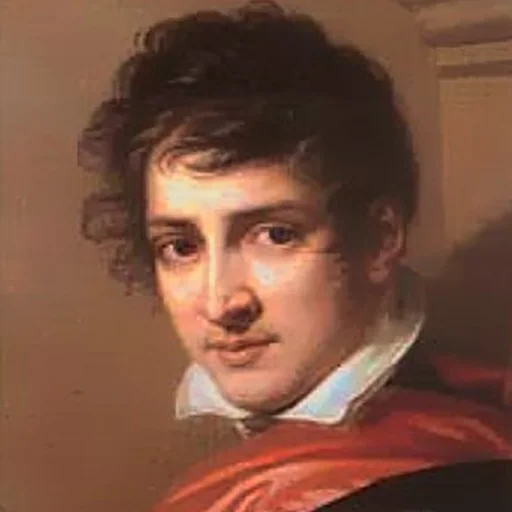
Vincenzo Camuccini (22 February 1771 – 2 September 1844) was an Italian Neoclassical painter. He was considered the premier academic painter of his time in Rome. Camuccini was known for his sober grandeur and archeological accuracy.