Artwork
Montreal, from the Mountain
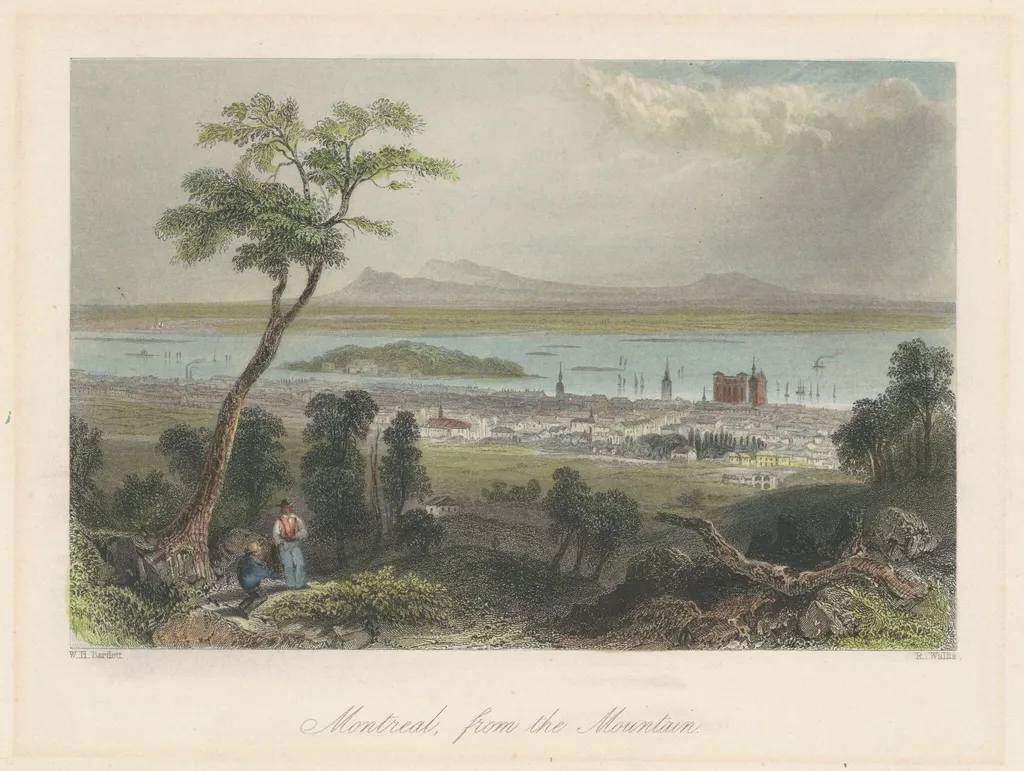
Montreal, from the Mountain is an ink print by the Romanticist artist Robert Wallis. It dates from 1840 and is held in the collection of the National Gallery of Art.
- Inscription
- Inscribed:lower right corner in graphite by unknown hand: 10- text at bottom in plate: W.H. Bartlett / R. Wallis / Montreal, from the Mountain
About this work
Overview
Rendered on wove paper, the print presents a panoramic landscape of the city nestled beside a broad river, with rolling hills visible in the distance.
Created in 1840 by Robert Wallis, this hand-colored engraving captures Montreal as viewed from a elevated vantage point. Rendered on wove paper, the print presents a panoramic landscape of the city nestled beside a broad river, with rolling hills visible in the distance. The composition is grounded by two figures seated beneath a tree in the foreground, their stillness contrasting with the quiet activity of the urban and aquatic scenes beyond.
Subject & Meaning
The scene depicts Montreal’s urban fabric, dense with buildings, church spires, and river traffic, seen from the natural high ground of Mount Royal. The presence of two observers invites the viewer to share their contemplative perspective. Rather than emphasizing commerce or power, the image conveys a sense of harmony between settlement and landscape, suggesting a tranquil coexistence of nature and civilization.
Technique & Style
Wallis employed engraving on metal to produce precise linear details, later enhanced by delicate hand-coloring to suggest atmospheric softness. The palette is muted, with gentle greens, grays, and blues lending a serene tone. Buildings are rendered with careful architectural accuracy, while the river and sky are treated with looser, wash-like hues, creating depth without overt drama.
History & Provenance
The print was produced during a period of rapid growth in Montreal, as the city expanded its port and commercial infrastructure. Wallis, a British artist known for topographical views, likely created the work for an audience interested in colonial landscapes. Its survival in collections today reflects its value as a documentary record of mid-19th-century urban form.
Context
In the 1840s, Montreal was a key hub in British North America, its economy tied to the St. Lawrence River and transatlantic trade. Views like this one were often commissioned or sold to travelers and investors, offering a reassuring image of orderly development. The inclusion of figures in repose aligns with Romantic-era ideals that valued nature as a moral counterpoint to industrial progress.
Legacy
The engraving remains a valuable visual archive of Montreal’s pre-industrial skyline and topography. It exemplifies the tradition of British topographical printmaking, where accuracy and aesthetic calm were equally prized. Though not widely known today, it contributes to the historical record of how 19th-century observers perceived and represented urban environments.
Own this work as a print
Artist & collection

 Islands Khalxi and Prinkipos, Sea of Marmora
 Hudson
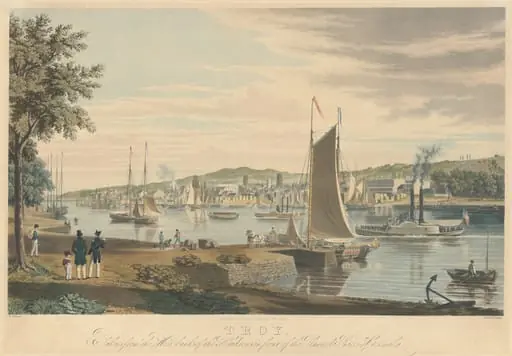 Troy: Taken from the West Bank of the Hudson in front of the United States Arsenal
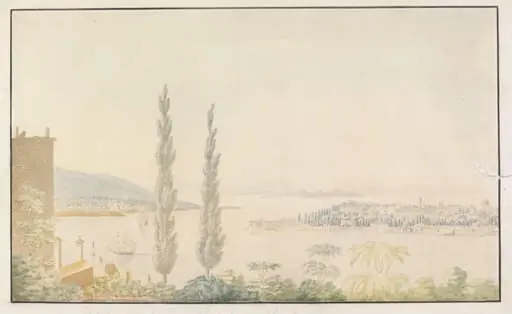 Üsküdar and Saray Burnu from Galata, with the Sea of Marmara in the distance
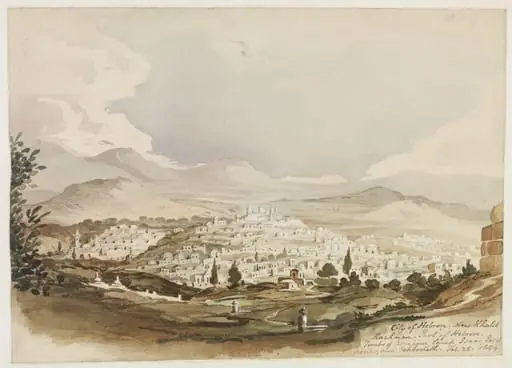 City of Hebron - Now Khalil Rachman - Pool of Hebron. Tombs of Abraham, Sarah, Isaac, Jacob, Abner, and Ishbosheth
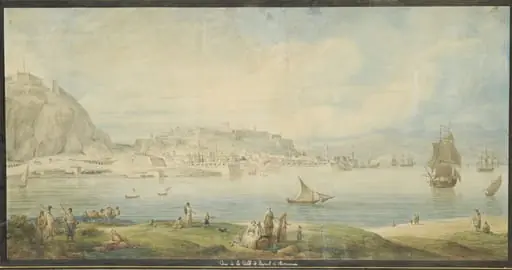 Ναύπλιο
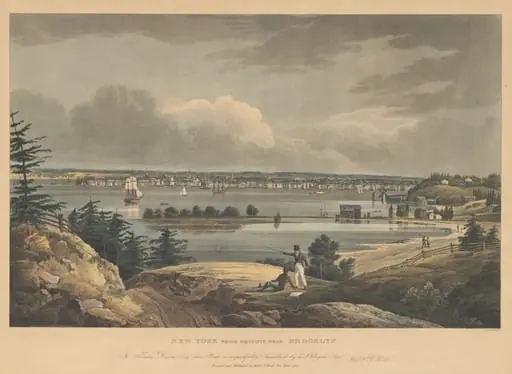 New York from Heights near Brooklyn
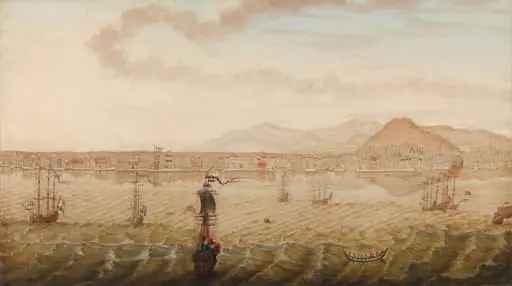 View of Smyrna (Izmir)
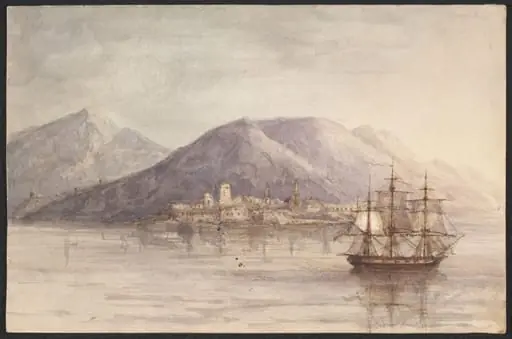 A British warship, lying off a Turkish Port, 1850-1860
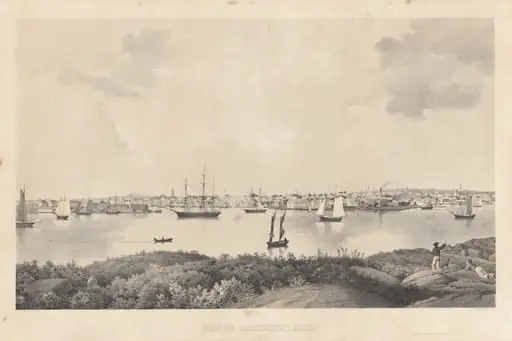 View of Gloucester, Mass.
 City and Bay of Naples
- Montreal from the Mountain and View of the St. Lawrence River