Artwork
Elijah in the Desert
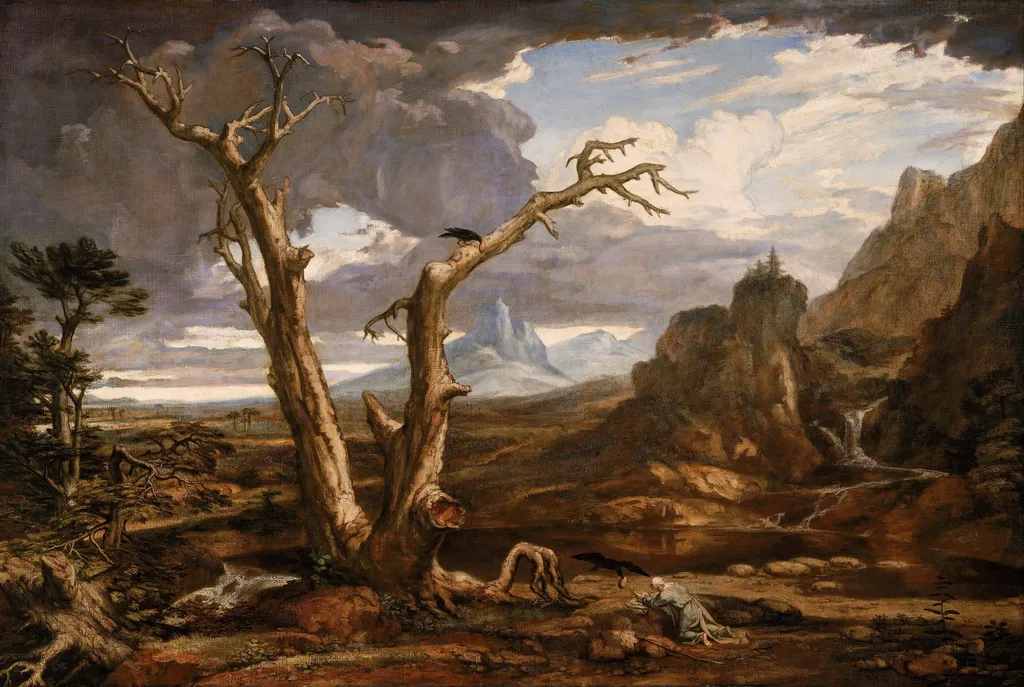
Elijah in the Desert is an oil painting by Washington Allston. It dates from 1818 and is held in the collection of the Museum of Fine Arts Boston.
About this work
Overview
Washington Allston's 'Elijah in the Desert' (1818) depicts the biblical prophet resting in a desolate wilderness after fleeing from Jezebel.
Washington Allston's 'Elijah in the Desert' (1818) depicts the biblical prophet resting in a desolate wilderness after fleeing from Jezebel. The composition centers on a solitary, weary figure kneeling beside a rocky stream, surrounded by gnarled, dead trees that frame the scene against a turbulent, stormy sky. Allston employs a dramatic chiaroscuro technique, utilizing deep shadows and contrasting light to emphasize the spiritual isolation and physical exhaustion of the subject.
The rugged terrain, marked by uneven ground, scattered stones, and sparse vegetation, reinforces the harshness of the environment. Created during Allston's mature period, this work reflects his deep engagement with Romanticism and his interest in the sublime power of nature as a vehicle for religious expression. The painting exemplifies the artist's shift toward a more atmospheric and emotional style, moving away from strict Neoclassical formalism to explore the psychological dimensions of faith and human vulnerability in the face of divine trials.
Subject & Meaning
The composition centers on the prophet Elijah, shown kneeling beside a rocky stream. The figure’s weary posture and the surrounding barren terrain suggest a moment of spiritual trial or refuge, echoing the biblical narrative of Elijah’s desert wanderings and his reliance on divine sustenance.
Technique & Style
Allston applies chiaroscuro, using deep shadows against illuminated areas to heighten the emotional tenor of the scene. The rugged foreground, twisted dead trees, and a storm‑filled sky are rendered with loose, expressive brushwork, while the figure is modeled with finer detail, emphasizing his vulnerability amid the overwhelming natural forces.
History & Provenance
Completed in 1818, the painting entered the Museum of Fine Arts, Boston, where it remains on display. Its acquisition reflects the early 19th‑century American interest in biblical subjects and the Romantic fascination with nature’s sublime power.
Own this work as a print
Artist & collection
Artist
Washington Allston spent his life chasing the glow of stories more than fame. Born in South Carolina, he studied law at Harvard before the itch to paint pulled him across the Atlantic to London. There he fell in with…

![A Study from Life [and] Study for Angel Releasing Saint Peter from Prison, by Washington Allston](https://artifactworldgallery.com/img/washington-allston--a-study-from-life-and-study-for-angel-releasing-saint-peter--13db111bb86c178e-w320.webp)
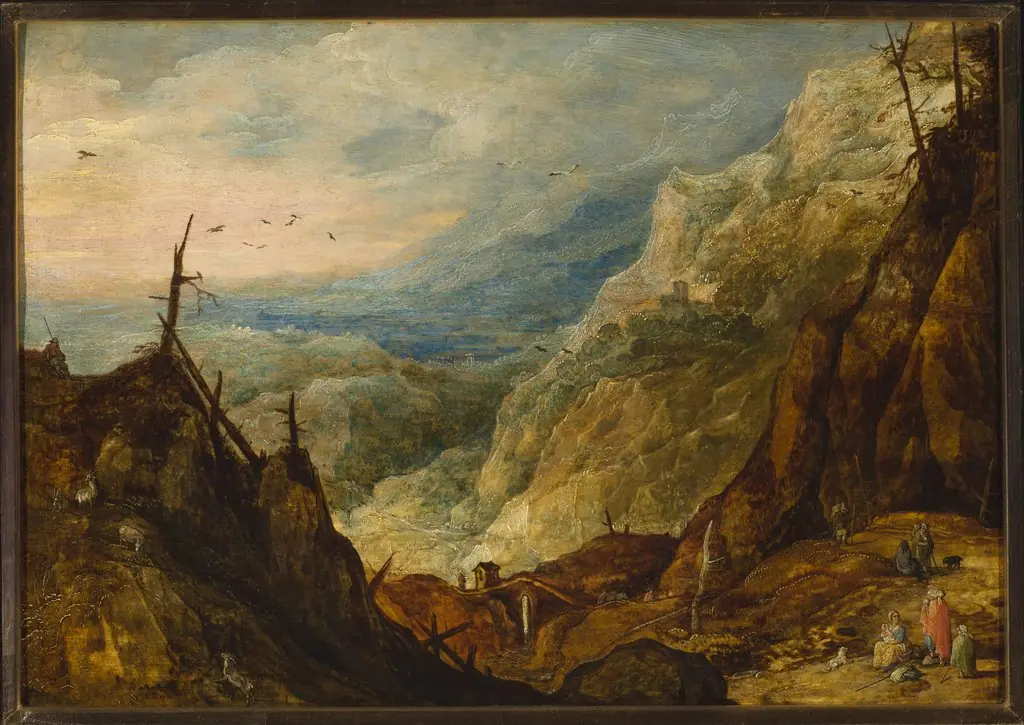 Mountain landscape with a broken tree
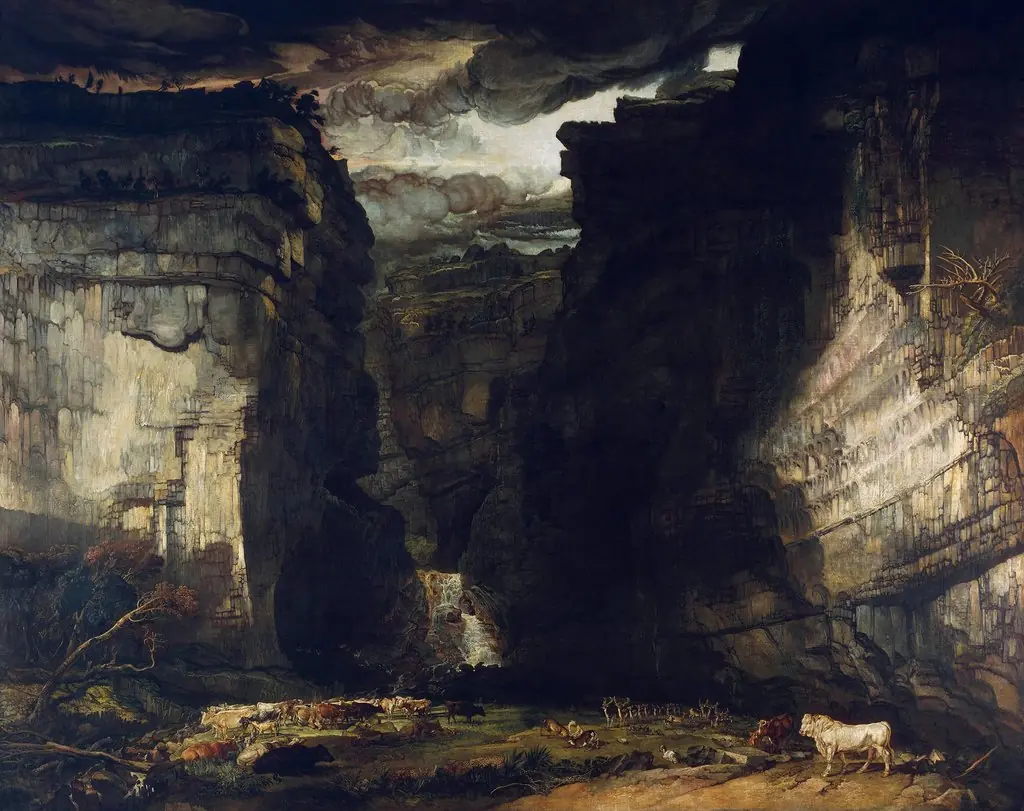 Gordale Scar
 Don Quixote and the Dead Mule
 Storm on the Dunes
 Nächtliche Landschaft
 Mountain landscape with fir trunks in a stream
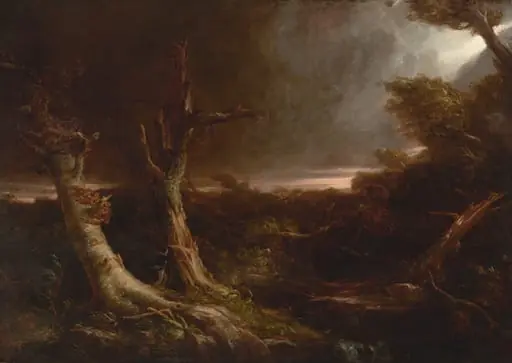 Tornado in an American Forest
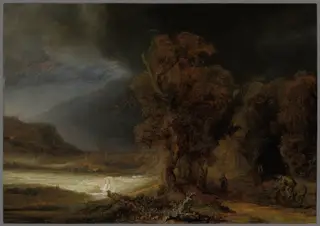 Landscape with the Good Samaritan
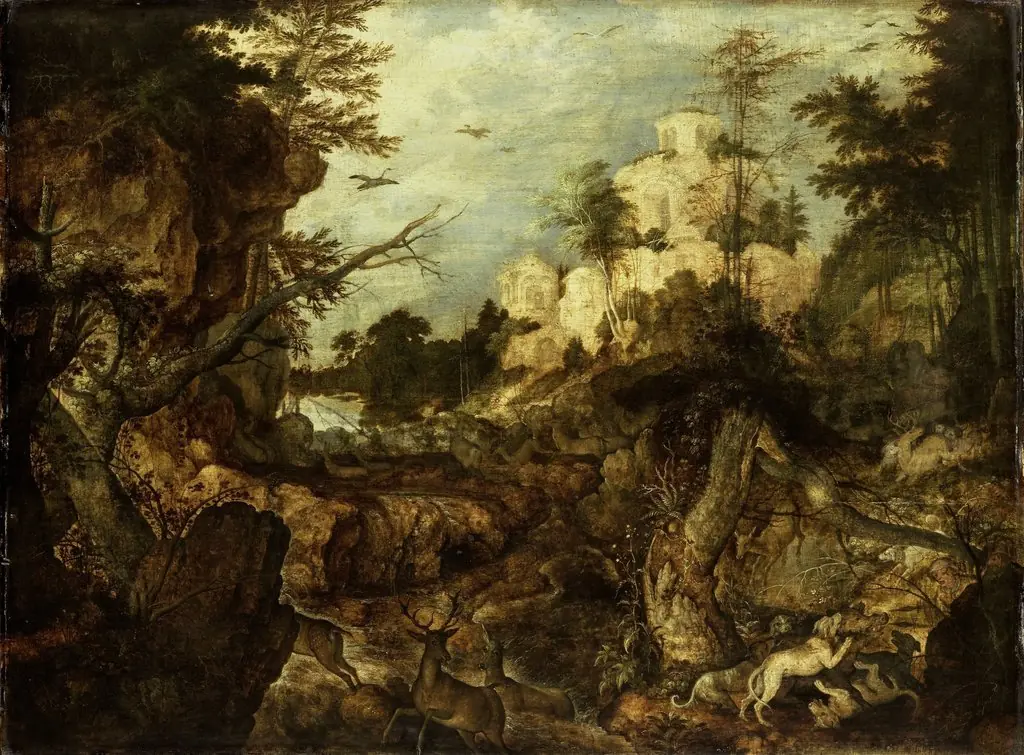 Wild boar hunt in a rocky landscape
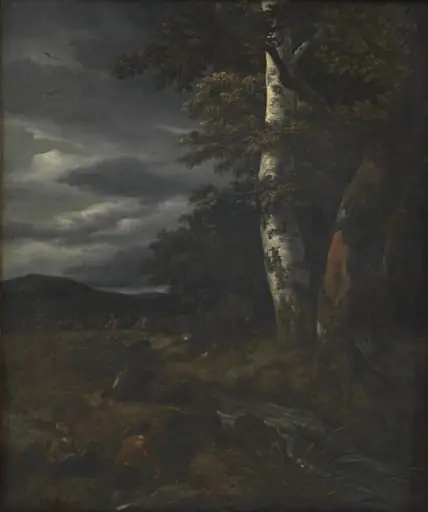 Landscape with a Hunting Scene
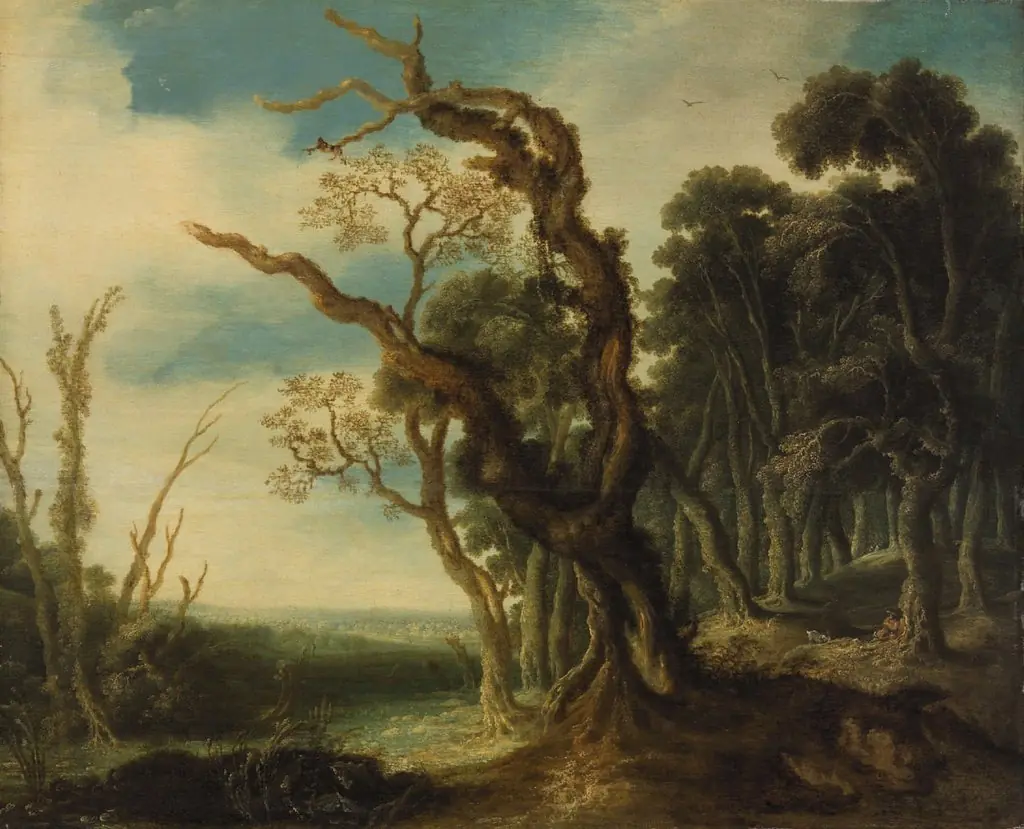 Wooded landscape with a goatherd
- Landscape with the Prophet Elijah in the Desert