Artwork
Don Quixote and the Dead Mule
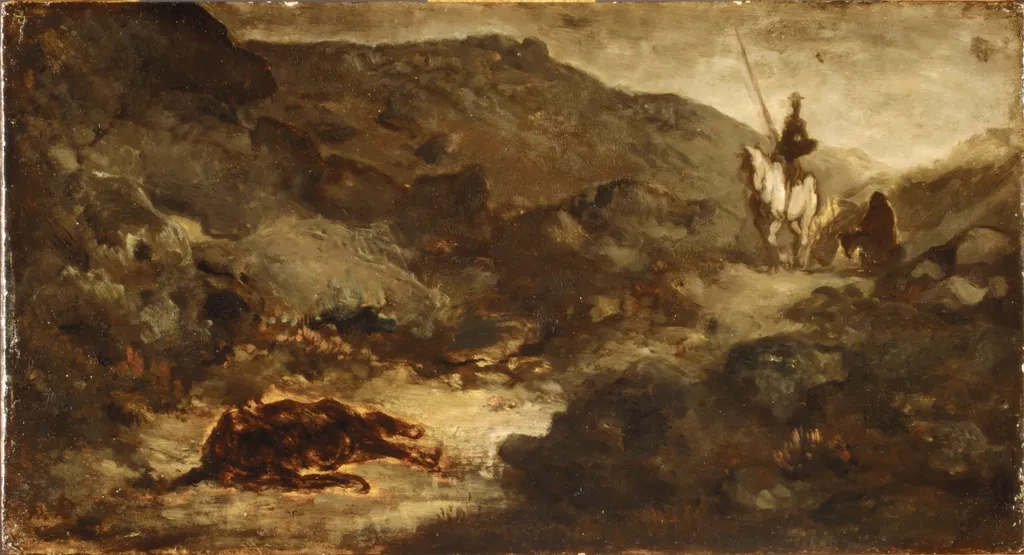
Don Quixote and the Dead Mule is an oil painting by the Realist artist Honoré Daumier. It dates from 1860 and is held in the collection of the Metropolitan Museum of Art.
About this work
Subject & Meaning
Executed in oil on panel, the work captures a moment of equestrianism interrupted by death, presenting the knight and his fallen mount as central figures.
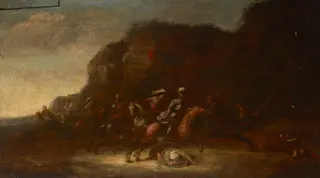
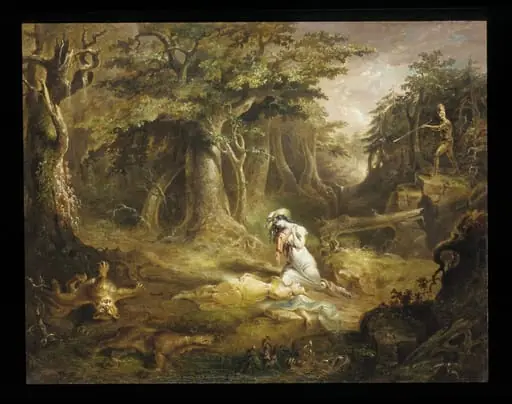
The painting depicts the literary character Don Quixote alongside a deceased animal, identified in records as a dead mule or horse. Executed in oil on panel, the work captures a moment of equestrianism interrupted by death, presenting the knight and his fallen mount as central figures. While the specific narrative context of this particular encounter is not detailed in the provided records, the composition focuses on the solitary man and the lifeless animal.
The imagery serves as a visual representation of the iconic duo from Miguel de Cervantes' novel, emphasizing themes of companionship and mortality through the juxtaposition of the living rider and the dead beast.
Technique & Style
Executed circa 1860, this work by Honoré Daumier is an oil painting created on a panel support. The composition measures approximately 24.8 cm in height and 46 cm in width, presenting a compact, horizontal format. Stylistically, the piece depicts an equestrian scene featuring a man, identified as Don Quixote, alongside a horse or mule.
The application of oil paint on wood panel characterizes the material handling of this specific classification within the artist's oeuvre. The work is currently held in the collection of the Metropolitan Museum of Art.
History & Provenance
The painting Don Quixote and the Dead Mule was created by Honoré Daumier in 1860 as an oil on panel work. It measures 24.8 cm in height and 46 cm in width and is part of the Metropolitan Museum of Art’s collection, where it remains on display. The composition shows Don Quixote alongside a dead mule, reflecting the artist’s engagement with literary subjects and equestrian imagery.
The work’s provenance is tied to its acquisition by the Met, which holds it in its permanent holdings. Its creation date falls within the 1860s, as recorded in museum documentation.
The painting 'Don Quixote and the Dead Mule' by Honoré Daumier is held in the collection of the Metropolitan Museum of Art in New York. While the work is firmly attributed to the artist and dated to approximately 1860, the provided records do not specify a unique accession or inventory number for the piece. Furthermore, although the work's physical attributes and subject matter are documented, there is no available information within the current sources regarding its exhibition history or specific loans to other institutions.
Legacy
Honoré Daumier’s 1860 canvas Don Quixote and the Dead Mule entered the Metropolitan Museum of Art’s collection, marking a sustained institutional interest in his literary subjects. The work exemplifies the artist’s late‑period fascination with Cervantes’ hero, combining satirical vigor with a somber palette that contrasts the knight’s delusions with the stark reality of the fallen animal. Its presence in a premier museum has reinforced scholarly discussions of Daumier’s role in visualizing 19th‑century literary themes, influencing subsequent exhibitions and academic analyses of the novel’s imagery.
Overview
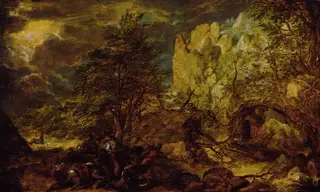
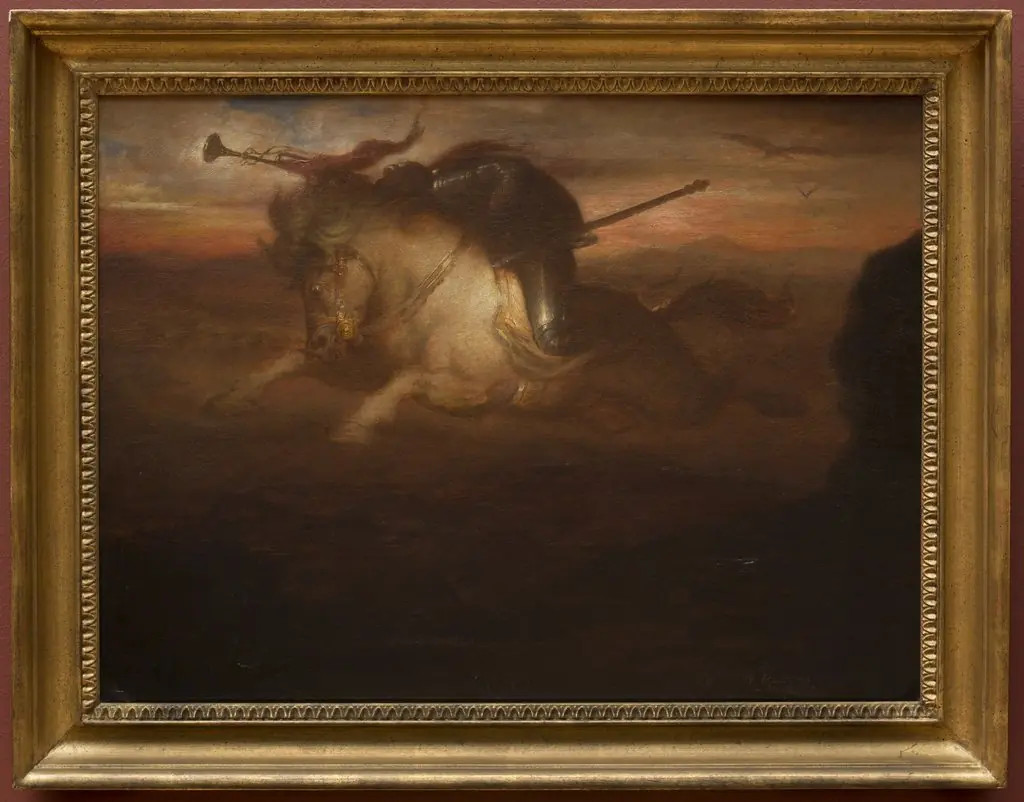
Honoré Daumier's oil painting, Don Quixote and the Dead Mule, created in 1860, depicts the iconic literary figure in a desolate landscape. The artwork, now housed at The Metropolitan Museum of Art, presents a solitary equestrian figure mounted on a small, dark horse, traversing a rugged, barren environment. The scene captures a moment of apparent struggle or contemplation, characteristic of the knight's often-unsuccessful adventures.
Context
Honoré Daumier frequently returned to the figure of Don Quixote throughout his career, drawn to the character's blend of idealism, folly, and tragic perseverance. For Daumier, Quixote represented a universal type, the dreamer battling an indifferent or hostile world. This particular work, with its emphasis on the knight's vulnerability and the loss of his steed, reflects Daumier's empathetic yet unsentimental portrayal of human struggle against overwhelming odds.
Artist & collection
Artist
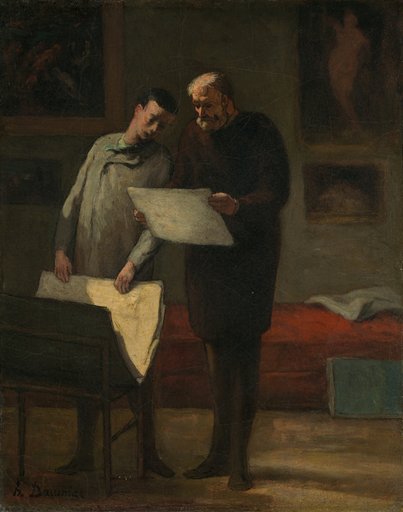
Honoré-Victorin Daumier (French: ; 26 February 1808 – 10 or 11 February 1879) was a French painter, sculptor, and printmaker, whose many works offer commentary on the social and political life in France, from the…