Artwork
Landscape with the Good Samaritan
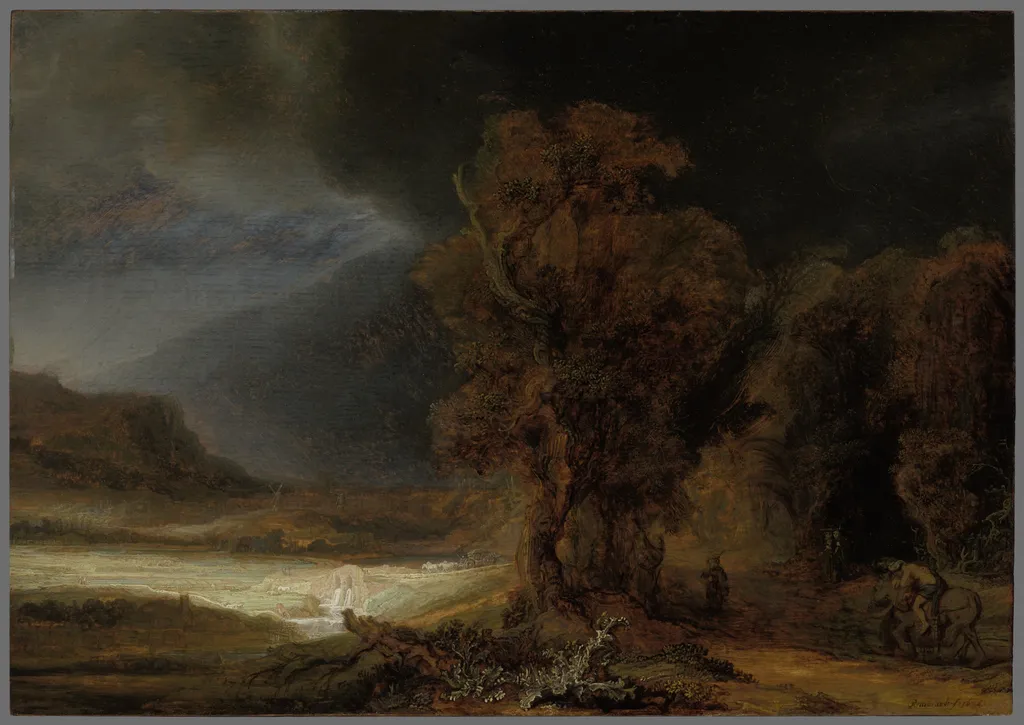
Landscape with the Good Samaritan is an oil painting by the Dutch Golden Age artist Rembrandt van Rijn. It dates from 1638 and is held in the collection of the National Museum in Kraków. Created in 1638, this oil painting on oak panel portrays a winding road through a wooded landscape, culminating in distant mountains.
About this work
Overview
5 centimetres, it is one of only six oil landscapes by the Dutch master and one of only three Rembrandt paintings in Polish collections.
Landscape with the Good Samaritan is a 1638 oil painting on oak panel by Rembrandt van Rijn, now held at the Czartoryski Museum, part of the National Museum in Kraków. Measuring approximately 46 by 65.5 centimetres, it is one of only six oil landscapes by the Dutch master and one of only three Rembrandt paintings in Polish collections. The work occupies a singular position in Rembrandt's output for its integration of a biblical narrative within a fully realised natural setting, a combination that distinguishes it from both his more numerous history paintings and the handful of pure landscapes he produced. Its rarity, its dramatic chiaroscuro, and its tumultuous modern history, including wartime looting and restitution, have made it a touchstone for scholarship on Rembrandt's landscape practice and on the ethics of art ownership.
Subject & Meaning
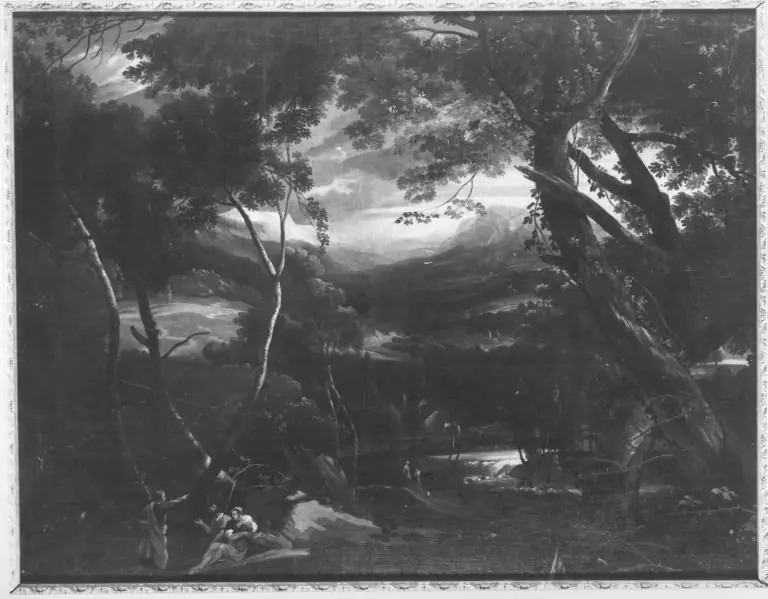
The painting illustrates the parable of the Good Samaritan from the Gospel of Luke, in which a Samaritan stops to aid a traveller who has been beaten and left half-dead by robbers. In Rembrandt's treatment, the narrative is subordinated to the landscape itself. A large oak tree dominates the right half of the composition, its thick trunk and dense canopy rendered in deep browns and dark greens. Several small figures cluster near the tree in the lower right corner: one figure lies on the ground while another bends over him, a horse stands nearby, and a standing figure with a staff is visible closer to the trunk. The Samaritan's act of mercy is thus tucked into a corner, almost incidental to the vastness of the natural world. A winding path leads from this scene toward a sunlit middle distance, where a river reflects light and tiny figures move through the terrain. The left side of the panel opens toward distant hills and a cloudy sky, where lighter grays and muted blues break through darker storm clouds. This spatial and moral structure, moving from shadowed crisis to illuminated distance, suggests a theological reading: the landscape itself becomes a metaphor for the journey from suffering toward redemption.
Technique & Style
The work is executed in oil on oak panel, a support Rembrandt favoured for its stability and fine grain. The brushwork varies markedly across the surface: thick, textured strokes define the oak tree and foreground earth, while smoother, more blended handling characterises the sky and distant hills. Deep shadows pervade the right side of the composition, concentrated around the tree and the clustered figures, while the left side glows with diffused, silvery light. This dramatic contrast between darkness and illumination, a hallmark of Rembrandt's mature style, is here deployed not for psychological interiority but for spatial and moral drama. The earthy browns and ochres of the foreground, punctuated by patches of low vegetation, give way to cooler tones in the middle distance and a tonal harmony of grays and blues in the sky. The signature appears in the lower right corner, integrated into the pictorial fabric rather than asserting itself as a separate inscription. The overall effect is of a natural world suffused with narrative meaning, where technique serves both optical truth and symbolic resonance.
History & Provenance
The painting was created in 1638, during Rembrandt's prosperous middle period in Amsterdam. Its early ownership history remains obscure until 1774, when it was purchased at auction in Paris by Jean-Pierre Norblin de La Gourdaine, a French artist who later became a naturalised Polish citizen. Norblin acquired the work for the collection of Princess Izabela Czartoryska, and it was first displayed at the Dom Gotycki at Puławy, her Gothic House. When the Czartoryska collection was later moved to Kraków, the painting went with it. In 1939, following the German invasion of Poland, it was looted by Nazi forces along with other works from the collection. After World War II, the Polish art historian Karol Estreicher conducted research that enabled its restitution to Kraków. In December 2016, the Princes Czartoryski Foundation sold the painting, along with the entire Czartoryski collection and associated Kraków real estate, to the Polish state for 100 million euros. It is now held by the Czartoryski Museum, National Museum in Kraków.
Context
Rembrandt's landscape output was extraordinarily small: only six oil paintings of the genre are known, making each one precious for understanding his engagement with the Dutch landscape tradition. Landscape with the Good Samaritan belongs to a moment in the 1630s when Rembrandt was at the height of his technical powers and commercial success, producing works for sophisticated collectors in Amsterdam and beyond. The painting's hybrid genre, combining religious narrative with landscape, reflects the broader Dutch Golden Age interest in finding spiritual significance within the observable world. Its presence in Poland since the early nineteenth century, through the collecting activities of the Czartoryska family, exemplifies the international dispersal of Dutch art during the Enlightenment and the formation of Polish national cultural patrimony. The wartime looting and subsequent restitution have made the painting a significant case in discussions of Nazi art plunder and postwar repatriation. Scholarship by Karol Estreicher and, more recently, Dorota Dec has examined both its provenance and its place within Rembrandt's oeuvre.
Legacy
Landscape with the Good Samaritan has acquired a reputation that extends beyond its modest size and quiet subject matter. As one of only three Rembrandt paintings in Poland, the others being The Girl in a Picture Frame and The Scholar at the Lectern, it serves as a focal point for Polish cultural identity and for the history of museum formation in Central Europe. The 2016 sale of the Czartoryski collection to the Polish state, at a valuation of 100 million euros for the entire holdings, underscored the continued financial and symbolic weight of the work. Its wartime experience and restitution have contributed to its prominence in debates about cultural heritage and historical justice. For art historians, the painting remains essential to any account of Rembrandt's landscape practice, demonstrating how the artist could infuse a biblical parable with the atmospheric depth and natural observation that characterised Dutch Golden Age painting at its most profound.
Own this work as a print
Artist & collection

Artist
Rembrandt Harmenszoon van Rijn, known mononymously as Rembrandt, was a Dutch Golden Age painter, printmaker, and draughtsman.

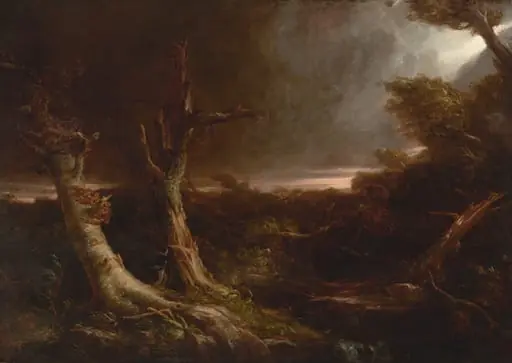 Tornado in an American Forest
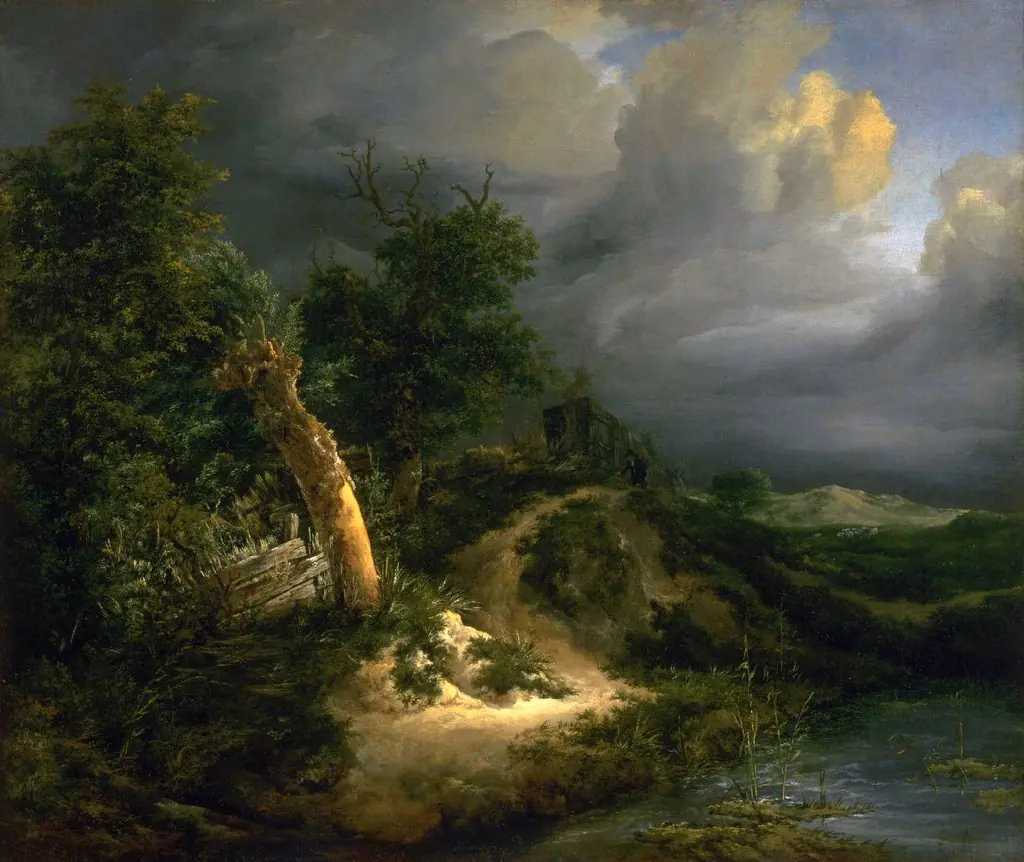 Storm on the Dunes
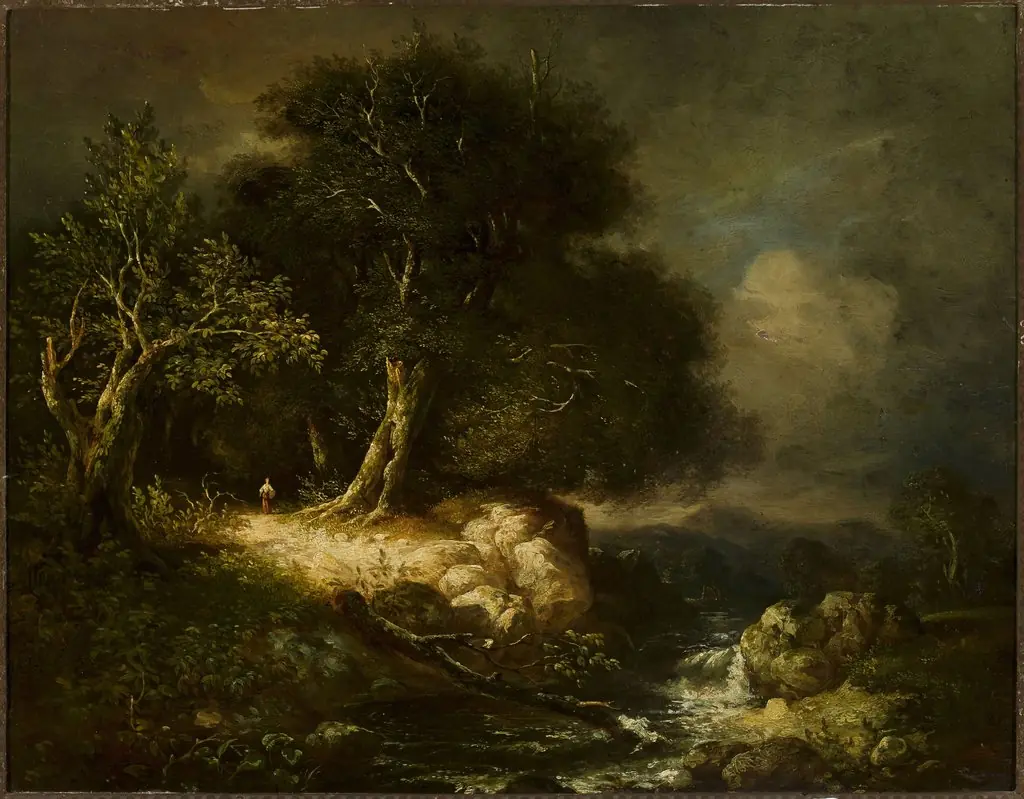 Forest landscape with a road and a river
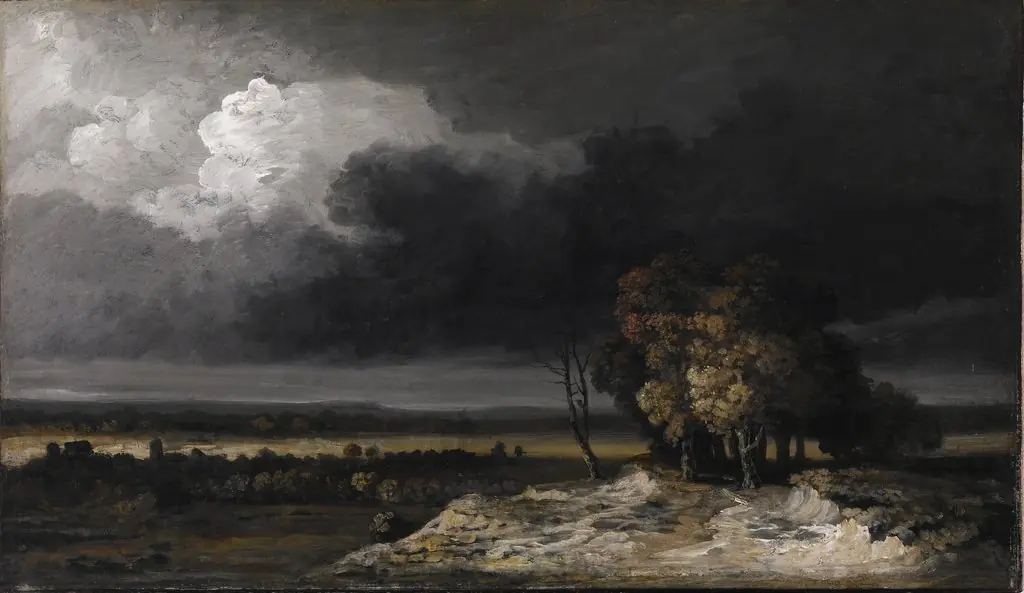 Gathering Storm
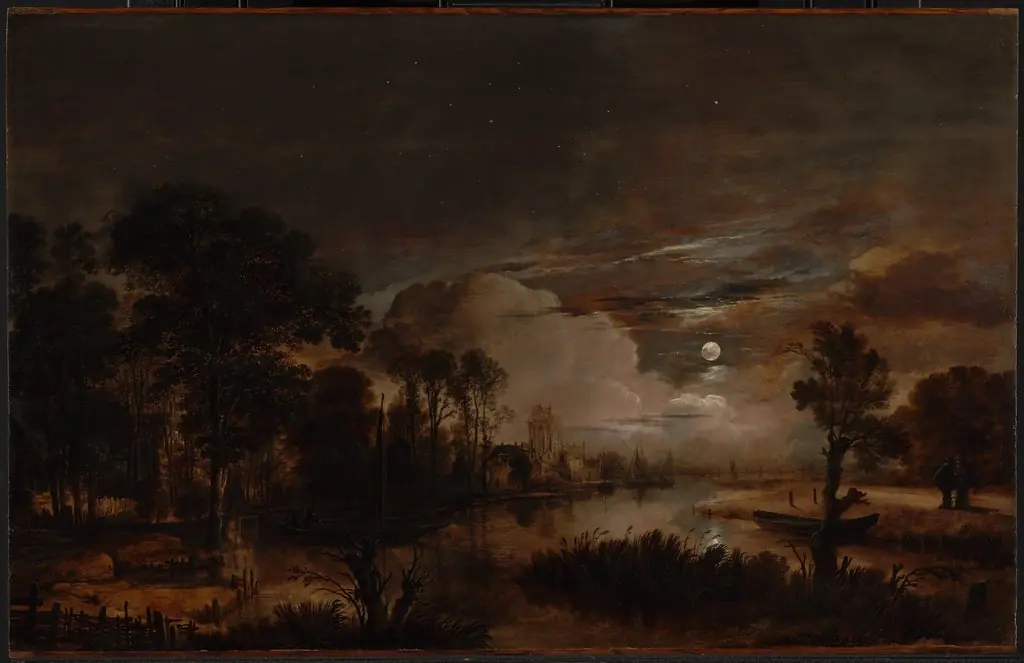 Moonlit Landscape with a View of the New Amstel River and Castle Kostverloren
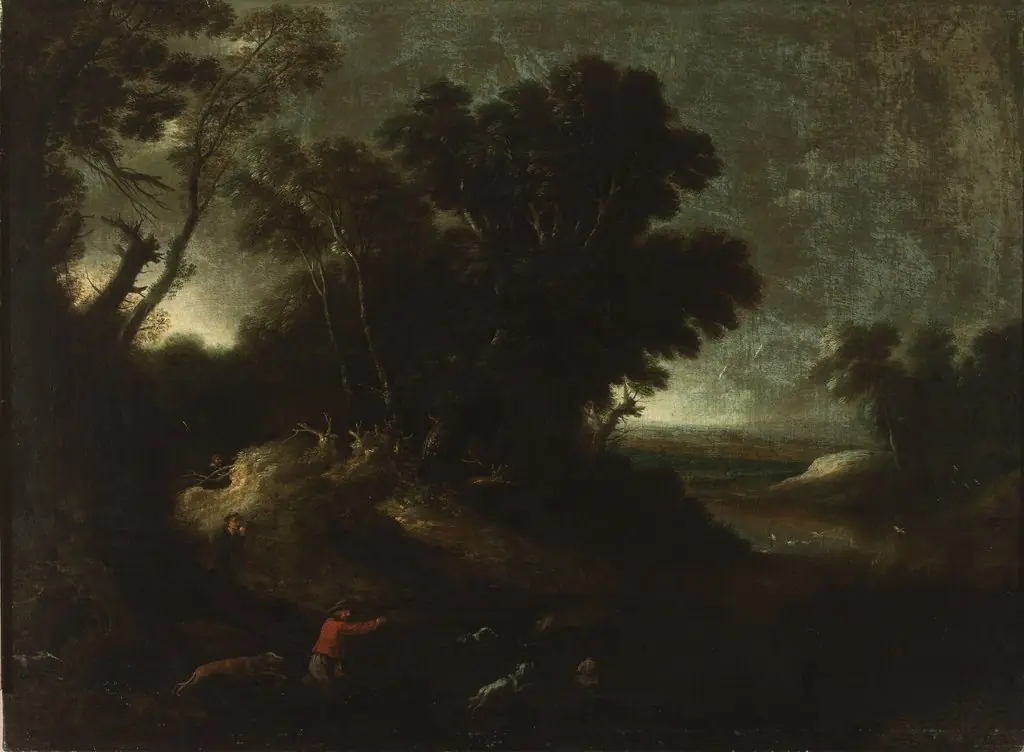 Landscape with deer hunting
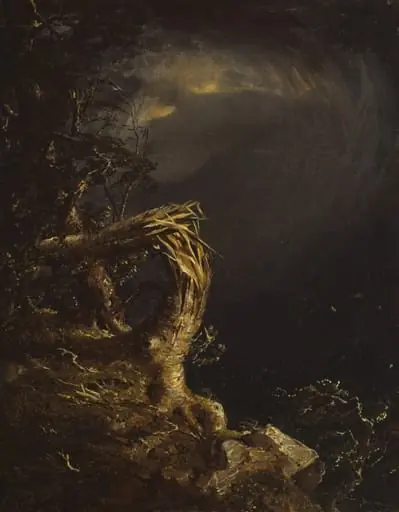 Blasted Tree
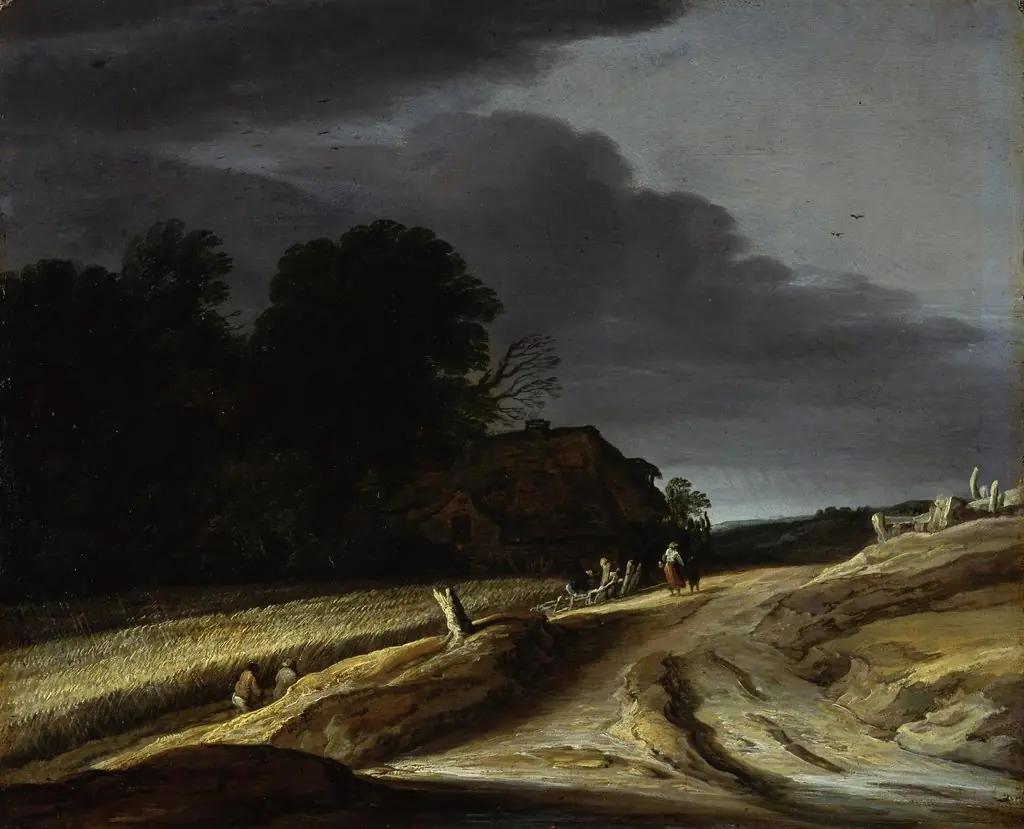 Dirt track near a corn field
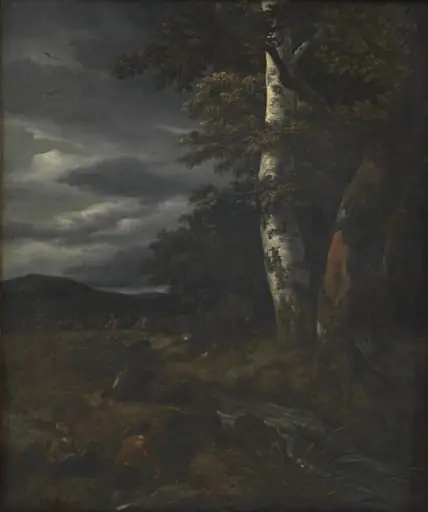 Landscape with a Hunting Scene
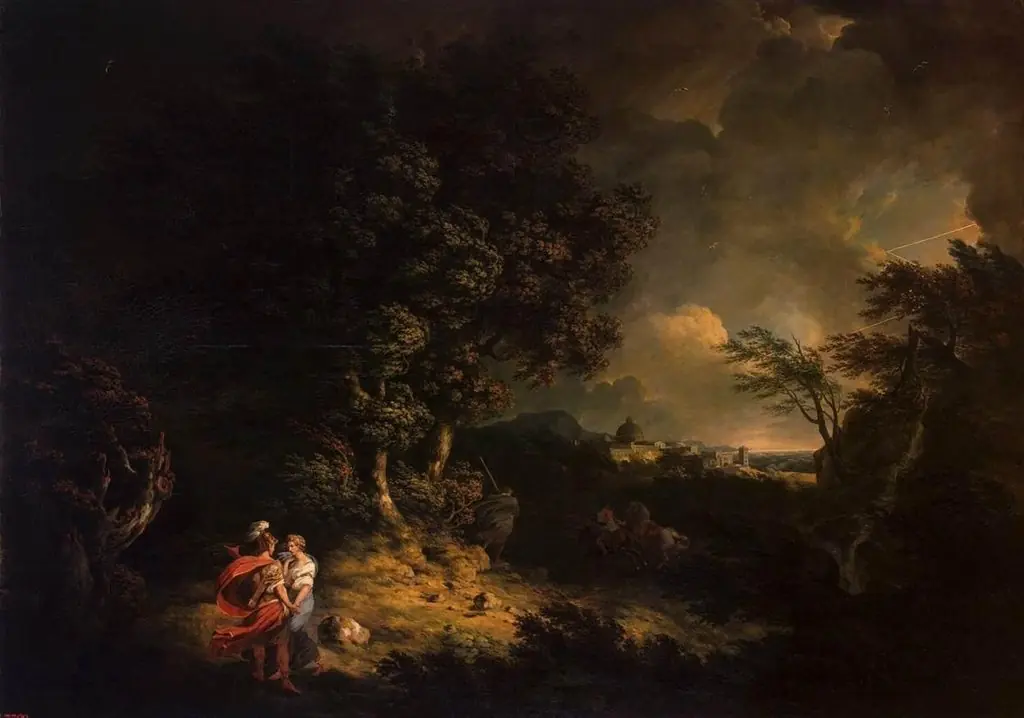 Landscape with Dido and Aeneas (Storm)
 Waldlandschaft
- Landscape with the Good Samaritan