Artwork
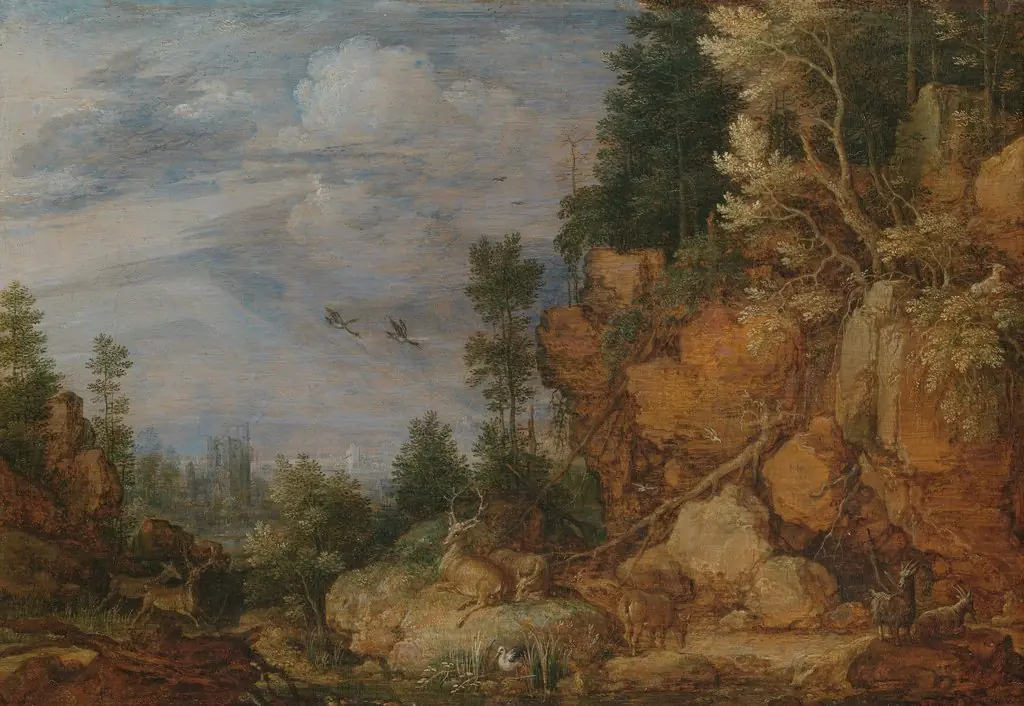
Wild boar hunt in a rocky landscape
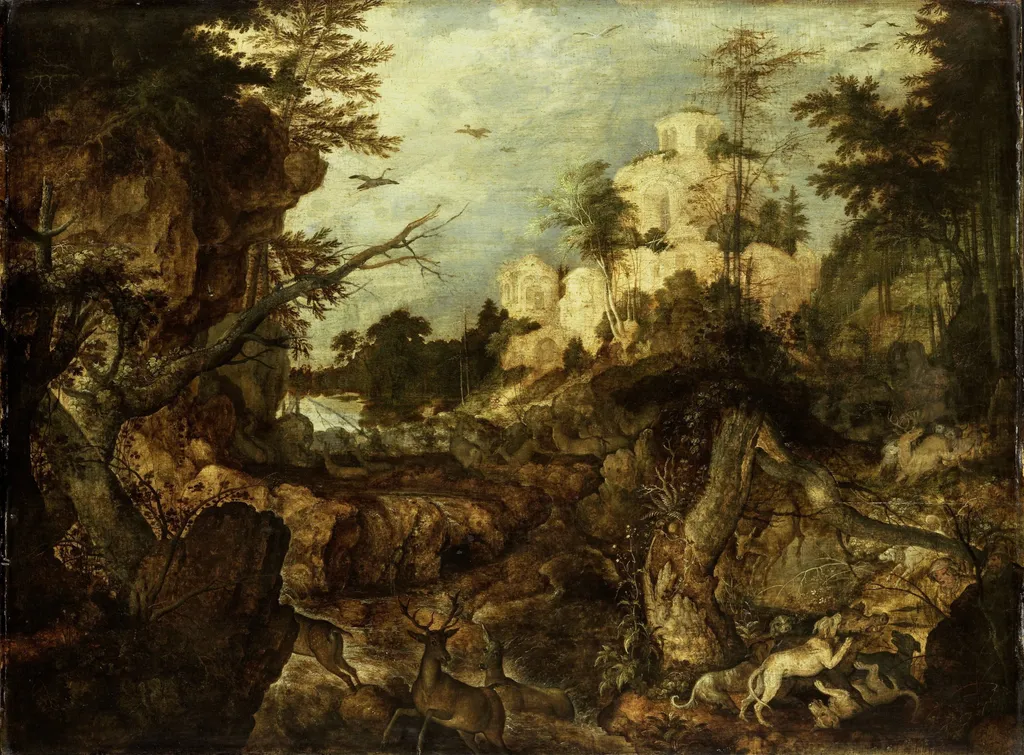
Wild boar hunt in a rocky landscape is an oil painting by the Dutch Golden Age artist Roelant Savery. It dates from 1620 and is held in the collection of the Rijksmuseum.
About this work
Subject & Meaning
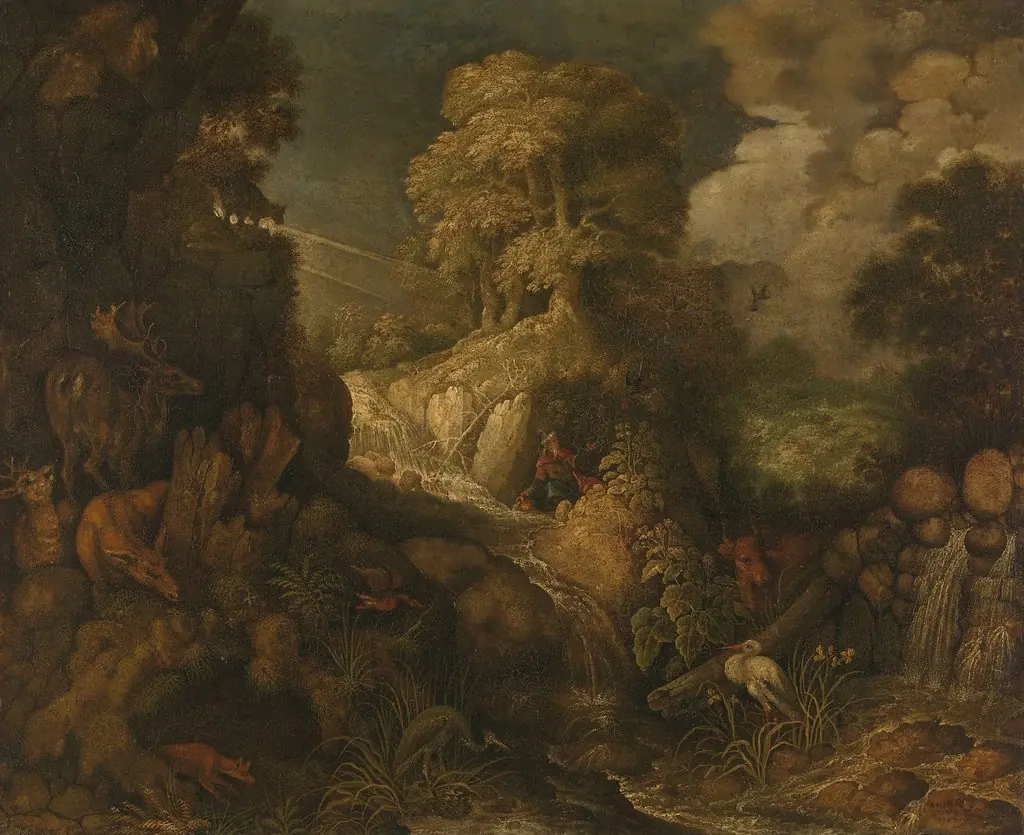
Groups of deer are shown fleeing among the rocks, with one specific deer being assaulted by three dogs in the right background.
The painting depicts a mountainous, rocky landscape featuring a dramatic hunt scene. In the right foreground, a wild boar is attacked by a pack of dogs while two hunters with lances observe the struggle. Groups of deer are shown fleeing among the rocks, with one specific deer being assaulted by three dogs in the right background. A castle ruin stands in the distance, completing the composition.
This work is one of several hunting scenes by Roelant Savery that recycle specific motifs found in his other paintings. The foreground boar hunt mirrors the main subject of his work held in Museum Bredius, though presented in reverse, leading scholars to suggest Savery may have utilized a lost print as a model. The fleeing deer and the background dog attack are also recurring elements in the artist's broader oeuvre.
Technique & Style
Roelant Savery executed Wild boar hunt in a rocky landscape in 1620 using oil paint on a panel support. The work measures 61 cm in height and 81.4 cm in width. Visually, the painting depicts a rugged mountainous terrain where a wild boar is attacked by a pack of dogs in the right foreground, while hunters with lances observe the scene.
The composition integrates multiple hunting motifs, including fleeing deer and a separate attack on a deer in the background, all set against a backdrop featuring the ruins of a castle. Art historical analysis suggests the artist may have reused and mirrored compositional elements from his own earlier works, specifically the Wild Boar Hunt held in Museum Bredius, potentially deriving the arrangement from an unknown print source.
History & Provenance
The painting is signed and dated ‘R· / SAVERY / 1620’ in the lower right. It is executed in oil on panel and, according to Savery’s own practice, is composed of at least three motifs reused from his other works, the boar‑hunt scene being a mirror image of a composition in Museum Bredius. Provenance begins with the Oudezijds Huiszittenhuis in Amsterdam, where it appears in an 18th‑century inventory as no. 16; it was transferred to the Nieuwezijds Huiszittenhuis in 1808, to the Armenhuis on the Roetersstraat in 1873, and loaned to the Rijksmuseum by the city of Amsterdam on 2 October 1885. The sources do not record a specific commission for the work.
The painting is held by the Rijksmuseum in Amsterdam, on loan from the city of Amsterdam since October 2, 1885. The work originates from the Oudezijds Huiszittenhuis, an Amsterdam municipal poor relief institution, where it appeared in an 18th-century inventory as item number 16. It was moved to the Nieuwezijds Huiszittenhuis in 1808 and later to the Armenhuis in 1873 before its transfer to the Rijksmuseum.
Context
The painting belongs to a recognized group of hunting scenes by Roelant Savery, of which several examples are known. Art historian Kurt Erasmus has examined the work's compositional sources, observing that the Rijksmuseum panel was assembled from at least three motifs drawn from other Savery paintings. The foreground boar hunt is a mirror image of the main subject of the Boar Hunt in the Museum Bredius in The Hague, a motif that recurs elsewhere in Savery's oeuvre, sometimes as the principal subject and sometimes as part of a larger composition.
The fleeing deer in the center and the deer attacked by hounds in the right background likewise appear in other Savery paintings. Erasmus has proposed that the Bredius composition was disseminated through a print that Savery then used as a model for the Rijksmuseum work, although no such print is presently known.
The painting was signed and dated "R· / SAVERY / 1620" at the lower right.
Legacy
The painting has influenced later depictions of wildlife hunts through its composite visual motifs drawn from other works by Savery. Art historians note that the boar hunt scene combines elements from other hunting subjects by the artist, including mirrored compositions found in Museum Bredius' Everjacht and recurring depictions of hunted deer and hounds. This synthesis contributed to a recurring motif in Dutch wildlife painting of the period.
The work's complex layering of narrative elements and its signed 1620 date have been cited in studies of Savery's technique and the transmission of graphic motifs into painted compositions.
The painting's compositional strategies were later analyzed in relation to printmaking practices, with scholars suggesting that Savery may have adapted a now-lost print as a compositional model. The reuse of figures and motifs across Savery's body of work highlights the interconnectedness of his paintings and drawings, particularly in the development of wildlife and hunting scenes in early 17th-century Dutch art.
Overview
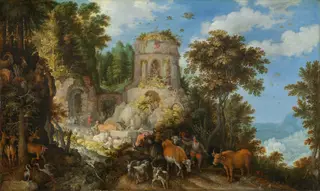
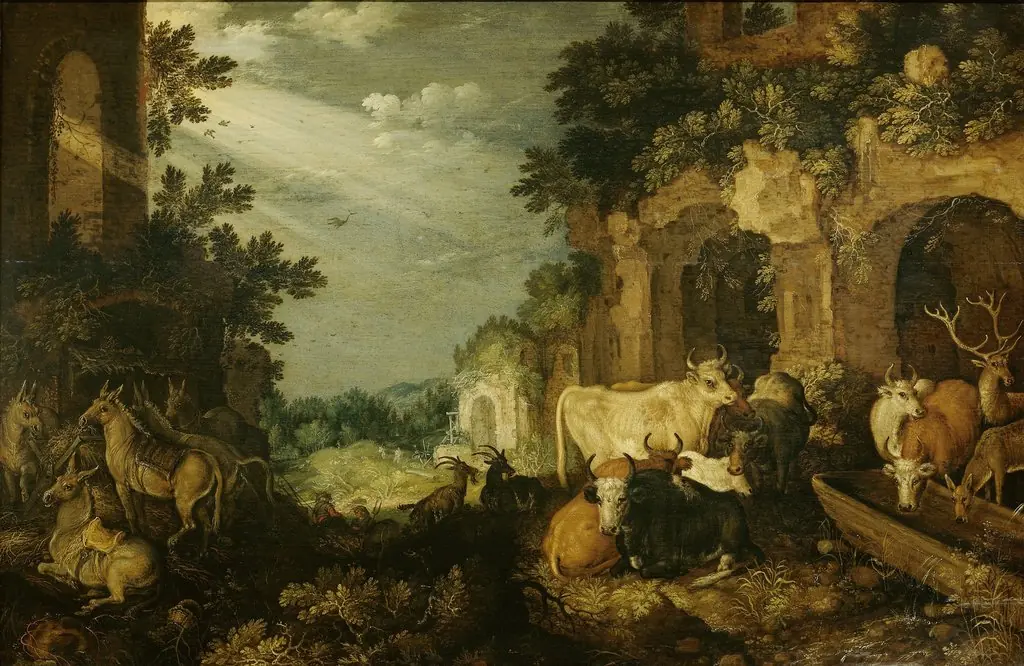
Created in 1620 by Roelant Savery, a Flemish-born painter who worked in the Dutch Golden Age, this oil on canvas belongs to the landscape tradition. The composition presents a rugged, forested terrain punctuated by rocks and a solitary tree, and it is currently displayed in the Rijksmuseum’s collection.
Own this work as a print
Artist & collection
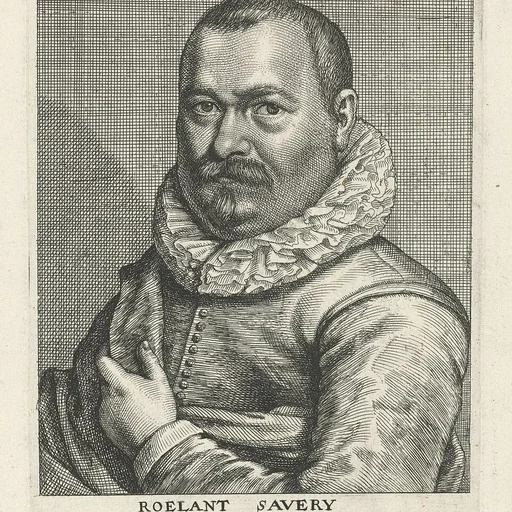
Artist
Roelant Savery (or Roeland(t) Maertensz Saverij, or de Savery, or many variants; 1576 – buried 25 February 1639) was a Flanders-born Dutch Golden Age painter.