Artwork
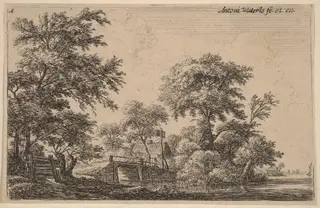
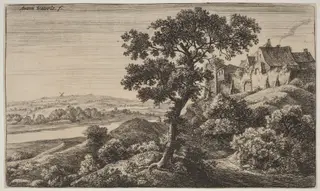
Watermill at the Foot of a Hill
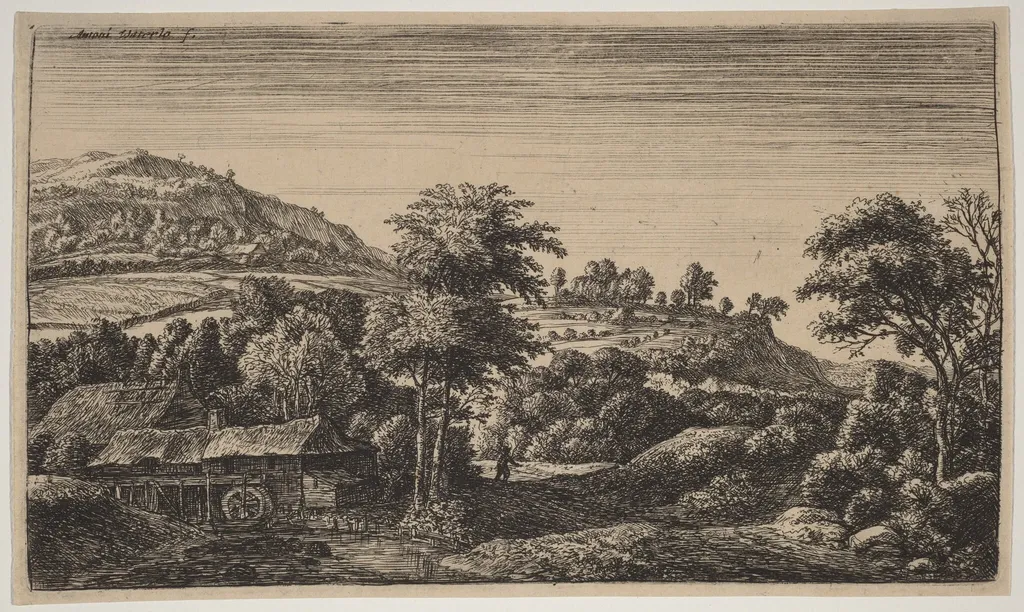
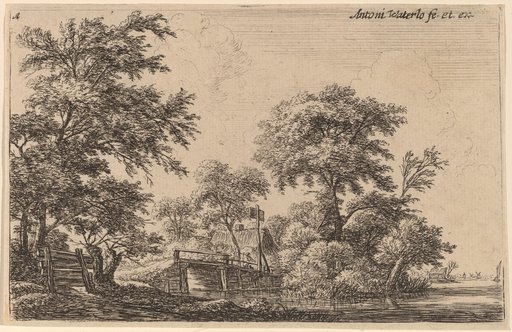
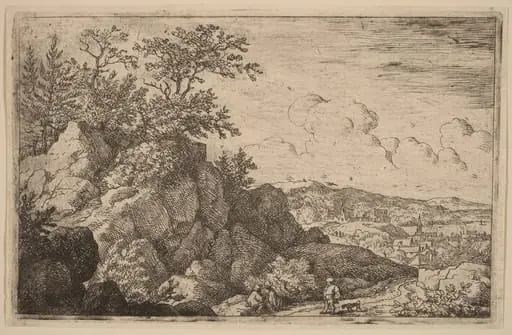
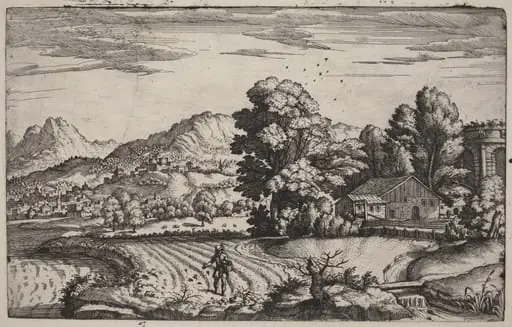
Watermill at the Foot of a Hill is an ink print by the Baroque artist Anthonie Waterloo. It dates from 1650 and is held in the collection of the National Gallery of Art.
- Inscription
- Inscribed:upper left in plate: Antoni Waterlo f.; by later hand, upper center verso in graphite: 210; by later hand, upper right verso in graphite: 957895; by later hand, lower right verso in graphite: 94 I
About this work
Overview
An etching titled Watermill at the Foot of a Hill was produced by the Dutch artist Anthonie Waterloo in 1650. Executed on laid paper, the work presents a quiet rural scene centered on a modest watermill nestled against a low rise. The composition extends outward to reveal gently undulating hills that disappear into the distance, offering a calm, panoramic view of the countryside.
Subject & Meaning
The image captures a functional watermill set within a natural landscape, surrounded by trees, shrubs, and a narrow stream that feeds the wheel. The placement of the mill at the hill’s base suggests a harmonious relationship between human industry and the surrounding environment, emphasizing the integration of work and nature typical of 17th‑century Dutch genre scenes.
Technique & Style
The resulting print displays delicate hatching and cross‑hatching that render textures of foliage, stone, and water with subtle gradations of light and shadow.
Waterloo employed the intaglio process of etching, incising fine lines into a copper plate before transferring the image onto laid paper. The resulting print displays delicate hatching and cross‑hatching that render textures of foliage, stone, and water with subtle gradations of light and shadow. The careful modulation of tone creates depth, while the visible paper grain contributes a tactile, historic quality to the surface.
History & Provenance
Created in the mid‑17th century, the etching reflects the period’s interest in topographical accuracy and domestic tranquility. Although specific ownership records are scarce, the work has been catalogued among Waterloo’s surviving prints and is representative of his output during a prolific phase of Dutch printmaking, when landscape subjects were in high demand among collectors.
Own this work as a print
Artist & collection