Artwork
A Young Artist (Ditlev Blunck) Examining a Sketch in a Mirror
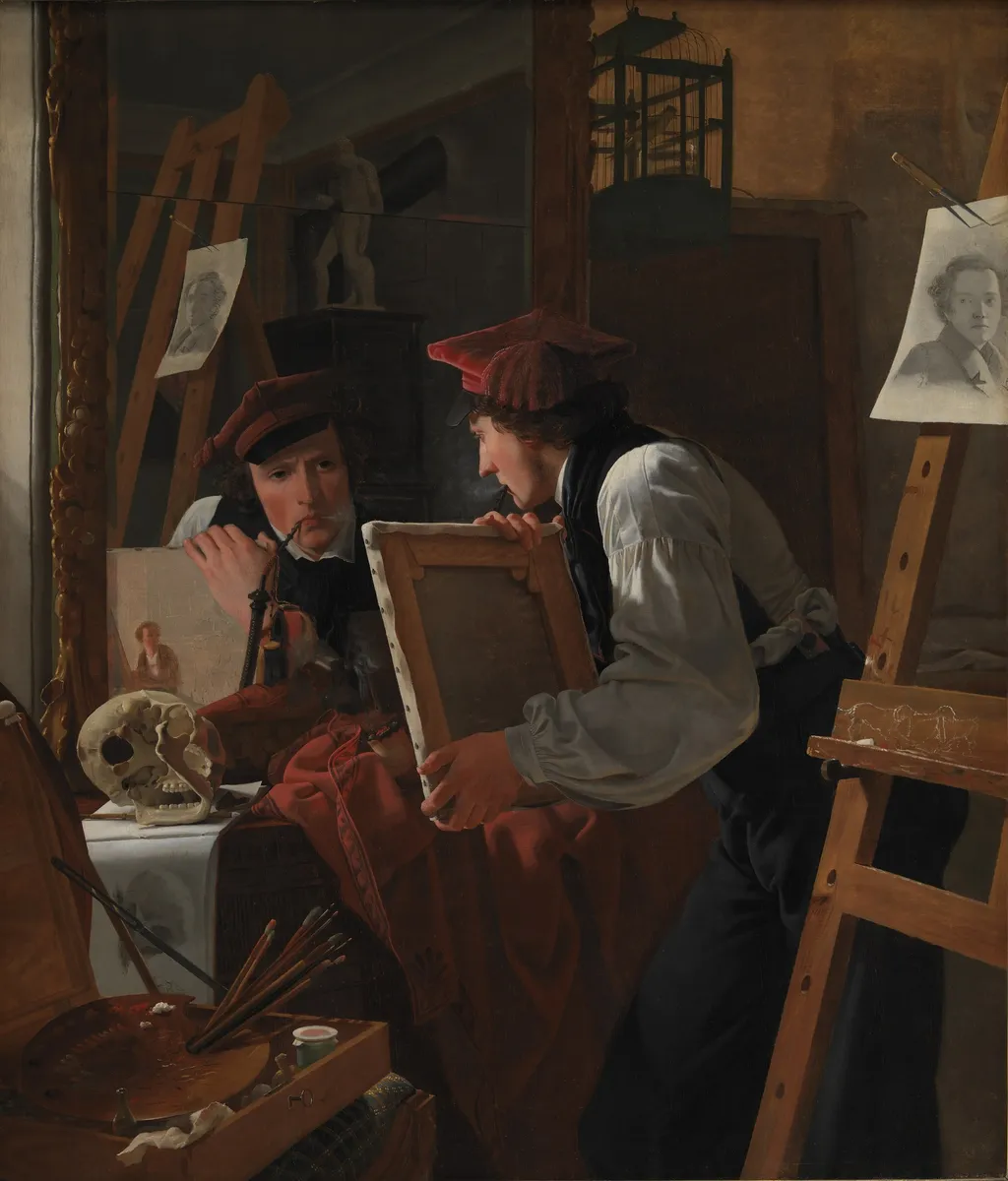
A Young Artist (Ditlev Blunck) Examining a Sketch in a Mirror is an oil painting by Wilhelm Bendz. It dates from 1826 and is held in the collection of the Statens Museum for Kunst.
About this work
This painting is called A Young Artist (Ditlev Blunck) Examining a Sketch in a Mirror. It's a work by Wilhelm Bendz.
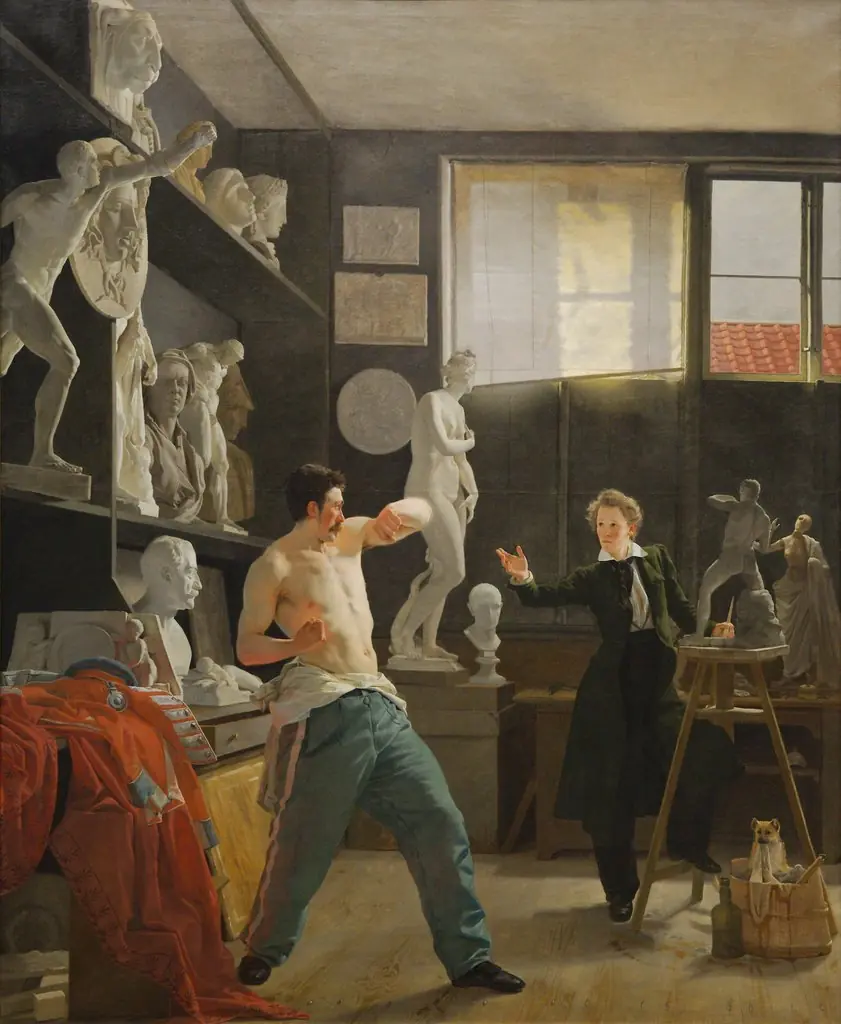
The painting is from 1826 and is part of a series of portraits of artists from the Danish Golden Age. This series gives us a glimpse into the lives of artists during that time.
To learn more about the artist behind this work, look up the artist: Wilhelm Bendz.
Subject & Meaning
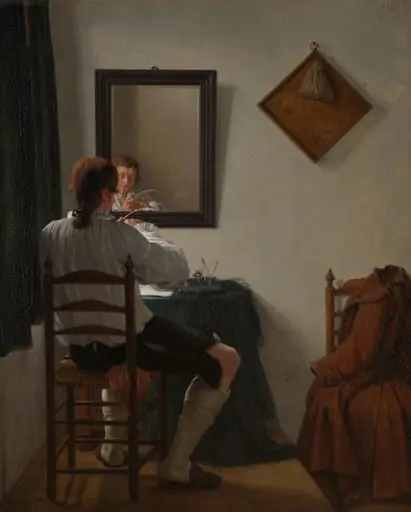
The painting depicts Ditlev Blunck, a fellow student of Bendz, pausing to examine a sketch for a portrait of Jørgen Valentin Sonne by holding it up to a mirror.
The painting depicts Ditlev Blunck, a fellow student of Bendz, pausing to examine a sketch for a portrait of Jørgen Valentin Sonne by holding it up to a mirror.
The composition layers reflections: the mirror reflects Blunck frontally toward the viewer, while the reflected room extends the space beyond the picture plane. The skull on the table functions as a memento mori, signaling the classical demand for anatomical study and the transience of earthly life. The mirror itself embodies the contemporary idea of art as a mirror of reality, while its reflective structure also evokes philosophical inquiry into identity and self-knowledge.
Technique & Style
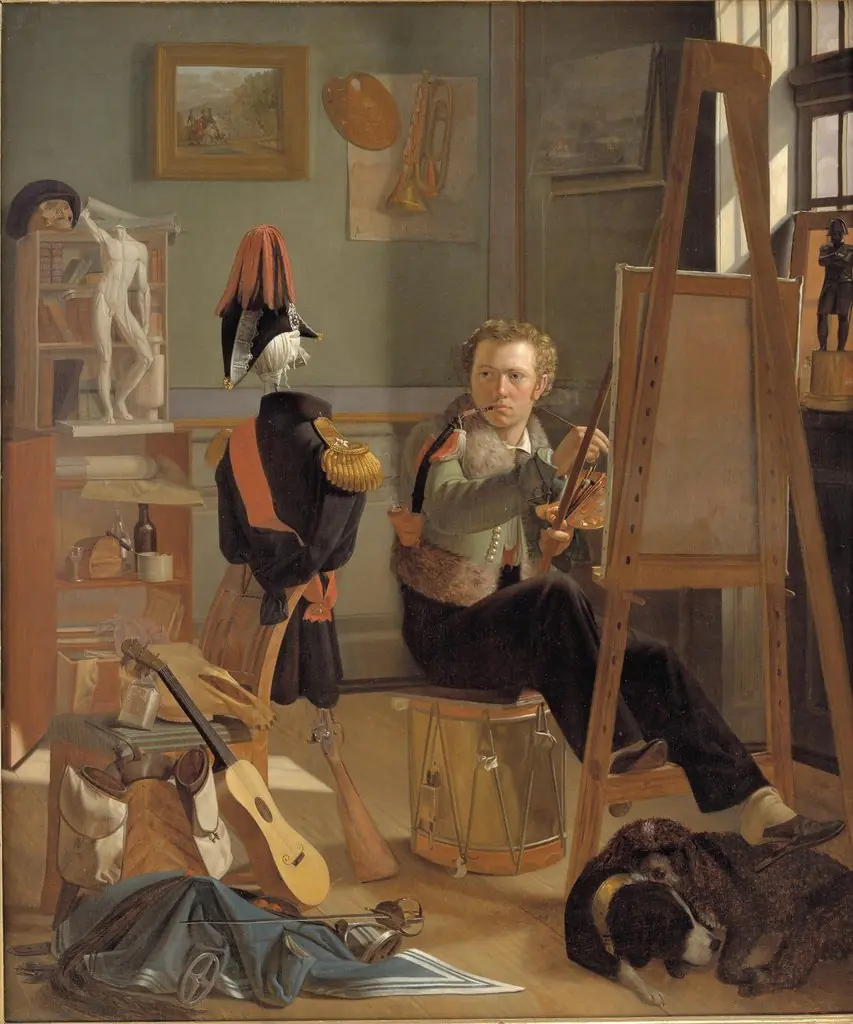
Created in 1826, the work is an oil painting executed on canvas, measuring 98 by 85 centimetres. The composition depicts the artist Ditlev Blunck within a studio environment, surrounded by period-appropriate tools including an easel, palette, paintbox, and a skull. The formal structure relies on a complex zigzag movement that guides the viewer's eye from foreground attributes to a sketch held before a two-part mirror.
This reflective element is central to the style, displaying Blunck's frontal image and extending the depicted space to include the room's interior, such as a stove and corner. The visual arrangement emphasizes the intellectual nature of the artist's role, utilizing the mirror as a symbol of art reflecting reality while the skull serves as a memento mori and a reference to anatomical study.
History & Provenance
The painting was completed on 28 March 1826 and exhibited that same year at the Charlottenborg Spring Exhibition. Wilhelm Bendz created it as part of his series of Danish Golden Age portraits of artists at work, depicting his fellow student Ditlev Blunck examining a sketch for a portrait of Jørgen Valentin Sonne. Rather than being commissioned, the work was purchased directly from the artist in 1826 by the Royal Painting Collection (Den Kongelige Malerisamling) as part of Denmark's policy to promote national art under the influence of Niels Laurits Høyen.
The painting remained in the Royal Collection until 1897, when it was transferred to the newly built Statens Museum for Kunst, where it remains today.
Context
Contemporary accounts praised the painting as a vivid illustration of the emerging self-consciousness of Danish artists, and it was acquired directly by the Royal Collection in 1826, underscoring its prestige. Nineteenth-century critics highlighted its genre-like realism and the symbolic use of the mirror to comment on artistic practice.
Modern scholarship situates the work within Bendz's series of studio portraits, interpreting the composition as a meditation on the artist's role as thinker rather than craftsman, with the skull and reflective surface evoking themes of mortality and identity. The painting thus marks a pivotal moment in the Danish Golden Age when painters began to view themselves as intellectual creators.
Legacy
The painting is regarded as a well-known example of Danish Golden Age portraiture, belonging to Wilhelm Bendz's series of artists-at-work portraits from the 1820s. It has been treated as a representative work of the period in scholarly literature, including Patricia G. Berman's 2007 study In Another Light: Danish Painting in the Nineteenth Century.
In April 2016, the work was selected by the Europeana project as one of the ten most important artworks of Denmark, and it was also included in the exhibition L'Âge d'or de la peinture danoise (1801–1864). Acquired directly from the artist in 1826 by the Royal Painting Collection under the cultural policy promoted by art historian Niels Laurits Høyen, it has remained in the national collection, moving in 1897 to the Statens Museum for Kunst, where it continues to be held.
Overview
Painted in 1826, A Young Artist (Ditlev Blunck) Examining a Sketch in a Mirror is a seminal work by Wilhelm Bendz, a central figure of the Danish Golden Age. The oil on canvas depicts the artist Ditlev Blunck standing in a studio interior, holding a sketchbook up to a mirror to scrutinize his own drawing. Bendz captures a moment of intense professional self-reflection, illustrating the artist's engagement with his craft rather than presenting a static formal portrait.
The composition is characterized by the artist's precise observation of light and texture, particularly in the rendering of the paper and the reflective surface of the mirror. This piece belongs to a distinguished series of portraits Bendz created between 1826 and 1832, which document his contemporaries within the Royal Danish Academy of Fine Arts. By focusing on the act of creation and the psychological state of the sitter, the work transcends simple likeness to offer a nuanced commentary on the artistic process.
It remains a key example of how Golden Age painters elevated the genre of portraiture to explore intellectual and creative identity.
Own this work as a print
Artist & collection
Artist
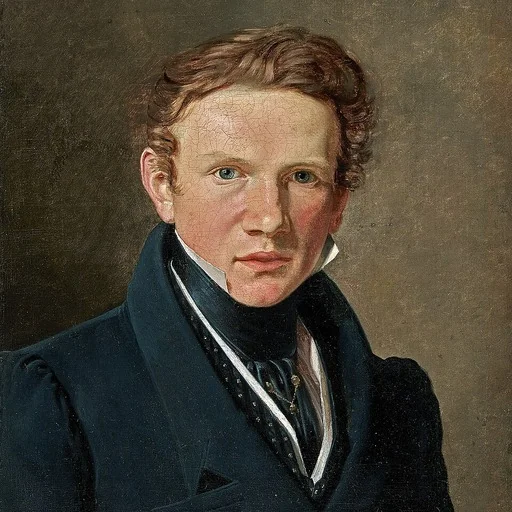
Wilhelm Ferdinand Bendz (20 March 1804 – 14 November 1832) was a Danish painter mainly known for genre works and portraits which often portray his artist colleagues and their daily lives.