Artwork
Familien Waagepetersen
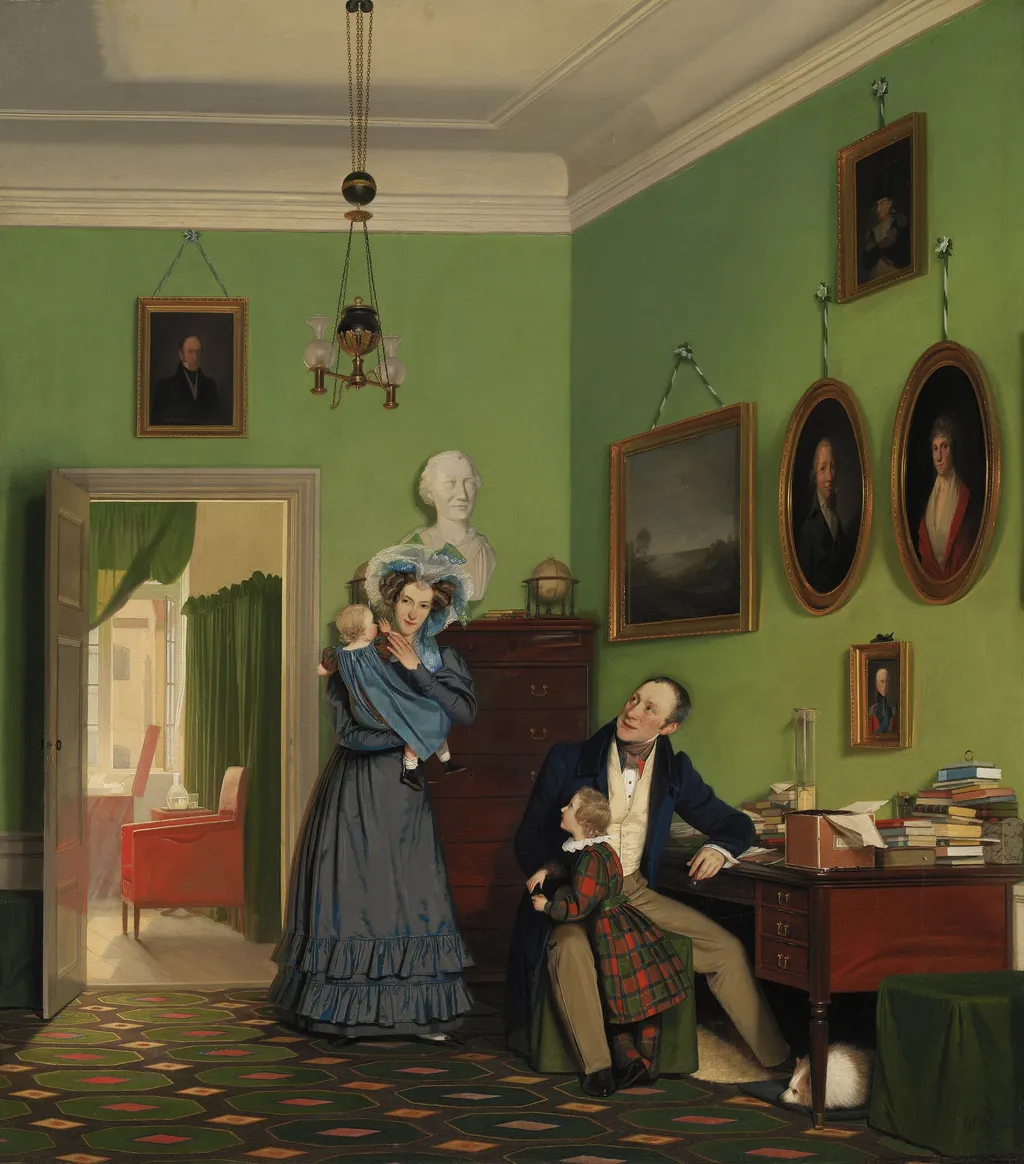
Familien Waagepetersen is an oil painting by the German Romanticist artist Wilhelm Bendz. It dates from 1830 and is held in the collection of the Statens Museum for Kunst.
About this work
Subject & Meaning
A glass cylinder containing a frog on the desk functions as a primitive barometer, subtly linking scientific curiosity with daily life.
The painting depicts Christian Waagepetersen, his wife Albertine, and two of their children in a domestic interior, emphasizing family life and scholarly pursuits. The seated patriarch is interrupted at his desk by his family, suggesting the prioritization of domestic bonds over work. The inclusion of a dog under the desk symbolizes fidelity and stability, reinforcing the theme of familial loyalty.
A glass cylinder containing a frog on the desk functions as a primitive barometer, subtly linking scientific curiosity with daily life. Oval portraits on the wall, painted by Jens Juel, depict Waagepetersen's parents, while a portrait of Frederik VI underscores the subject's social and cultural engagement. The scene reflects the values of the Danish middle class in the post-Napoleonic era, highlighting the convergence of family, work, and cultural participation in a rising bourgeois milieu.
Technique & Style
Completed in early 1830, this group portrait is executed in oil paint on canvas, measuring 99.5 by 88.5 centimeters. The work exemplifies the Danish Golden Age style through its depiction of an intimate, everyday domestic scene within a study. Bendz employs a realistic approach to render the textures of the mahogany desk, the family's carpet, and the clothing of the subjects.
The composition is carefully constructed, evidenced by a surviving perspective drawing held in the Statens Museum for Kunst's collection of prints and drawings. The painting features detailed interior elements, including a glass cylinder containing a frog used as a primitive barometer, oval portraits on the wall, and various scholarly objects like a globe and books, all illuminated to highlight the bourgeois values of family and work.
History & Provenance
The work was commissioned by wealthy wine merchant Christian Waagepetersen and painted by Wilhelm Bendz in the early months of 1830; Bendz presented it at the Charlottenborg Exhibition on 7 April 1830, a week after the show opened. The artist died of typhoid fever in 1832, and the portrait passed from Christian's son Mozart Waagepetersen to his adopted son Hermann Gaston Waagepetersen, who kept it until his death in 1922. After nearly seven decades in the family it was sold at Bruun Rasmussen auction 640 on 2 December 1997 to the Artemis Group in London, following an export restriction, and was acquired by the National Gallery of Denmark in 1998.
Familien Waagepetersen is held in the collection of the Statens Museum for Kunst (National Gallery of Denmark) in Copenhagen. Prior to this acquisition, the painting remained with the Waagepetersen family until December 2, 1997, when it was sold at auction by Bruun Rasmussen (Auction No. 640, Catalog No. 109) to the Artemis Group in London. The Danish Commission of Export of Cultural Assets had issued an export ban preceding this sale.
Historically, the work was exhibited at the annual Charlottenborg Exhibition on April 7, 1830, just one week after the event's official opening, as recorded in Christoffer Wilhelm Eckersberg's diary.
Context
Wilhelm Bendz's Familien Waagepetersen (1830) is situated within the Danish Golden Age's cultivation of bourgeois portraiture, reflecting the era's valorization of domestic harmony and intellectual life among the urban middle class. The painting's inclusion in the 1830 Charlottenborg Exhibition, noted in Eckersberg's diary, situates it within the institutional framework of Copenhagen's art world, where Bendz's premature death in 1832 curtailed his further development. The commission's continuity by Wilhelm Marstrand underscores the Waagepetersen circle's enduring significance in Danish art patronage.
Christian Waagepetersen's role as a cultural host, frequented by composers, musicians, and artists, anchors the work in the broader social currents of the period, where art, science, and social refinement intersected. The painting's prolonged family ownership and eventual 1997–1998 acquisition by the Statens Museum for Kunst, following an export ban, highlights its later recognition as a cultural patrimony of Denmark.
Legacy
The painting's early cultural significance deepened after Bendz's premature death in 1832, when his protégé Wilhelm Marstrand completed two further portraits of the Waagepetersen family, extending the artistic legacy of the composition. The work remained in family hands for more than a century, underscoring its private prestige before it entered the Statens Museum for Kunst in 1998 following an export-ban dispute and public sale. Since acquisition, it has been treated as a touchstone of Danish Golden Age portraiture, cited for its synthesis of domestic intimacy and bourgeois self-fashioning and used to illustrate broader trends in post-Napoleonic Danish cultural life.
Overview
Wilhelm Bendz's 1830 oil on canvas, Familien Waagepetersen, captures a domestic moment involving the affluent Copenhagen wine merchant Christian Waagepetersen, his wife Albertine, and two of their children. This group portrait, set within their residence on Store Strandstræde, exemplifies the intimate genre scenes characteristic of the Danish Golden Age. The painting is presently held in the collection of the National Gallery of Denmark.
Own this work as a print
Artist & collection
Artist
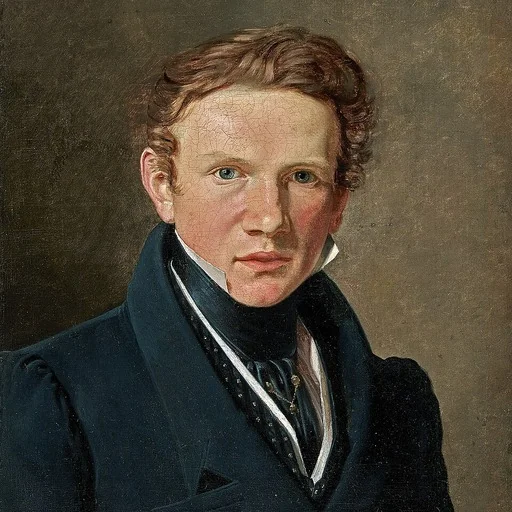
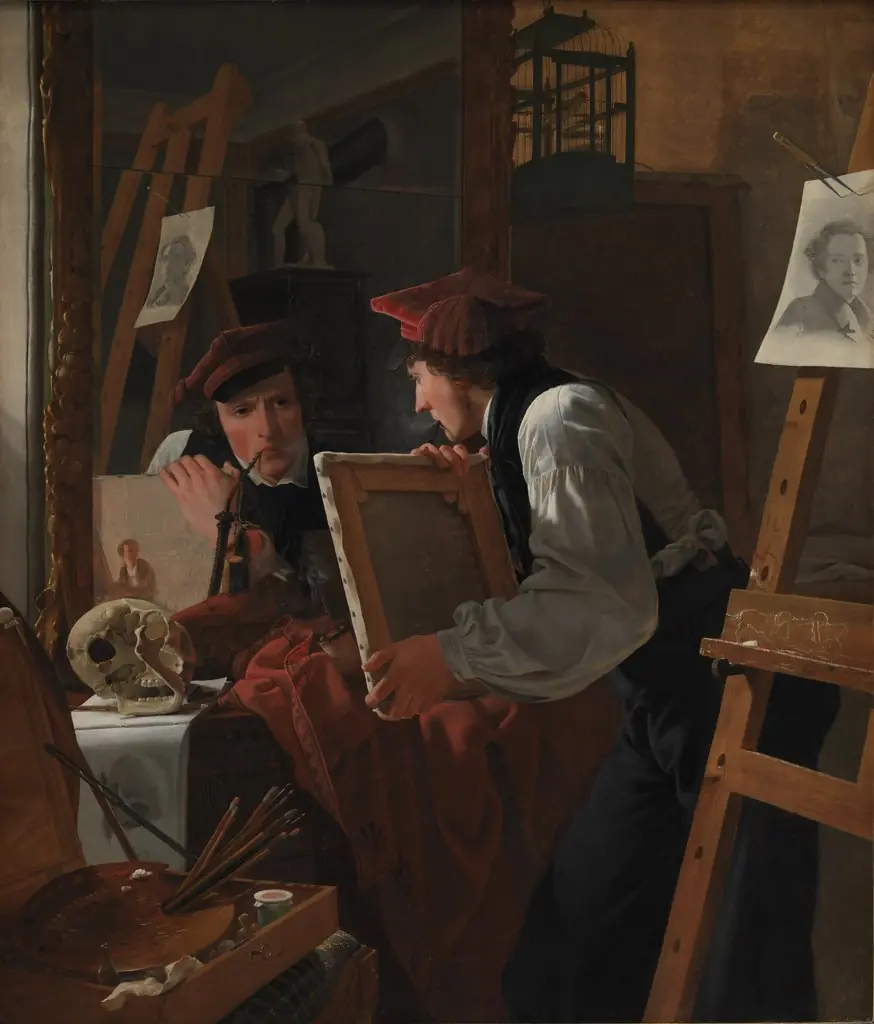
Wilhelm Ferdinand Bendz (20 March 1804 – 14 November 1832) was a Danish painter mainly known for genre works and portraits which often portray his artist colleagues and their daily lives.

 Portrait of the Family of Adrianus Bonebakker with Dirk L. Bennewitz
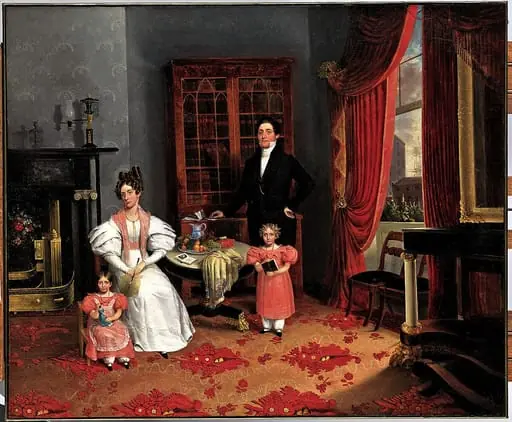 The Family of John Q. Aymar
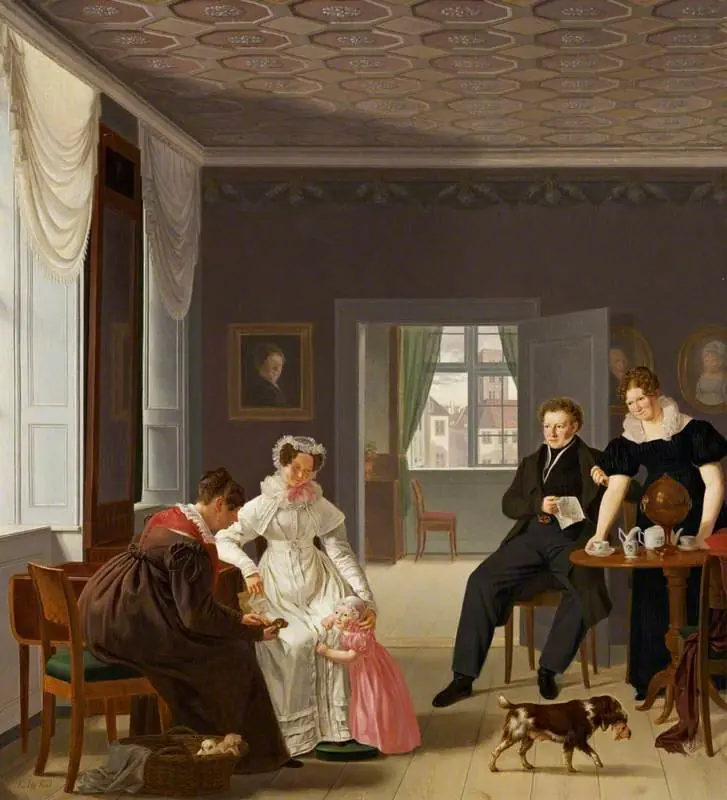 The Winther Family
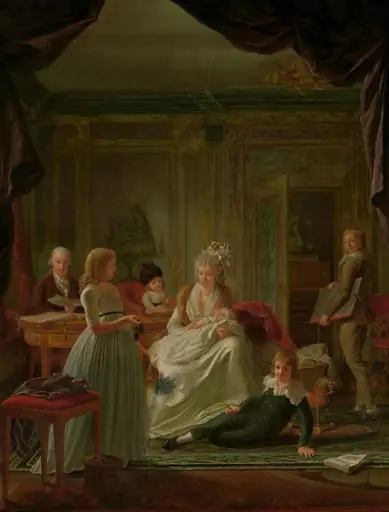 Portrait of Aernout van Beeftingh, his Wife Jacoba Maria Boon and their Children
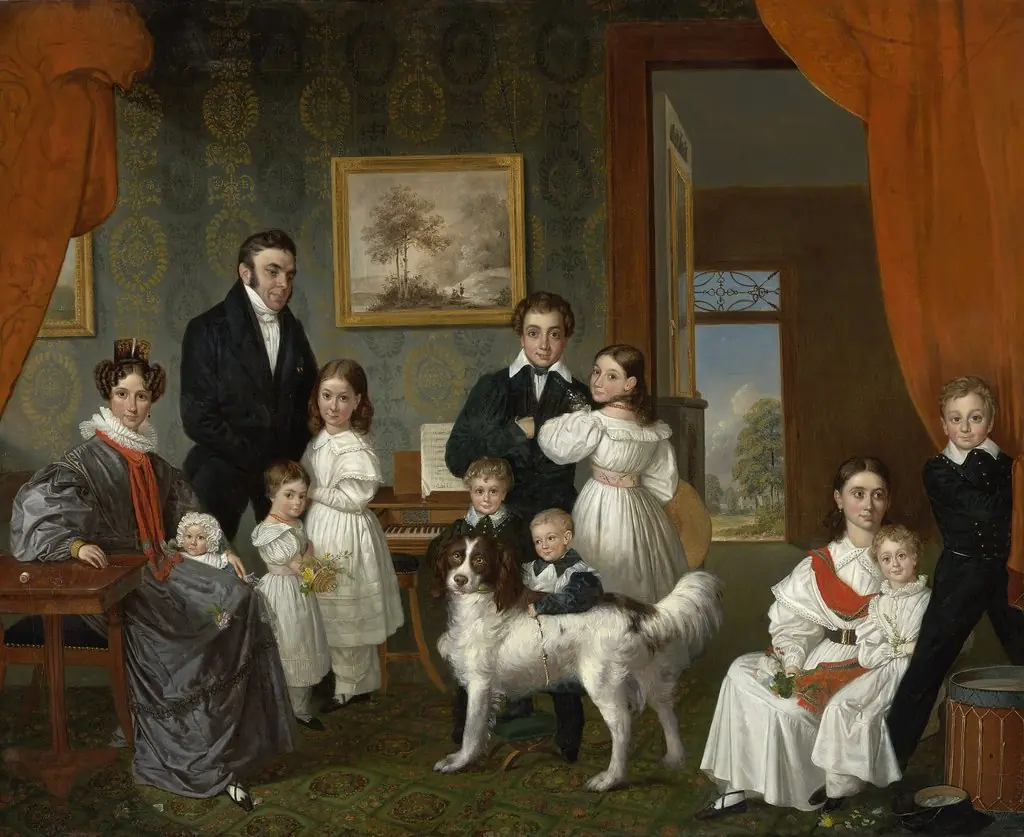 Portrait of the Baud family in their country house in Voorburg
 John, Fourteenth Lord Willoughby de Broke, and his Family
 Portrait of the Family of the 1st Viscount of Santarém
 The Art Gallery of Jan Gildemeester Jansz