Artwork
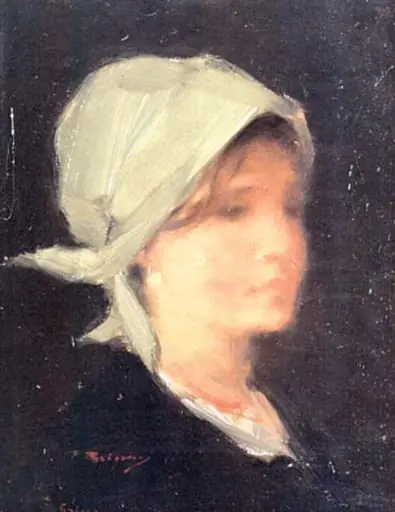
Peasant Girl with a White Headcloth
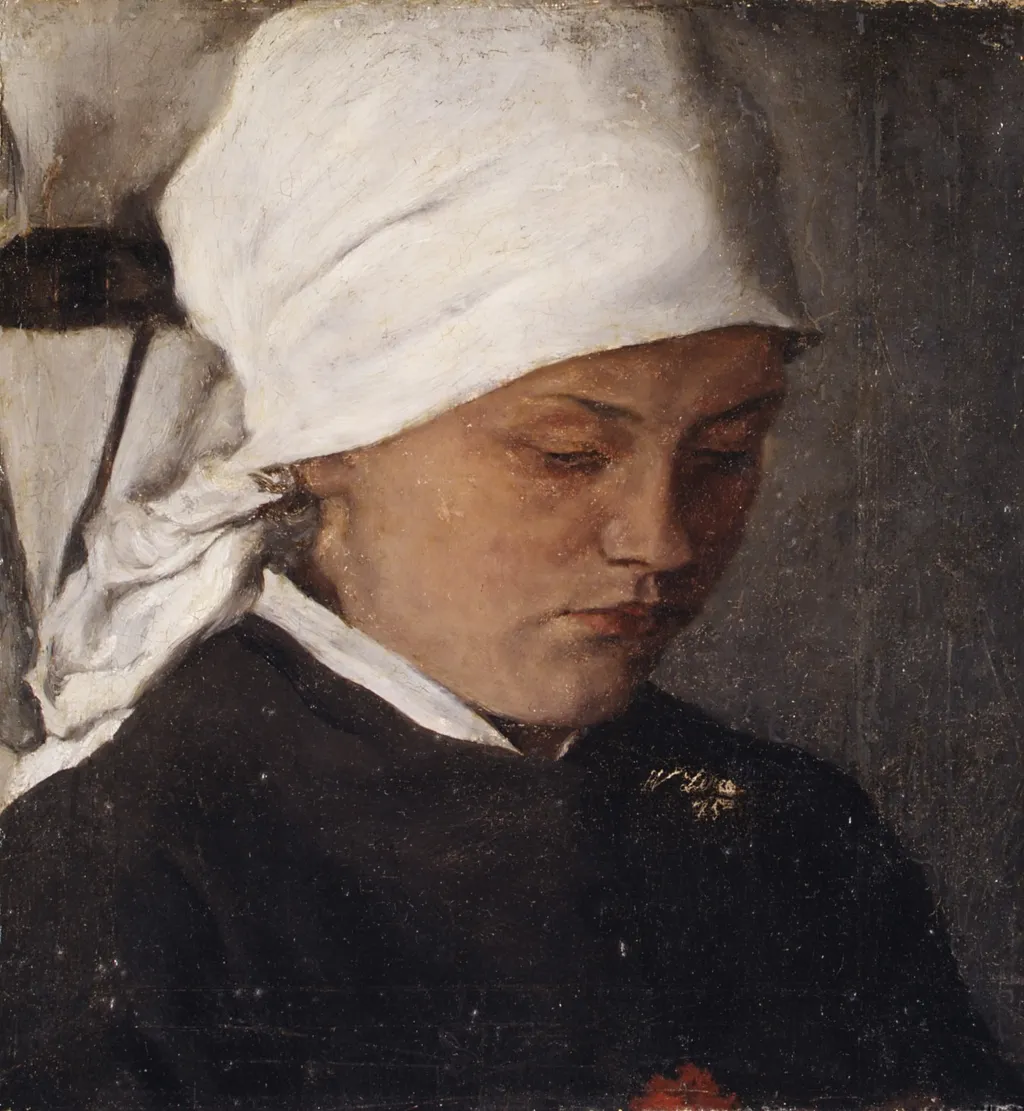
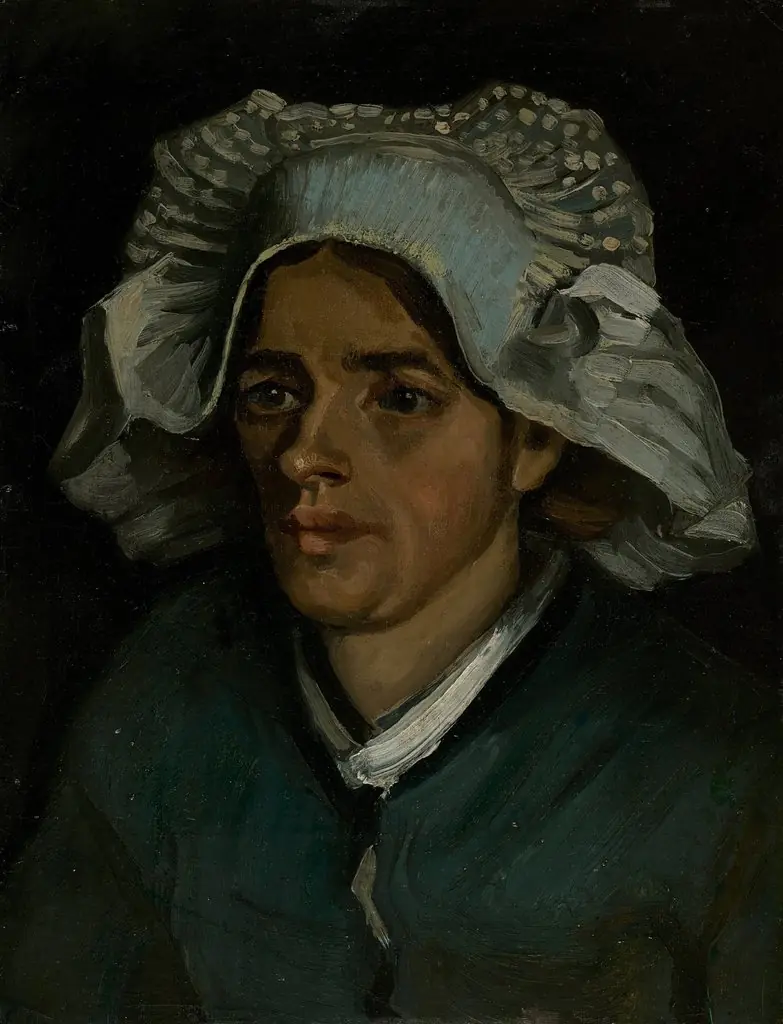
Peasant Girl with a White Headcloth is an oil painting by the Realist artist Wilhelm Leibl. It dates from 1893 and is held in the collection of the Metropolitan Museum of Art.
About this work
Technique & Style
Leibl, known for his commitment to unidealized realism, typically rendered his peasant subjects with direct, unembellished attention to surface and texture.
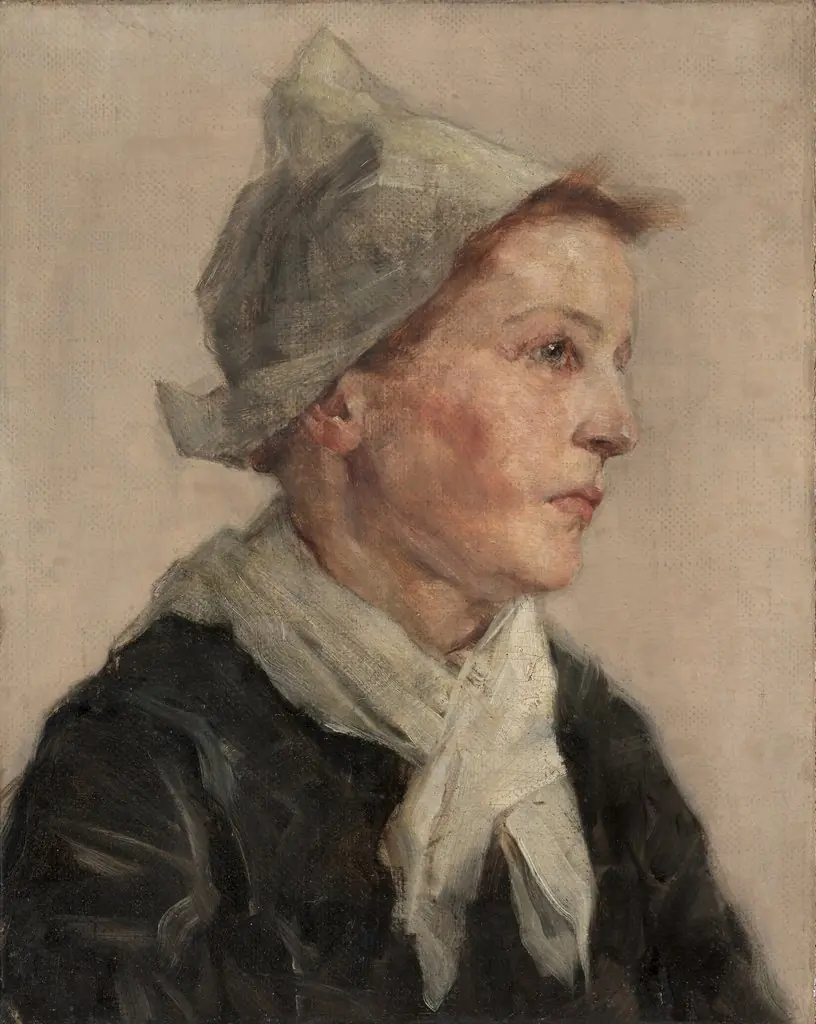
Wilhelm Leibl executed Peasant Girl with a White Headcloth in oil paint on canvas, with dimensions of 25.1 × 23.2 cm. The small scale and oil medium suggest an intimate, closely observed study. Leibl, known for his commitment to unidealized realism, typically rendered his peasant subjects with direct, unembellished attention to surface and texture. The white headcloth likely serves as a focal point of tonal contrast against more subdued garments and background, demonstrating his controlled handling of light on fabric.
The painting's compact format and straightforward presentation align with his broader practice of producing focused, portrait-like studies of rural figures.
History & Provenance
Peasant Girl with a White Headcloth was painted by Wilhelm Leibl in 1885, executed in oil paint on canvas. The work entered the collection of the Metropolitan Museum of Art, where it remains held and on view. No further details regarding commission, prior ownership, intermediate collectors, or acquisition circumstances are documented in the available sources.
The painting measures 25.1 cm in height by 23.2 cm in width, consistent with a small-scale portrait format. Beyond the 1885 creation date and its current institutional home, the provenance chain is not specified.
Overview
Wilhelm Leibl's 1893 oil painting, Peasant Girl with a White Headcloth, captures a young woman in a style characteristic of the Realism movement. This work is a notable example of the German artist's focus on individual portraits and scenes from rural life. The painting is currently part of the collection at The Metropolitan Museum of Art, representing a key aspect of Leibl's artistic output.
Subject & Meaning
The painting portrays a young woman, likely a peasant, whose face is gently inclined downwards, with her gaze similarly directed. She wears a simple, dark garment complemented by a white collar and a white headcloth. This modest attire, combined with her introspective posture, conveys a sense of quiet dignity or humility. The focus on an ordinary individual reflects the Realist commitment to depicting everyday life without embellishment.
Context
Wilhelm Leibl was a prominent German painter recognized for his dedication to Realism, particularly in his portrayals of rural subjects and individual portraits. Peasant Girl with a White Headcloth aligns with his broader artistic practice, illustrating his interest in capturing the unvarnished reality of peasant life. The work stands as an example of late 19th-century art that sought to elevate the ordinary, presenting common people with a serious and direct gaze.
Artist & collection
Artist
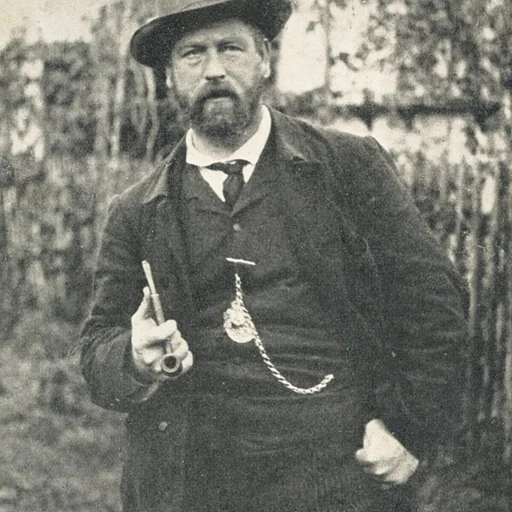
Wilhelm Maria Hubertus Leibl (October 23, 1844 – December 4, 1900) was a German realist painter. He became famous for his portraits and depictions of scenes of peasant life.