Artwork
Untitled
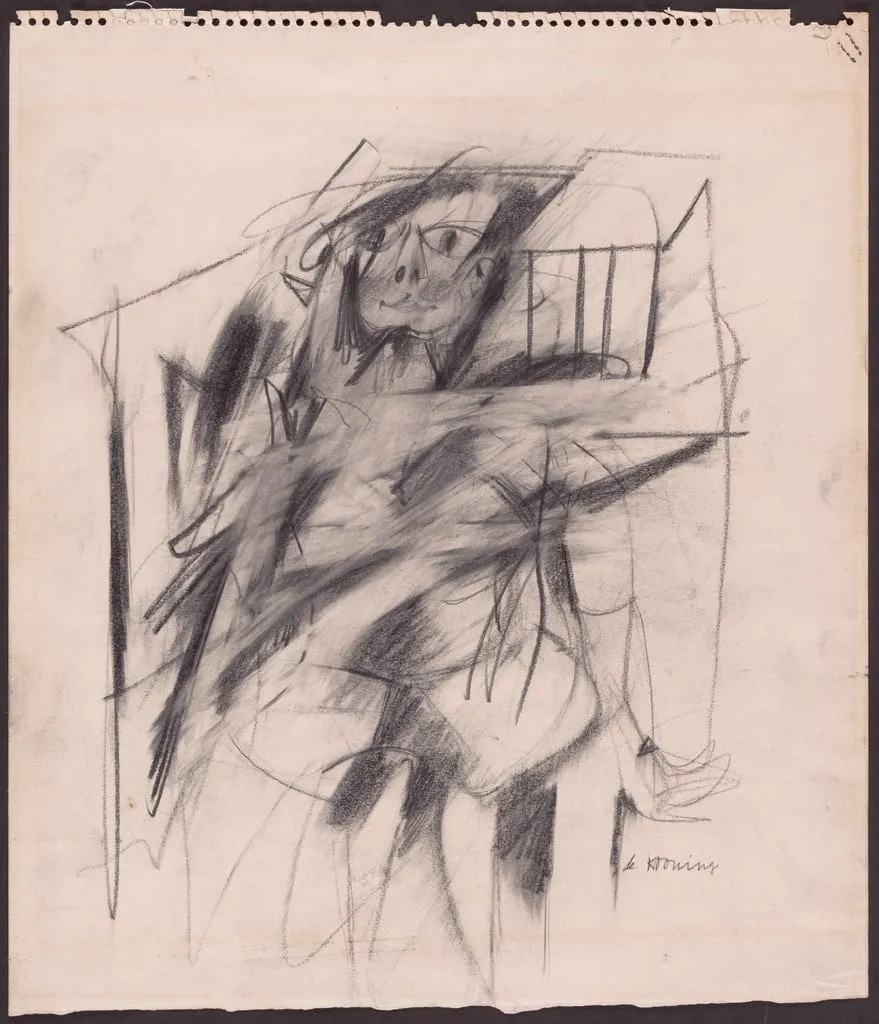
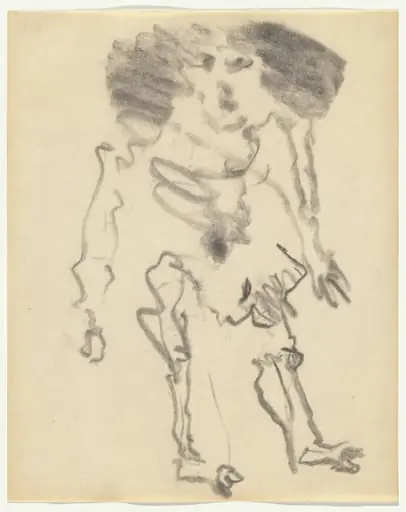
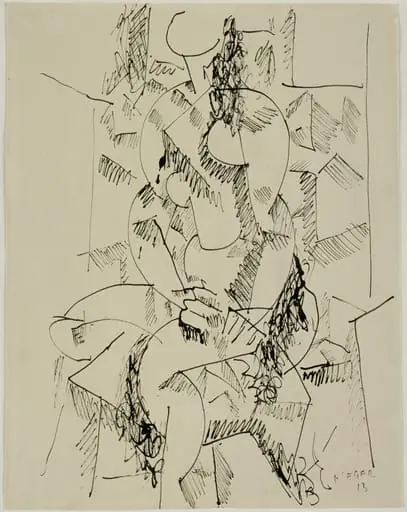
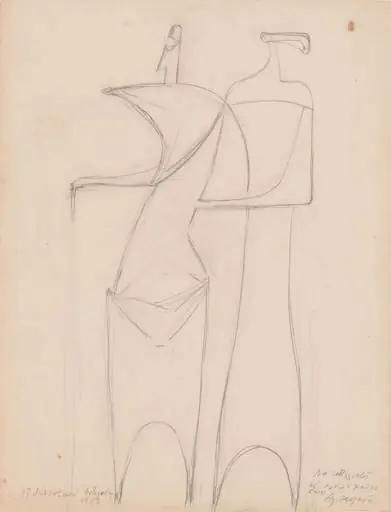
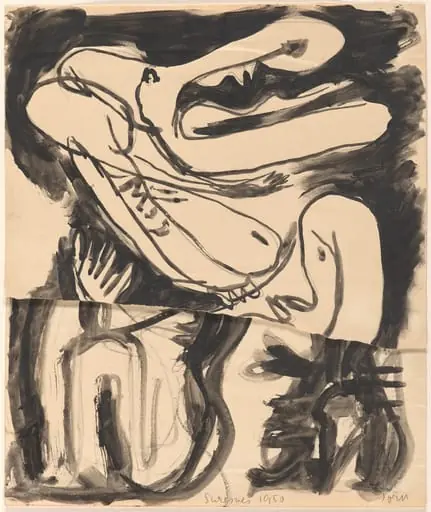
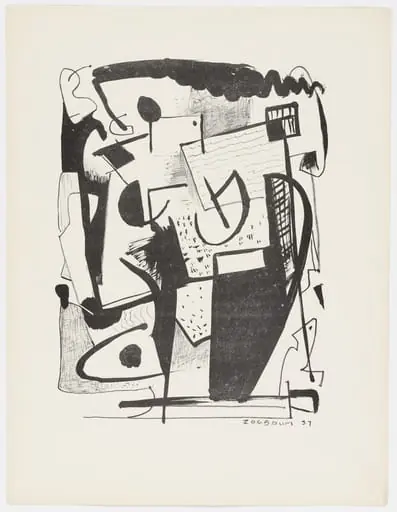
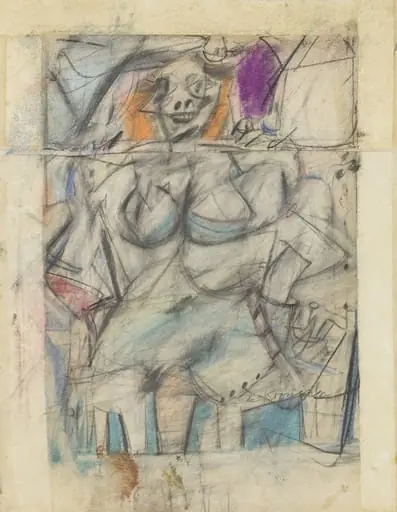
Untitled is a graphite drawing by Willem de Kooning. It dates from 1954 and is held in the collection of the Museum of Modern Art.
About this work
Overview
Created in 1954, this pencil drawing on paper by Willem de Kooning captures a seated figure with rapid, unrefined strokes.
Created in 1954, this pencil drawing on paper by Willem de Kooning captures a seated figure with rapid, unrefined strokes. Both sides of the sheet bear marks, suggesting the artist worked through ideas without concern for finish. The work belongs to The Museum of Modern Art’s collection and exemplifies de Kooning’s engagement with drawing as a space for immediate, physical inquiry rather than polished representation.
Subject & Meaning
The figure, seated in a chair, appears slumped and loosely rendered, with exaggerated facial features, large eyes, a minimal mouth, that disrupt conventional portraiture. The subject resists clear identification, functioning more as an anchor for gesture than a portrait. De Kooning’s focus lies in the act of depiction itself, where the body becomes a vehicle for energy and rhythm rather than narrative or psychological depth.
Technique & Style
Executed entirely in pencil, the drawing employs swift, layered lines that retain their initial urgency. Smudges and erasures remain visible, emphasizing process over resolution. De Kooning avoids contouring or shading to model form; instead, he builds volume through accumulation and pressure.
The lack of color and the rawness of the marks align with his broader interest in the physicality of mark-making during this phase of his career.
History & Provenance
The drawing entered The Museum of Modern Art’s collection in the mid-20th century, part of a broader acquisition of de Kooning’s works from the 1950s. It was likely made in his New York studio during a period of intense experimentation, when he was transitioning between figurative and abstract modes. Its preservation on both sides reflects the artist’s economical use of materials and the informal, iterative nature of his practice.
Context
In the early 1950s, de Kooning was refining his approach to the human form amid the rise of Abstract Expressionism. While his paintings from this time grew increasingly abstract, his drawings often retained vestiges of the figure as a point of departure. This work reflects a broader trend among New York School artists who valued spontaneity and the body’s role in creation, positioning drawing as a direct extension of movement and thought.
Legacy
This drawing contributes to the understanding of de Kooning’s process as one rooted in revision and physical engagement. Its unpolished quality challenged traditional notions of draftsmanship, influencing later generations who saw value in the unfinished and the gestural. As a record of thought in motion, it remains a key example of how drawing functioned as a laboratory for his larger artistic inquiries.
Artist & collection

Artist
Willem de Kooning ( də KOO-ning, Dutch:; April 24, 1904 – March 19, 1997) was a Dutch-American abstract expressionist artist.