Artist
Subject
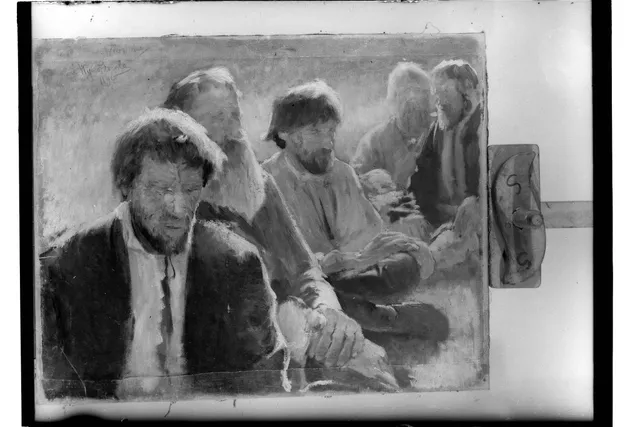
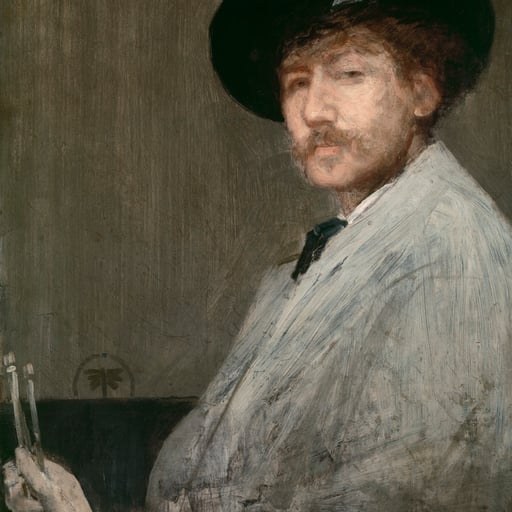
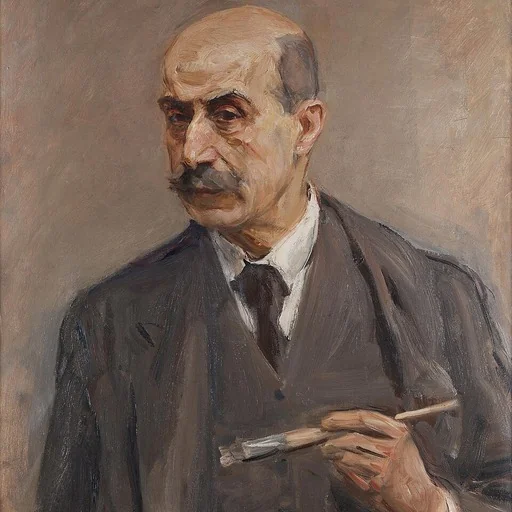
Charcoal is a subject in art. The gallery holds 34 works in this subject in art, including works by James McNeill Whistler, Max Liebermann and Alphonse Legros.
Charcoal is a lightweight black carbon residue produced by strongly heating wood (or other animal and plant materials) in minimal oxygen to remove all water and volatile constituents. In the traditional version of this pyrolysis process, called charcoal burning, often by forming a charcoal kiln, the heat is supplied by burning part of the starting material itself, with a limited supply of oxygen.
Artist

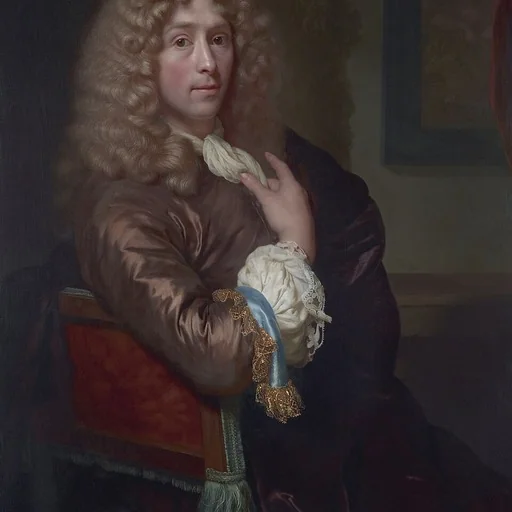
Charcoal is a lightweight black carbon residue produced by heating wood or other organic materials in minimal oxygen, a process known as pyrolysis. In art, charcoal functions doubly: as a depicted subject matter and as a fundamental drawing medium. Its appearance in 56 works within this collection signals its deep embedding in human visual culture, reflecting both its utilitarian necessity for fuel, metallurgy, and cooking, and its expressive possibilities as an artistic tool. The medium's capacity for deep blacks, subtle gradations, and immediate erasure has made it indispensable to artists from prehistoric cave painters to modern masters.
As iconography, charcoal carries layered significance. Its blackness associates it with mourning, poverty, and humble labor, yet also with transformation and purification through fire. In religious contexts, charcoal's use in incense and ritual burning links it to spiritual offering and prayer. The charcoal burner's isolated, watchful existence in forest huts, documented across European folklore, imbues the material with connotations of marginality and vigil. As a drawing medium, charcoal's very materiality, its origin in controlled destruction of wood, metaphorically resonates with artistic creation itself, the making of lasting images from perishable matter. Its powdery, adherent quality, noted since antiquity, enables both precise line and atmospheric tonal effects, making it uniquely suited to studies of light, shadow, and emotional intensity.
The treatment of charcoal as subject and medium evolved substantially across periods. Prehistoric cave artists used charcoal alongside other pigments, with some works dated to approximately 23,000 BCE. In classical antiquity, Roman charcoal production was industrial in scale, with archaeological evidence of 27 charcoal kilns at Hooglede, Belgium, indicating mass production for metallurgy and glassmaking. Medieval and Renaissance artists increasingly valued charcoal for preparatory studies, though its fragility limited permanent works. The Dutch and Flemish traditions particularly exploited charcoal's tonal range for landscape and genre studies. By the nineteenth century, charcoal became central to Realist and Naturalist practices seeking direct, unidealized representation of contemporary life, explaining its prominence in peasant and labor scenes within this collection. Modern artists such as James Ensor and Pablo Picasso employed charcoal for its expressive immediacy, while contemporary practice continues to exploit its environmental and material resonances.
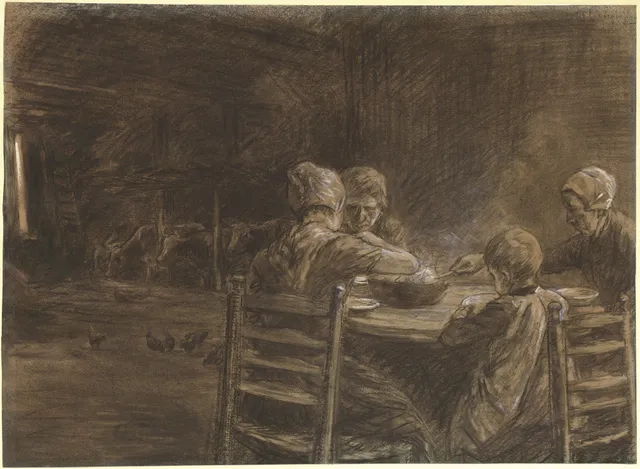
Specific notable depictions in this collection include Dziady (All Souls' Day), which draws upon charcoal's association with commemorative fire and ancestral ritual, and East Frisian Peasants Eating Supper, where it signifies domestic warmth and humble sustenance. The Self-portrait and Desene copii demonstrate charcoal's use in intimate, autobiographical, and pedagogical contexts. While individual artists are not always specified in the corpus, the range from religious copyists to documentarians of Polish and Romanian village life indicates broad artistic engagement. Historically, Ensor and Picasso represent canonical modern practitioners who exploited charcoal's powdery adherence and tonal violence, though their specific works are not in this collection. The Nachahmer (imitator) of The Last Supper suggests charcoal's role in reproductive and devotional practices.
Charcoal's cultural afterlife extends beyond art into urgent contemporary discourse. Its production remains environmentally consequential: illegal and unregulated charcoal burning drives deforestation in South America, Africa, and Haiti, where it supplies 60 percent of domestic energy. Nigeria produces charcoal for European export, contributing to carbon dioxide emissions and climate change. Conversely, biochar research investigates charcoal's potential for carbon sequestration, reframing it as environmental solution rather than problem. In art, charcoal persists as a medium of choice for drawing, its very anachronism in digital age marking a commitment to material presence and haptic process. The continued depiction of charcoal in works spanning from prehistoric caves to this collection's contemporary holdings testifies to its enduring hold on the human imagination, as both practical necessity and symbol of transformation through controlled fire.
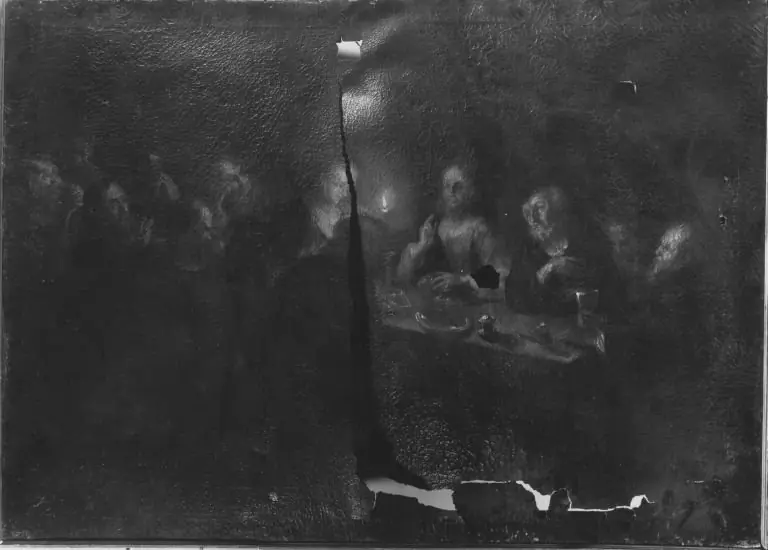 Das letzte Abendmahl (Nachahmer)
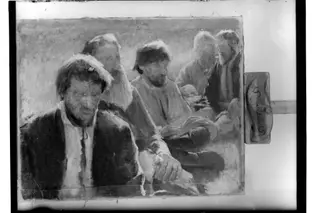 Dziady (All Souls’ Day)
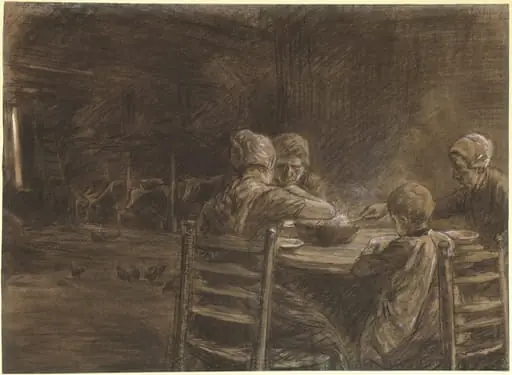 East Frisian Peasants Eating Supper
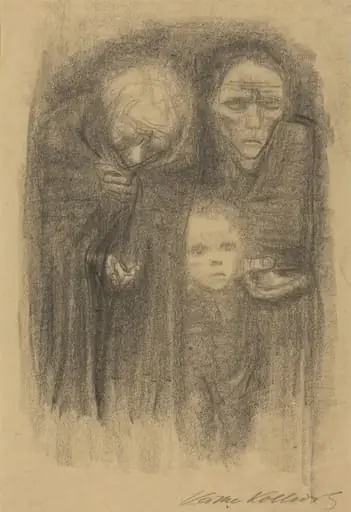 Beggars
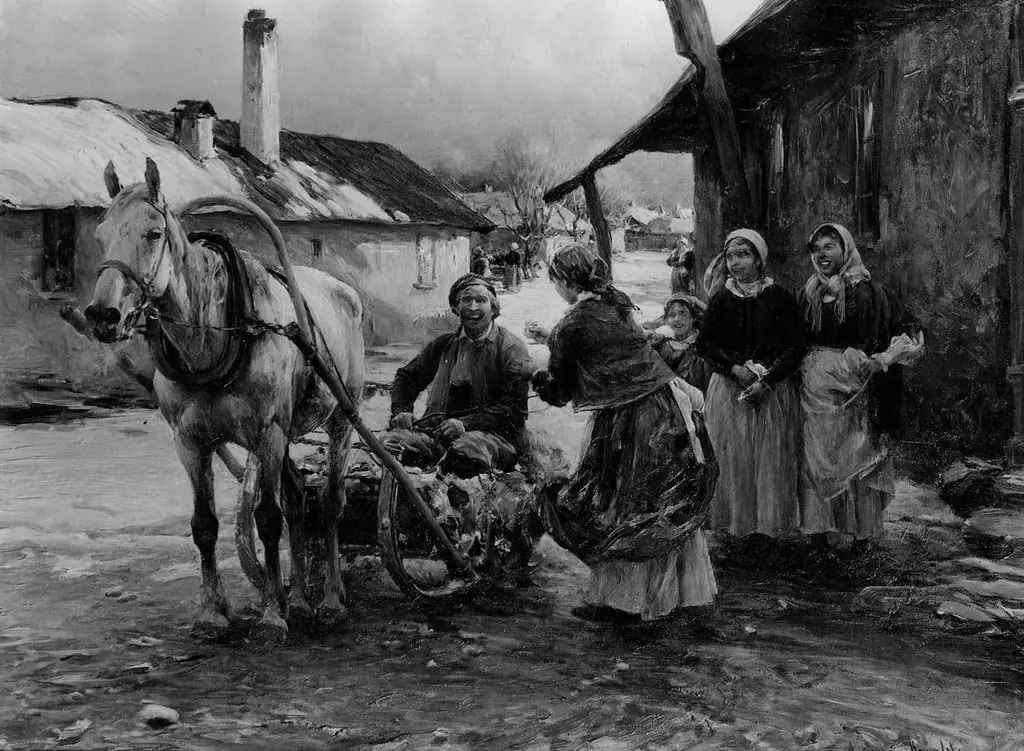 In a Polish Village
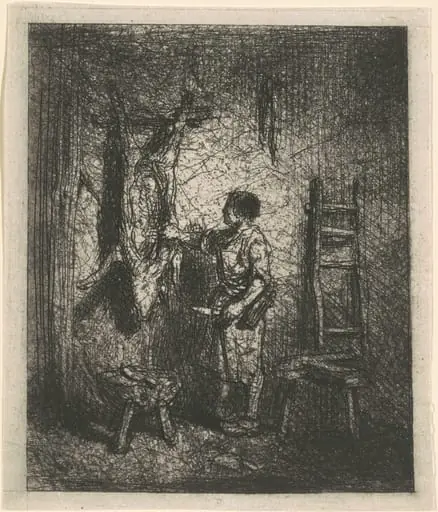 The Pig Butcher
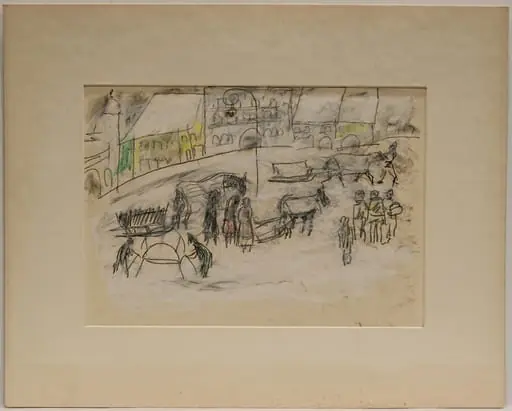 Peisaj de iarnă
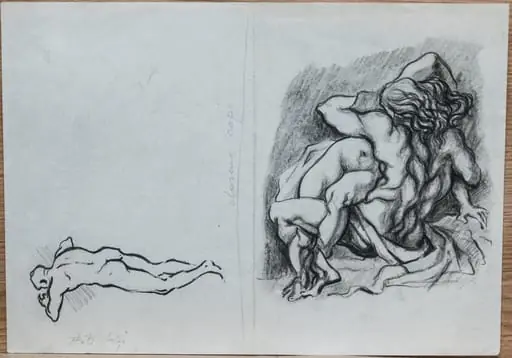 Desene copii
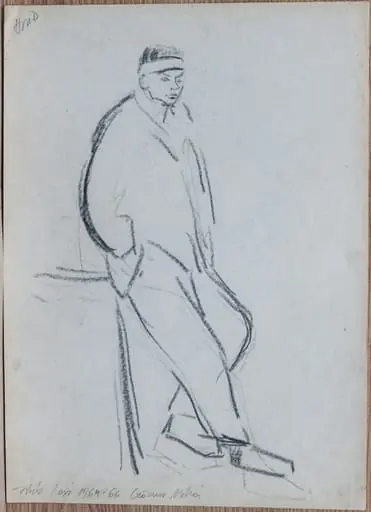 verso: Portret
 Desene după Grigorescu
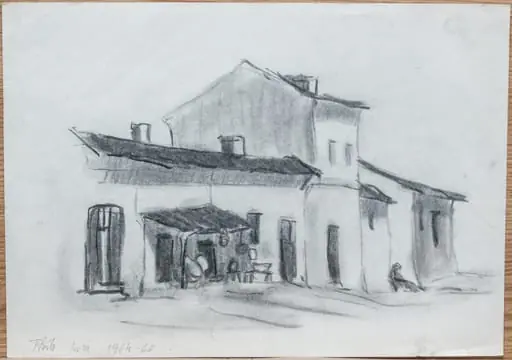 Peisaj cu casă
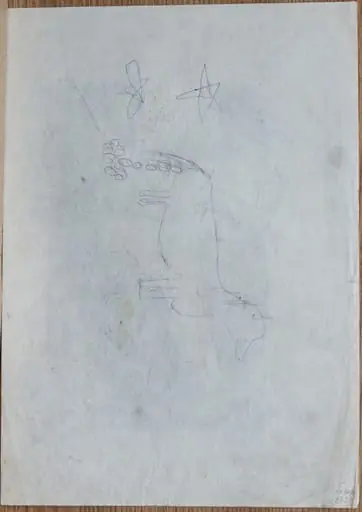 Desen după o poză din Tahiti
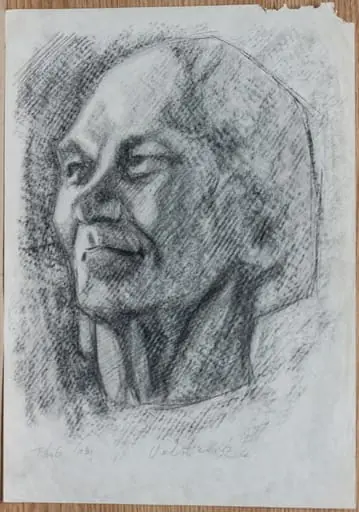 Voltaire
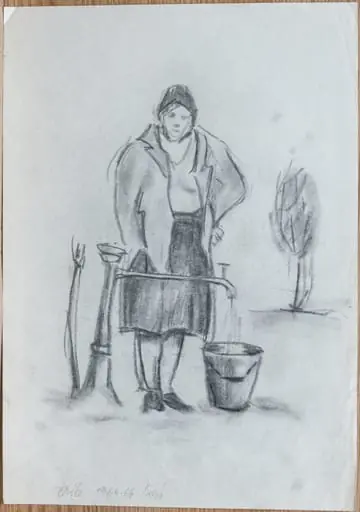 Femeie lângă canal
 Colegul de clasă Crăciun Mihai
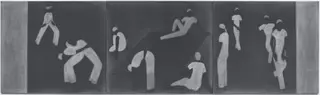 Untitled
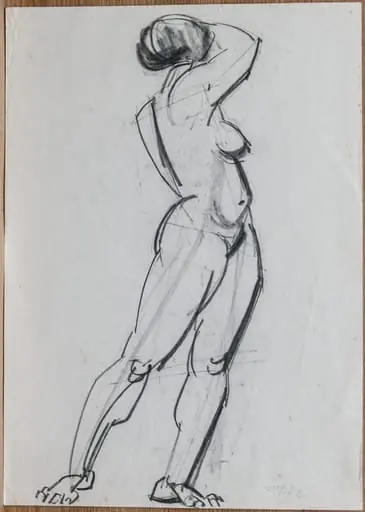 Crochiu 7
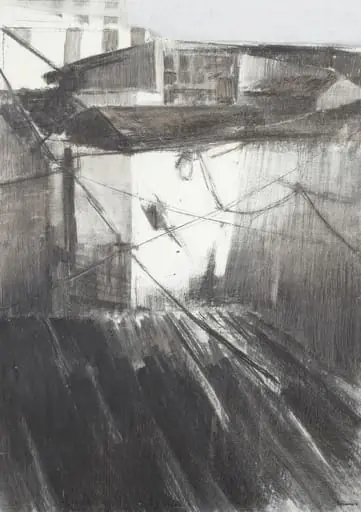 Landscape
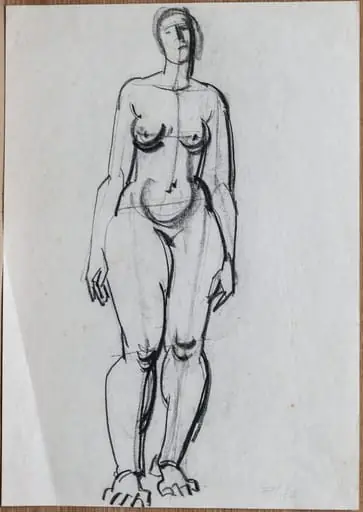 Crochiu 2
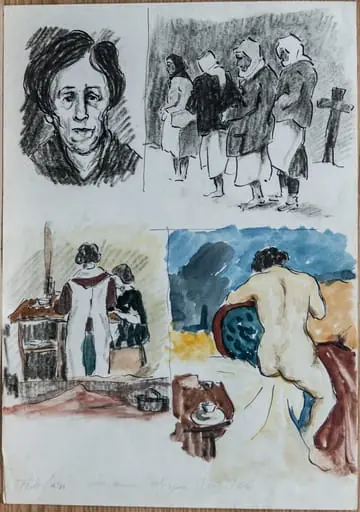 Desene după Tonitza
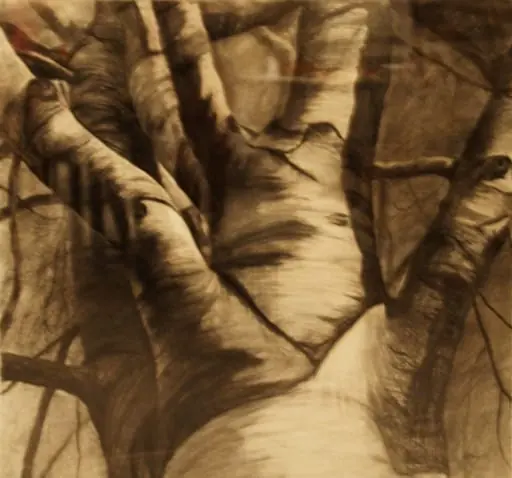 Λεύκες.
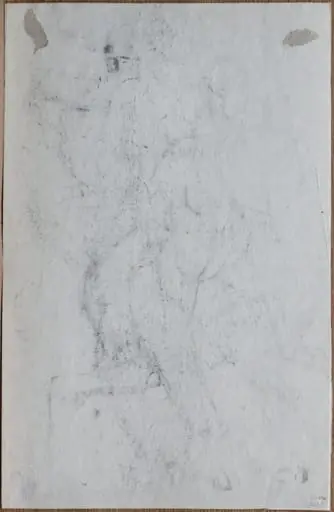 Crochiu 9
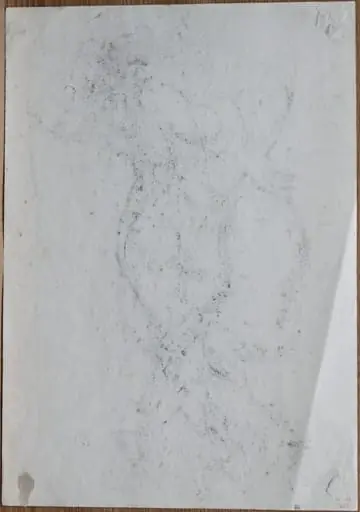 Crochiu 1
 Peisaj cu case
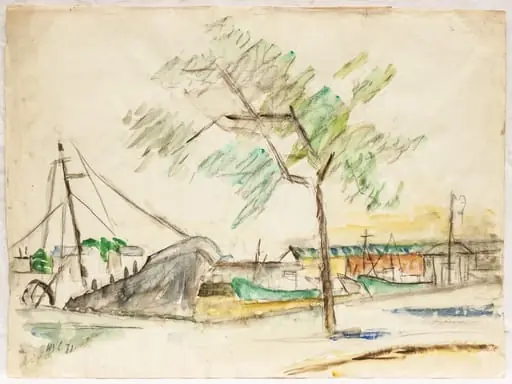 Peisaj cu pomi
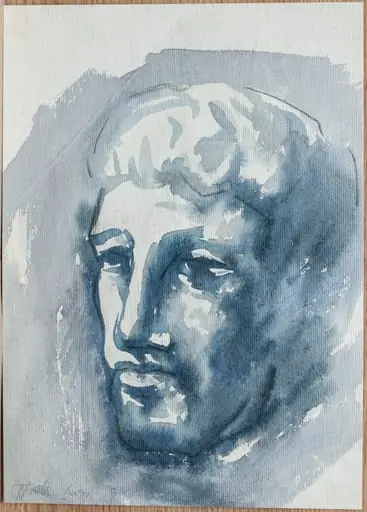 verso: Schiță de compoziție cu 2 personaje
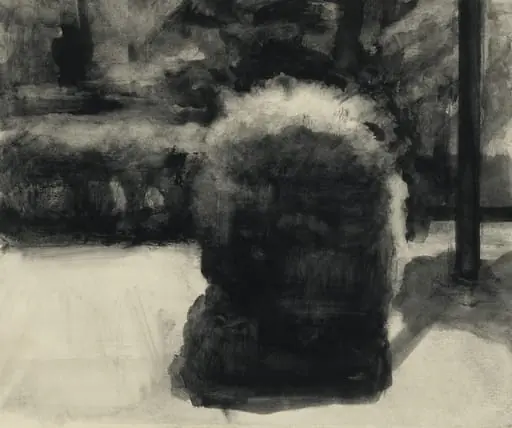 Untitled
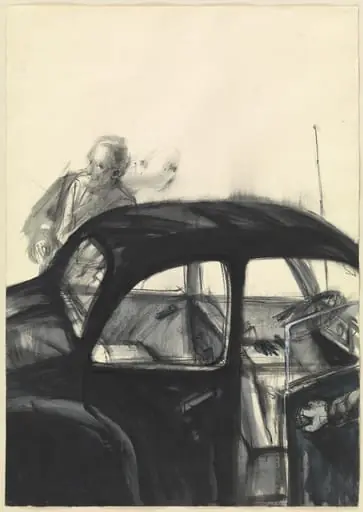 Untitled
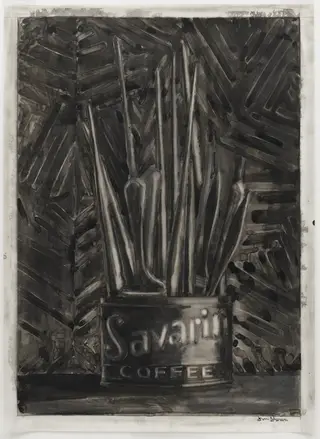 Untitled
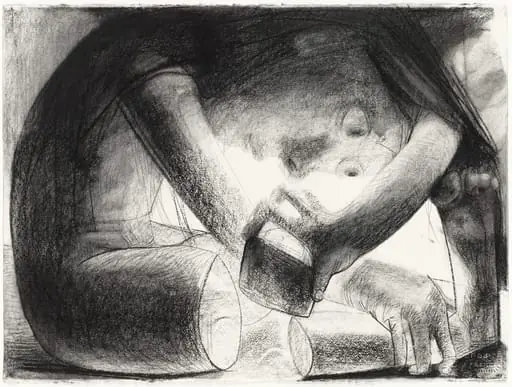 Untitled
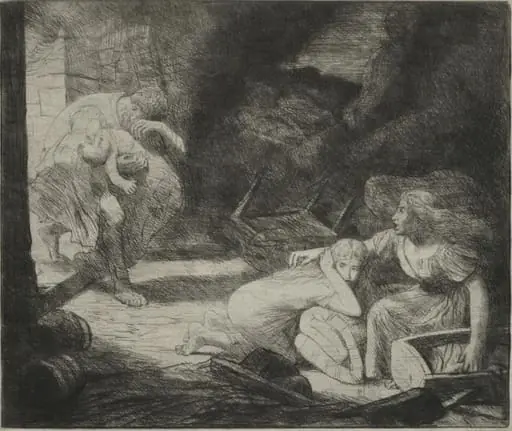 L'Incendie
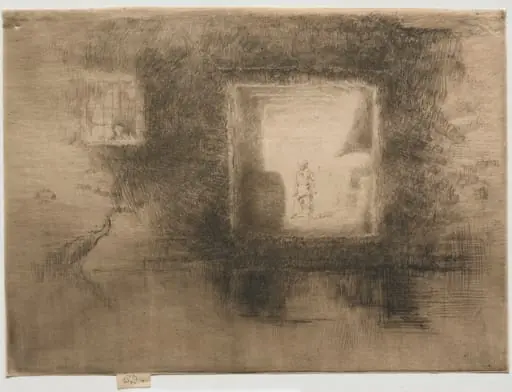 Nocturne Furnace
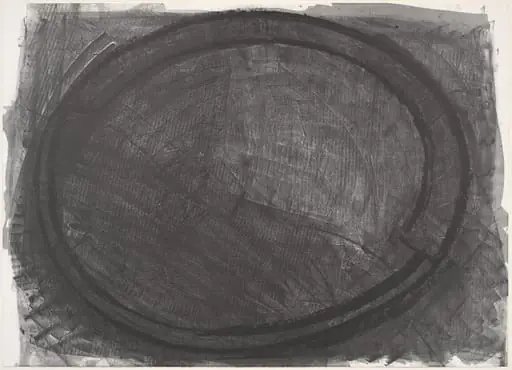 Untitled
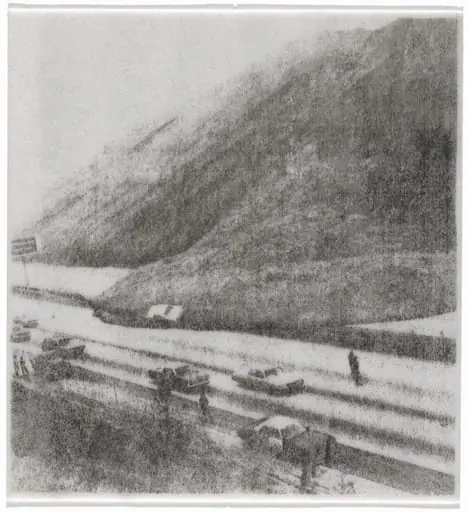 Untitled
Charcoal is a lightweight black carbon residue produced by strongly heating wood (or other animal and plant materials) in minimal oxygen to remove all water and volatile constituents.
Artifact World Gallery holds 34 public-domain Charcoal works, all free to view and download.
Key Charcoal artists in the collection include James McNeill Whistler, Max Liebermann and Alphonse Legros.
Charcoal works in the collection are held by Gavrila Simion Eco-Museum Research Institute Tulcea, Museum of Modern Art and National Gallery of Art.
Your cart is empty
Browse artworks →