Artwork
The Cannon Shot
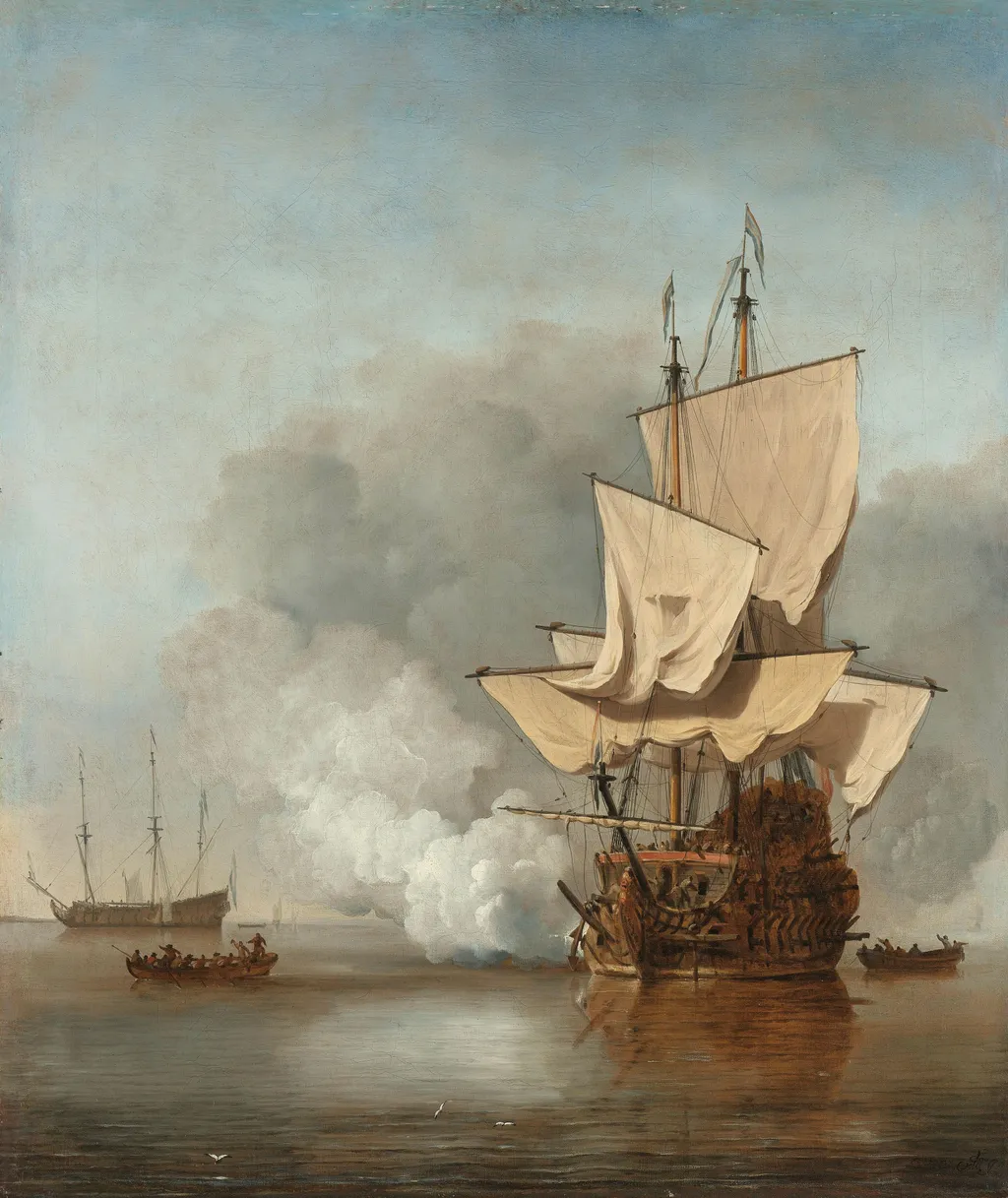
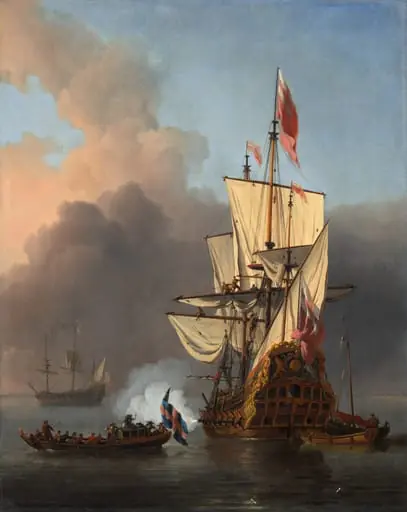
The Cannon Shot is an oil painting by the Dutch Golden Age artist Willem van de Velde the Younger. It dates from 1690 and is held in the collection of the Rijksmuseum. Created around 1680, this oil on canvas depicts a Dutch warship discharging a ceremonial gun salute.
About this work
This painting shows a Dutch navy ship firing a salute. Willem van de Velde the Younger painted it around 1680. He used oil on canvas.
It was made after he moved to England in the 1670s. His father worked as a court painter too. Both father and son painted many sea scenes.
Check out the Rijksmuseum to see this work in person.
Subject & Meaning
The work depicts a Dutch three-masted warship firing a salute cannon on calm waters, with two small sloops nearby and a second frigate in the distance.
The work depicts a Dutch three-masted warship firing a salute cannon on calm waters, with two small sloops nearby and a second frigate in the distance. Created around 1680, the painting visualizes the acoustic impact of the gun salute through a large, billowing cloud of smoke that disperses without obscuring the background vessel. While the collector Adriaan van der Hoop once believed the ship represented the De Zeven Provinciën, flagship of Michiel de Ruyter, modern scholarship refutes this specific identification, viewing the vessel as a generic example of a Dutch warship of that type.
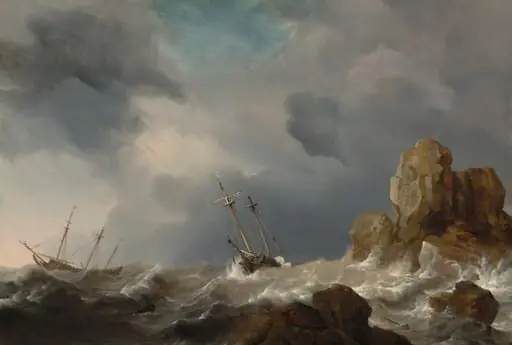
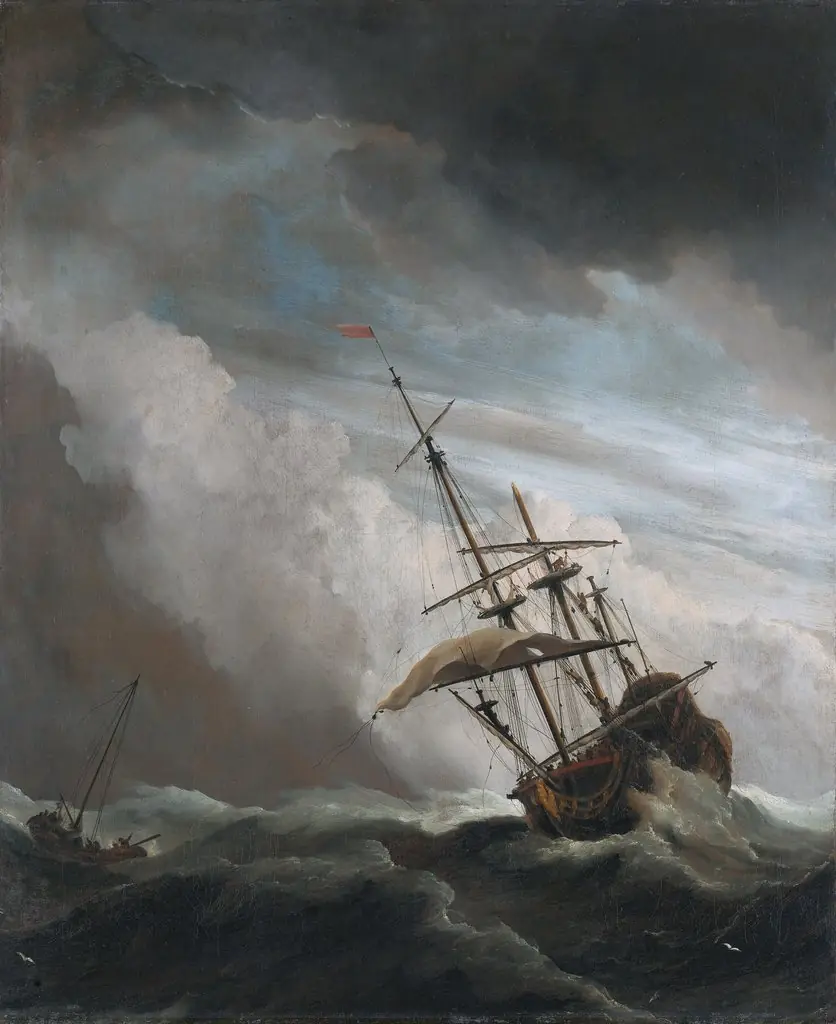
The scene is often interpreted in contrast to its pendant, The Gust of Wind, which portrays a ship battered by a storm. This juxtaposition of the calm, self-assured salute against the chaotic tempest is thought to carry symbolic weight, reflecting the artist's enduring Dutch identity even during his service in England.
The composition emphasizes tranquility and order, with the smoke rendered to convey a moment where nature itself seems to pause for the signal.
Technique & Style
The Cannon Shot is an oil painting on canvas support, measuring 78.5 cm high by 67 cm wide. Van de Velde the Younger applied oil paint with meticulous brushwork, achieving a highly detailed, realistic rendering of the ship, its sails, and the expansive smoke plume that follows the gunshot. The composition is carefully balanced, arranging the principal vessel, attendant boats, and background frigate as if composing a still life, while the colour palette remains restrained and translucent, especially in the water. These qualities reflect his reputation for precise draftsmanship, strong colour sense, and composed marine scenes.
History & Provenance
The painting was created around 1680 by Willem van de Velde the Younger, likely after his move to England in about 1672, where he served as court painter to Charles II. It was long paired with its pendant, The Gust of Wind. By the 18th century both works were in the collection of Sir Philip Stephens.
In 1834 the Amsterdam banker and collector Adriaan van der Hoop acquired The Cannon Shot at auction, believing it depicted Michiel de Ruyter's flagship De Zeven Provinciën, an identification later refuted. Van der Hoop lent the painting to an old masters' exhibition in 1845, where critic Alexander Oltmans gave it its current title. Upon van der Hoop's death in 1854, the work passed to the city of Amsterdam as part of his bequest of about 250 paintings.
It was initially housed in the Museum van der Hoop and transferred to the Rijksmuseum in 1885, where it remains.
The Cannon Shot is held in the collection of the Rijksmuseum in Amsterdam. It entered the museum's holdings in 1885, having previously been housed in the Museum van der Hoop after Adriaan van der Hoop bequeathed his collection to the city of Amsterdam upon his death in 1854. Van der Hoop had originally acquired the painting at auction in 1834, separating it from its pendant, The Gust of Wind, which had long remained together with it in the collection of Sir Philip Stephens during the 18th century.
The work was publicly exhibited in 1845 when van der Hoop lent it to an old masters' exhibition. It was during this event that art critic Alexander Oltmans assigned the painting its current title in a contemporary review.
Context
Painted around 1680, The Cannon Shot belongs to Willem van de Velde the Younger's English-period output, produced after he and his father joined the court of Charles II around 1672. Van de Velde is widely regarded as one of the foremost marine painters of his era, prized for the extreme accuracy of his ship portraits, his compositional balance, and his handling of light and atmosphere. The painting and its pendant The Gust of Wind are considered fully autograph masterworks within his oeuvre, contrasting a calm gun salute with a ship battered by storm.
The work's modern title originated in 1845, when critic Alexander Oltmans, reviewing an old masters' exhibition to which Adriaan van der Hoop had lent it, praised its translucent water and brilliantly rendered smoke. Adriaan van der Hoop had acquired it at auction in 1834, mistakenly believing it depicted Michiel de Ruyter's flagship De Zeven Provinciën, an identification later refuted. The painting entered the Museum van der Hoop and was transferred to the Rijksmuseum in 1885.
Legacy
By the mid-nineteenth century The Cannon Shot had entered the canon of Dutch Golden Age marine painting, a status confirmed when critic Alexander Oltmans praised its translucent water and finely rendered smoke in a review of the 1845 Amsterdam exhibition of old masters. The painting’s pairing with its pendant The Gust of Wind persisted for centuries, reinforcing its reputation as a matched masterpiece executed entirely by Willem van de Velde the Younger. After Adriaan van der Hoop bequeathed the work to Amsterdam in 1854, its transfer in 1885 to the newly opened Rijksmuseum cemented its place in the national collection and broadened its public legacy.
French writer Paul Claudel later attested to the picture’s singular acoustic power, noting that the cannon’s smoke cloud arrests both sea and viewer in a moment of suspended attention.
Overview
Created around 1680, this oil on canvas depicts a Dutch warship discharging a ceremonial gun salute. The work belongs to the marine oeuvre of Willem van de Velde the Younger, a specialist in naval subjects whose meticulous rendering captures the momentary flash of cannon fire against a calm sea.
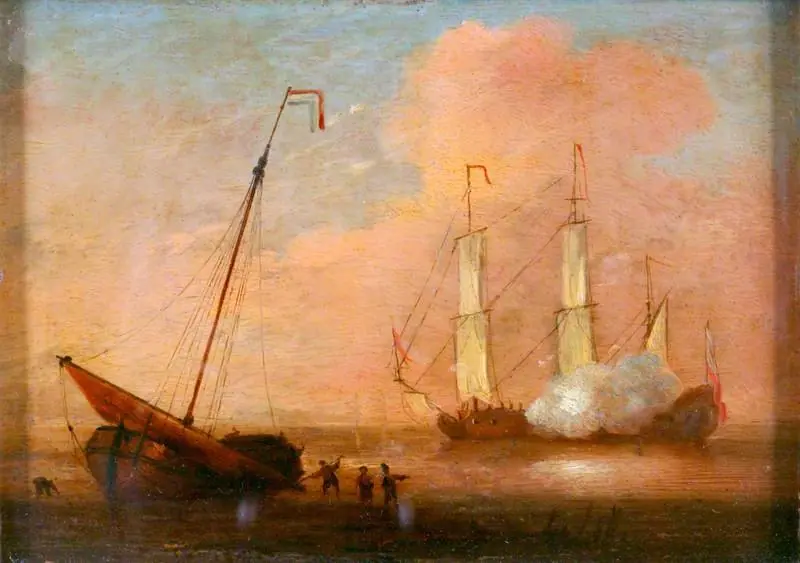
Own this work as a print
Artist & collection
Artist
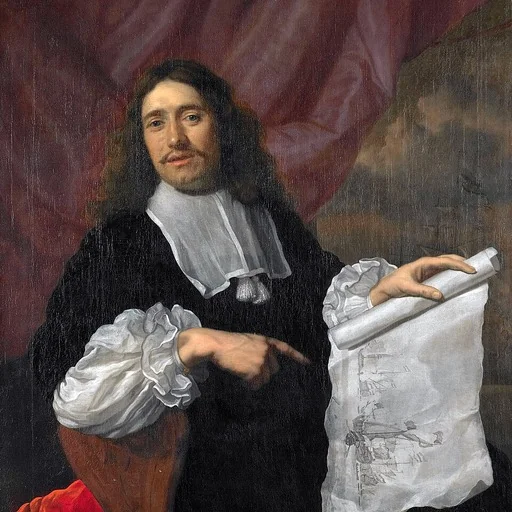
Willem van de Velde the Younger
Willem van de Velde the Younger (18 December 1633 (baptised) – 6 April 1707) was a Dutch painter who specialised in marine art.

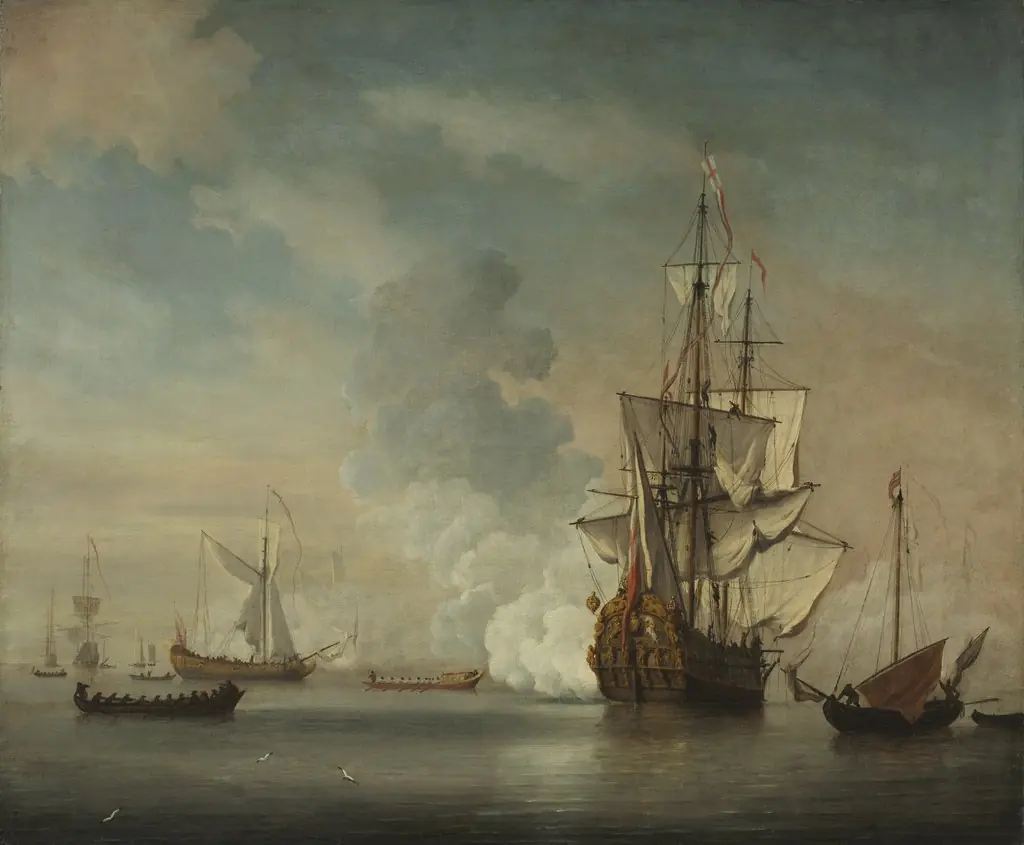
 English Warship Firing a Salute
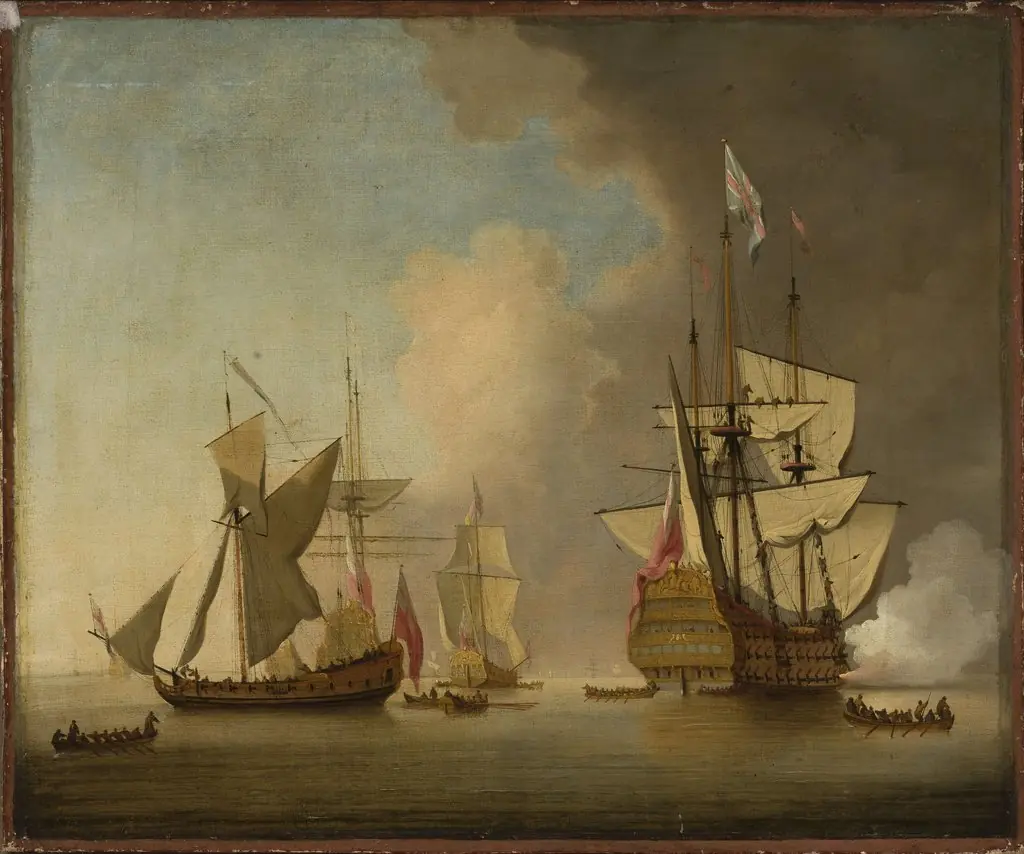 Ships on the sea
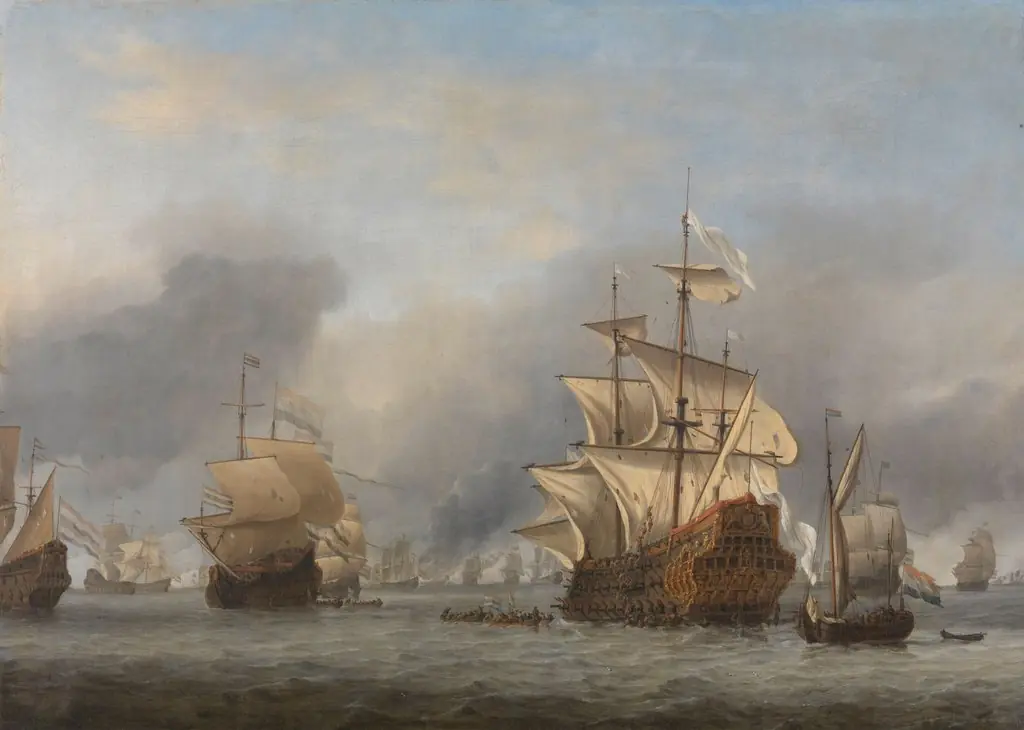 The Capture of the Royal Prince
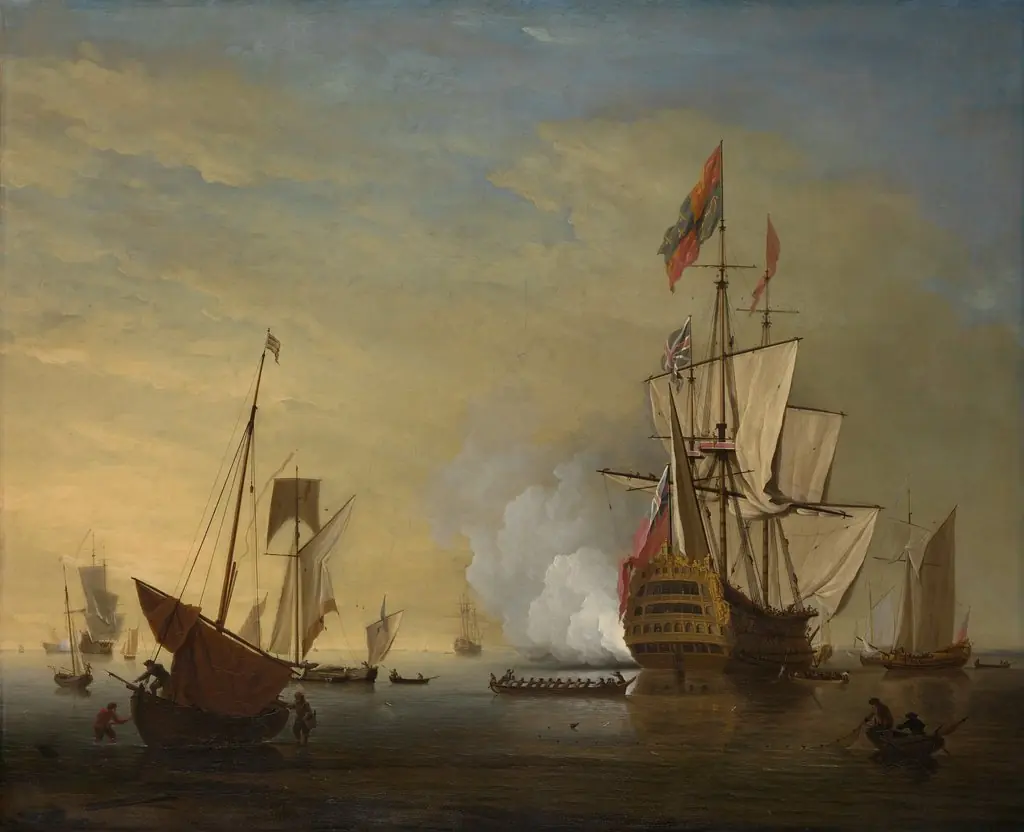 Harbor Scene: An English Ship with Sails Loosened Firing a Gun
 De verovering van de Royal Prince
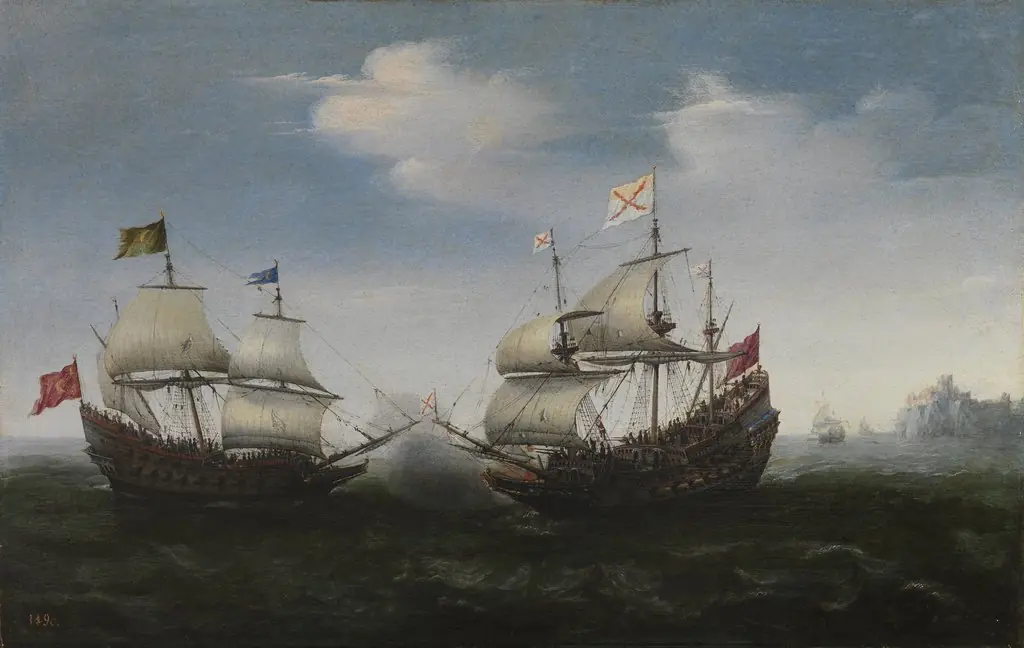 Naval Battle off a Rocky Coast
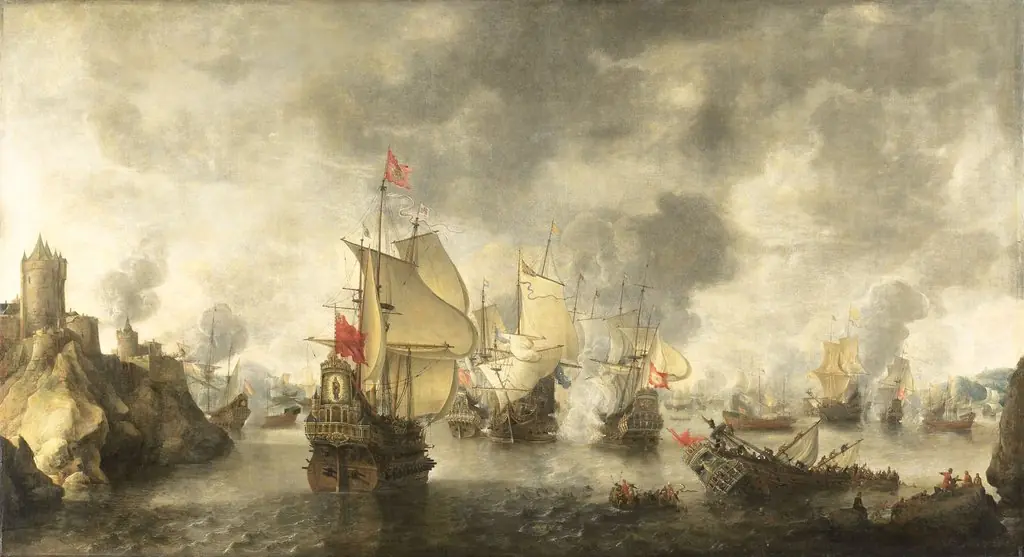 Battle of the combined Venetian and Dutch fleets against the Turks in the Bay of Foya, 1649
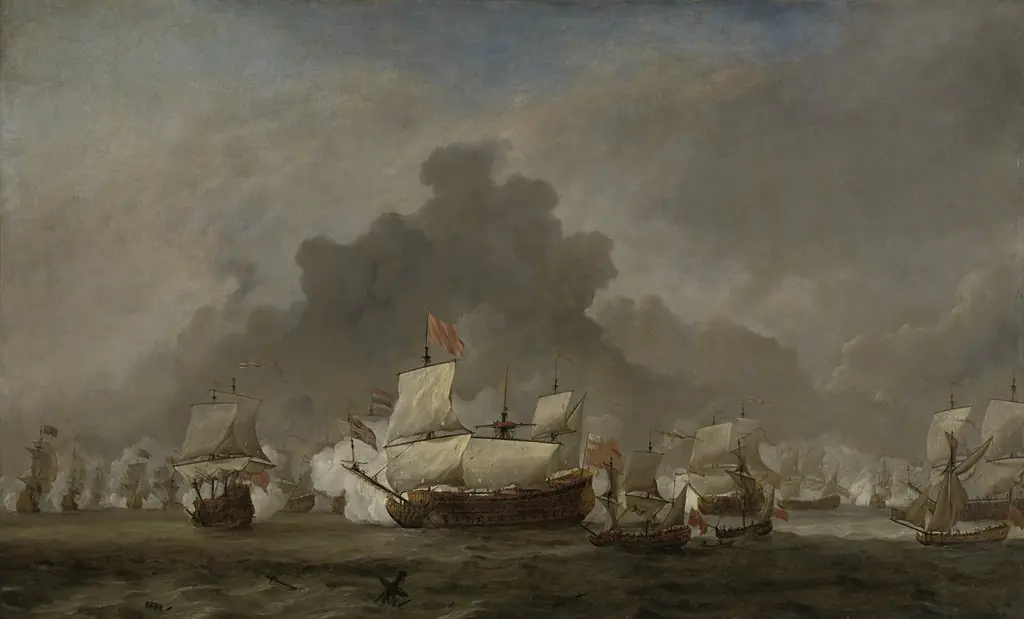 The skirmish of Michiel Adriaensz de Ruyter against the duke of York, commanding the 'Royal Prince'during the Battle of Solebay, 7 June 1672: episode from the Third Anglo-Dutch War (1672-74)
 Untitled
- The Evening Gun