Artwork
Still Life with Flowers and Fruit
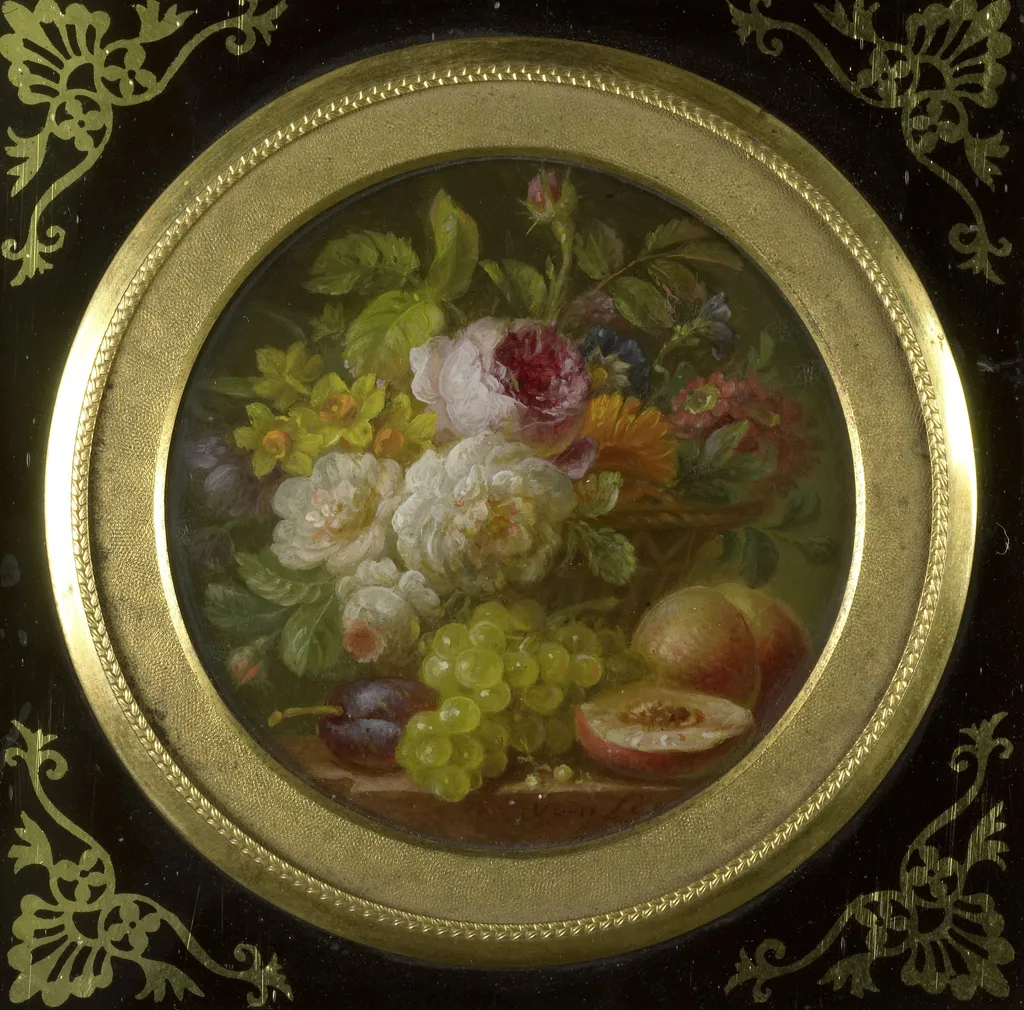
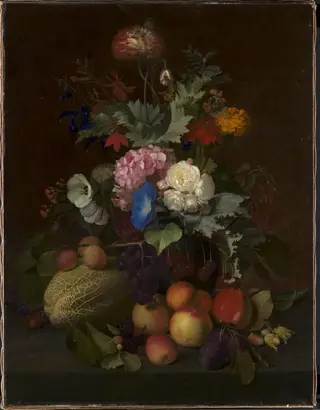
Still Life with Flowers and Fruit is an unspecified painting by the Biedermeier artist Willem van Leen. It dates from 1798 and is held in the collection of the Rijksmuseum.
About this work
Subject & Meaning
Cut flowers evoked the transience of beauty and the brevity of life, while ripe fruit signaled abundance, the bounty of nature, and the senses.
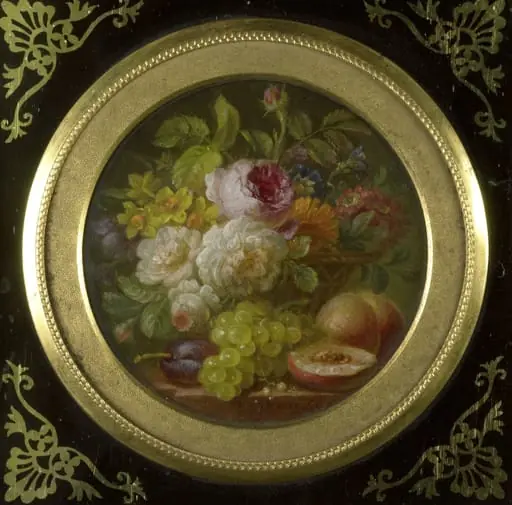
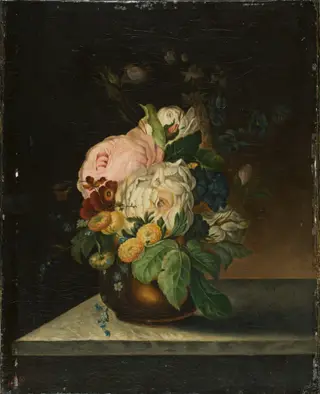
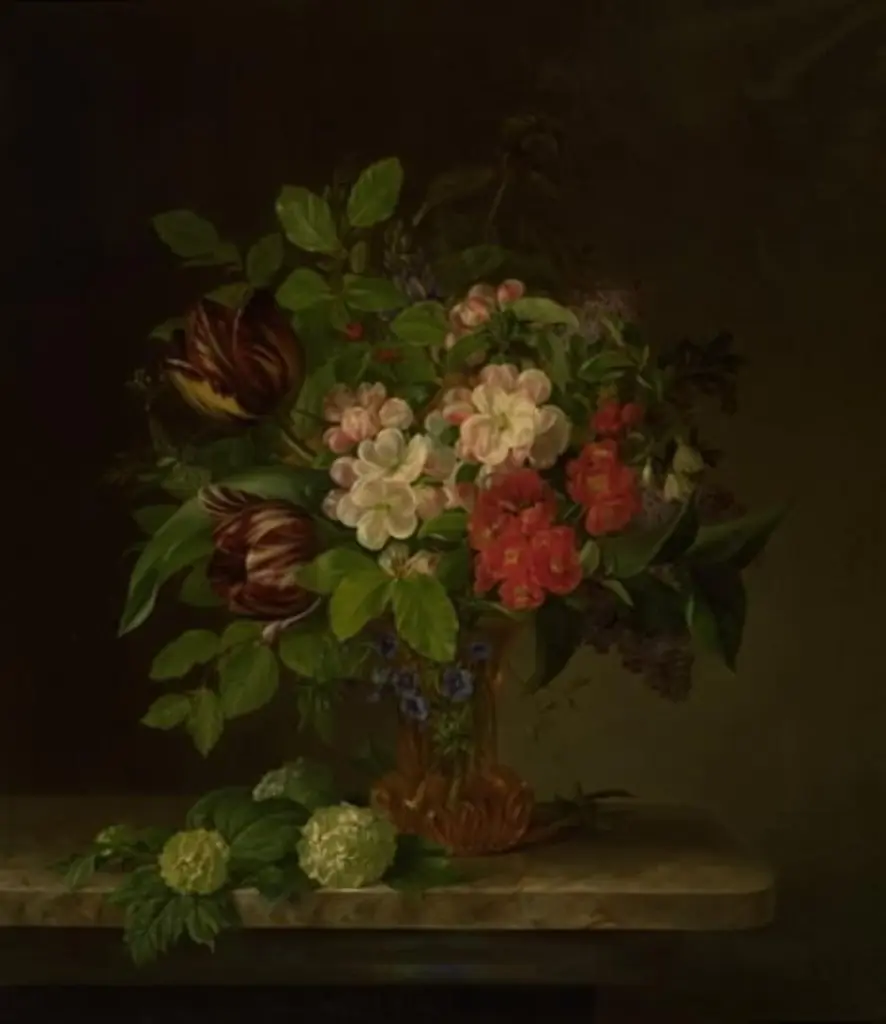
The work is a still life depicting flowers and fruit rendered in verre églomisé, a reverse-painted glass technique. According to the catalogue record, the imagery centers on a floral arrangement accompanied by fruit, the two subject categories explicitly listed as the depicted content.
In the tradition of late-eighteenth-century Dutch still life, the pairing of flowers and fruit carried layered symbolic meaning. Cut flowers evoked the transience of beauty and the brevity of life, while ripe fruit signaled abundance, the bounty of nature, and the senses. Together they formed a common vanitas-inflected motif, meditating on natural cycles of bloom and decay, pleasure and perishability, even within a decorative format.
The choice of verre églomisé, with its luminous backing of gold or silver leaf behind the painted surface, heightened the precious, jewel-like character of the bouquet and fruit, reinforcing themes of natural beauty preserved and elevated by craft.
Technique & Style
Willem van Leen's Still Life with Flowers and Fruit, created in 1795, is executed in the technique of verre églomisé. This specific medium involves painting on the reverse side of a glass support, a method distinct from traditional oil on canvas or panel. The work functions as a still life that depicts floral arrangements and various fruits.
As a piece of verre églomisé, the handling of the paint on the glass surface defines its formal qualities, creating a unique visual effect where the image is viewed through the glass itself.
History & Provenance
The work Still Life with Flowers and Fruit was created in 1795 by the Dutch artist Willem van Leen. Executed in the technique of verre églomisé, this still life depicts arrangements of flowers and fruit. The piece is currently held in the collection of the Rijksmuseum.
Still Life with Flowers and Fruit is held in the collection of the Rijksmuseum, where it is catalogued under the inventory number SK-A-1865. The work entered the museum's holdings through a formal acquisition process, though specific acquisition details are not provided in the source records. It was featured in the Rijksmuseum exhibition titled "Dutch and Flemish Paintings from the 17th and 18th Centures," which took place from March 15 to June 15, 2009, and was included in the catalogue exhibition "Dutch and Flemish Paintings from the 17th and 18th Centures," held from March 15 to June 15, 2009.
The painting is a verre églomisé work created in 1795 by Willem van Leen. It is classified as a still life and is part of the Rijksmuseum's collection in Amsterdam.
The work was also included in the exhibition "Dutch and Flemish Paintings from the 17th and 18th Centures," which ran from March 15 to June 15, 2009, at the Rijksmuseum.
Overview
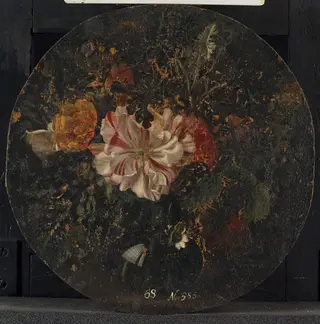
Willem van Leen’s Still Life with Flowers and Fruit (1798) presents a compact arrangement of blossoms and produce rendered in the reflective medium of verre églomisé. The composition is set within a gold‑rimmed, circular frame and rests against a deep black ground edged with an ornamental gold motif, emphasizing the contrast between the luminous surface and the dark backdrop.
Own this work as a print
Artist & collection

Artist
Willem van Leen (1753 – 1825) was a Dutch painter. Leen was born in Dordrecht and became a specialist in flower painting. He is known primarily for his interior decorations for mantelpieces, overdoors, etc. He also…