Artwork
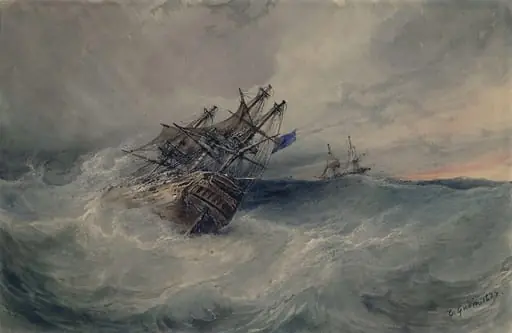
Shipwreck off Nantucket (Wreck off Nantucket after a Storm)
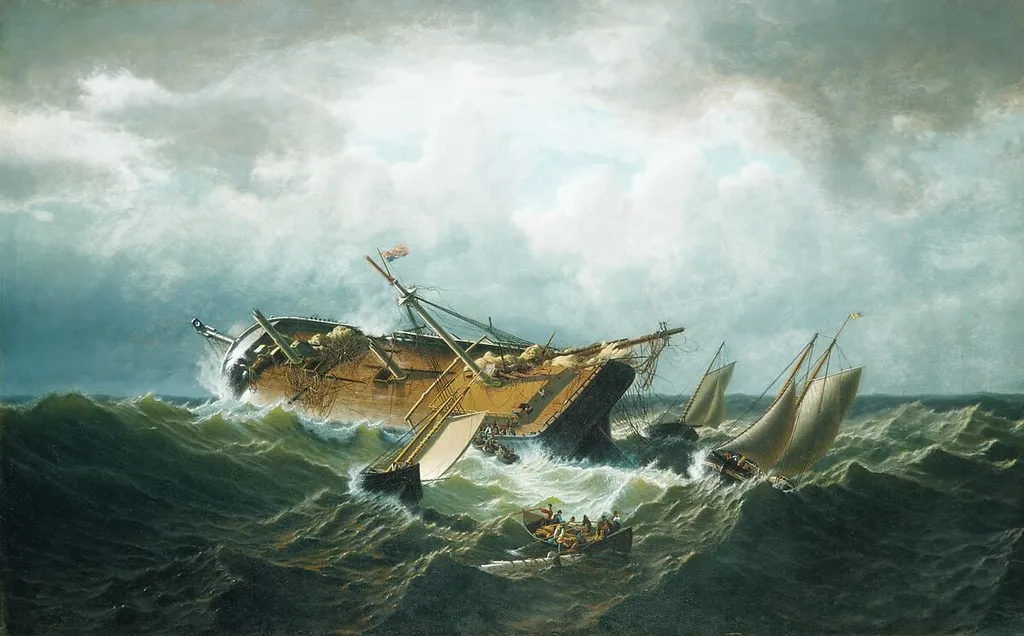
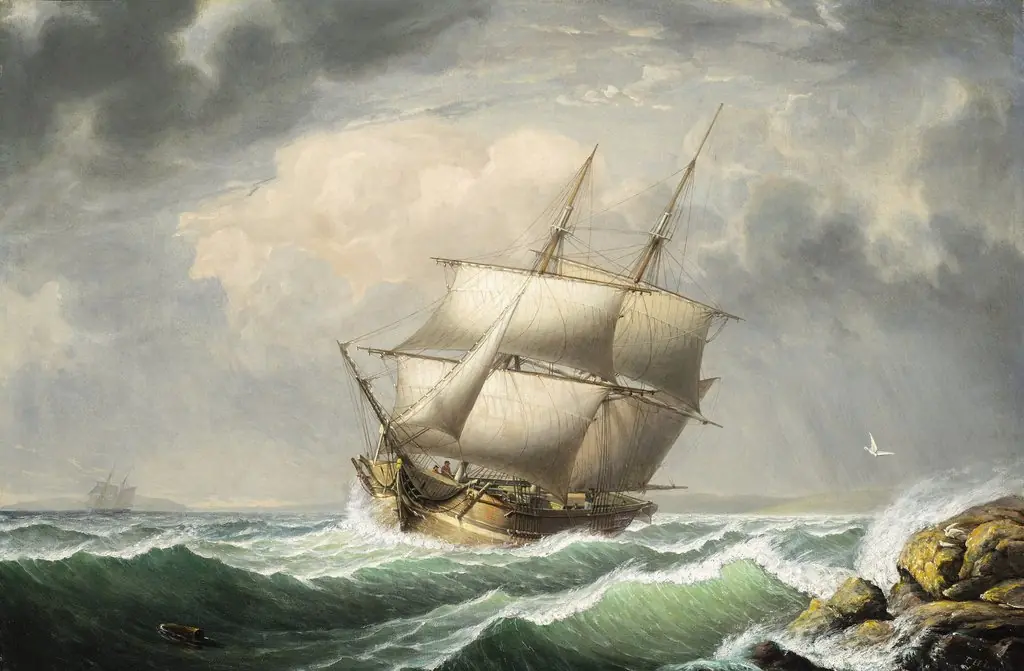
Shipwreck off Nantucket (Wreck off Nantucket after a Storm) is an oil painting by the American Impressionist artist William Bradford. It dates from 1860 and is held in the collection of the Metropolitan Museum of Art.
- Accession no.
- 1971.192
- Credit line
- Purchase, John Osgood and Elizabeth Amis Cameron Blanchard Memorial Fund, Fosburgh Fund Inc. Gift, and Maria DeWitt Jesup Fund, 1971
About this work
Subject & Meaning
The work depicts a dramatic maritime scene centered on a shipwreck and a boat amid wind-driven waves, capturing the aftermath of a storm off Nantucket.
The work depicts a dramatic maritime scene centered on a shipwreck and a boat amid wind-driven waves, capturing the aftermath of a storm off Nantucket. Created in 1860 by William Bradford, the painting focuses on the raw power of the ocean and the perilous fate of vessels caught in severe weather. As a marine genre piece, its primary subject is the physical destruction of the ship and the struggle against the elements, represented by the turbulent sea and the wreckage.
The imagery conveys the vulnerability of human endeavor against nature's force, a common theme in nineteenth-century American marine art, with the boat and the wreck as central elements emphasizing the immediate danger and chaos of the storm.
Technique & Style
The painting is executed in oil on canvas. Bradford employed a relatively thin, translucent application of paint to render the churning sea and the illuminated rigging, allowing subtle gradations of light to suggest atmospheric turbulence. The canvas is stretched and primed, typical of mid-nineteenth-century marine works, and the surface shows fine, even brushwork that delineates both the fragile hull fragments and the towering wind-driven waves.
A dramatic contrast between the darkening sky and the bright, frothy surf emphasizes the compositional tension between disaster and the sublime.
History & Provenance
Shipwreck off Nantucket (Wreck off Nantucket after a Storm) by William Bradford, painted in 1860, is held in the collection of the Metropolitan Museum of Art, classified within the museum's American Wing. The work is an oil on canvas measuring 101.6 cm in height by 162.6 cm in width. No specific accession number or details of past exhibitions are documented in the available sources.
Context
William Bradford's 1860 oil painting Shipwreck off Nantucket, housed in the Metropolitan Museum of Art and shown in the American Wing, exemplifies nineteenth-century American marine art through its dramatic depiction of a vessel battling a storm-tossed sea. The work combines precise atmospheric rendering with a composition that emphasizes the perilous struggle of seafarers, reflecting the cultural fascination with oceanic disaster during the era. Art historians regard the canvas as a notable example of how American painters engaged with themes of exploration and peril, situating it within Bradford's mature period.
Overview
William Bradford, an American romanticist painter and explorer, created Shipwreck off Nantucket (Wreck off Nantucket after a Storm) around 1860. This oil on canvas work, housed in the American Wing, exemplifies his focus on maritime subjects. It depicts a vessel broken by powerful waves near Nantucket, showcasing the artist's deep connection to the sea and its perils. The painting is associated with the American Impressionism movement.
Artist & collection

Artist
William Bradford (April 30, 1823 – April 25, 1892) was an American romanticist painter, photographer and explorer, originally from Fairhaven, Massachusetts, near New Bedford.