Artwork
Taste in High Life
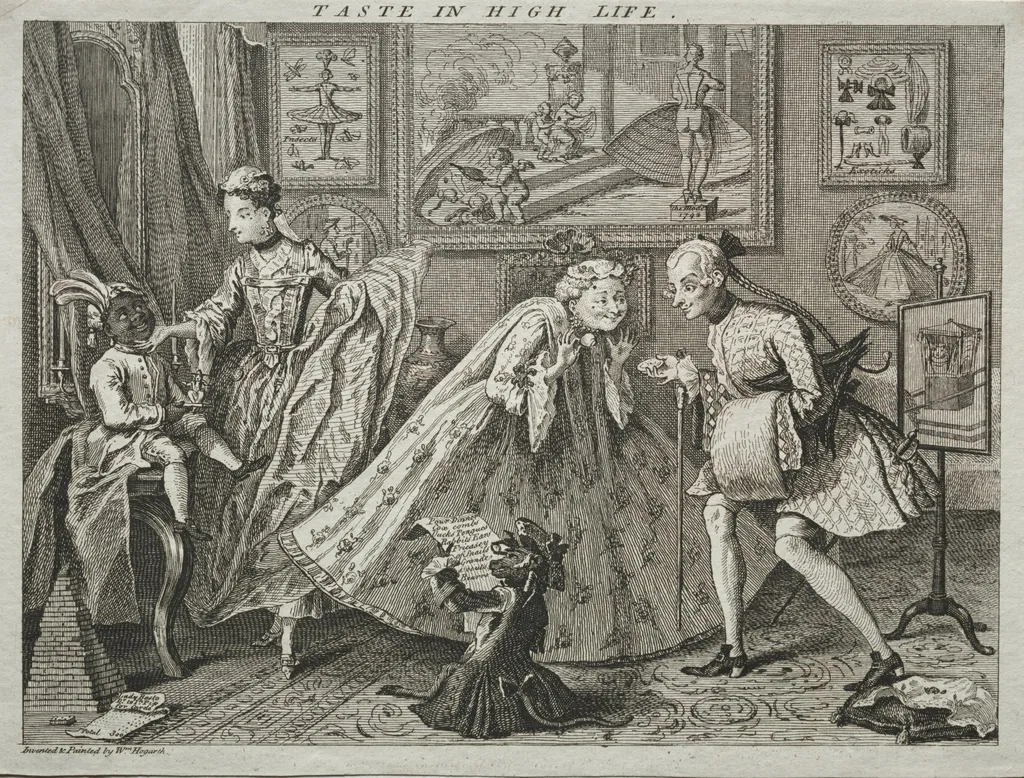
Taste in High Life is a print by the Baroque artist William Hogarth. It dates from 1746 and is held in the collection of the Cleveland Museum of Art.
- Accession no.
- 1954.331
- Credit line
- Mr. and Mrs. Charles G. Prasse Collection
About this work
Overview
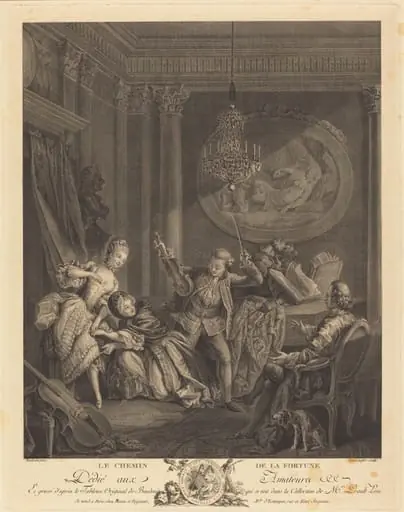
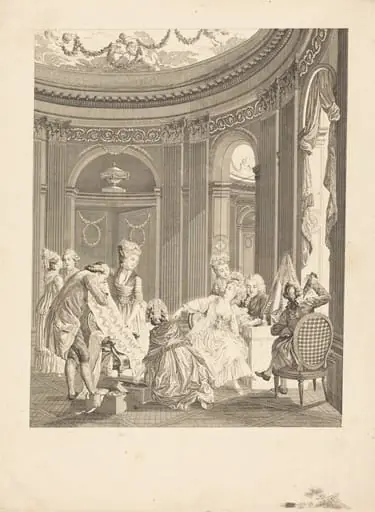
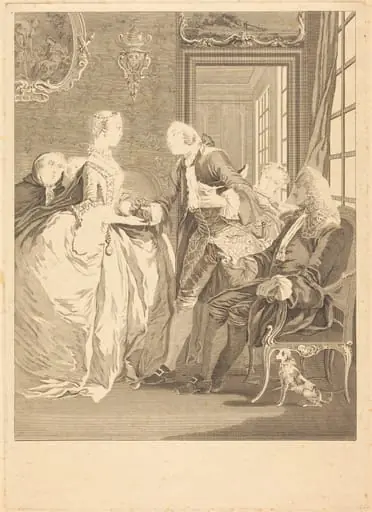
William Hogarth’s 1746 engraving Taste in High Life offers a satirical glimpse into the affectations of England’s fashionable elite. Executed in the medium of etching, the work assembles a small group within an opulently appointed interior, using exaggerated poses and attire to expose the pretensions of high society.
Subject & Meaning
The scene presents a wig‑clad gentleman clutching a scroll, a heavily dressed lady with her head thrown back, and two children, one dressed in fine clothing, the other in a servant’s livery, leaning forward with curiosity. A dog lies at their feet. By contrasting the stiff aristocrats with the more natural demeanor of the servant child, Hogarth lampoons the artificiality of social display.
Technique & Style
Hogarth employs fine line work and careful shading characteristic of mid‑18th‑century English etching. The composition balances detailed architectural elements, tall, ornamented windows and elaborate wall décor, with the figures’ caricatured gestures, creating a visual tension between refined setting and the absurdity of the subjects’ behavior.
Context
Created during a period when Hogarth was producing narrative series such as A Harlot’s Progress and Marriage A‑la‑Mode, this single print continues his broader critique of moral and cultural excess. It reflects contemporary concerns about the rise of ostentatious consumption among the rising middle class and the aristocracy’s waning authenticity.
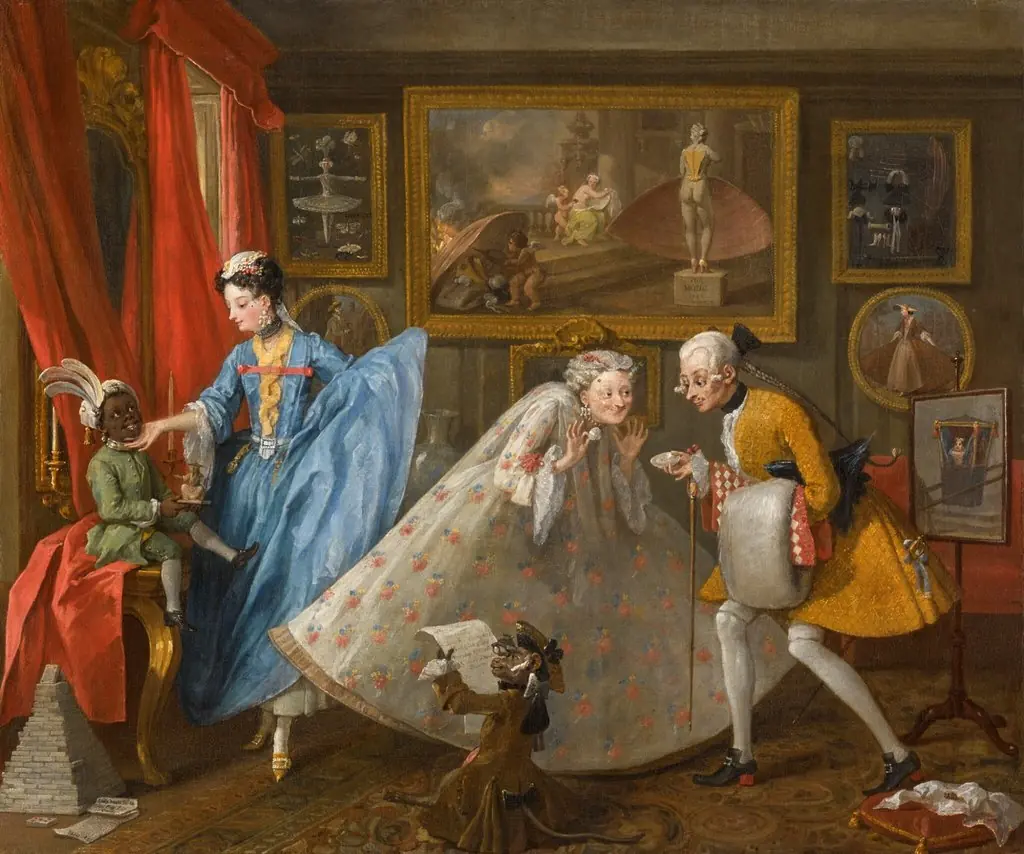
Own this work as a print
Artist & collection
Artist
William Hogarth (; 10 November 1697 – 26 October 1764) was an English painter, engraver, satirist, cartoonist and writer.