Artwork
Mrs. Samuel Gardiner
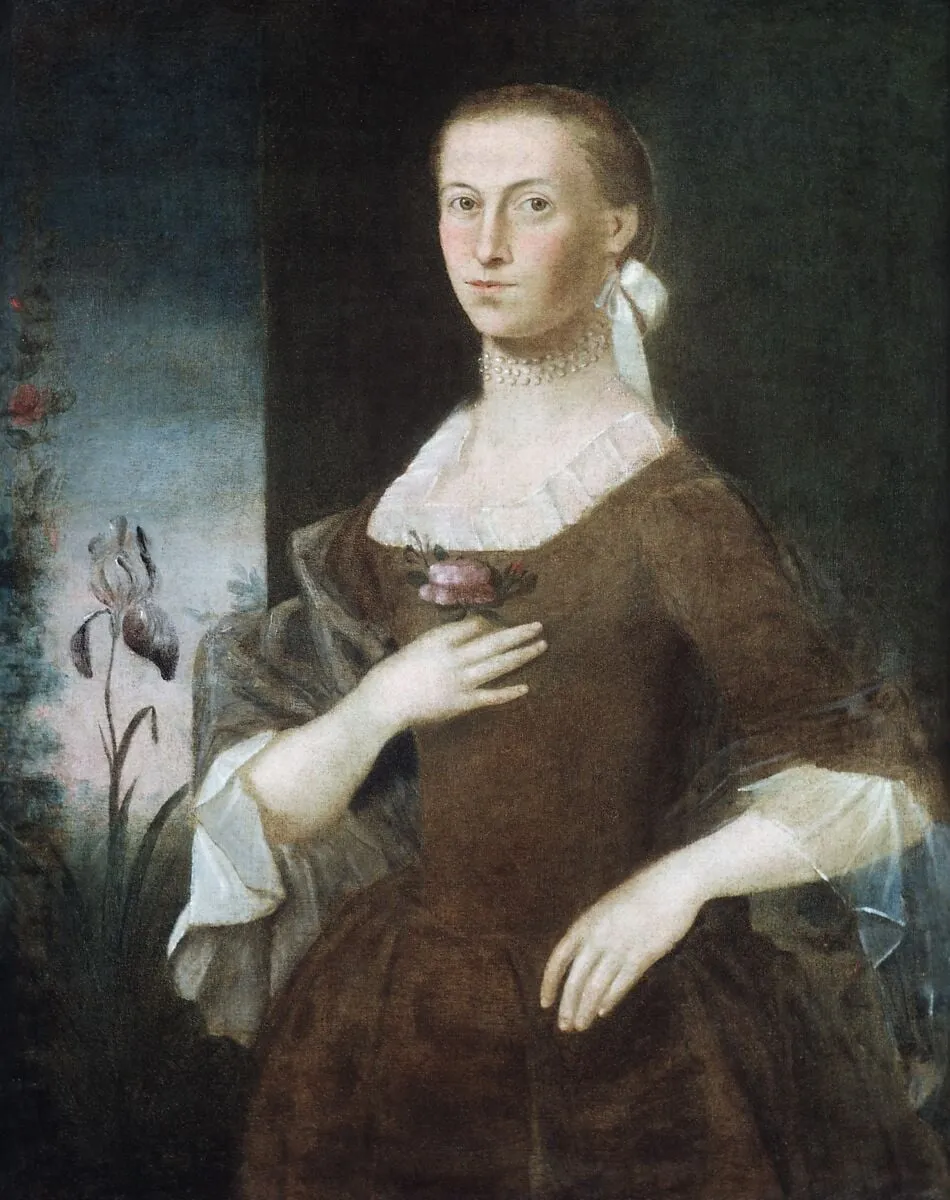
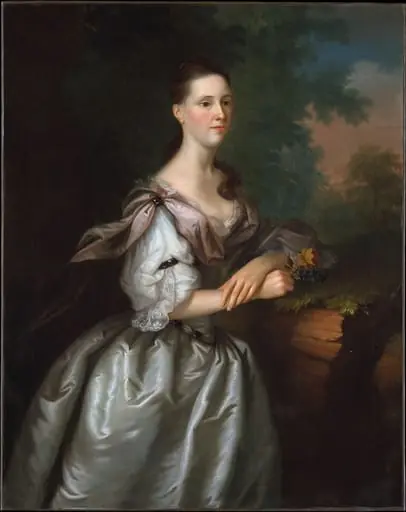
Mrs. Samuel Gardiner is an oil painting by the Rococo painting artist William Johnston. It dates from 1763 and is held in the collection of the Metropolitan Museum of Art.
About this work
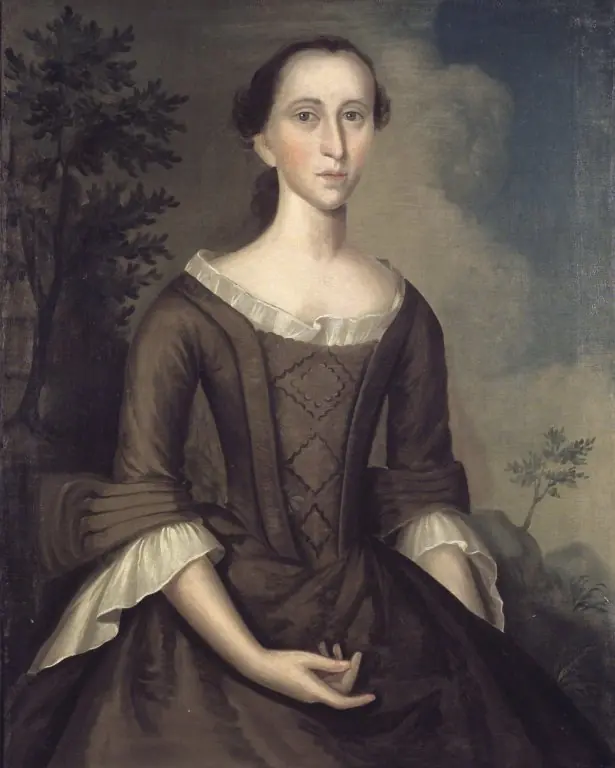
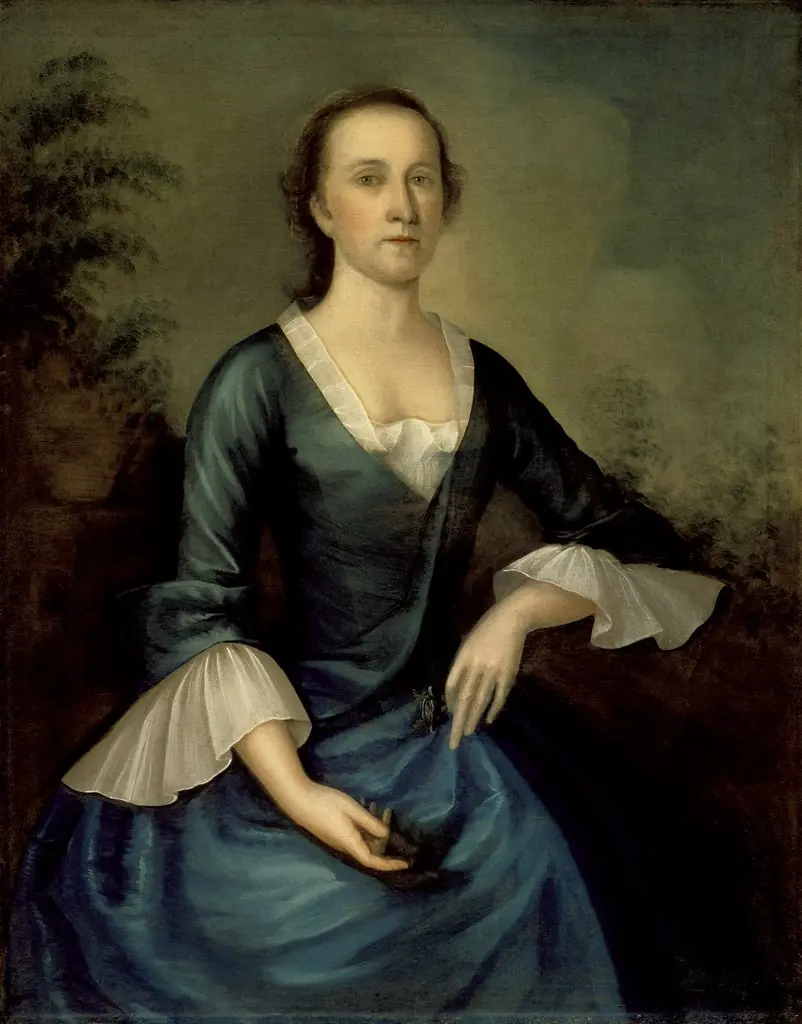
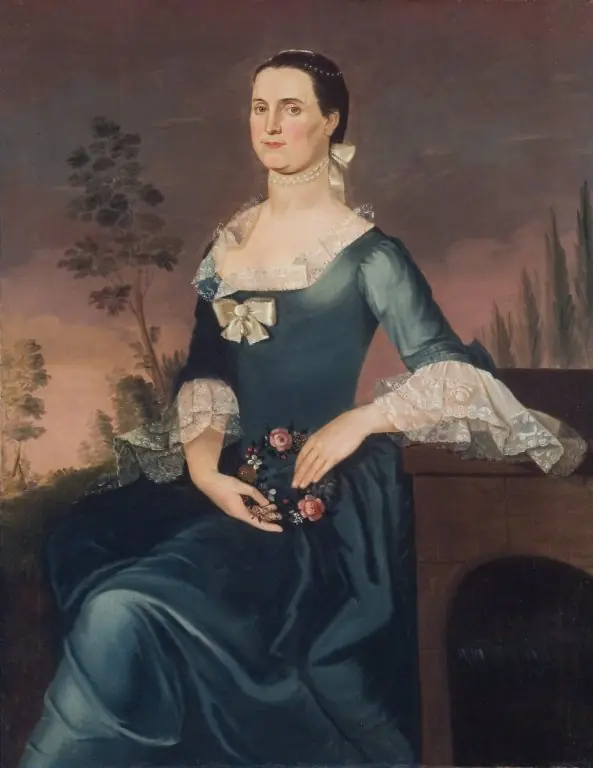
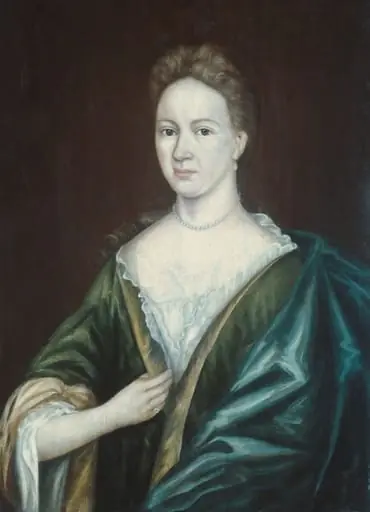
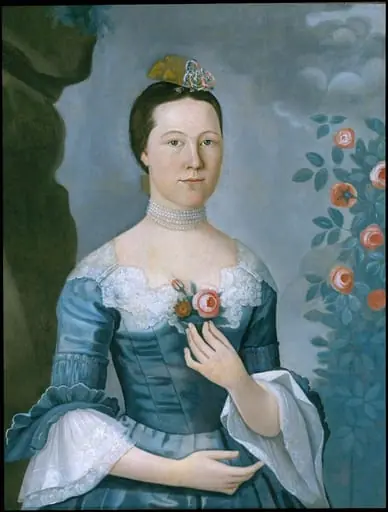
A woman in a pale blue dress holds a pink rose, a white ribbon tied at her waist. Painted in 1763, when many American artists still copied European styles, Johnston gave her a soft, natural look with no stiff pose or fancy backdrop. The rose and ribbon read as quiet details rather than symbols.
Subject & Meaning
She is identified as the main subject, and the composition includes an Iris flower, a pearl necklace, and a ribbon, all listed as depicted elements.
The portrait shows Abigail Gardiner, wife of Samuel Gardiner, rendered in oil on canvas in 1763. She is identified as the main subject, and the composition includes an Iris flower, a pearl necklace, and a ribbon, all listed as depicted elements. These details are recorded in the work’s cataloguing, which notes the portrait’s genre, medium, and dimensions, as well as its location in the Metropolitan Museum of Art.
The combination of the floral motif, jewelry, and ribbon functions as visual references within the painting’s iconography, reflecting the sitter’s status and the artistic conventions of the period.
Technique & Style
Executed in oil on canvas in 1763, the portrait employs a refined, smooth handling typical of mid-eighteenth-century American portraiture. The sitter is rendered with careful attention to facial features and costume, including a pearl necklace and ribbon, against a neutral ground that focuses attention on the subject. The inclusion of irises suggests a symbolic language of fidelity and virtue common in colonial portraiture.
The composition’s restrained palette and precise linear definition align with Johnston’s documented style, emphasizing clarity and surface polish rather than painterly texture. No evidence of significant overpainting or structural damage is recorded in available sources.
History & Provenance
The portrait of Mrs. Samuel Gardiner, depicting Abigail Gardiner, was created by the artist William Johnston in 1763. Executed as an oil painting on canvas, the work measures 91.4 cm in height and 73.6 cm in width. The piece currently resides in the collection of the Metropolitan Museum of Art, specifically within The American Wing.
While the specific commission details or original ownership chain prior to the museum's acquisition are not detailed in the provided records, the work is firmly dated to the mid-18th century. The composition features the sitter adorned with a pearl necklace and a ribbon, accompanied by floral elements including an iris, characteristics typical of Johnston's portraiture from this period.
Context
The painting, titled Mrs. Samuel Gardiner, executed in 1763 by William Johnston, is housed in The American Wing of the Metropolitan Museum of Art. It portrays Abigail Gardiner, wife of Samuel Gardiner, wearing a pearl necklace, ribbon, and holding an iris. Critics of the period noted its refined brushwork and subtle symbolism, and modern scholarship situates Johnston among early American portraitists, emphasizing his role in bridging colonial portraiture and neoclassical sensibilities.
Overview
Painted in 1763 by William Johnston, Mrs. Samuel Gardiner is an oil-on-canvas portrait depicting a woman in a pale blue dress. The composition centers on the sitter, who holds a pink rose in her hand while a white ribbon is tied at her waist. Johnston executed the work during a period when American portraiture largely adhered to European conventions, yet he distinguished this piece through a softer, more naturalistic approach.
The artist avoided the stiff poses and elaborate, dark backdrops common in formal British portraiture of the era, opting instead for a lighter, more intimate presentation. The inclusion of the rose and ribbon serves as delicate symbolic detail rather than ostentatious display, reflecting a shift toward a more relaxed aesthetic in colonial American art. This work stands as a significant example of Johnston's ability to blend traditional portraiture techniques with a distinctively gentle sensibility, capturing the subject with a quiet dignity that anticipates later developments in American portraiture.
Artist & collection

Artist
William Johnston painted faces that look like they have just stepped in from the cold.