Artwork
Still Life with Books and a Globe
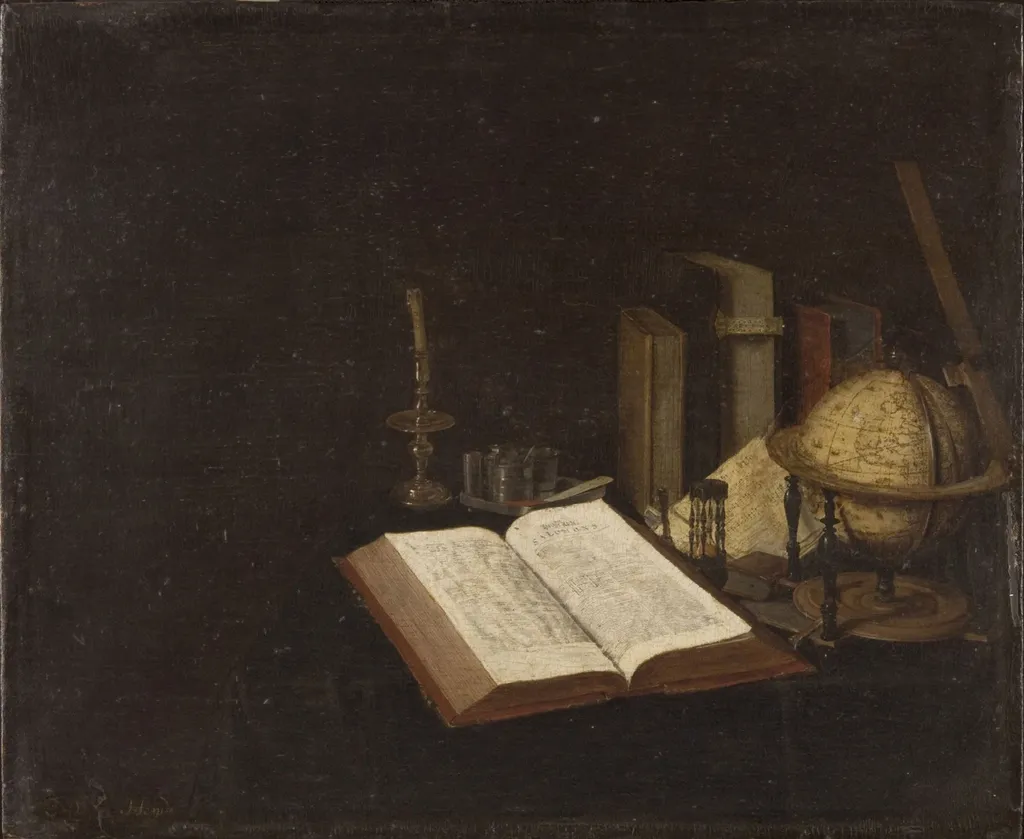
Still Life with Books and a Globe is an oil painting by the Dutch Golden Age artist Jan van der Heyden. It dates from 1667 and is held in the collection of the Philadelphia Museum of Art.
About this work
Overview
It depicts a scholar's desk, capturing the intellectual pursuits of the era through a meticulous arrangement of books, a globe, and writing implements.
Still Life with Books and a Globe is an oil on panel painting by the Dutch artist Jan van der Heyden, dated to roughly 1665 to 1670. Measuring 22.7 by 27 centimeters, the work is held in the Philadelphia Museum of Art as part of the John G. Johnson collection. The painting is a rare example of a still life by an artist primarily renowned for his townscapes and architectural views during the Dutch Golden Age. It depicts a scholar's desk, capturing the intellectual pursuits of the era through a meticulous arrangement of books, a globe, and writing implements.
Subject & Meaning
The composition features an open book resting in the foreground alongside a terrestrial globe on a wooden stand. Rather than portraying a generic biblical scene, Van der Heyden painted the actual book opened to the Song of Solomon. Several upright volumes of varying sizes stand behind the globe, including one fitted with a clasp. A tall brass candlestick with a melted candle, a small metal inkstand with a quill, and a folded document with writing complete the array. The objects characterize a scholar's desk, reflecting the intellectual and worldly curiosity of the period. The inclusion of the globe and diverse volumes points to the broadening horizons of seventeenth century learning.
Technique & Style
Executed in oil on panel, the painting demonstrates Van der Heyden's precise handling and smooth brushwork. The palette is dominated by deep browns, blacks, and muted golds, with the white pages of the open book providing the brightest contrast. Light enters from the left, illuminating the foreground book and casting soft shadows across the dark surface. The artist paid careful attention to the textures of paper, metal, and wood, rendering the sheen of the brass candlestick and the varied bindings of the books with exacting detail. This meticulous approach aligns with the broader Dutch Golden Age tradition of illusionistic still life painting.
History & Provenance
The work was created around 1665 to 1670, during a period when Van der Heyden was also deeply engaged in his civic engineering projects in Amsterdam. The painting later entered the collection of John G. Johnson, a prominent American collector, before being bequeathed to the Philadelphia Museum of Art. It is cataloged with the Hofstede de Groot number 339. A closely related painting by Van der Heyden, depicting a similar cabinet of curiosities with a globe, books, and a sculpture, is held by the Akademie der bildenden Kunste in Vienna. The Vienna version, dated to around 1669 to 1670, is larger at 62 by 49.5 centimeters and has been discussed in scholarship by Renate Trnek and Reinier Baarsen.
Context
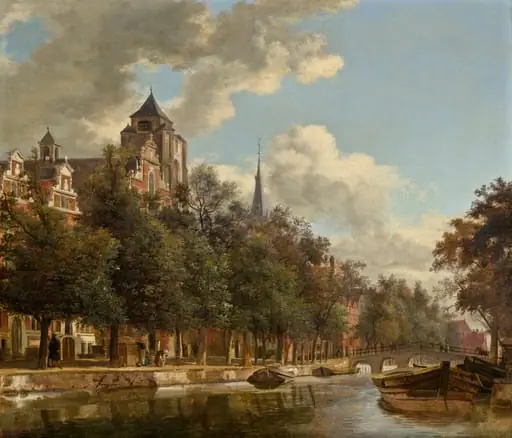
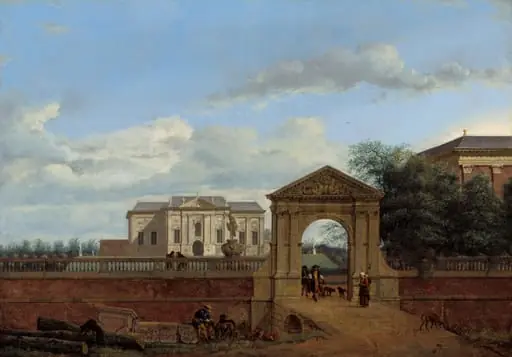
Jan van der Heyden was one of the leading architectural painters of the Dutch Golden Age, specializing in cityscapes and capricci. He painted still lifes primarily at the beginning and end of his career. This work resonates directly with his personal life, as Van der Heyden himself owned an impressive library of 184 volumes, an exceptional number for a painter of his time. His dual identity as an artist and an inventor is notable. He never joined the Amsterdam painters guild, as his primary income came from his roles as an engineer and municipal official. He invented improvements to the fire hose, reorganized the volunteer fire brigade, and designed a comprehensive street lighting system for Amsterdam that remained in use until 1840.
Own this work as a print
Artist & collection

Artist
Jan van der Heyden (5 March 1637, Gorinchem – 28 March 1712, Amsterdam) was a Dutch Baroque-era painter, glass painter, draughtsman and printmaker.

- Still Life with Books
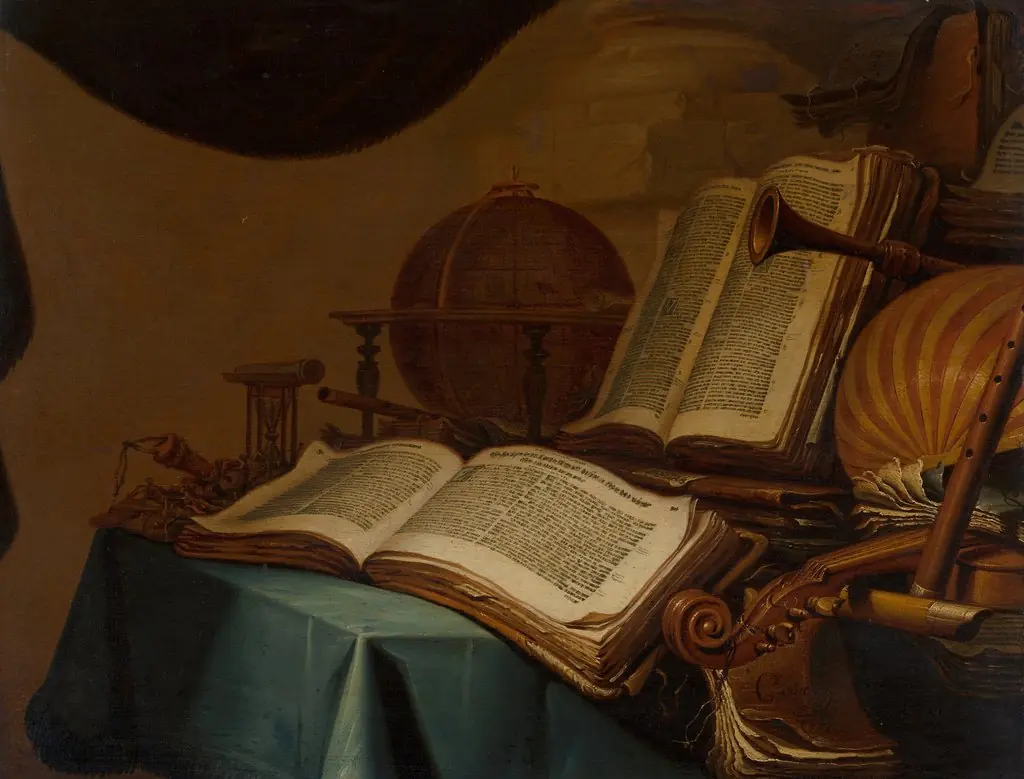 Still Life with Books, a Globe and Musical Instruments
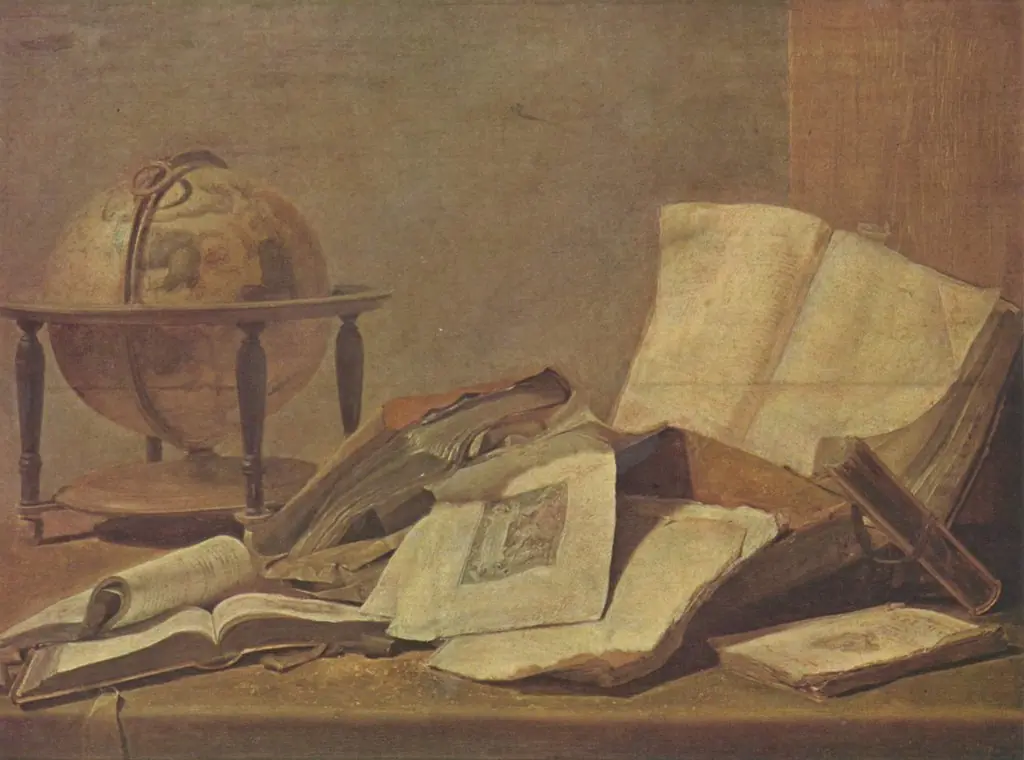 Still-life with Books and Globe
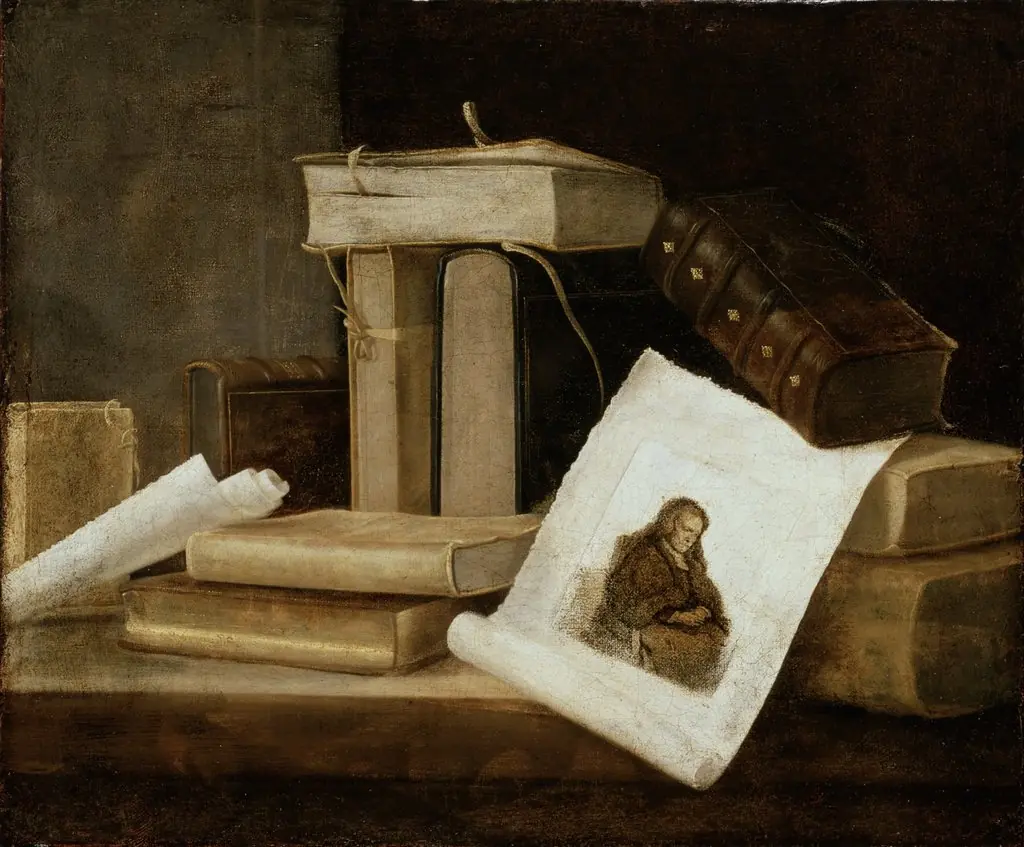 Still Life of Books and a Rembrandt Engraving
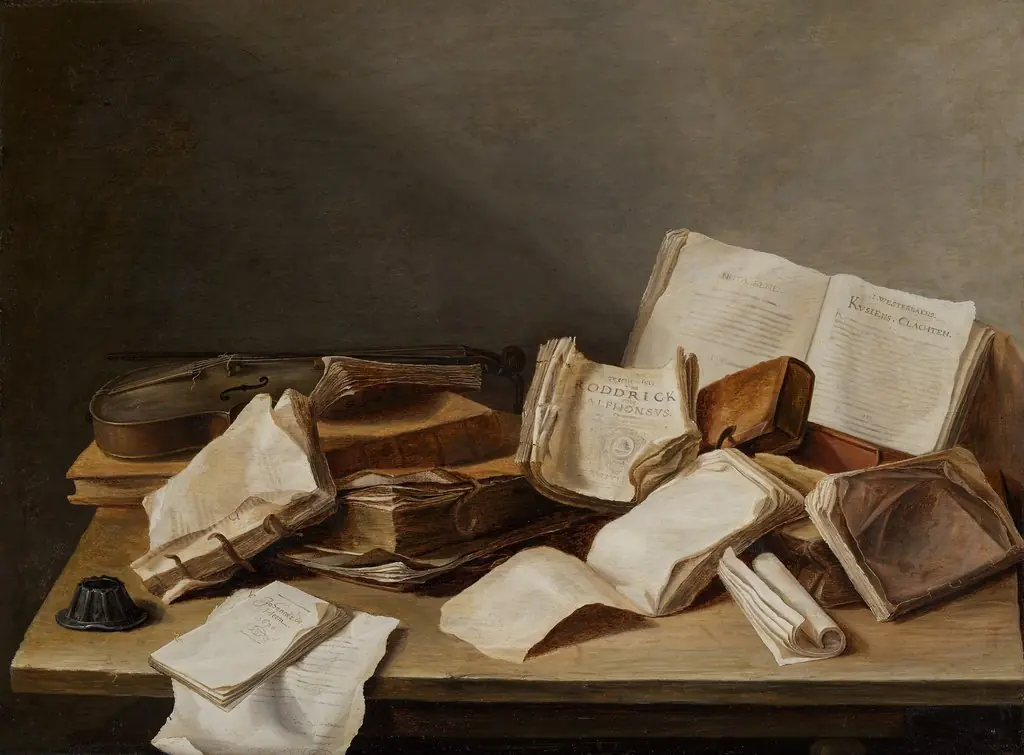 Still-Life of Books
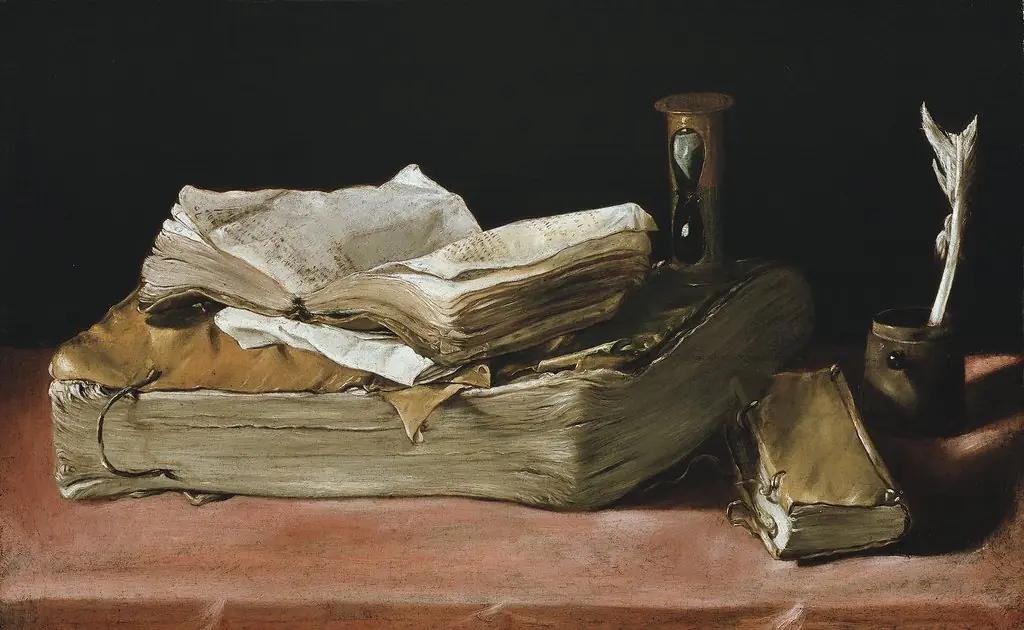 Still Life with Books
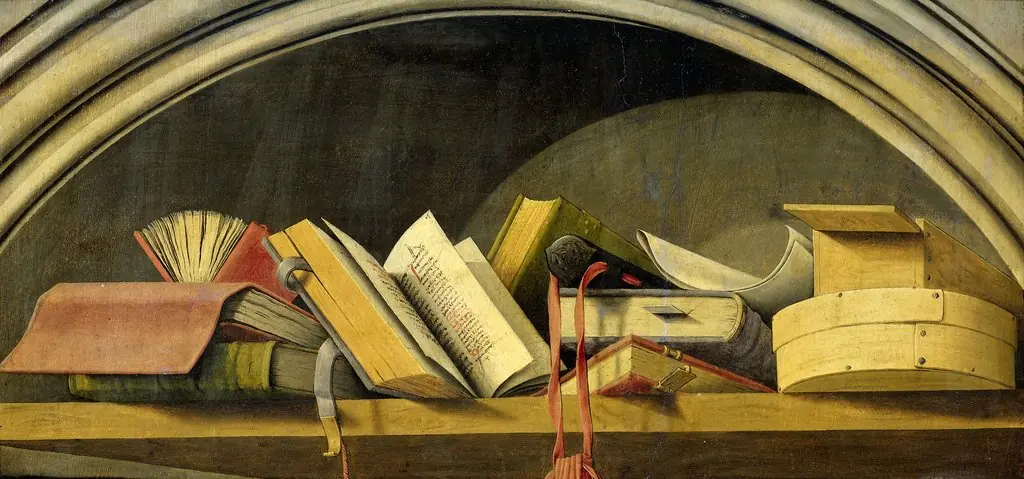 Still Life with Books in a Niche
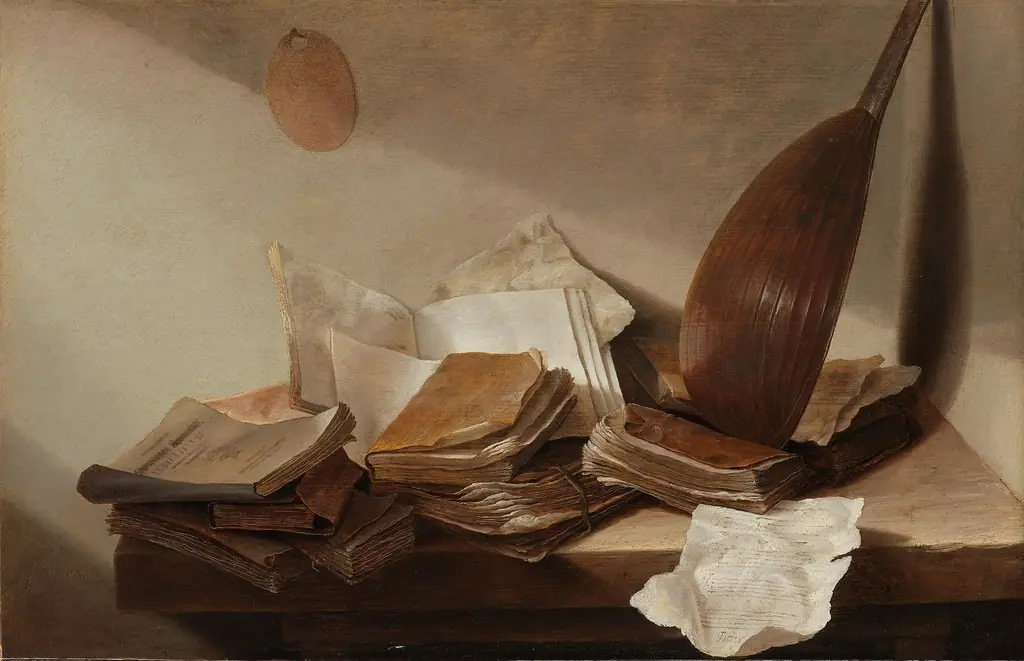 Still Life with Books
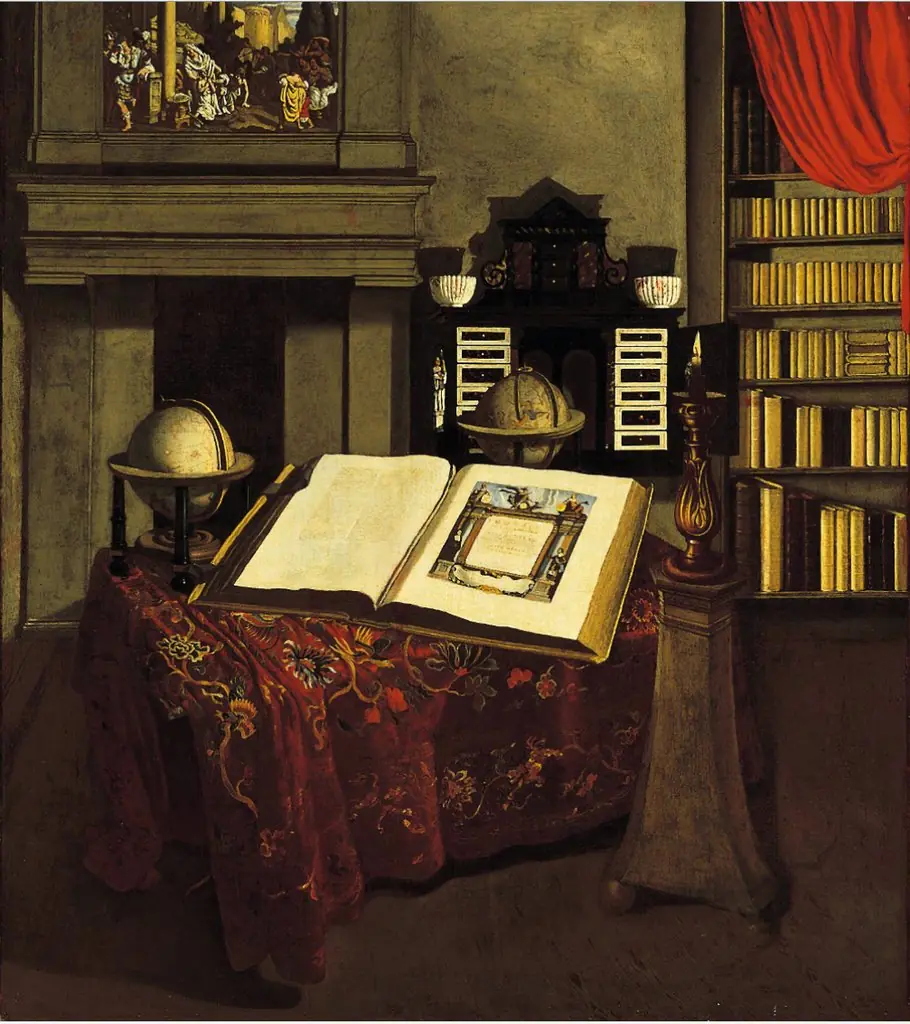 Library Interior with Still Life
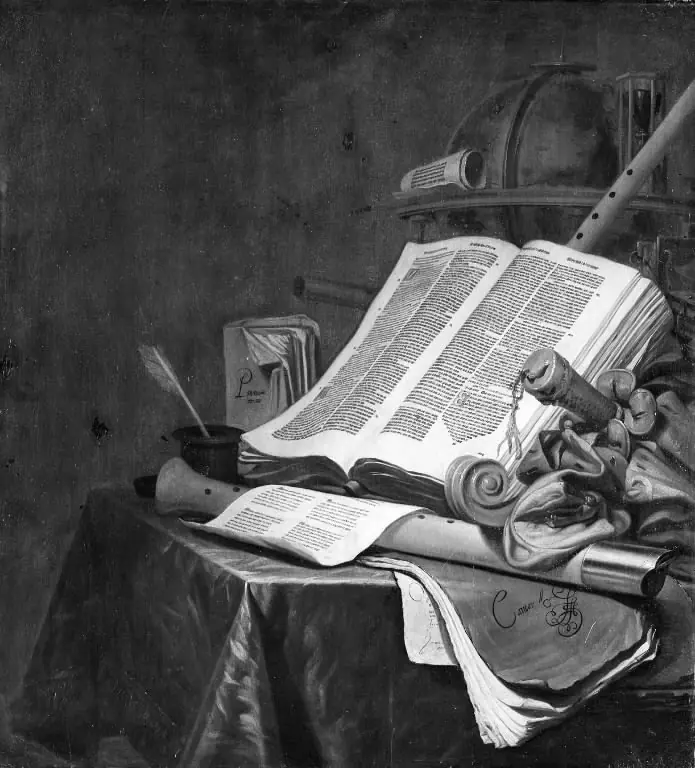 Still Life with Books and Musical Instruments
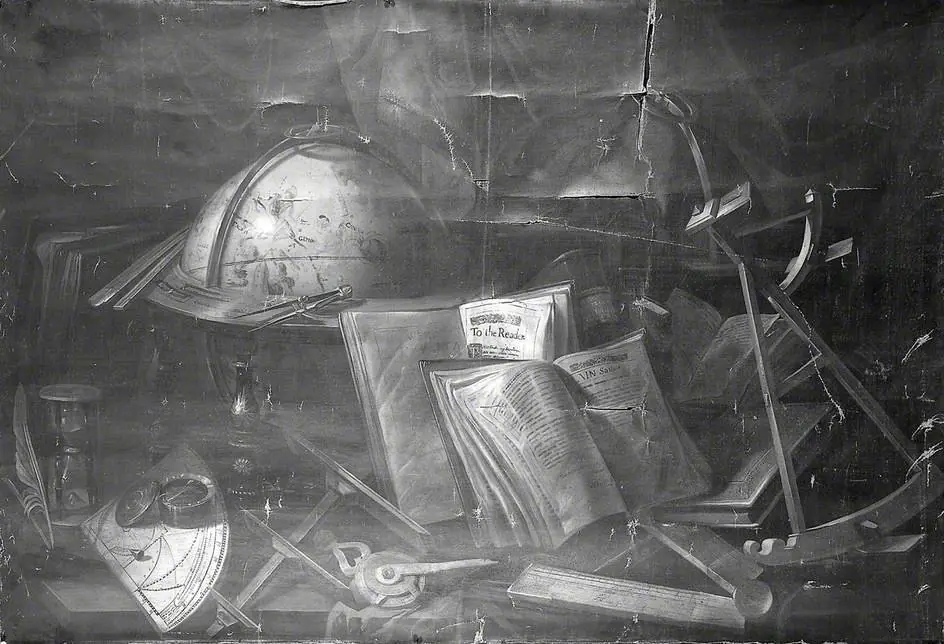 Still Life with Books and Astronomical Instruments
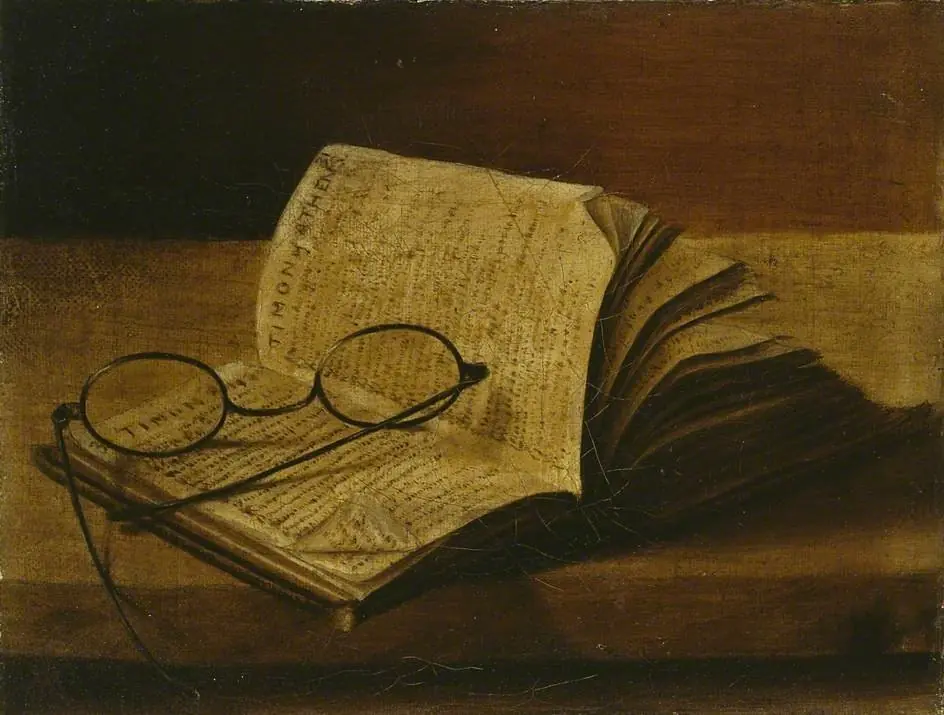 Still Life with an open Book and Spectacles