Artwork
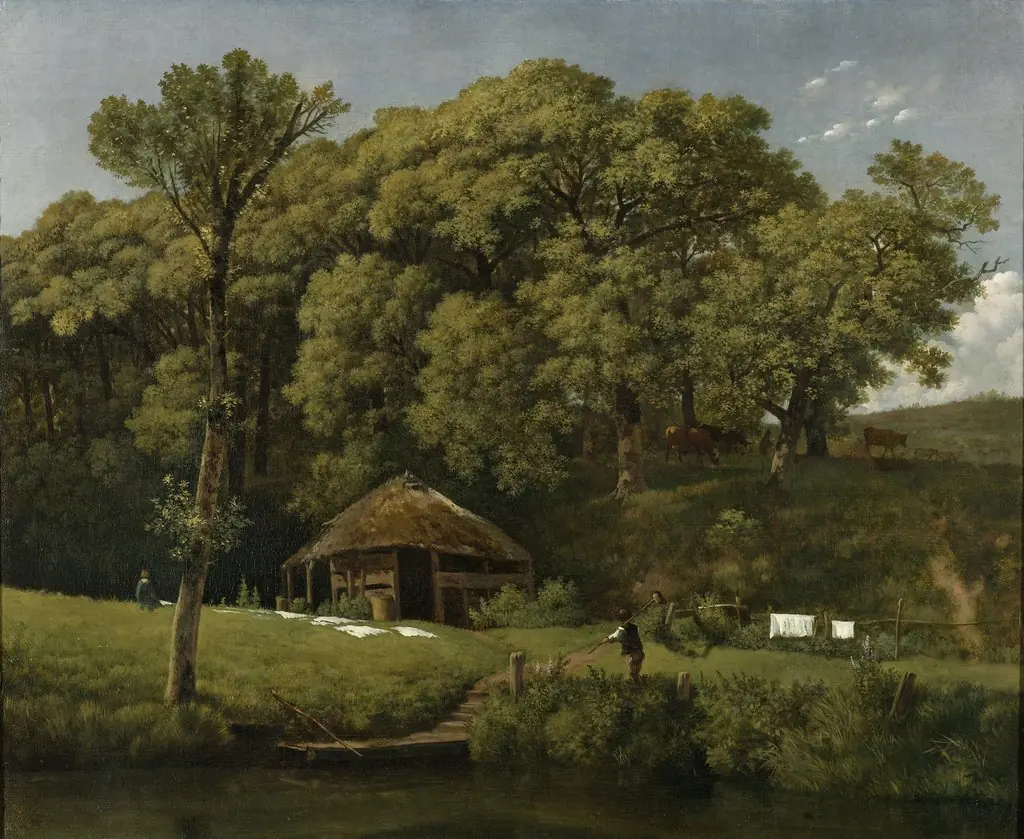
Farm Building in Gelderland
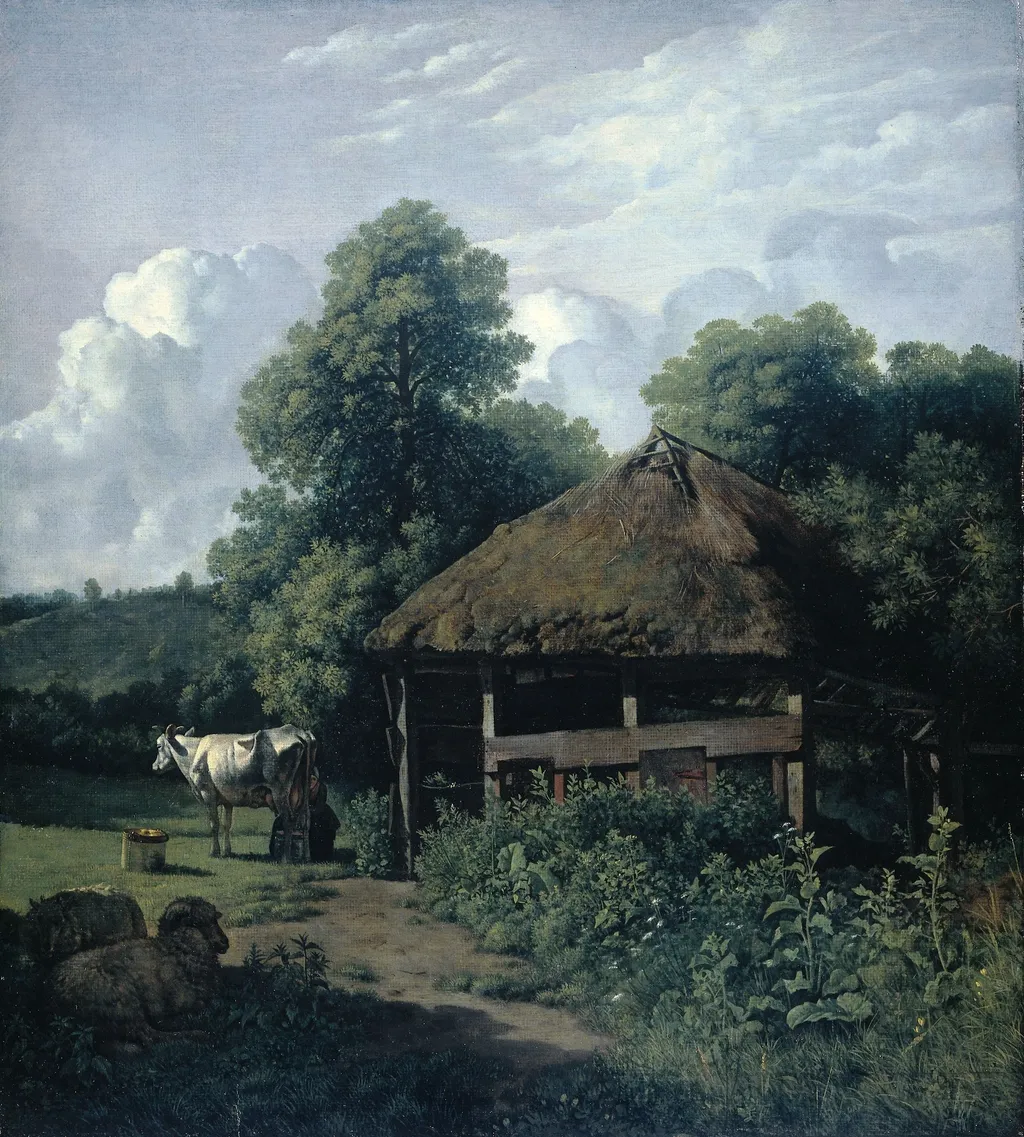
Farm Building in Gelderland is an oil painting by the Dutch Golden Age artist Wouter Johannes van Troostwijk. It dates from 1807 and is held in the collection of the Rijksmuseum.
About this work
Subject & Meaning
The scene conveys the quiet endurance and simplicity of rural life, focusing on everyday architecture rather than idealized grandeur.
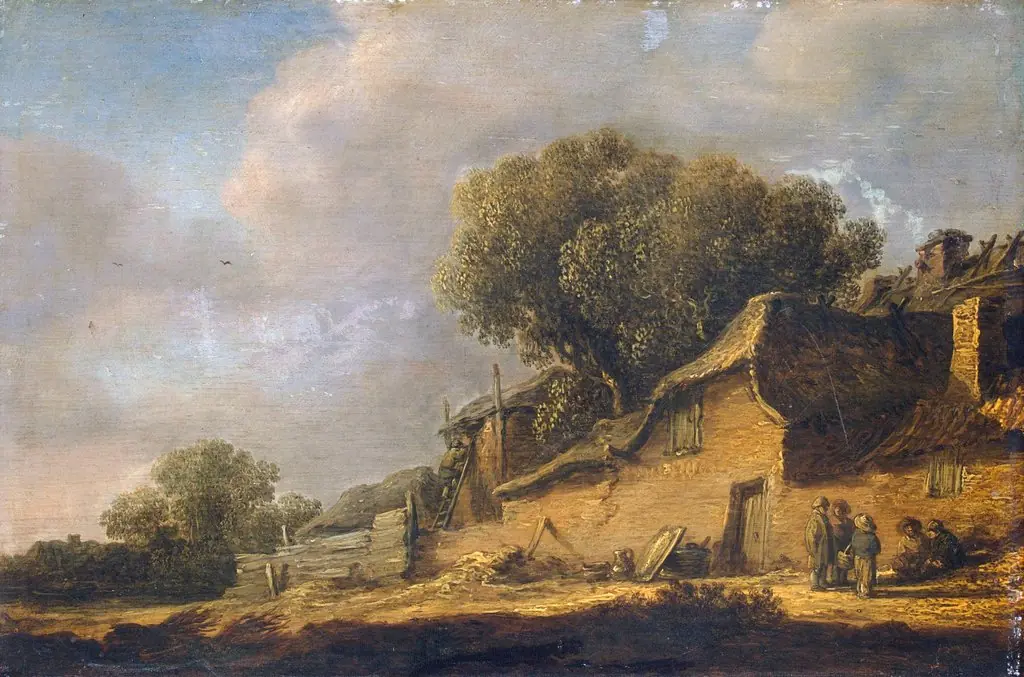
The painting depicts a modest farm building set in the Gelderland region, framed by a mature tree. The structure is rendered with careful attention to its rural function, with plain walls and a tiled roof, evoking the agricultural character of the Dutch countryside at the turn of the nineteenth century.
The scene conveys the quiet endurance and simplicity of rural life, focusing on everyday architecture rather than idealized grandeur. By centering the farm building and the surrounding tree, the work underscores the interdependence between human labor and the natural environment in Gelderland’s landscape tradition.
Technique & Style
Farm Building in Gelderland is an oil painting on canvas, measuring 45 by 40 cm. The work belongs to the landscape genre and depicts a house among trees. Wouter Johannes van Troostwijk executed the scene in oil paint, a medium that allowed for the detailed rendering of architectural and natural elements characteristic of early 19th-century Dutch landscape painting.
History & Provenance
Farm Building in Gelderland was produced by Wouter Johannes van Troostwijk in 1807, executed in oil paint on canvas as a landscape work depicting a house and tree.
The painting is held in the collection of the Rijksmuseum, with the institution also listed among the holdings of Kunstmuseum Den Haag. No further details regarding commission, intermediate ownership, or acquisition history are documented in the available sources.
Farm Building in Gelderland, an 1807 oil painting by Wouter Johannes van Troostwijk, is held in the collection of the Rijksmuseum. According to the associated Wikidata record, the work is part of the holdings of both the Rijksmuseum and the Kunstmuseum Den Haag, with the Rijksmuseum identified as its location. No specific inventory or accession number, loan history, or exhibition record is documented in the available sources.
The painting measures 45 cm in height by 40 cm in width and is executed in oil paint on canvas.
Overview
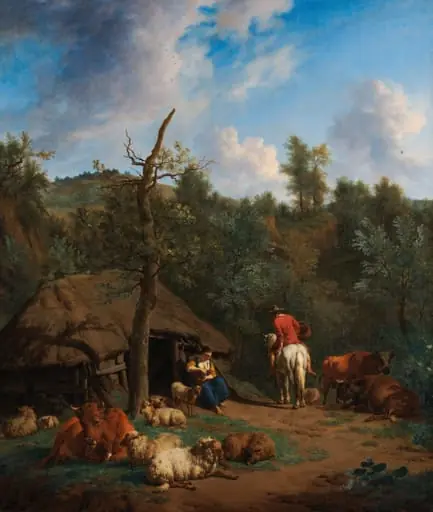
Wouter Johannes van Troostwijk’s 1807 oil painting portrays a modest farm building set in a quiet Gelderland landscape. A thatched roof crowns the structure, while a small doorway opens onto a foreground populated by a cow, a bucket, and two recumbent sheep. The scene is framed by a scattering of trees and a muted, cloud‑filled sky, conveying a tranquil rural atmosphere.
Context
Although van Troostwijk is often associated with the Dutch Golden Age’s legacy, his career unfolded in the early 1800s, a period of renewed interest in rural scenes that celebrated national identity. This work aligns with contemporary trends that favored depictions of everyday life and the Dutch countryside, echoing the broader European Romantic fascination with nature.
Own this work as a print
Artist & collection
Artist
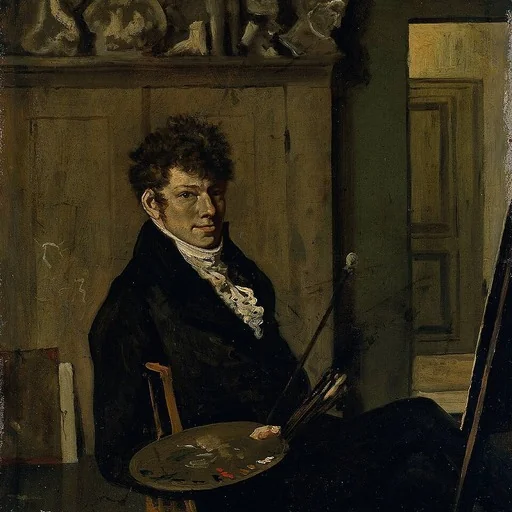
Wouter Johannes van Troostwijk
Wouter Johannes van Troostwijk (28 May 1782, Amsterdam - 20 September 1810, Amsterdam) was a Dutch painter and etcher. Most of his works are landscapes (featuring cattle) or cityscapes.