Artwork
Study of a Seated Man's Legs
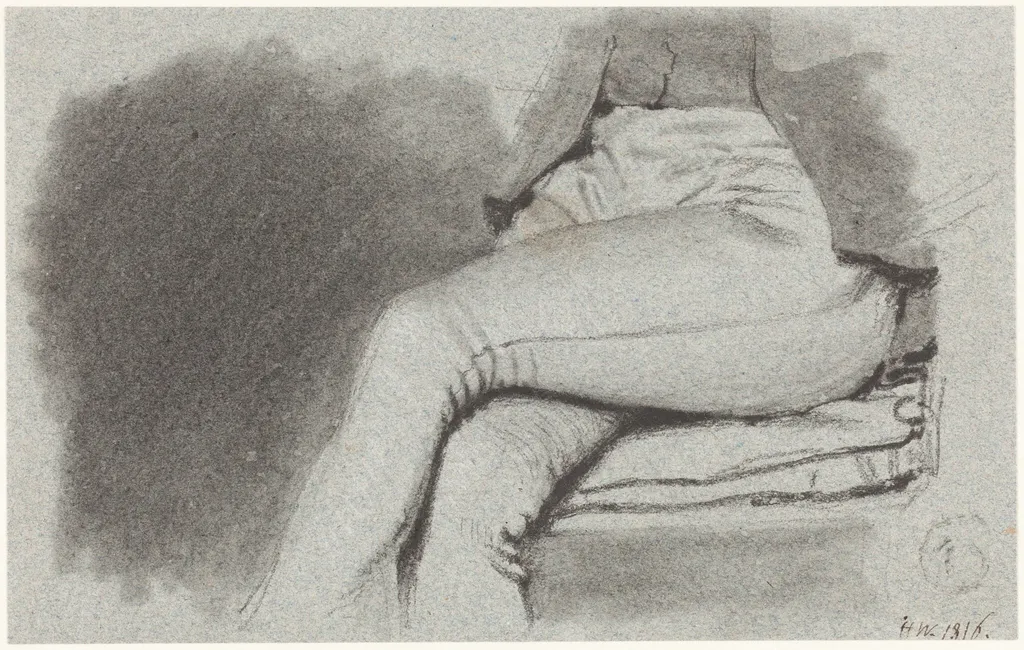
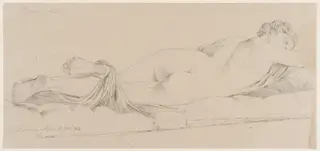
Study of a Seated Man's Legs is a chalk drawing by the Romanticist artist Henry Wyatt. It dates from 1816 and is held in the collection of the National Gallery of Art.
- Inscription
- Inscribed:lower right in brown ink: HW. 1816.; by later hand, lower right verso in graphite: 4
About this work
Overview
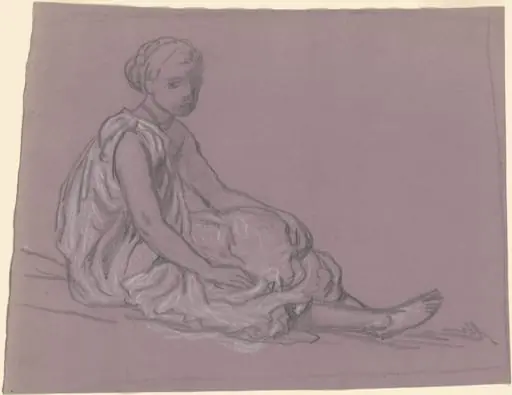
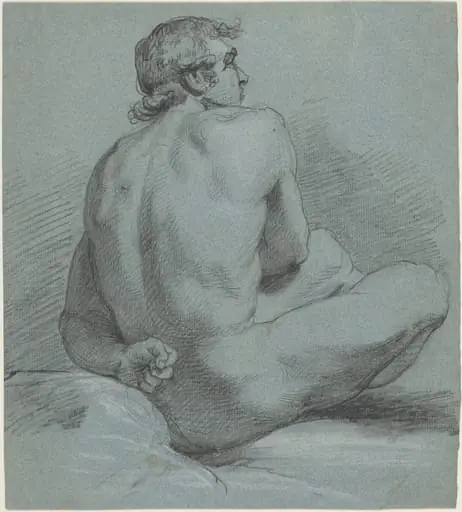
Created in 1816, the drawing titled Study of a Seated Man’s Legs is a modest study by the English artist Henry Wyatt. Executed in black chalk with stumping and accented with white highlights, it is rendered on blue‑wove paper, a support that subtly tints the surface and enhances the contrast of the marks.
Subject & Meaning
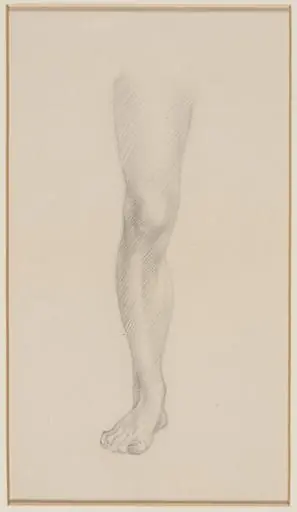
The composition isolates the lower limbs of a seated figure, the legs crossed and the feet turned outward. By focusing solely on this portion of the body, Wyatt explores the anatomy and posture of a relaxed sitter, inviting contemplation of the gesture rather than narrative content.
Technique & Style
Wyatt employed loose, gestural strokes of black chalk, employing stumping to blend and soften edges, while selective white chalk lifts suggest the play of light across the calves and feet. The darkened background recedes, allowing the illuminated legs to emerge with a modest chiaroscuro effect, heightened by the cool blue tone of the paper.
History & Provenance
The study forms part of Wyatt’s early 19th‑century sketchbook output, a period when he produced numerous preparatory drawings for larger works. Its provenance traces to private collections before entering a museum holding of British draftsmen, where it is catalogued as an example of Wyatt’s academic training and observational practice.
Own this work as a print
Artist & collection