Artwork
Pipa (Loquats)
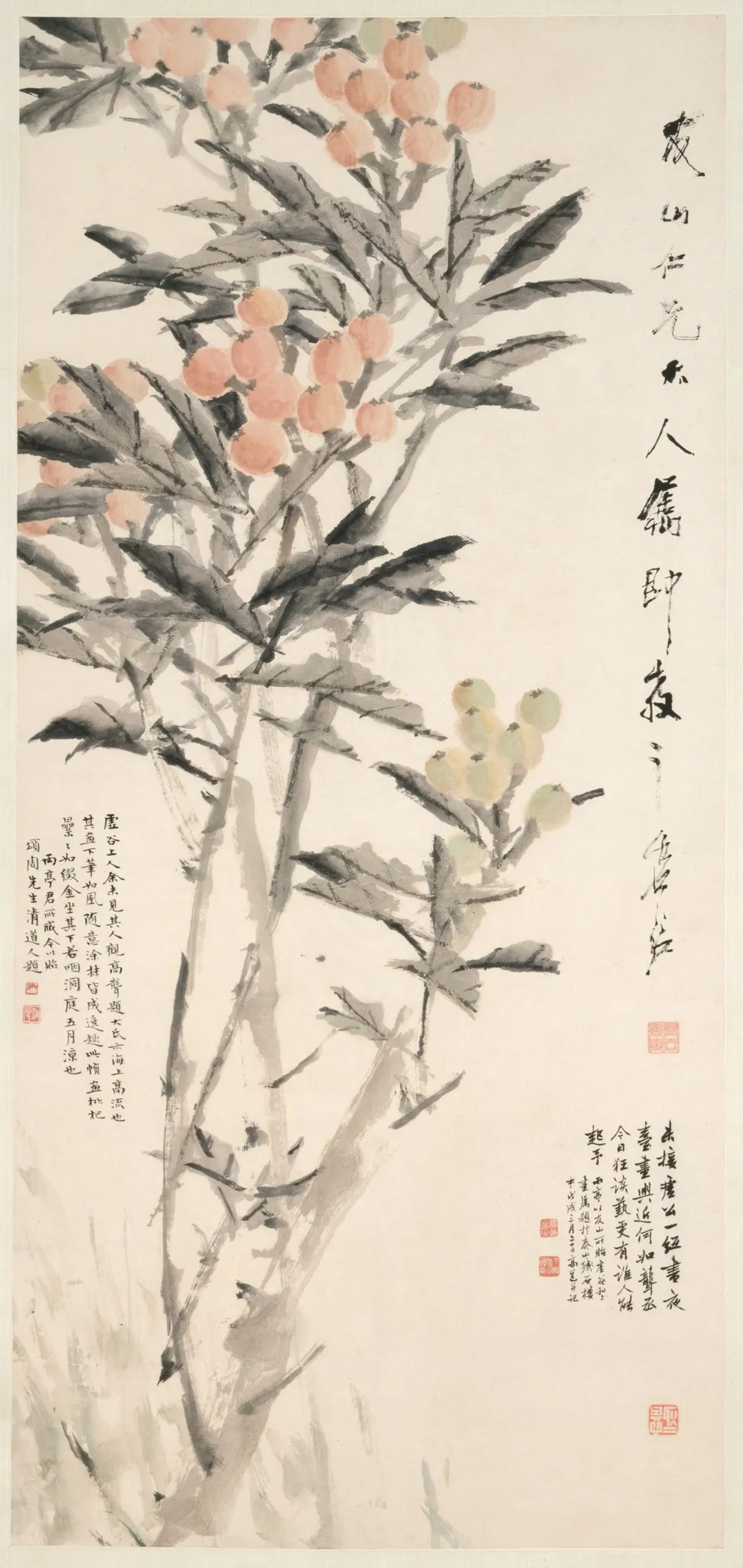
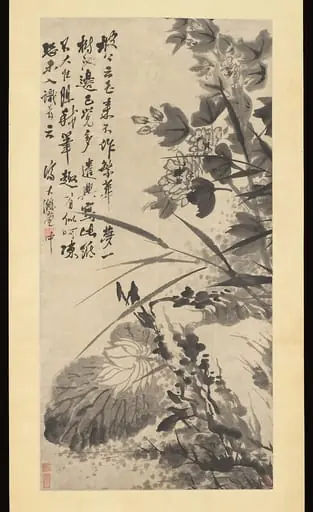
Pipa (Loquats) is an unspecified painting by the Nihonga artist Xu Gu. It dates from 1894 and is held in the collection of the Cleveland Museum of Art.
About this work
History & Provenance
The work’s creation aligns with Xu Gu’s mature period, reflecting his later style in still-life compositions.
The painting Pipa (Loquats) was created by the Chinese artist Xu Gu in 1888, as indicated by the artist’s dated inscription on the work and corroborated by the Cleveland Museum of Art’s records.
The painting entered the Cleveland Museum of Art’s collection in 1999 as accession number 1999.6. Its provenance prior to acquisition is not documented in the available sources. The work’s creation aligns with Xu Gu’s mature period, reflecting his later style in still-life compositions.
Pipa (Loquats) by Xu Gu is held in the collection of the Cleveland Museum of Art. Its accession number is 1999.6. The painting, dated 1888, depicts a flower subject and remains associated with the museum's holdings.
No exhibition history is documented in the available sources.
Legacy
Xu Gu’s Pipa (Loquats) has been recognized primarily within institutional holdings rather than through widespread stylistic influence. The painting entered the Cleveland Museum of Art in 1999 as part of the museum’s collection, where it remains accessible for study and display.
Within the broader context of late Qing still-life painting, the work has been cited as an example of the genre’s technical refinement, yet it has not been widely invoked as a model for subsequent artists or movements. Its later reception reflects the broader preservation and scholarly interest in nineteenth-century Chinese painting rather than a transformative legacy in artistic practice.
Overview
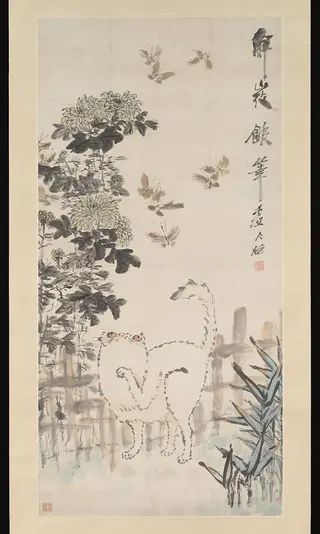
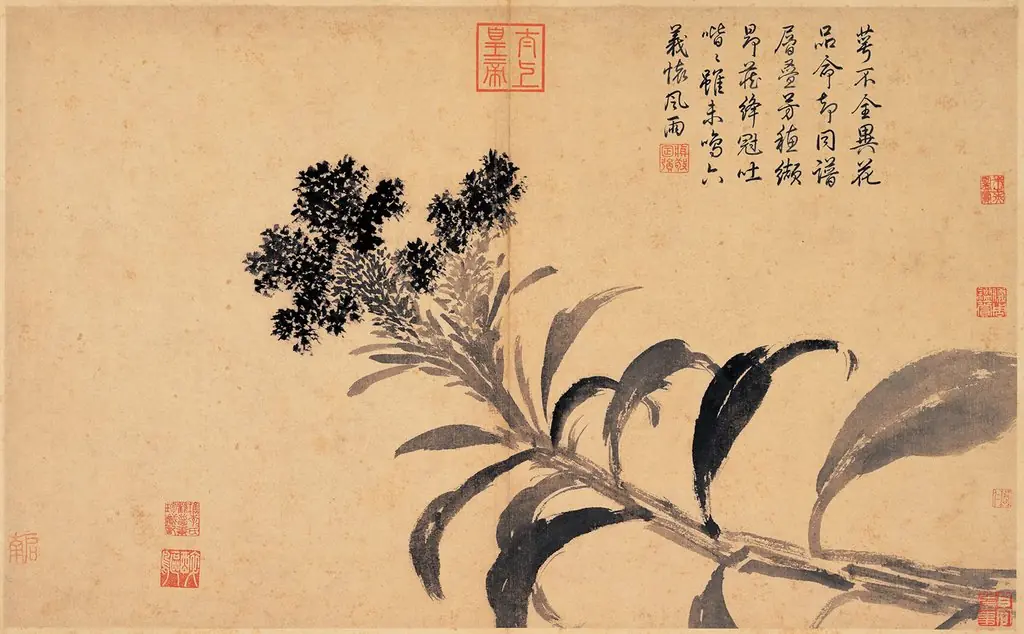
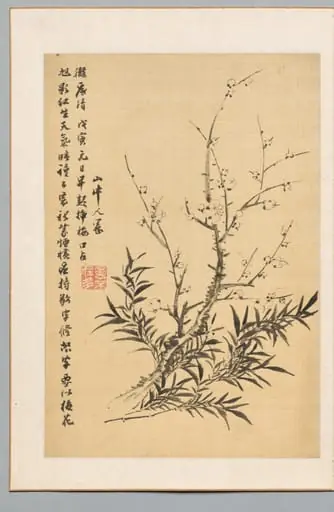
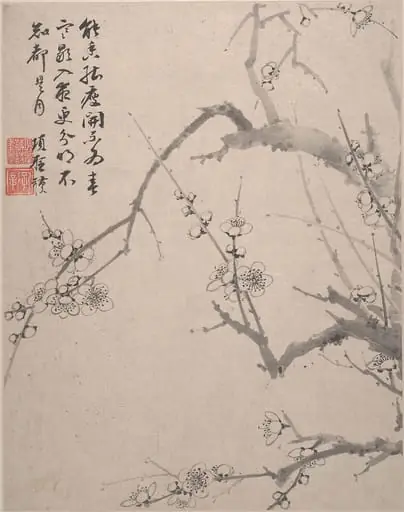
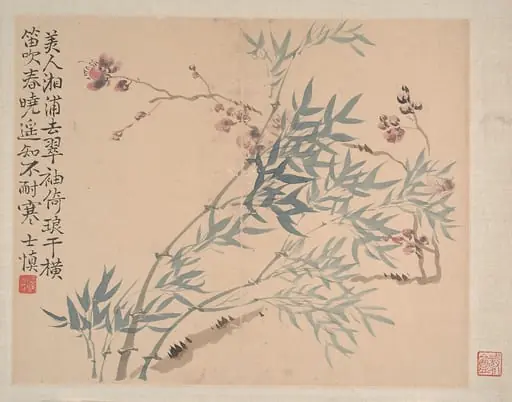
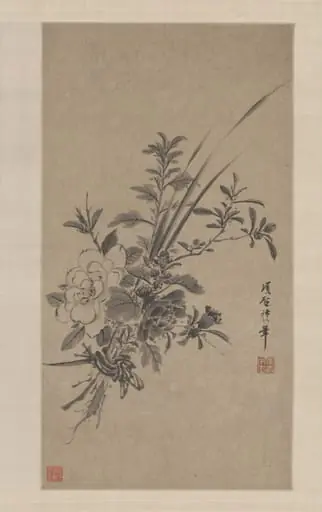
Pipa (Loquats) is a painting created in 1894 by Xu Gu, a Chinese artist and poet active during the late Qing Dynasty. This work, now housed at The Cleveland Museum of Art, exemplifies his approach to depicting natural subjects. It features a single branch laden with loquat fruits, rendered with a distinctive expressive style. The composition includes calligraphic elements and artist's seals, characteristic of traditional Chinese painting.
Subject & Meaning
The painting centers on a branch of loquats, a fruit frequently associated with the arrival of spring in Chinese artistic traditions. Clusters of small, round fruits are depicted in soft pink and pale green hues, nestled among dark green leaves. This focused portrayal allows for an intimate study of the plant, emphasizing its natural forms and seasonal significance within a minimalist composition.
Technique & Style
Xu Gu employed loose and rapid brushstrokes to render the loquat branch, allowing ink to blend into watery washes that define the leaves. This technique imparts a sense of spontaneity and fluidity to the botanical forms. The composition is balanced by vertical black calligraphy positioned along the right edge, a common integration of text and image in Chinese painting. Red seals, likely indicating the artist's signature or previous collectors, mark the lower portion of the work.
Artist & collection
Artist
Xū Gǔ (Hsü Ku, simplified Chinese: 虚谷; traditional Chinese: 虛谷; pinyin: Xū Gǔ); (c. 1824–1896) was a Chinese painter and poet during the Qing Dynasty (1644–1912).