Artwork
Herbaceous Peony
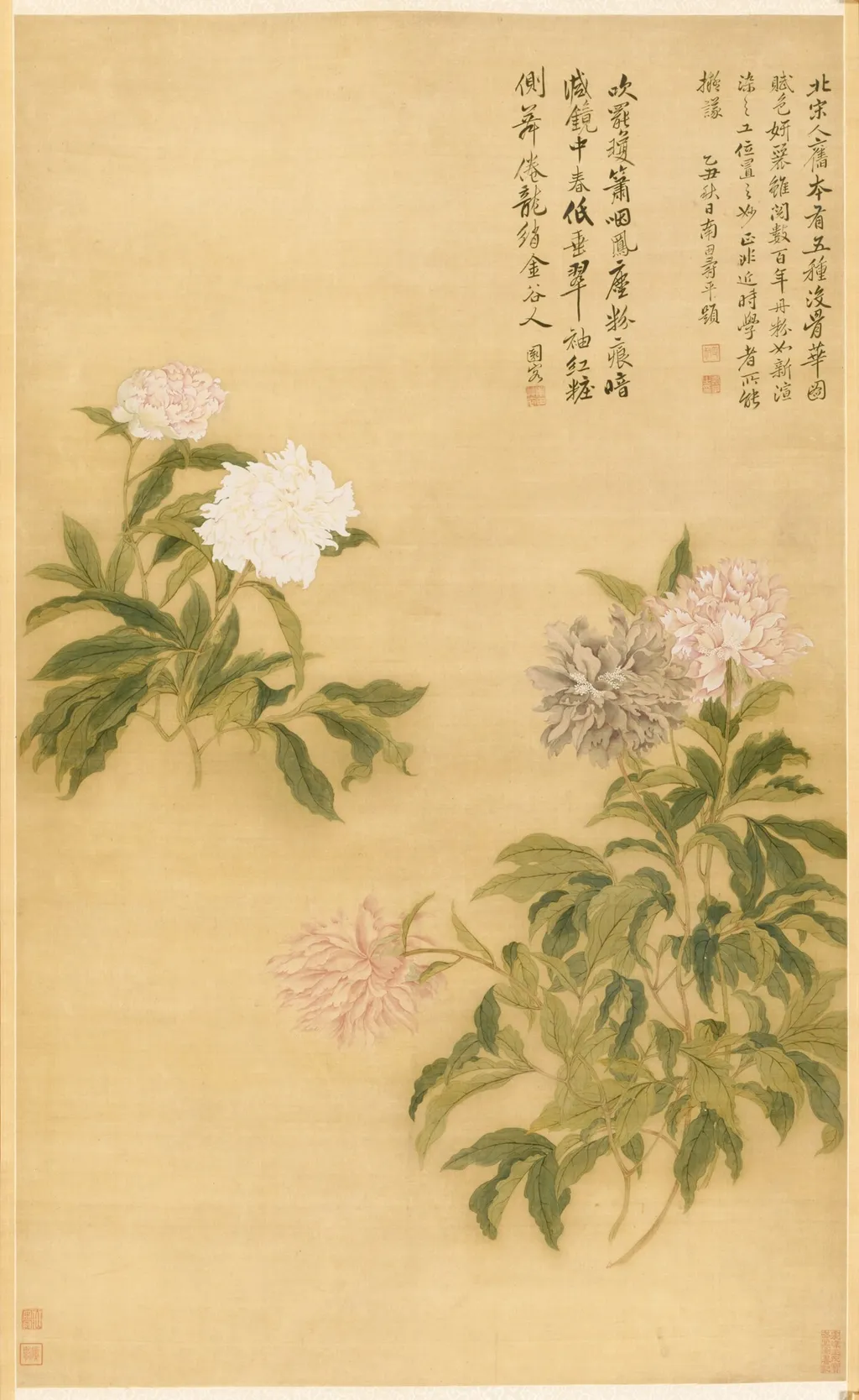
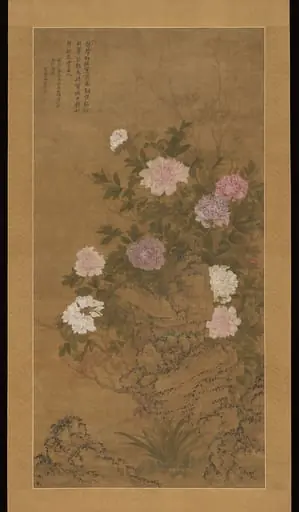
Herbaceous Peony is an unspecified painting by Yun Shouping. It is held in the collection of the Cleveland Museum of Art.
About this work
Subject & Meaning
The work focuses entirely on the botanical subject, presenting the bloom as the sole element of the composition.
Created in 1685 by the Chinese artist Yun Shouping, this painting depicts a herbaceous peony flower. The work focuses entirely on the botanical subject, presenting the bloom as the sole element of the composition. While the peony often carries rich symbolic associations in Chinese art history, the available records for this specific piece identify the subject simply as a flower without elaborating on specific iconographic programs or allegorical meanings intended by the artist. The painting serves as a representation of the natural form of the herbaceous peony.
History & Provenance
Yun Shouping painted Herbaceous Peony in 1685 in China, creating a work now held by the Cleveland Museum of Art. The painting entered the museum's collection at an earlier date, establishing its provenance within the institution's custody. Its creation is documented through the artist's activity during the late 17th century, with the work exemplifying his floral subjects. The painting is cataloged under the Cleveland Museum of Art's records as part of their permanent holdings.
The artwork's genesis aligns with Yun Shouping's documented practice of painting flowers, as reflected in its classification and creation history. The date of 1685 is confirmed by the source as the year of its inception, placing it within the artist's mature period. The work's journey to the Cleveland Museum of Art constitutes its documented ownership chain, though specific prior owners are not detailed in the available records.
Herbaceous Peony remains a significant example of Chinese floral painting from the late 17th century, currently residing in Cleveland where it is accessible to the public as part of the museum's collection.
Herbaceous Peony is held by the Cleveland Museum of Art, where it is catalogued under the inventory number 1967.192. The painting, dated to 1685, is part of the museum's collection of Chinese art.
No exhibition history is documented in the available sources.
Overview
Created in 1693 by Yun Shouping, a prominent early‑Qing painter counted among the Six Masters, Herbaceous Peony is a small hanging scroll now held by the Cleveland Museum of Art. The work presents a modest grouping of three peony blossoms rendered in soft pinks and whites against a muted beige ground, inviting quiet contemplation.
Technique & Style
Yun employs a restrained brush technique, using smooth, controlled strokes that give the petals a delicate, almost translucent quality. The limited palette, subtle pinks, whites, and greens, contrasts with the light, almost neutral background, emphasizing the natural forms while maintaining the lyrical simplicity characteristic of his mature style.
Context
Yun’s work reflects the early Qing court’s taste for refined, literati painting that combined poetry, calligraphy, and modest botanical subjects. By focusing on a single flower group rather than a grand landscape, the piece aligns with the era’s aesthetic preference for intimate, scholarly expression over decorative excess.
Own this work as a print
Artist & collection

Artist
Yun Shouping (Chinese: 惲壽平; 1633 – 1690), also known as Nantian (Chinese: 南田), was a Chinese calligrapher and painter.

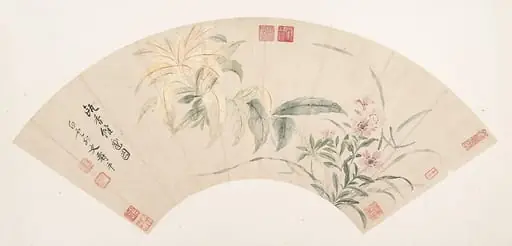
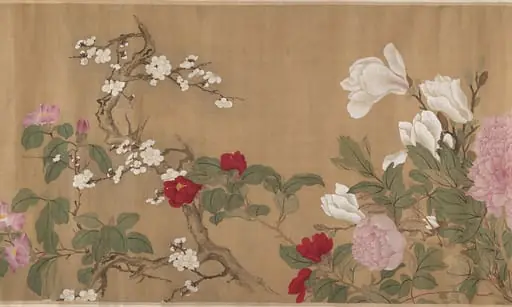
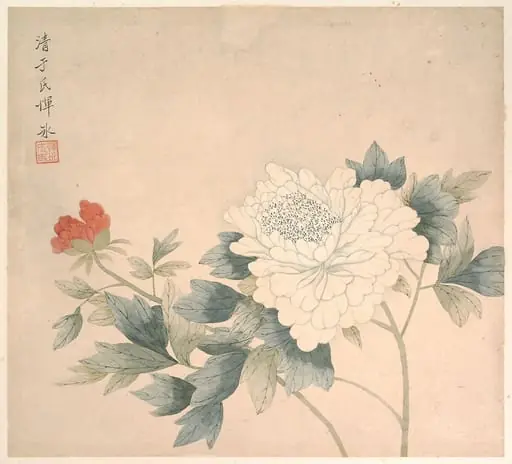 清 惲冰 花卉圖 册页|Flower Study
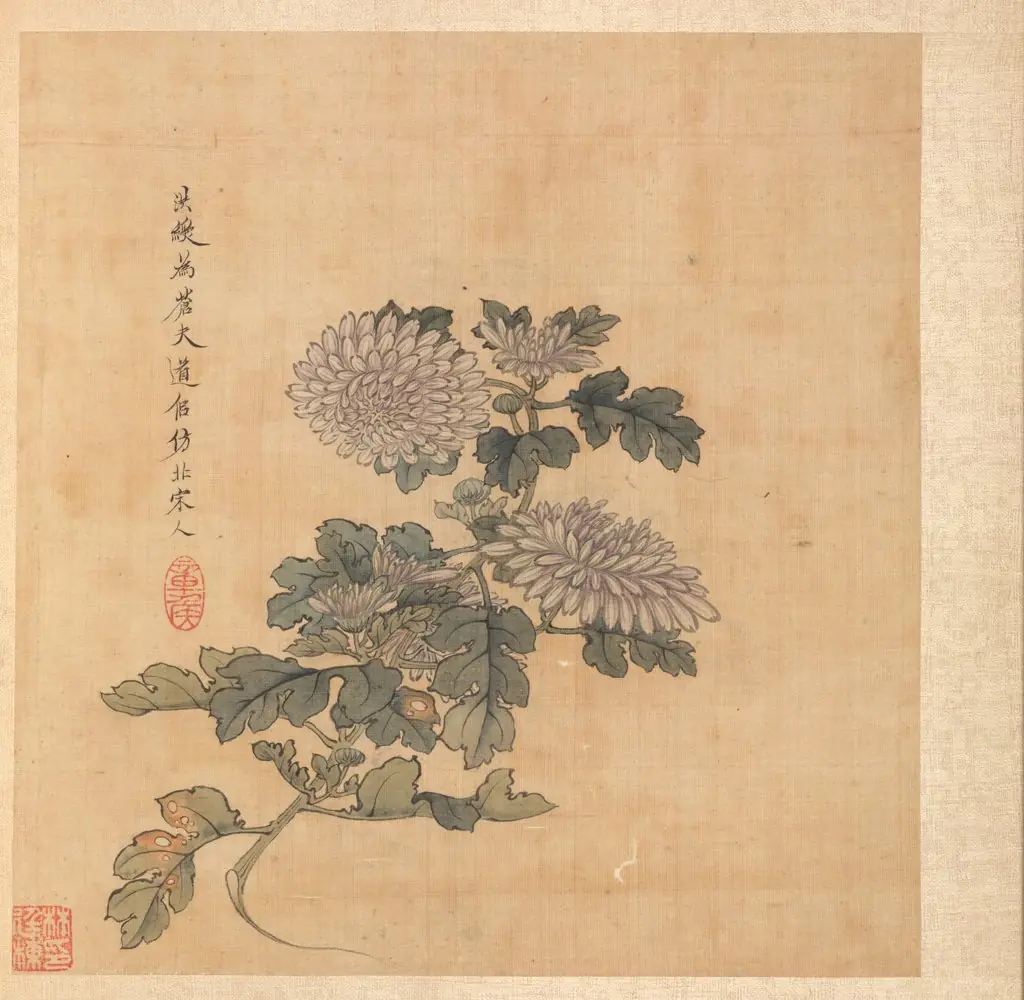 Paintings after Ancient Masters: Chrysanthemum
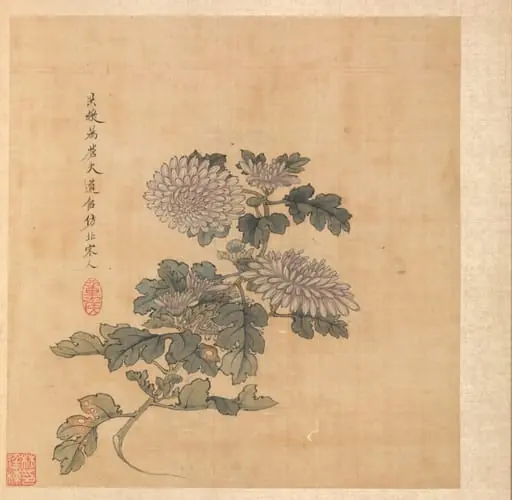 Paintings after Ancient Masters: Chrysanthemum
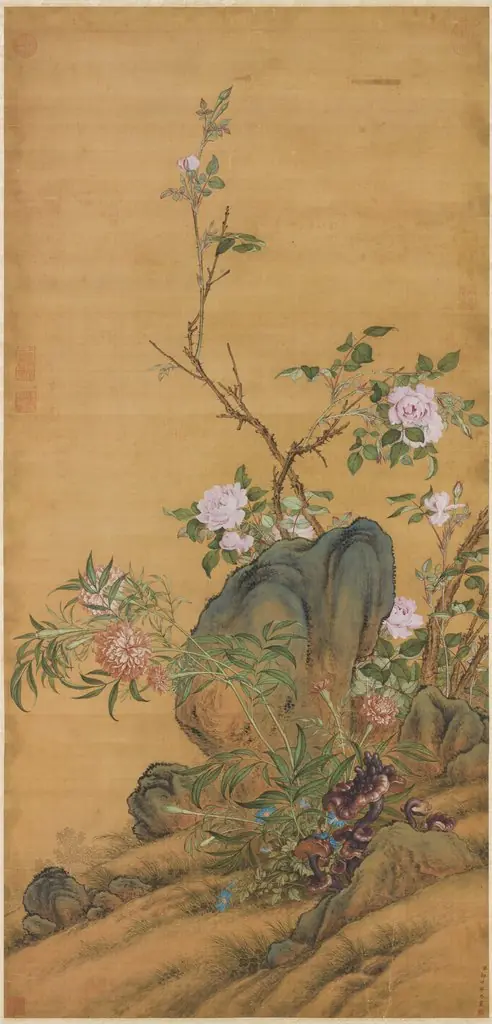 Myriad Longevities in an Everlasting Spring
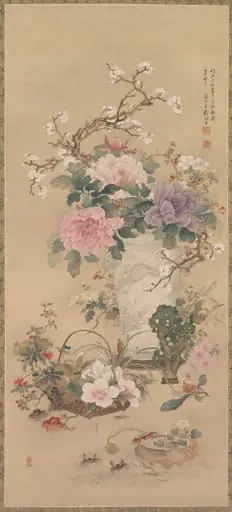 Vase of Flowers with Grasshopper, Marine Life, and Garden Rock
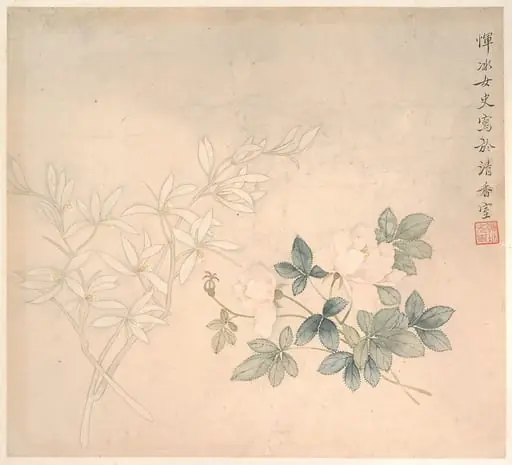 清 惲冰 花卉圖 册页|Flower Study
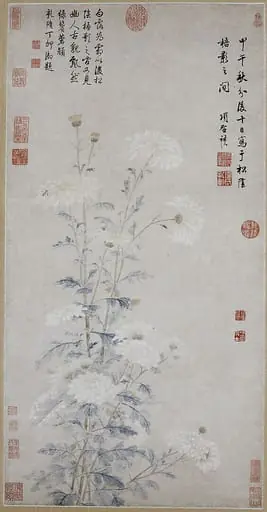 明/清 項聖謨 白菊圖 軸|White Chrysanthemums
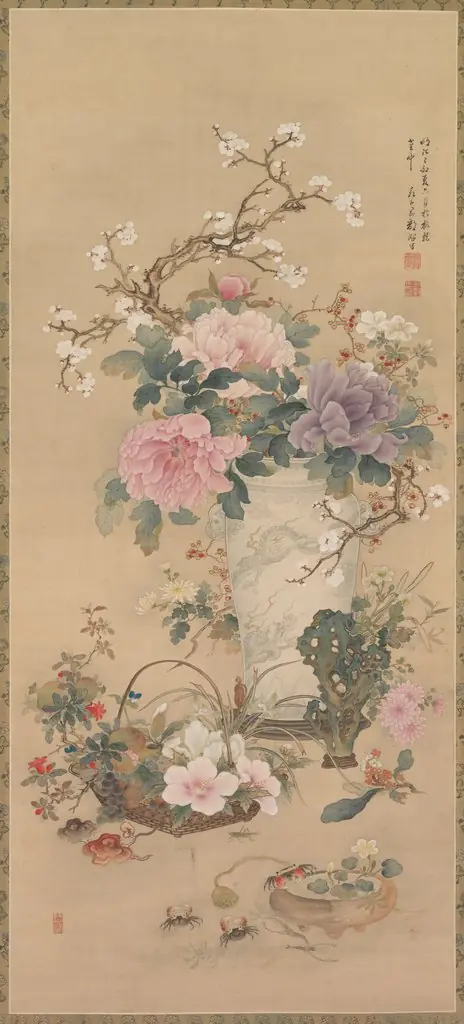 Vase of Flowers with Grasshopper, Marine Life, and Garden Rock