Artwork
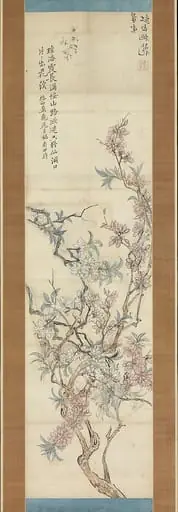
清 (傳)惲壽平 百花圖 卷|One Hundred Flowers
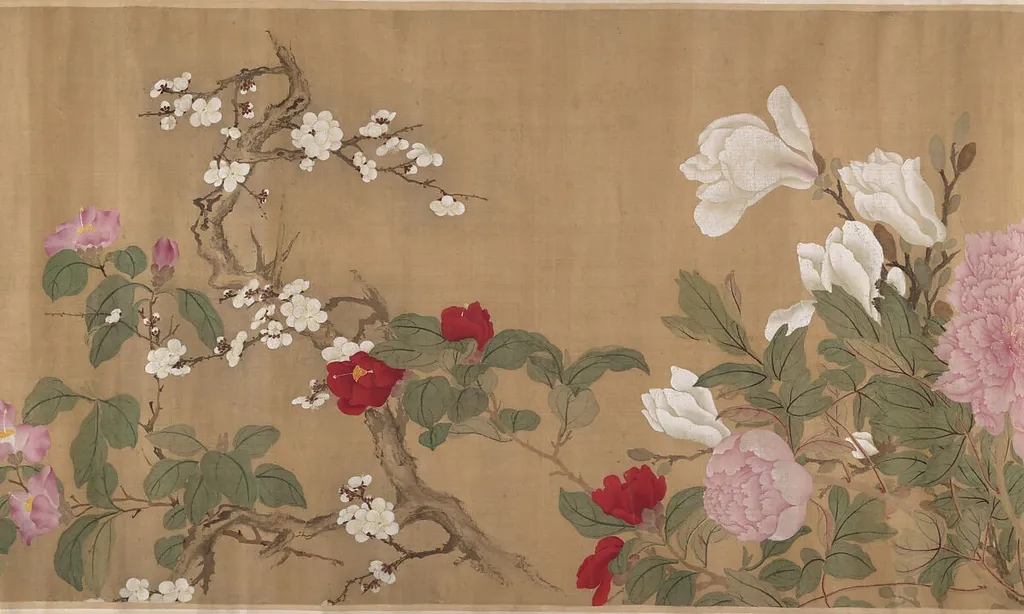
清 (傳)惲壽平 百花圖 卷|One Hundred Flowers is an ink painting by the Baroque artist Yun Shouping. It is held in the collection of the Metropolitan Museum of Art.
About this work
Subject & Meaning
By assembling such a vast array of flowers into a single long scroll, the artist creates a visual catalogue that celebrates the diversity of the plant world.
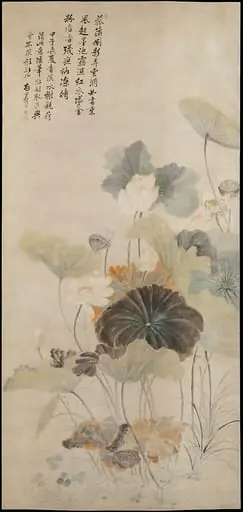
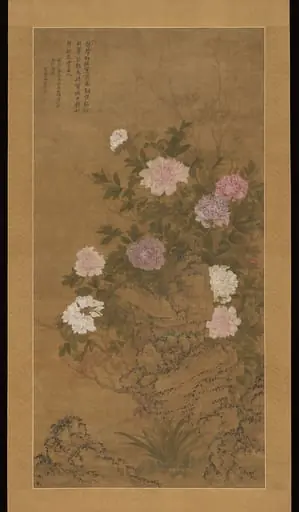
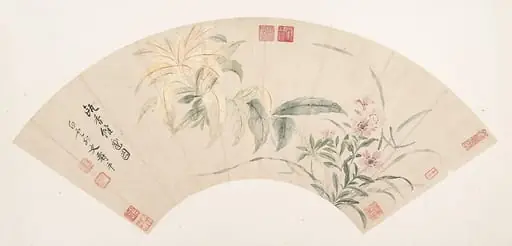
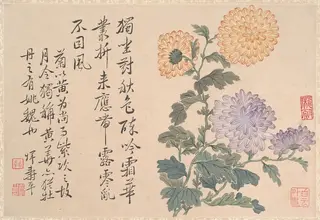
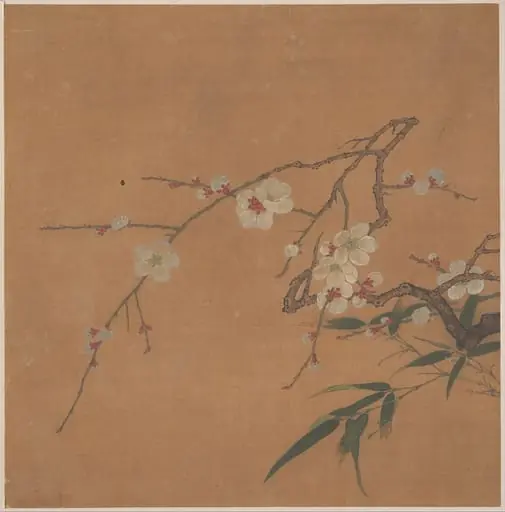
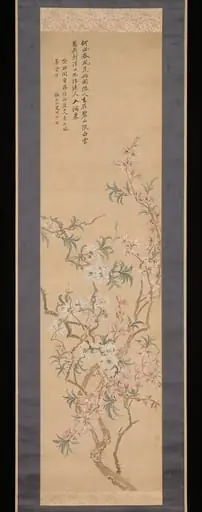
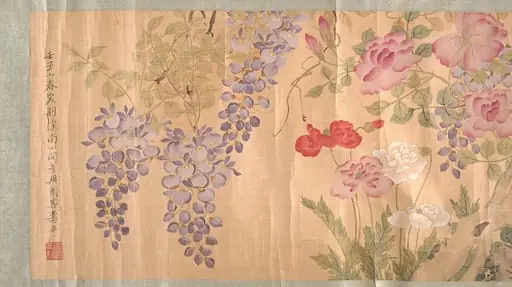
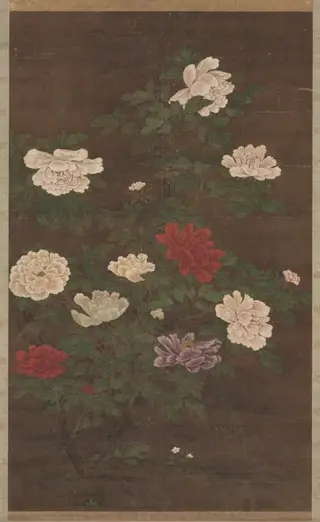
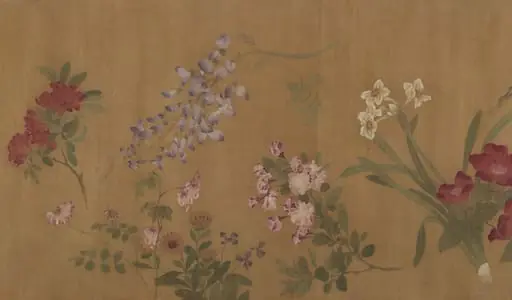
The handscroll depicts a continuous arrangement of flowers, presenting a still-life composition focused entirely on floral subjects. As the title suggests, the work aims to represent one hundred distinct flowers, utilizing ink and color on silk to render the botanical forms. The iconography centers on the natural beauty and variety of these blooms, a common theme in Chinese painting that often carries connotations of vitality and the cycles of nature.
By assembling such a vast array of flowers into a single long scroll, the artist creates a visual catalogue that celebrates the diversity of the plant world.
Technique & Style
The work is a handscroll executed in ink and color on silk, dated 1749. The medium combines fluid ink washes with delicate mineral and organic pigments to render a continuous floral procession across the length of the silk support. Stylistically, the composition unfolds in a sequential, episodic manner typical of the handscroll format, with individual clusters of blossoms isolated within narrow registers and connected by slender stems and winding branches.
Handling emphasizes soft, wet-into-wet ink transitions and subtly modulated color gradations, producing a gentle luminosity that characterizes Yun's boneless flower manner.
History & Provenance
Traditionally attributed to the Qing dynasty artist Yun Shouping, this handscroll titled One Hundred Flowers is dated 1749. Executed in ink and color on silk, the work depicts a variety of floral subjects. It is held in the collection of the Metropolitan Museum of Art, where it is cataloged with dimensions of 41.9 cm in height and 649 cm in width.
The attribution to Yun Shouping is traditional. The museum does not publish a separate accession or inventory number for this piece, and no exhibition history is noted in the available documentation.
Context
One Hundred Flowers is a handscroll painted in ink and color on silk, traditionally attributed to the Qing dynasty painter Yun Shouping and dated 1749. The work belongs to the flower-painting tradition for which Yun Shouping was celebrated, executed in his characteristic 'boneless' (mogu) manner. Held in the Metropolitan Museum of Art, the scroll measures 41.9 cm by 649 cm. Its Chinese origin and floral subject situate it within the broader development of flower painting in early modern China.
Overview
Yun Shouping, a leading figure among the early Qing “Six Masters,” created the hand‑scroll One Hundred Flowers in 1749. Executed on silk with ink and mineral pigments, the painting presents a continuous procession of individual blossoms. The work follows the Qing tradition of flower still‑life, emphasizing the quiet elegance of each bloom rather than a formal bouquet.
Artist & collection

Artist
Yun Shouping (Chinese: 惲壽平; 1633 – 1690), also known as Nantian (Chinese: 南田), was a Chinese calligrapher and painter.