Artwork
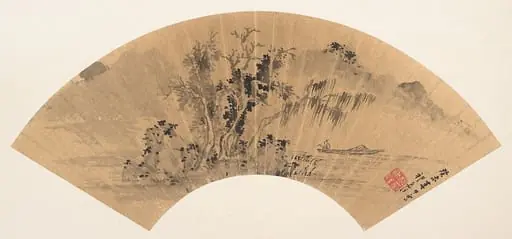
明/清 莊冏生 山水 扇面|River Landscape
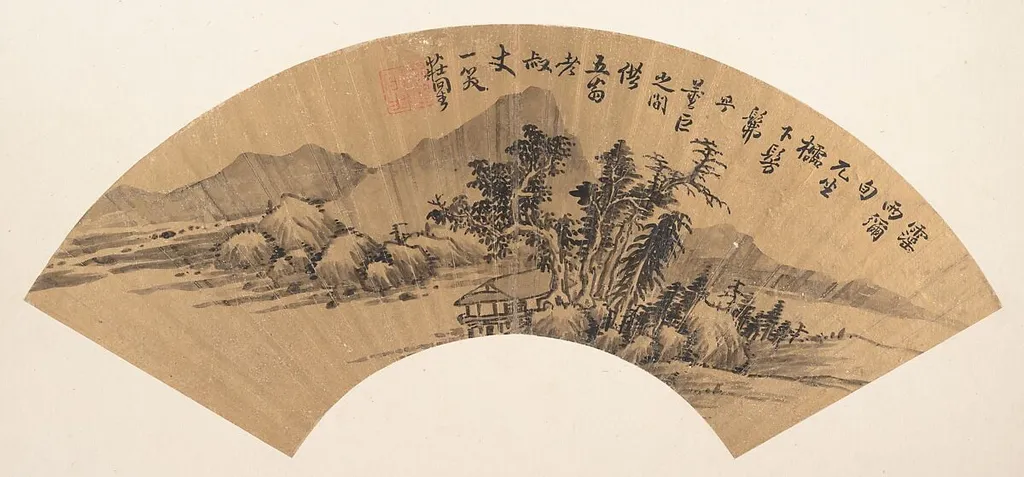
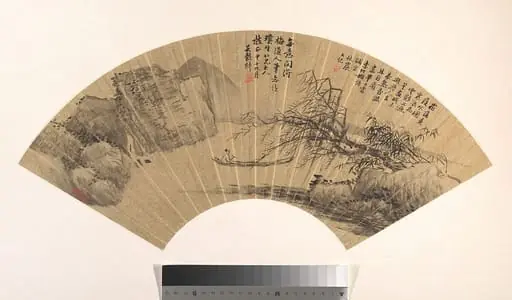
明/清 莊冏生 山水 扇面|River Landscape is an ink painting by the Baroque artist Zhuang Jiongsheng. It dates from 1660 and is held in the collection of the Metropolitan Museum of Art.
About this work
Technique & Style
Stylistic traits align with the restrained yet expressive manner associated with Zhuang Jiongsheng’s dated oeuvre of the 1660s.
The work is a folding fan remounted as an album leaf, executed in ink on gold paper. Handling shows the fine, controlled brushwork typical of late-Ming–early-Qing literati practice, with layered washes defining recession along the river and its wooded banks. Formal qualities include a narrow, horizontal format that compresses distance into a shallow, recessional space, emphasizing the river’s winding course through attenuated, textured banks.
Stylistic traits align with the restrained yet expressive manner associated with Zhuang Jiongsheng’s dated oeuvre of the 1660s.
History & Provenance
The work was created in 1660 in China as a folding fan mounted as an album leaf, executed in ink on gold paper. It portrays a river landscape and belongs to the landscape painting genre. According to the Metropolitan Museum of Art’s records, the painting entered the museum’s collection and remains on view there.
The work’s inception date is recorded as 1660, and its physical dimensions are 16.2 cm in height and 50.2 cm in width. No further documented ownership chain or commission details are provided in the sources.
The folding fan leaf titled River Landscape, created by Zhuang Jiongsheng in 1660, is held in the collection of the Metropolitan Museum of Art. The work, executed in ink on gold paper and mounted as an album leaf, measures 16.2 by 50.2 centimeters. While the sources confirm the artwork's current location within the museum's holdings, they do not provide a specific accession or inventory number. Furthermore, no information regarding the piece's exhibition history is available in the provided records.
Overview
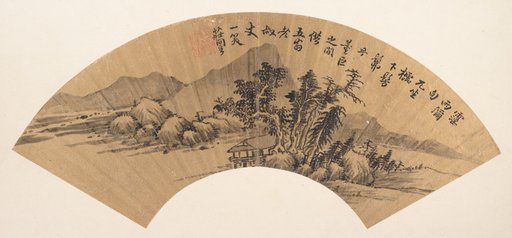
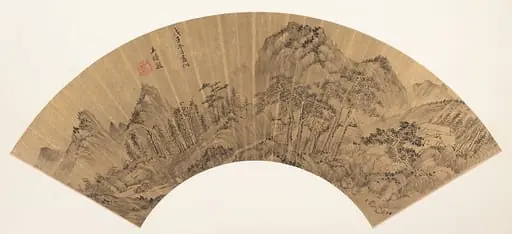
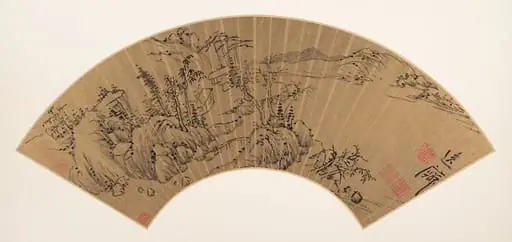
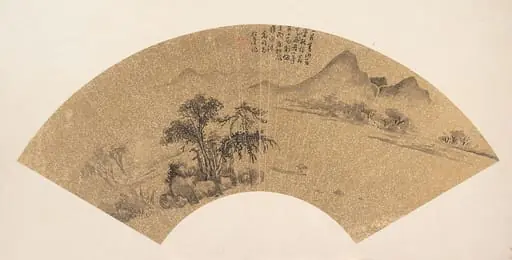
Created in 1660 by the Chinese artist Zhuang Jiongsheng, this work is a landscape executed in ink on gold paper, originally formed as a folding fan and later mounted as an album leaf. The composition depicts a river winding through misty hills, utilizing the curved format of the fan to create a sense of the landscape enveloping the viewer. Jiongsheng employs extremely light ink washes that fade into the metallic ground, evoking the atmospheric quality of morning fog and emphasizing the ethereal nature of the scene.
The interplay between the dark, delicate brushwork and the shimmering gold surface is characteristic of the literati tradition's adaptation to fan painting during the early Qing dynasty. While biographical details regarding Zhuang Jiongsheng remain scarce in historical records, this piece stands as a refined example of his ability to convey spatial depth and atmospheric mood within a constrained, decorative format. The work reflects the period's continued appreciation for subtle tonal variations and the integration of calligraphic brushwork with the luxurious materiality of gold paper.
Subject & Meaning
The artwork portrays a quiet river scene, where a small waterway meanders through a landscape of hazy hills. The composition evokes a sense of calm and introspection, typical of traditional Chinese landscape painting. The misty atmosphere suggests an early morning or a contemplative, dreamlike state, inviting viewers to immerse themselves in its tranquil beauty.
Context
Little is known about the artist Zhuang Jiongsheng, making River Landscape a significant surviving example of his output. This quiet and contemplative work offers insight into the artistic practices of a less documented painter from the mid-17th century. Its survival provides a rare glimpse into the broader landscape traditions of the Ming-Qing transitional period.
Artist & collection