Artwork
明 陳洪綬 山水圖 扇|Landscape
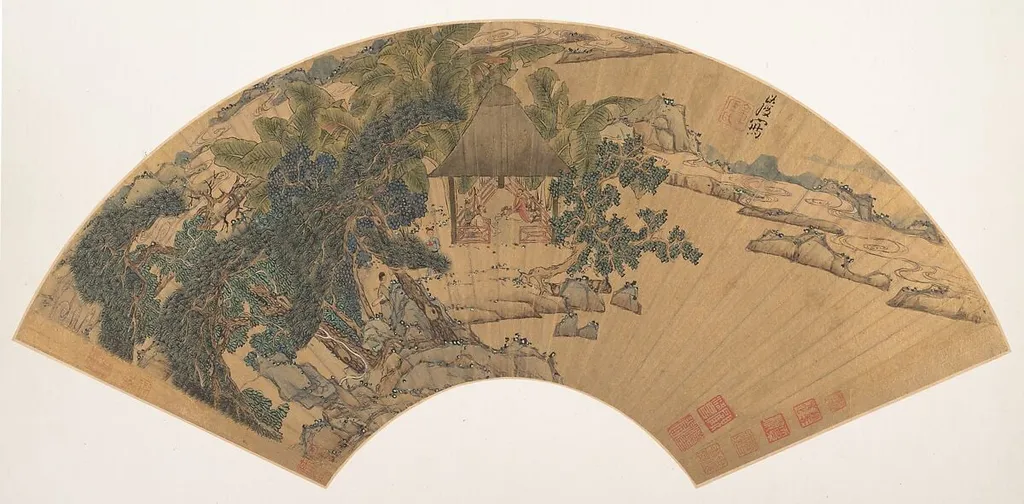
明 陳洪綬 山水圖 扇|Landscape is an ink painting by the Baroque artist Chen Hongshou. It dates from 1650 and is held in the collection of the Metropolitan Museum of Art.
About this work
Technique & Style
The work takes the form of a folding fan mounted as an album leaf, a format that shapes both the composition and the viewer's reading of the image.
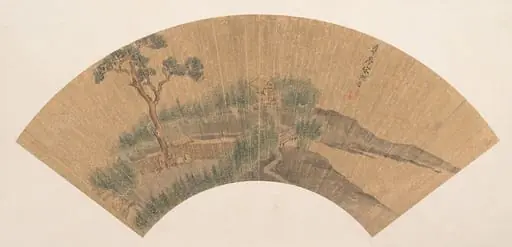
Chen Hongshou's Landscape is executed in ink and color on gold paper, a refined support that lends the surface a warm, luminous ground. The work takes the form of a folding fan mounted as an album leaf, a format that shapes both the composition and the viewer's reading of the image. Measuring 20.3 cm in height by 55.9 cm in width, the horizontal arc of the fan dictates a panoramic, laterally unfolding arrangement typical of the genre.
The use of gold paper combined with ink and color is characteristic of mid-seventeenth-century Chinese literati practice, allowing for delicate tonal modulation and crisp, controlled brushwork against the metallic ground.
No condition issues are documented in the available sources, and the piece is held in the collection of the Metropolitan Museum of Art.
History & Provenance
The work Landscape by Chen Hongshou is held in the collection of the Metropolitan Museum of Art. While specific accession or inventory numbers are not provided in the available records, the museum lists the piece within its holdings of Chinese paintings. The artwork, dated to 1650, is classified as a landscape painting and is currently located in New York City at the museum's institution. No exhibition history is documented in the provided sources.
Legacy
The folding‑fan landscape by Chen Hongshou, dated 1650, is held in the Metropolitan Museum of Art, indicating its recognized importance in Chinese painting. Its presence in a major museum collection and classification as a landscape work have informed scholarly assessments of Chen Hongshou’s contribution to the genre, influencing later artists who examined his use of ink, color on gold paper, and album‑leaf format. The work’s dimensions of 20.3 × 55.9 cm are recorded in the museum catalogue, and its creation in China is documented, reinforcing its role in the development of Ming‑era landscape painting.
Overview
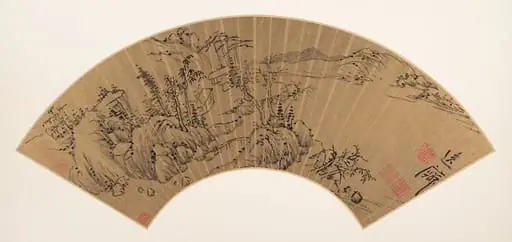
Created in 1650, this landscape by Chen Hongshou (1598–1652) is executed in ink and color on gold paper, mounted as an album leaf from a folding fan. The composition depicts a secluded dwelling nestled among stylized rocks and dense foliage, characteristic of the artist's late Ming period style. Chen employs his signature distorted forms and archaic figures to render the scene, blending natural elements with a sense of timeless stillness.
Small figures are visible within the architectural structure, suggesting a narrative of reclusion or scholarly retreat. The use of gold paper provides a luminous background that contrasts with the dark ink outlines and subtle color washes, enhancing the decorative quality of the work. As a product of Chen's later career, following the fall of the Ming dynasty, the piece reflects his turn toward introspection and a rejection of contemporary trends in favor of a more idiosyncratic, ancient aesthetic.
The work bears red collector seals in the lower right corner, attesting to its historical circulation and appreciation. This fan leaf exemplifies Chen Hongshou's mastery of the landscape genre and his unique ability to infuse traditional subjects with personal expression and structural innovation.
Subject & Meaning
The artwork depicts a serene natural environment, centered around a house nestled amidst a dense arrangement of trees and prominent rock formations. Within the dwelling, small figures are discernible, suggesting human presence within the expansive landscape. The composition invites contemplation of the relationship between human habitation and the surrounding wilderness, a recurring theme in East Asian art.
Artist & collection

 明/清 陳洪綬、陳字 雜畫 冊|Figures, flowers, and landscapes
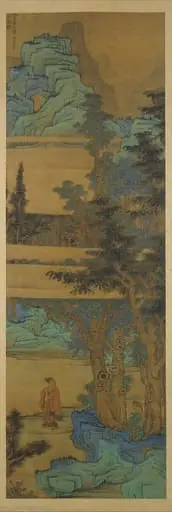 明 陳洪綬 樹下高士圖 軸|Scholar-recluse in blue-green landscape
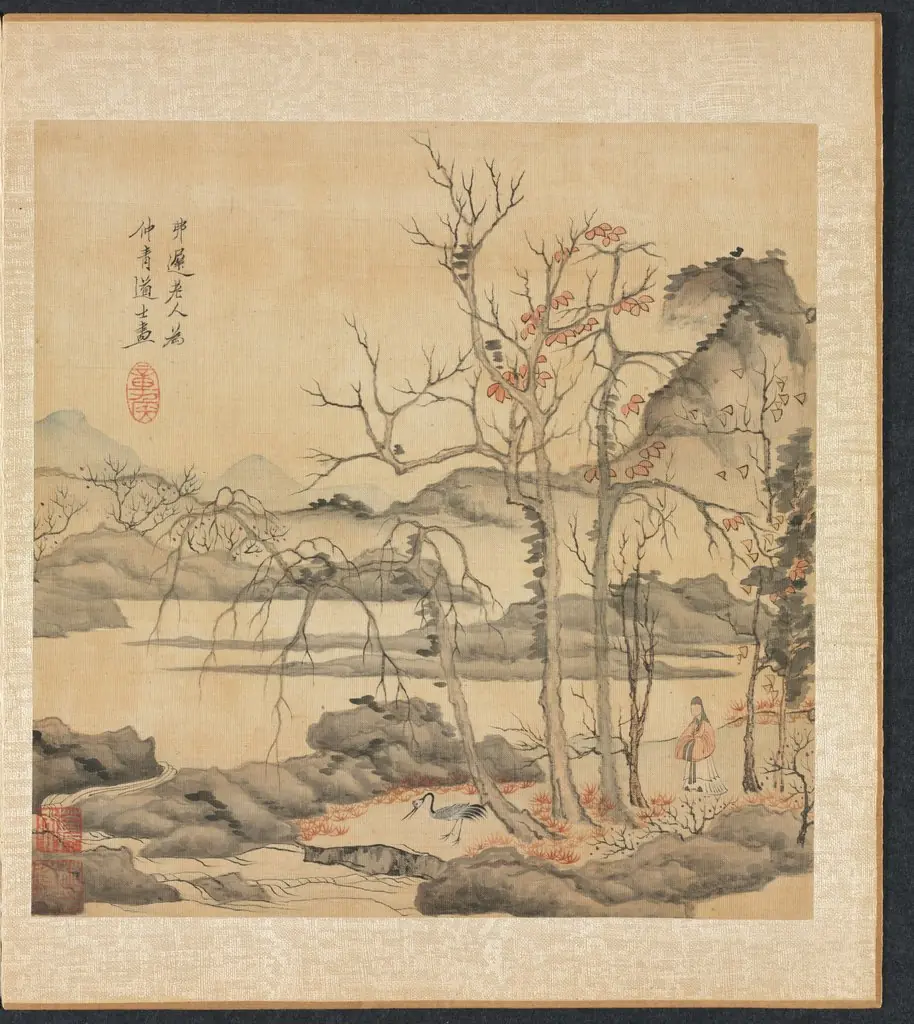 Paintings after Ancient Masters: Daoist and Crane in Autumn Landscape
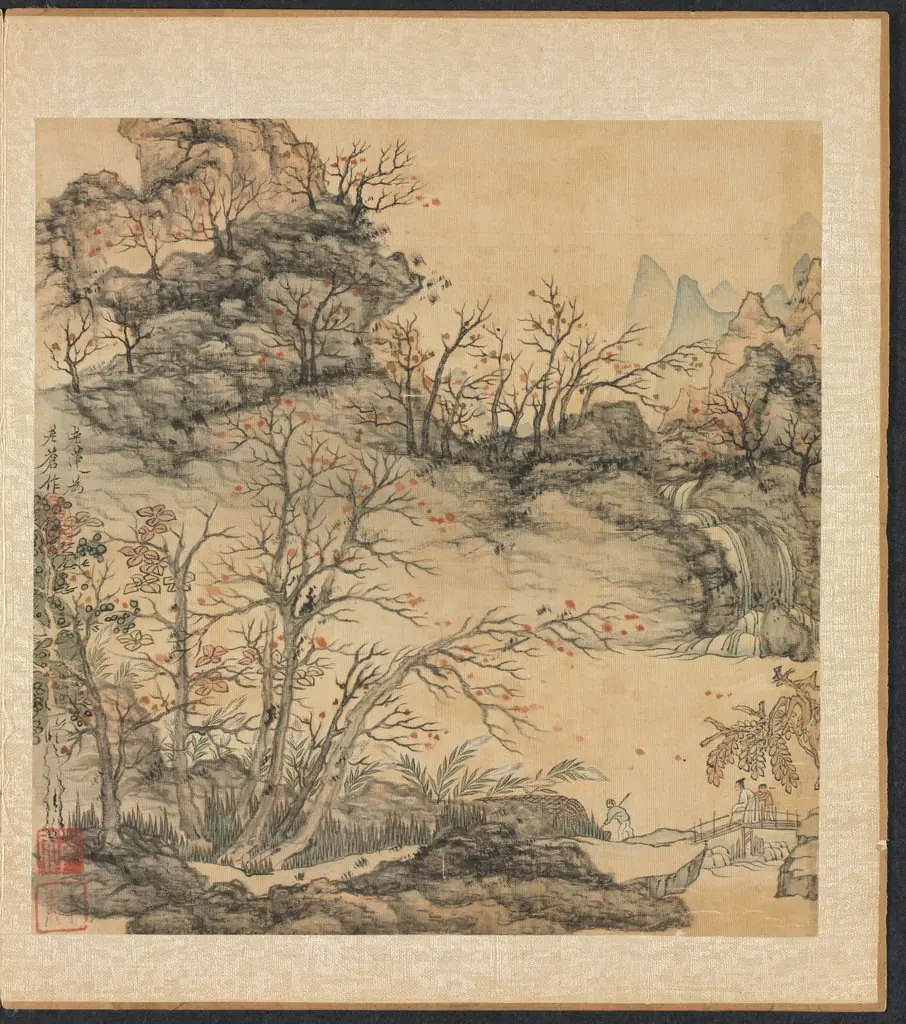 Paintings after Ancient Masters: Autumn Landscape
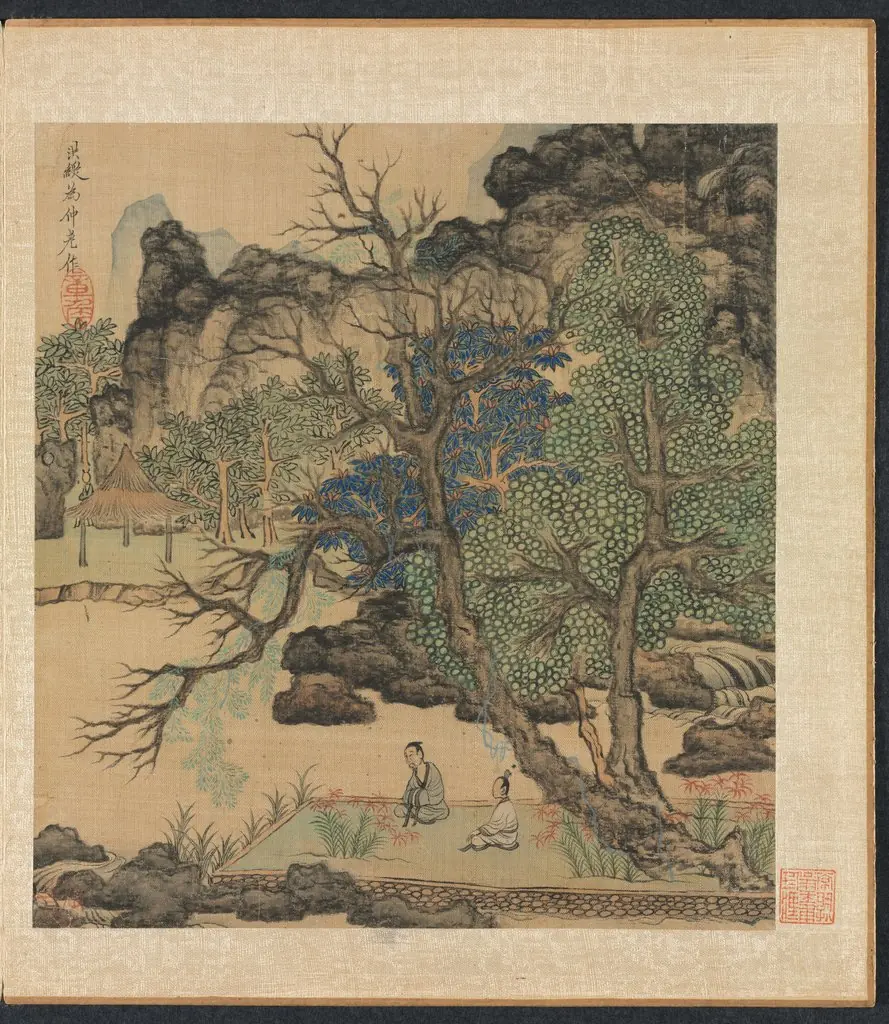 Paintings after Ancient Masters: Scholars in a Garden
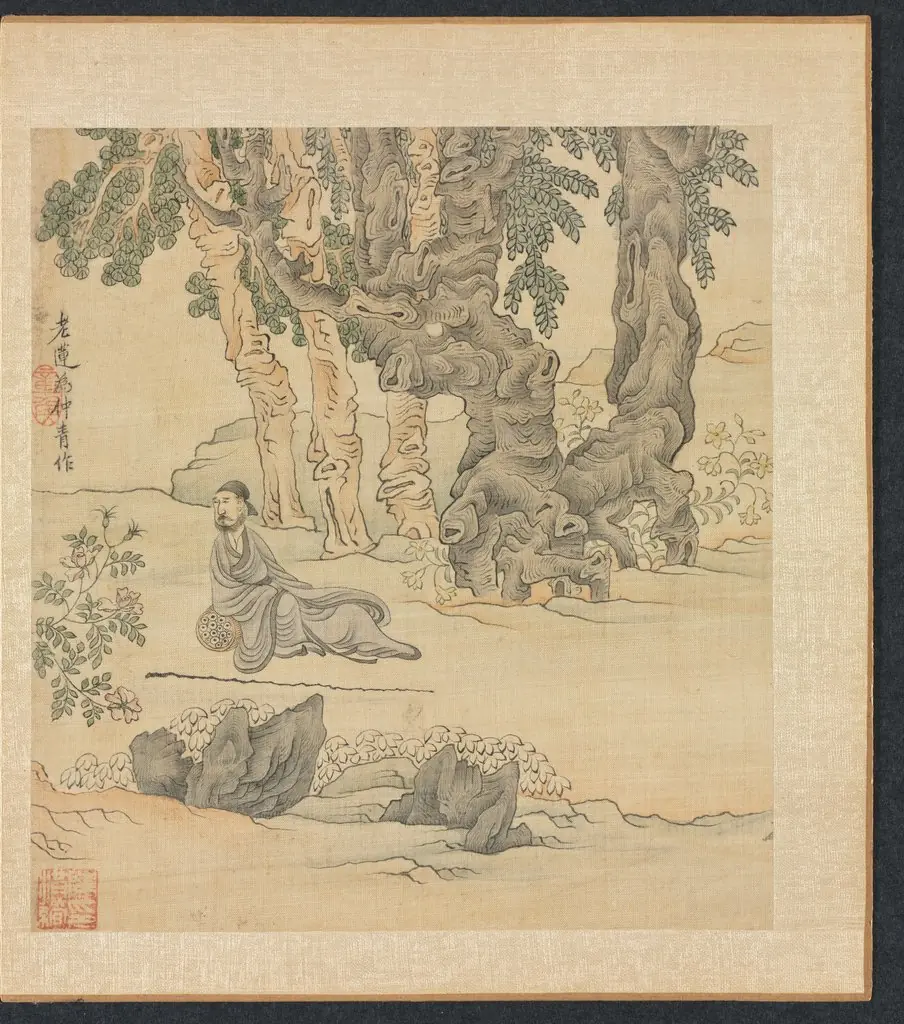 Paintings after Ancient Masters: Portrait of Zhongqing in a Landscape
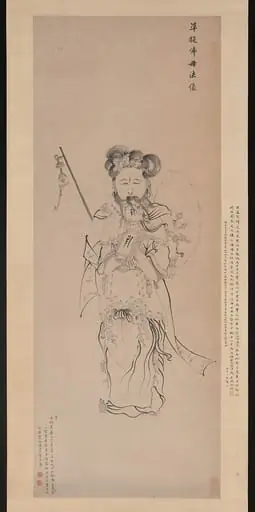 明 陳洪綬 準提佛母法像圖 軸|Bodhisattva Guanyin in the Form of the Buddha Mother
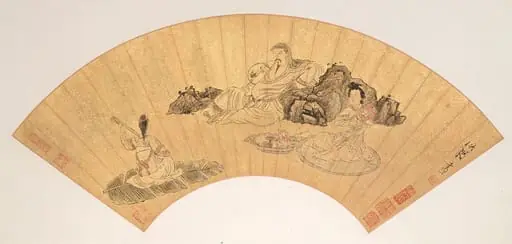 明 陳洪綬 山水花鳥人物圖 扇冊|Landscapes and Flowers