
Movement
Action Painting
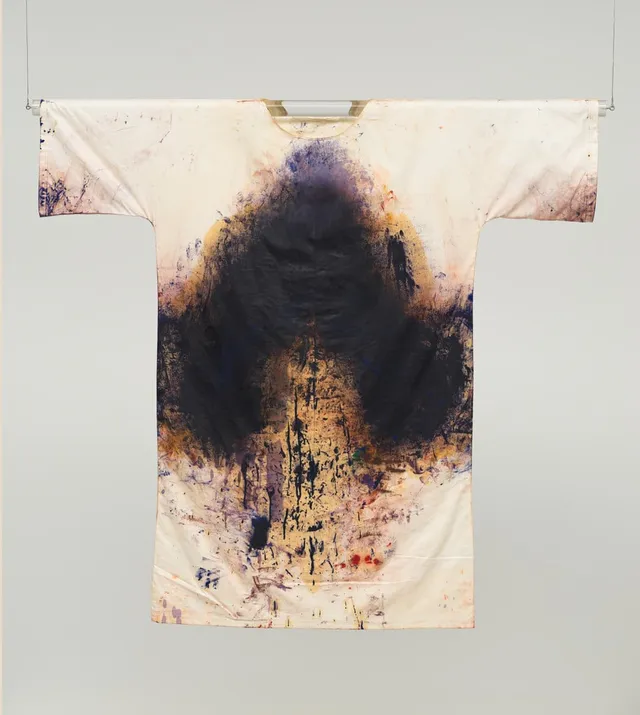
Action Painting is an art movement of the 1940–1960 period. The gallery holds 1 work in this movement, including works by Arshile Gorky, Willem de Kooning and Jackson Pollock. Browse Action Painting paintings, portraits, pictures and artworks from the world's public-domain museum collections.
Action painting is the gestural wing of Abstract Expressionism, the movement that made New York the center of the Western art world in the years after the Second World War. The term was coined by the critic Harold Rosenberg in his essay "The American Action Painters," published in ARTnews in December 1952 and later collected in The Tradition of the New (1959). Rosenberg argued that for these painters the canvas had become "an arena in which to act" rather than a surface on which to reproduce or design an image. Emerging from a generation shaped by the Depression, European Surrealist émigrés, and existentialist ideas of authentic self-creation, the style treated the picture less as a finished object than as the residue of a charged physical event.
Its defining characteristic is the visible trace of the artist's movement: sweeping, often arm-driven brushstrokes, pouring, dripping, splattering, and slashing. Paint is read as an index of gesture and speed. Jackson Pollock crystallized the approach in 1947 when, working alone in his Springs studio on Long Island, he laid unstretched canvas on the floor and built up "all-over" compositions by flinging and dripping household enamel—an idea he encountered partly through Janet Sobel's earlier all-over drip pictures, which he saw at Peggy Guggenheim's Art of This Century gallery in 1945.
The canonical works are physical to the point of being choreographic. Pollock's Autumn Rhythm (Number 30), 1950, is a roughly eight-by-seventeen-foot skein of poured paint now in the Metropolitan Museum of Art. Willem de Kooning fused violent brushwork with the figure in Woman I (1950–52), and Franz Kline reduced the impulse to stark black-and-white architectures of slashed pigment. Hans Hofmann and Robert Motherwell pursued their own gestural idioms within the same New York School circle.
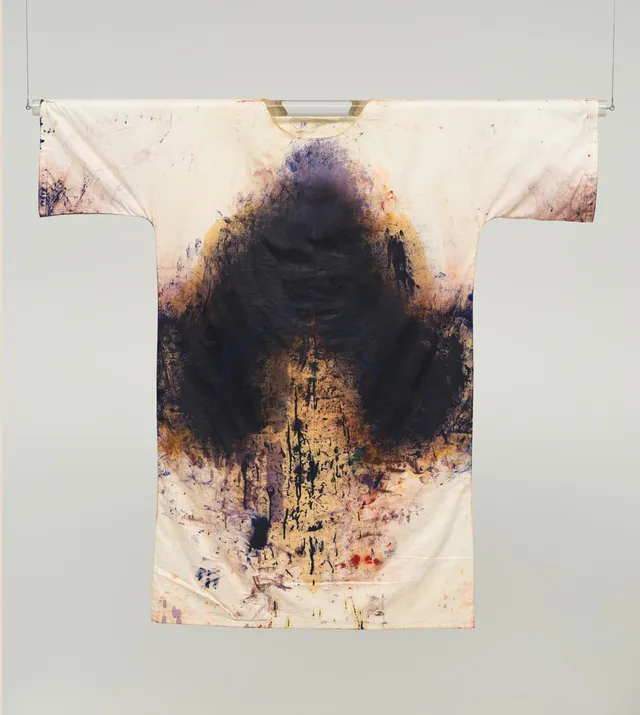
Action painting is best understood beside its sibling tendency, color field painting—the contemplative wing championed by Clement Greenberg and exemplified by Mark Rothko, Barnett Newman, and Clyfford Still—against whose stained, meditative expanses the gesturalists' urgency stands in sharp relief. The emphasis on the act itself proved enormously influential, feeding into performance and process art and, in Europe, the bodily extremes of Viennese Actionism, whose central figure Hermann Nitsch extended painting into ritual event.
Key artists


Works
Groups & collectives
Frequently asked questions
What is Action Painting?
Action Painting is an art movement. A strand of Abstract Expressionism in which the physical act of painting — dripping, pouring, and slashing — was itself the subject.
Who are the key Action Painting artists?
Key Action Painting artists in the collection include Arshile Gorky, Willem de Kooning and Jackson Pollock.
When did Action Painting take place?
Action Painting dates from 1940–1960.
Where can I see Action Painting works?
Action Painting works in the collection are held by Museum of Modern Art.