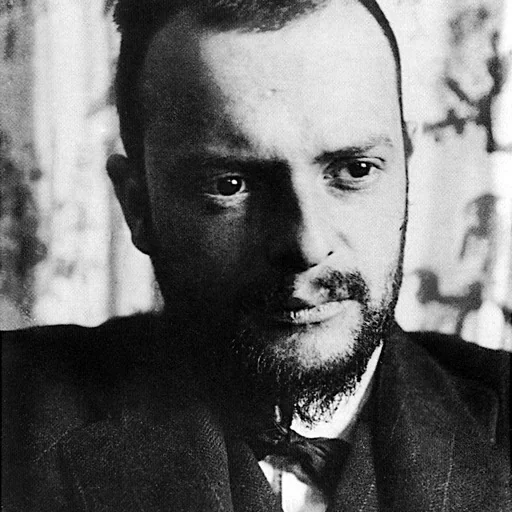
Movement
Color Field
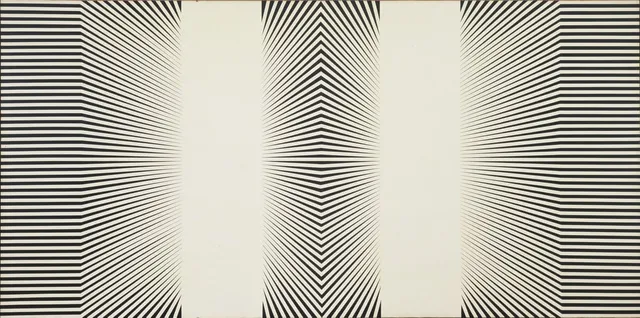
Color Field is an art movement dating from 1940. The gallery holds 2 works in this movement, including works by Paul Klee, Helen Frankenthaler and Barnett Newman. Browse Color Field paintings, portraits, pictures and artworks from the world's public-domain museum collections.
Color Field painting emerged in New York across the late 1940s and 1950s as one of the two principal strands of Abstract Expressionism. The critic Clement Greenberg helped establish the term, applying it first to Mark Rothko, Barnett Newman, and Clyfford Still — painters who, in the unsettled aftermath of the Second World War, abandoned the energetic mark in favor of vast, contemplative expanses of color. Where the action painters Jackson Pollock and Willem de Kooning dramatized the trace of the artist's hand, the Color Field painters pursued a quieter, even transcendent encounter, hoping to summon primal emotion through color itself rather than through recognizable imagery.
The signature canvases are monumental in scale and deliberately flat, dissolving the figure-ground distinction so that color becomes the subject rather than the description of something else. Newman's Vir Heroicus Sublimis (1950–51), a wall of saturated red broken only by slender vertical "zips," envelops the standing viewer, while Rothko's stacked, softly bleeding rectangles hover with a muffled luminosity. Brushwork, surface incident, and the illusion of depth are suppressed in favor of an immersive, sustained chromatic experience.
A pivotal innovation came in 1952, when the twenty-three-year-old Helen Frankenthaler painted Mountains and Sea, pouring turpentine-thinned oil onto raw, unprimed canvas so the pigment soaked into the weave rather than resting on top. After Greenberg brought Morris Louis and Kenneth Noland to her studio in 1953, both adopted this "soak-stain" method, yielding Louis's poured translucent veils and Noland's concentric targets, chevrons, and stripes. Greenberg named this cooler, more formalist generation Post-Painterly Abstraction in a 1964 exhibition at the Los Angeles County Museum of Art. A parallel current, the Washington Color School, gathered painters such as Gene Davis and Alma Woodsey Thomas.
By stripping away the mythic content and gestural drama of early Abstract Expressionism, Color Field painting anticipated Hard-Edge abstraction and Minimalism, and its emphasis on opticality and pure color reverberated for decades. The British-Guyanese painter Frank Bowling, working in New York from 1966, carried stained, radiant color into his own expansive abstractions. Our collection holds untitled works in this lineage by Arnold Schmidt and Larry Zox, alongside pieces by Barnett Newman, Alma Woodsey Thomas, Helen Frankenthaler, and Frank Bowling.
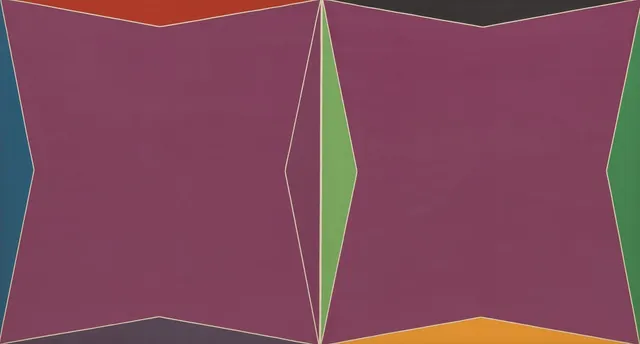
Key artists

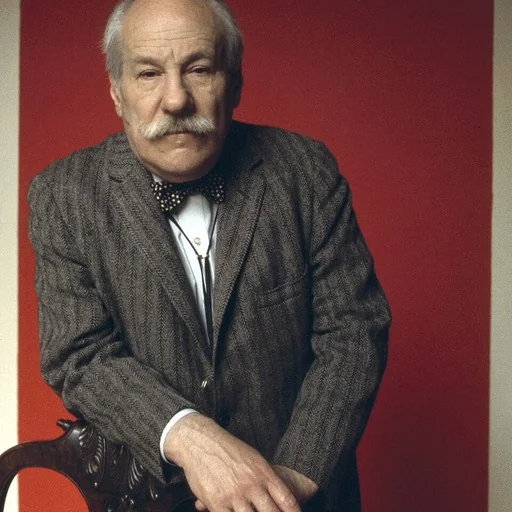
Works
Groups & collectives
Frequently asked questions
What is Color Field?
Color Field is an art movement. An American abstract movement emerging in the late 1940s and 1950s, defined by large expanses of flat, stained, or atmospheric color meant to envelop the viewer.
Who are the key Color Field artists?
Key Color Field artists in the collection include Paul Klee, Helen Frankenthaler and Barnett Newman.
When did Color Field take place?
Color Field dates from around 1940.
Where can I see Color Field works?
Color Field works in the collection are held by Museum of Modern Art.