Artist
Movement
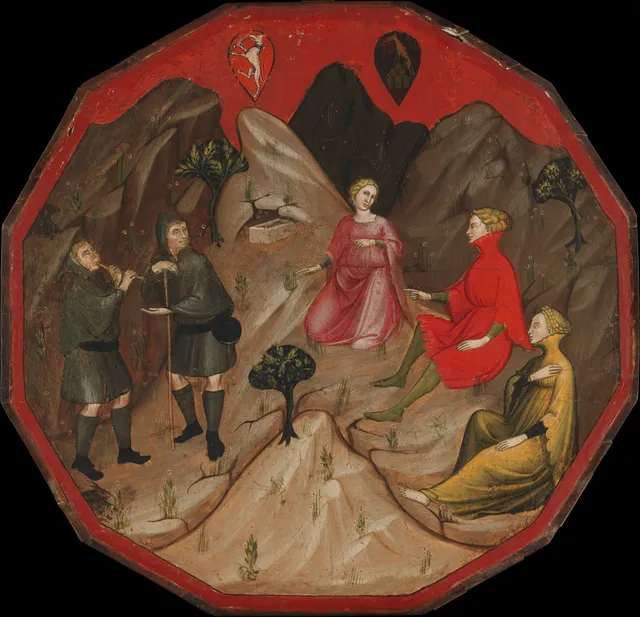
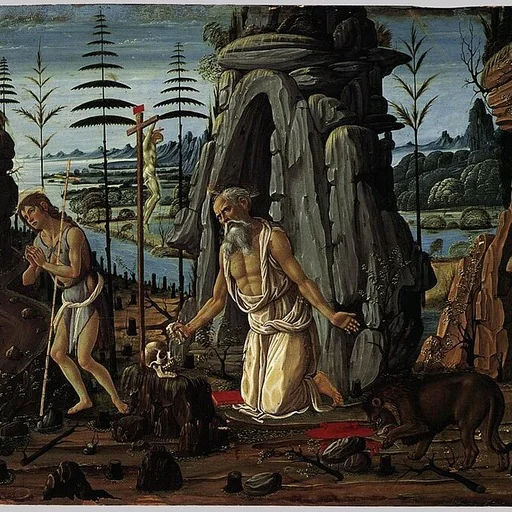
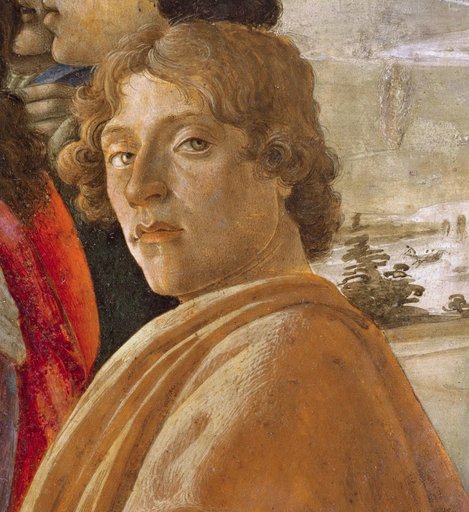
Florentine School is an art movement dating from 1300. The gallery holds 2 works in this movement, including works by Sandro Botticelli, Jacopo da Sellaio and Master of 1416. Browse Florentine School paintings, portraits, pictures and artworks from the world's public-domain museum collections.
The Florentine School denotes the tradition of painting that arose in Florence in the early 14th century and, over the following two centuries, became the leading current in Western art. Its decisive break with the gilded, hieratic conventions of Byzantine art is credited to Giotto di Bondone (c. 1267–1337), whose frescoes for the Arena (Scrovegni) Chapel in Padua endowed sacred subjects with solid, weighty bodies and genuine human emotion. This naturalism flourished in a prosperous republic whose wealth, drawn from banking and the wool and silk trades, funded an unprecedented appetite for art. The civic and dynastic patronage of families such as the Medici, coupled with the humanist revival of classical antiquity, gave the city both the means and the intellectual ambition to remake painting in the image of the observable world.
The school's defining achievement was the formalization of one-point linear perspective, devised by the architect Filippo Brunelleschi around 1415 and first deployed in painting by Masaccio (1401–1428), one of the founders of the mature Florentine style. In frescoes such as the Tribute Money and Trinity, Masaccio fused Giotto's sculptural, light-modelled figures with mathematically constructed space. Above all, Florentine practice elevated disegno—drawing and design—as the intellectual foundation of art, prizing line, anatomical accuracy and rational structure. This ethos distinguished it sharply from the Venetian school's emphasis on colorito, fuelling the celebrated disegno-versus-colore debate of the 16th century.
The canon is extraordinarily rich: Fra Angelico, Filippo Lippi, Domenico Ghirlandaio, Andrea del Verrocchio and his pupils Leonardo da Vinci and Lorenzo di Credi, and Sandro Botticelli, whose Primavera and Birth of Venus marry linear grace to humanist allegory. The tradition culminated in the High Renaissance and the disegno-driven art of Michelangelo, whom Giorgio Vasari—himself a Florentine—proclaimed its supreme exponent in his Lives of the Artists (1550).
This collection holds works that trace the school's range, from the narrative panel A Contest between the Shepherds Alcesto and Acaten by the anonymous Master of 1416 to a Venus attributed to Lorenzo di Credi, a Verrocchio-trained painter who absorbed Leonardo's influence. The Florentine emphasis on drawing, anatomy and constructed space became the bedrock of academic art across Europe for centuries, shaping Mannerism and the curricula of the academies that followed.
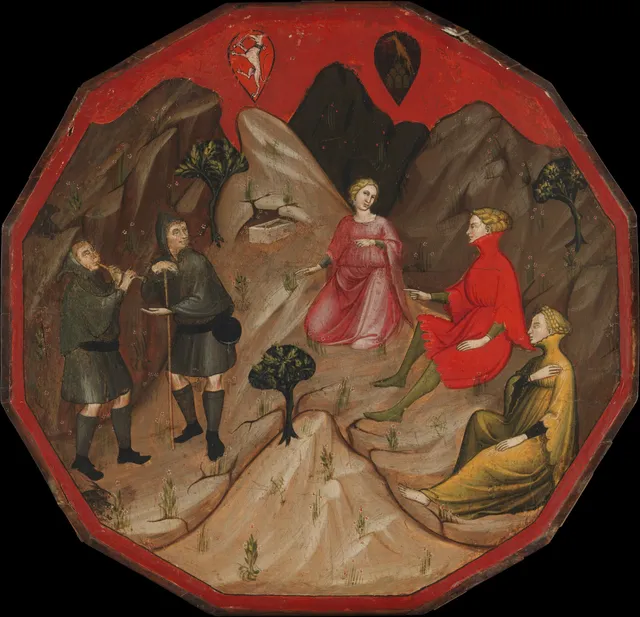
Florentine School is an art movement. The painting tradition that emerged in 14th-century Florence under Giotto and developed through the 15th century into the Renaissance mainstream.
Key Florentine School artists in the collection include Sandro Botticelli, Jacopo da Sellaio and Master of 1416.
Florentine School dates from around 1300.
Florentine School works in the collection are held by Uffizi Gallery and Metropolitan Museum of Art.
Your cart is empty
Browse artworks →