Movement
Genoese School
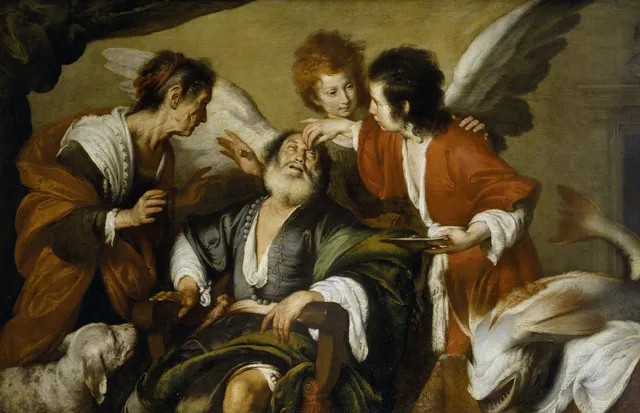
Genoese School is an art movement dating from 1590. The gallery holds 1 work in this movement. Browse Genoese School paintings, portraits, pictures and artworks from the world's public-domain museum collections.
The Genoese School denotes the distinctive school of painting that flourished in the Republic of Genoa—the maritime banking power known as "La Superba"—chiefly across the seventeenth and early eighteenth centuries. Unlike Florence, Rome, or Venice, Genoa had not been a major Renaissance art center; its artistic identity arose only around 1600, when the immense wealth of its banker-oligarch families, who lined the Strada Nuova with the monumental Palazzi dei Rolli, was channeled into ambitious patronage. Crucially, the city's mercantile ties to Northern Europe drew Flemish masters south: Peter Paul Rubens lived and worked in Genoa around 1605–07 (later publishing his Palazzi di Genova in 1622), and Anthony van Dyck spent much of his Italian sojourn of 1621–27 there, creating an enduring, glamorous template for aristocratic portraiture.
Out of this exchange the Genoese painters forged a hybrid manner, fusing the warm color and fluid brushwork of Venice, the dramatic Caravaggesque lighting absorbed from Rome, and the lush, full-bodied naturalism of Flanders. The school was notably broad in subject, embracing not only grand religious and mythological canvases and society portraits but also the still life and animal painting that Flemish contact encouraged.
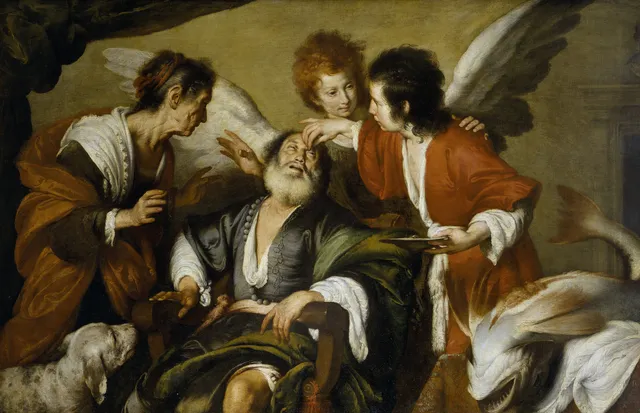
Its greatest figure was Bernardo Strozzi (1581–1644), called il Cappuccino or il Prete Genovese, whose richly painterly canvases—such as Tobias heals his Father (c. 1640–44)—carried his influence to Venice, where he settled late in life. Around him worked Domenico Fiasella and Gioacchino Assereto, who deployed strong chiaroscuro; Giovanni Benedetto Castiglione, called il Grechetto (1609–1664), a brilliant inventor of pastoral and animal scenes and pioneer of the monotype; the short-lived, eclectic Valerio Castello (1624–1659); and a dynasty of painters named de Ferrari—Giovanni Andrea (1598–1669), Orazio (1606–1657), and the Baroque-Rococo decorator Gregorio (c. 1647–1726).
The school's exuberant, decorative late phase culminated in the fresco cycles of the De Ferraris and in Alessandro Magnasco (1667–1749), whose flickering, expressionistic chiaroscuro and tiny, restless figures pushed Genoese painting toward the Rococo. Long overshadowed by Rome and Venice, the Genoese Baroque is now recognized as one of Italy's most inventive regional traditions.
Works
Frequently asked questions
What is Genoese School?
Genoese School is an art movement. The painting tradition of Genoa from the late 16th through 17th centuries, heavily shaped by Flemish merchants who imported works by Rubens and van Dyck.
When did Genoese School take place?
Genoese School dates from around 1590.
Where can I see Genoese School works?
Genoese School works in the collection are held by Museo del Prado.