Movement
Neapolitan school of painting
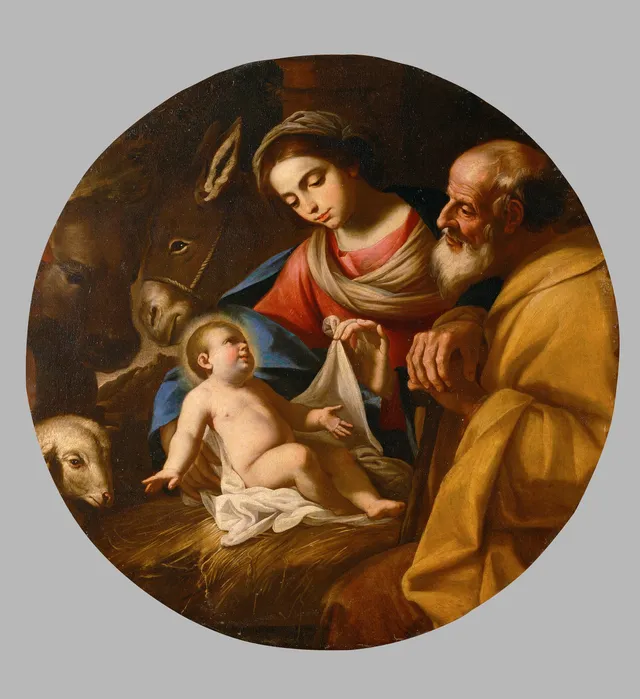
Neapolitan school of painting is an art movement dating from 1500. The gallery holds 2 works in this movement, including works by Angelo Solimena. Browse Neapolitan school of painting paintings, portraits, pictures and artworks from the world's public-domain museum collections.
The Neapolitan school of painting was not a single workshop but the dense, multi-generational tradition that flourished in Naples from the early seventeenth century through the eighteenth. Its conditions were unusual: Naples was then one of the largest cities in Europe and the seat of a Spanish viceroy, a wealthy, crowded, religiously fervent capital that lacked a strong native artistic lineage of its own. That vacuum was filled abruptly when Caravaggio, a fugitive from a death sentence in Rome, arrived in September 1606 and returned again in 1609. His brief presence and the powerful altarpieces he left behind detonated a local revolution, laying the foundations of what became known as Neapolitan Naturalism.
The school's defining language was tenebrism: figures sculpted from deep shadow by raking, dramatic light, set against an unidealised, often harsh realism and charged with intense emotion. Giovanni Battista (Battistello) Caracciolo was the first to translate Caravaggio's manner into a distinctly Neapolitan idiom, while the Spanish-born Jusepe de Ribera, settled in Naples from 1615, gave the style its most celebrated voice—stark martyrdoms and unsparing studies of saints, beggars and philosophers that delighted the city's Spanish elite. Around them worked Massimo Stanzione, the exquisite Bernardo Cavallino, Artemisia Gentileschi, and the powerful Mattia Preti.
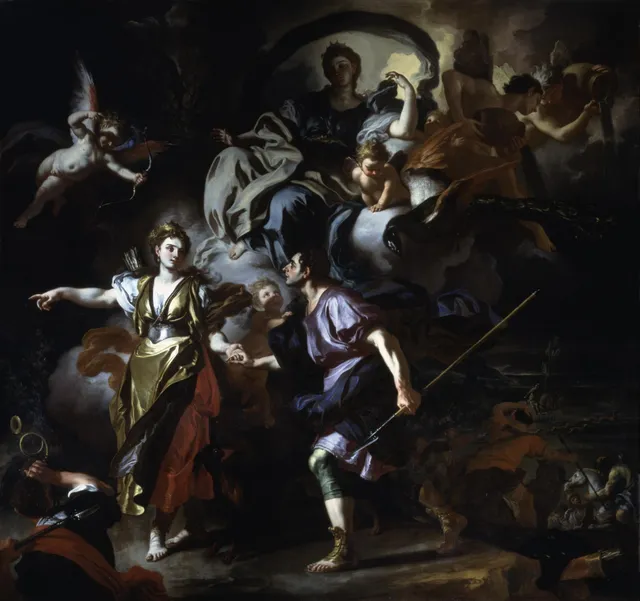
As the century progressed the palette lightened. Luca Giordano (1634–1705), trained under Ribera, abandoned the gloom of his elders for Venetian colour, glowing light and headlong movement, becoming the most prolific decorator of his age. The tradition culminated with Francesco Solimena (1657–1747), who dominated Neapolitan painting for four decades. He received his first training from his father, Angelo Solimena, a provincial master devoted to the naturalist tradition; works such as Solimena's swirling Royal Hunt of Dido and Aeneas show the school's late synthesis of drama and grandeur.
The Neapolitan school stands as one of the great regional branches of the Italian Baroque, distinct from but in constant dialogue with Rome and Bologna. Through Ribera it fed back into Spanish art, and through Solimena's crowded studio it shaped a generation of European painters, exporting Neapolitan light and theatre well into the eighteenth century.
Key artists
Works
Frequently asked questions
What is Neapolitan school of painting?
Neapolitan school of painting is an art movement. The rich tradition of Baroque painting that flourished in Naples from the early 17th through 18th centuries.
Who are the key Neapolitan school of painting artists?
Key Neapolitan school of painting artists in the collection include Angelo Solimena.
When did Neapolitan school of painting take place?
Neapolitan school of painting dates from around 1500.
Where can I see Neapolitan school of painting works?
Neapolitan school of painting works in the collection are held by Kunsthistorisches Museum and Museum of Fine Arts, Houston.