Movement
Historicism
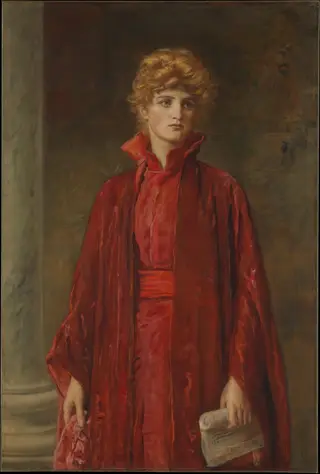
Historicism is an art movement. The gallery holds 1 work in this movement, including works by Lawrence Alma-Tadema, John William Godward and Camillo Miola. Browse Historicism paintings, portraits, pictures and artworks from the world's public-domain museum collections.
Historicism was the dominant artistic and architectural movement of the nineteenth century, defined not by the invention of a new style but by the revival, scholarly imitation, and creative recombination of the styles of the past. Emerging in the wake of Romanticism and intensifying after mid-century, it arose partly as a reaction to the upheavals of the Industrial Revolution, offering the rapidly modernizing cities of Europe a vocabulary of borrowed grandeur and historical legitimacy. Where earlier ages had worked within a single prevailing taste, the historicist century ransacked every preceding era, treating Gothic, Renaissance, Baroque, and classical antiquity alike as a repertoire to be quoted at will.
In architecture this produced the so-called "neostyles"—Neo-Romanesque, Neo-Gothic, Neo-Renaissance, and Neo-Baroque—and, when these were freely intermixed, the eclecticism that became Historicism's signature. Buildings were modeled on idealized versions of historical styles but adapted to modern functions and to new materials such as iron, steel, and glass, with the chosen style often signaling a building's purpose. Vienna's Ringstrasse, begun under Emperor Franz Joseph I, remains the movement's paradigm: Theophil Hansen's Neo-Hellenistic Parliament, Friedrich von Schmidt's Neo-Gothic City Hall, Heinrich Ferstel's French-Gothic Votivkirche, and the Neo-Renaissance museums and Opera House together form an open-air anthology of the European past.
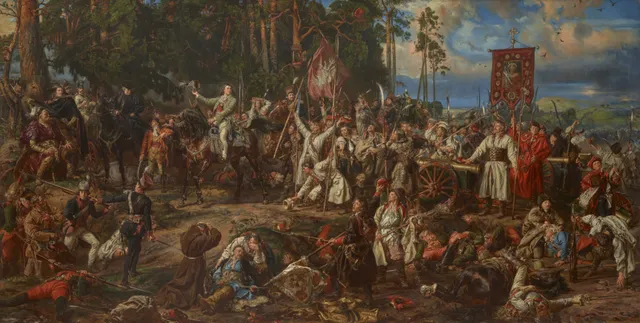
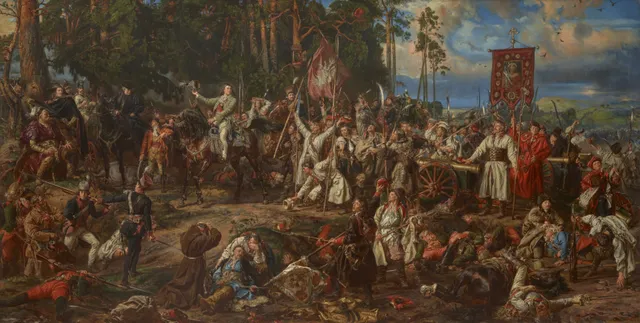
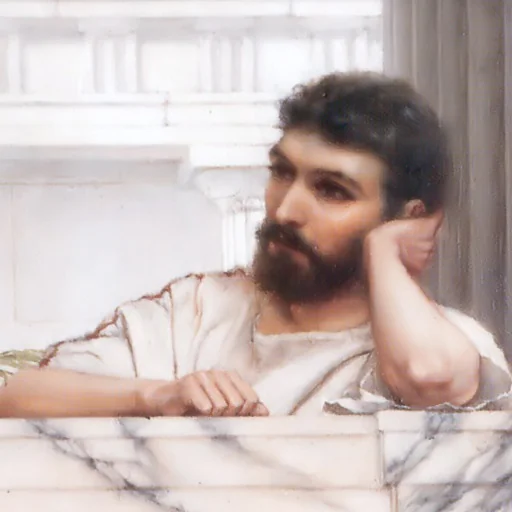
In painting, Historicism overlapped with academic history painting and the revival of antiquity. Sir Lawrence Alma-Tadema (1836–1912) reconstructed Roman and Greek life with archaeological precision, studying Pompeii and the Parthenon casts to render marble, bronze, and silk for Victorian audiences; his protégé John William Godward continued this "Marble School" of idealized classical maidens. In Italy, excavations at Pompeii inspired the Neo-Pompeian scenes of Roberto Bompiani (1821–1908), nicknamed "the Italian Bouguereau," and Camillo Miola (1840–1919), a pupil of Domenico Morelli. Elsewhere the movement served nationhood: Jan Matejko's monumental Battle of Racławice (1888), commemorating Kościuszko's 1794 victory of scythe-bearing peasants, kindled patriotism in a partitioned Poland.
Historicism dominated official taste until the close of the century, when Art Nouveau, the Vienna Secession, and the rising Modern movement rejected its backward gaze in favor of forms expressive of the present age. Its legacy nonetheless endures in the civic and museum architecture of nearly every European capital, and in the academic tradition from which both Symbolism and twentieth-century classicism would later draw.
Key artists
Works
Groups & collectives
Frequently asked questions
What is Historicism?
Historicism is an art movement. A 19th-century European tendency to borrow the styles of past eras — Gothic, Renaissance, Baroque — and apply them to contemporary buildings and paintings.
Who are the key Historicism artists?
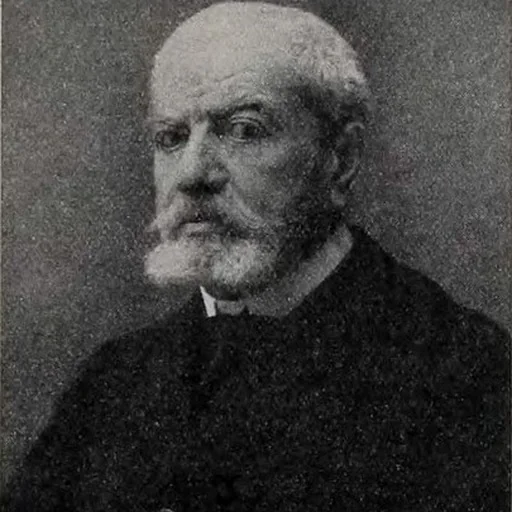
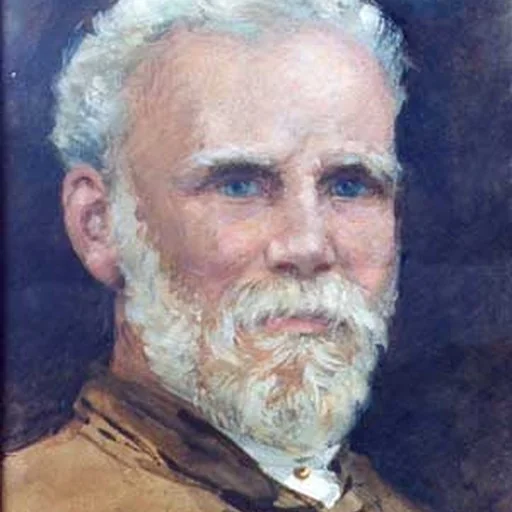
Key Historicism artists in the collection include Lawrence Alma-Tadema, John William Godward and Camillo Miola.
Where can I see Historicism works?
Historicism works in the collection are held by National Museum in Kraków.