February 12 in Art History
6 real events recorded on February 12, the earliest from 1630. 2 artists were born , 1 died on this date.
The day's biggest moments
Born on this day 2
- 1630 Born
Born this day: Cornelis Bisschop
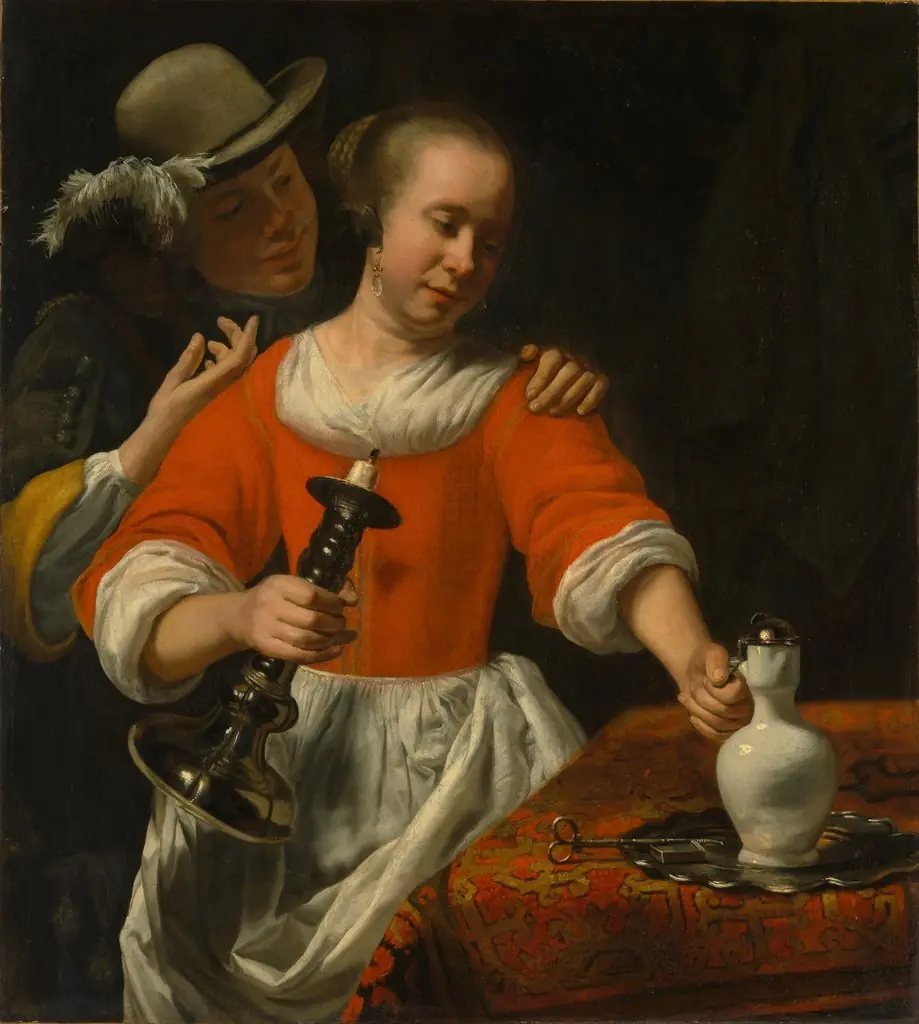
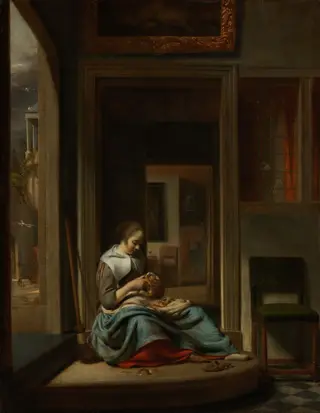
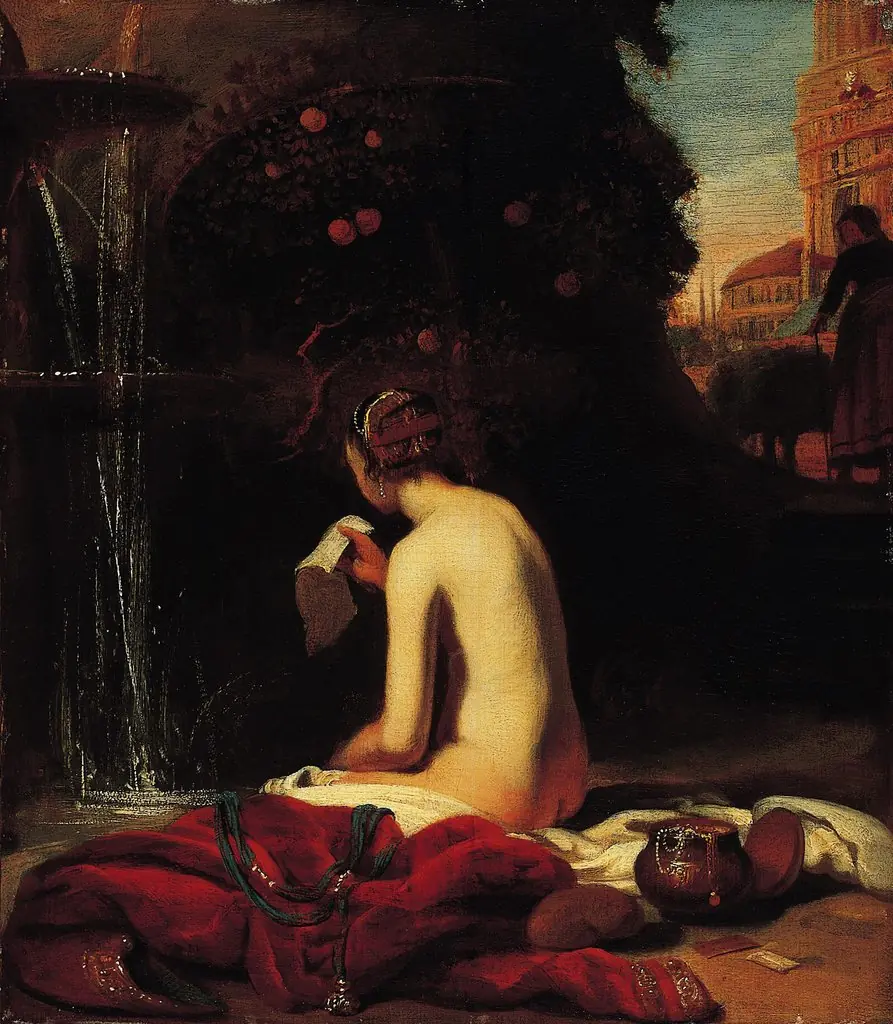
Cornelis Bisschop, a Dutch Golden Age artist, was born on February 12, 1630, in Dordrecht, and is known for his delicate and intimate paintings, often depicting everyday life and scenes from the Bible, as seen in works like 'A Young Woman and a Cavalier' and 'Bathsheba'.
He remains a notable figure in the Dutch Golden Age for his captivating and nuanced portrayals of domestic scenes and biblical subjects.
- 1837 Born
Born this day: Thomas Moran
Thomas Moran, born on February 12, 1837, was a prominent American painter and printmaker of the Hudson River School, known for his vibrant landscapes of the Rocky Mountains. As a skilled illustrator and colorist, he worked as the chief illustrator for Scribner's Monthly, launching his career as a premier painter of the American West.
Thomas Moran's work continues to influence American landscape painting with his captivating depictions of the natural world.
Died on this day 1
- 1942 Died
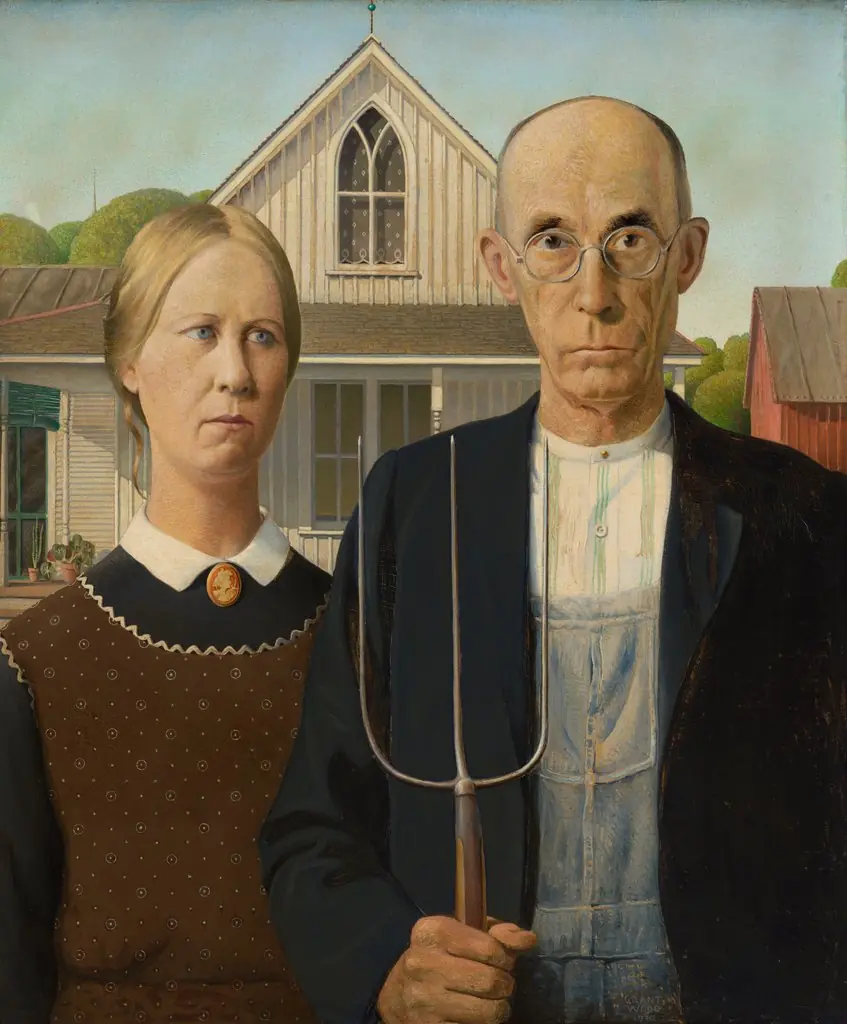
Died this day: Grant Wood
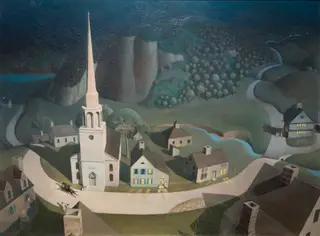
Grant Wood, a prominent American artist, passed away on February 12, 1942. He was a key figure in the Regionalist movement, capturing the essence of the rural American Midwest in his work. Wood's iconic painting, American Gothic, has become a quintessential representation of early 20th-century American art.
Grant Wood's legacy continues to influence American art and culture with his enduring and iconic representations of the Midwest.

Exhibitions & salons 2
- 1935 Exhibition
Abstract Painting in America opens at the Whitney
On February 12, 1935, the Whitney Museum of American Art opened Abstract Painting in America, also described as the Exhibition of American Abstract Painting. The show ran through March 22 and gathered work by 65 abstract artists active in the United States, including future American Abstract Artists figures such as Byron Browne, Werner Drewes, Balcomb Greene, Karl Knaths, Irene Rice Pereira, and Louis Schanker. In a Depression-era art world still dominated by representational painting and social realism, the exhibition publicly tested whether abstraction could be understood as a serious American practice rather than a derivative European import. Its aftermath helped bring artists together in studio discussions that fed into the later formation of American Abstract Artists.
The exhibition helped create the conditions for a durable American abstract-art advocacy group.
Balcomb Greene , Werner Drewes , Louis Schanker , Byron Browne , Irene Rice Pereira , Karl Knaths Whitney Museum of American Art, Manhattan
- 1970 Exhibition
The Year 1200 opens at the Met
On February 12, 1970, the Metropolitan Museum of Art opened The Year 1200 as one of the central exhibitions of its centennial program. The exhibition, documented in two Met publications, ran through May 10 and examined Romanesque and early Gothic art around the turn of the thirteenth century. It was part of a broader anniversary cycle that used ambitious loan exhibitions, publications, lectures, and commissions to present the museum as both an encyclopedic collection and a scholarly institution. By pairing objects with a substantial catalogue and background survey, The Year 1200 helped frame medieval art not as a static prelude to the Renaissance but as a dynamic period of international artistic exchange.
The exhibition strengthened the Met's model of research-heavy, publication-led blockbuster scholarship.
Auctions, prizes & heists 1
- 1994 Heist Landmark
The Scream stolen from Oslo's National Gallery
On 12 February 1994, the opening day of the Lillehammer Winter Olympics, two thieves broke into the National Gallery in Oslo and stole the 1893 painted version of Edvard Munch's The Scream. The work had been moved to a more visible second-story gallery as part of Olympic-related attention, and the thieves left a taunting note about security. The museum refused a ransom demand, and Norwegian police, aided by British police and the Getty Museum, recovered the painting undamaged on 7 May 1994. The heist turned a familiar modern icon into a case study in museum vulnerability, publicity, and the black-market uselessness of instantly recognizable masterpieces.
The theft made The Scream a benchmark example in modern museum-security debates.