Artwork
Bathsheba
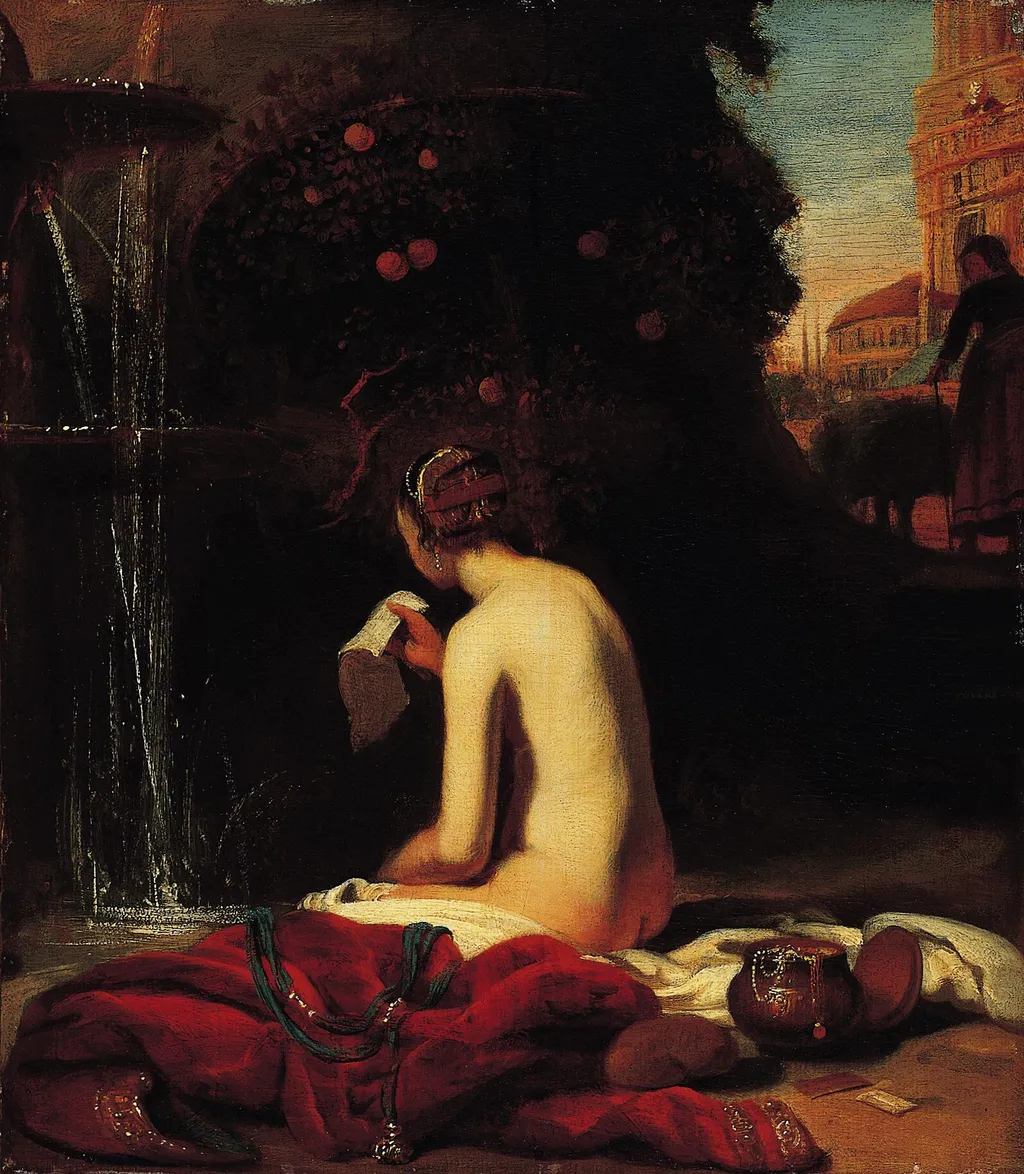
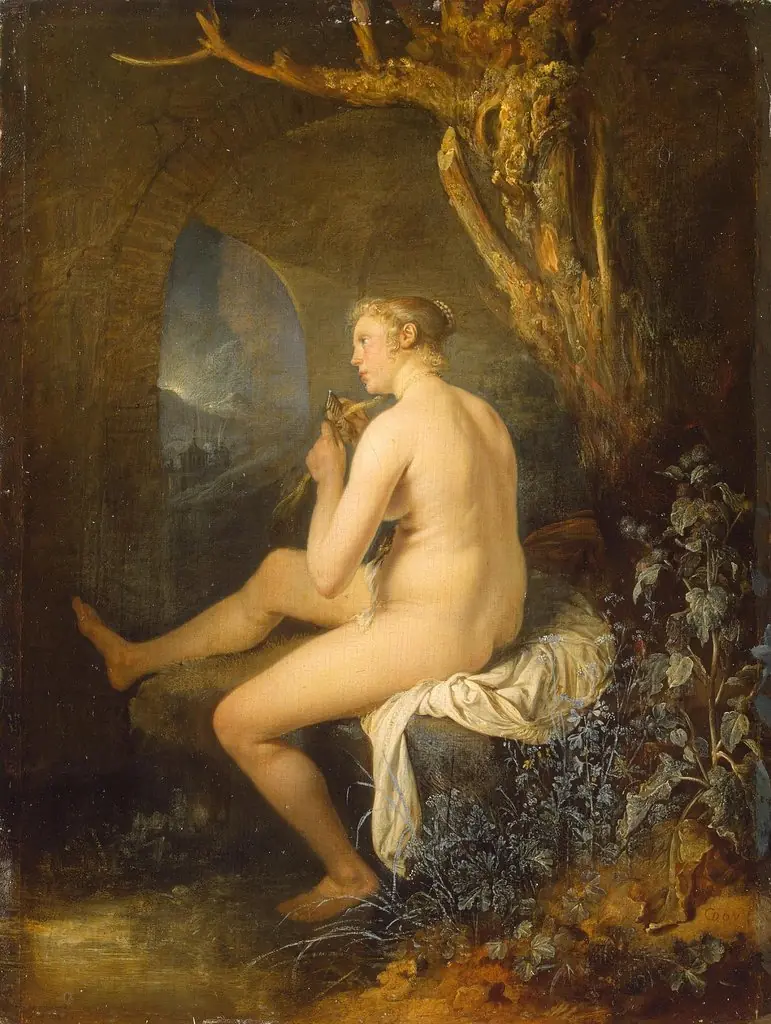
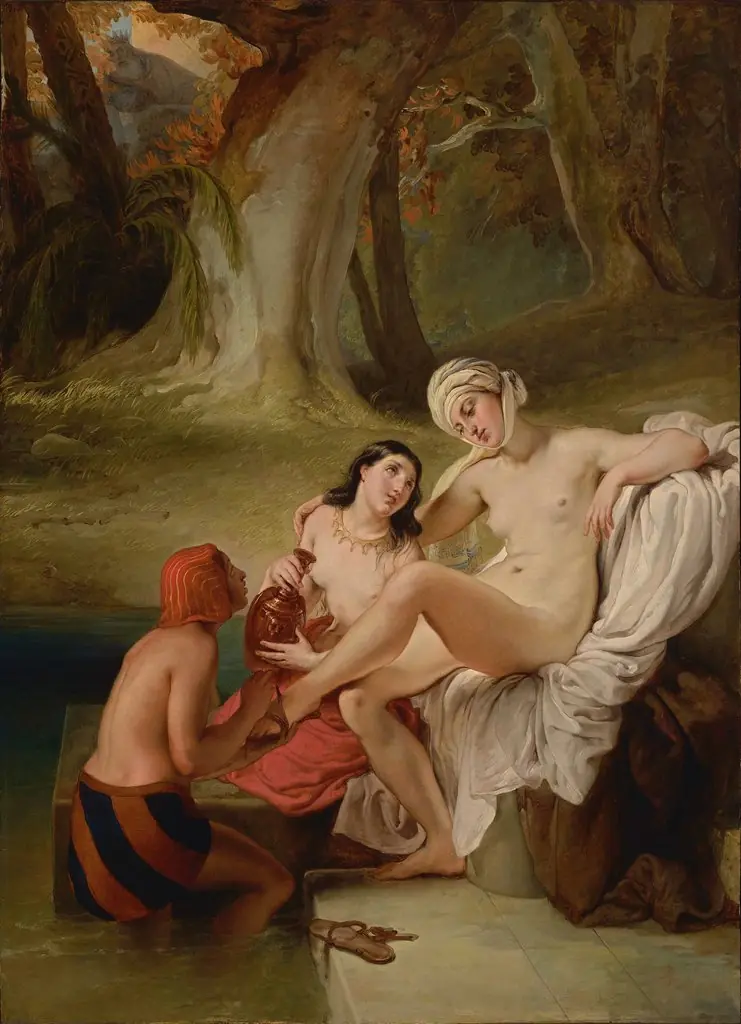
Bathsheba is an oil painting by the Dutch Golden Age artist Cornelis Bisschop. It dates from 1660 and is held in the collection of the Norton Simon Museum.
About this work
Subject & Meaning
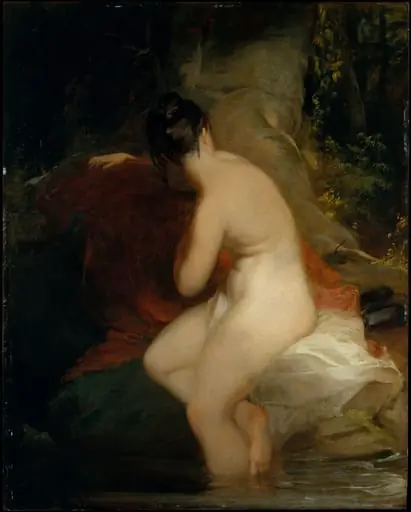
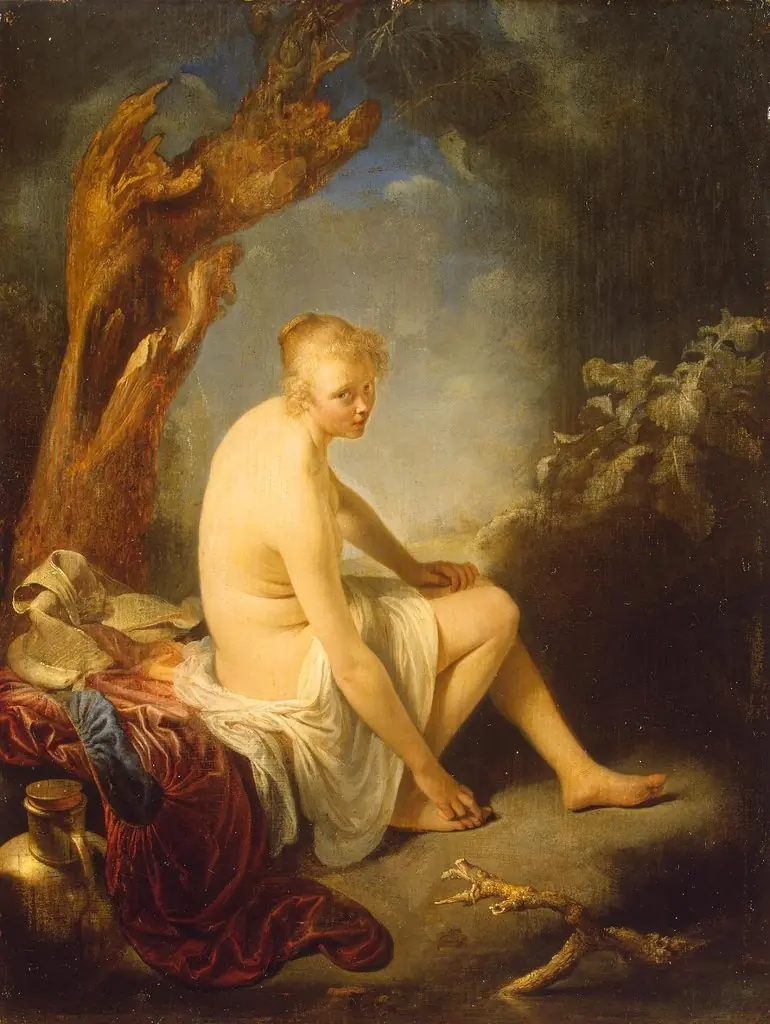
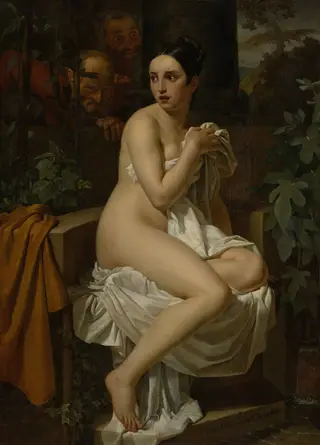
Cornelis Bisschop's 1660 oil painting depicts the biblical figure Bathsheba during her ritual bath, a scene traditionally identified as Bathsheba at her bath.
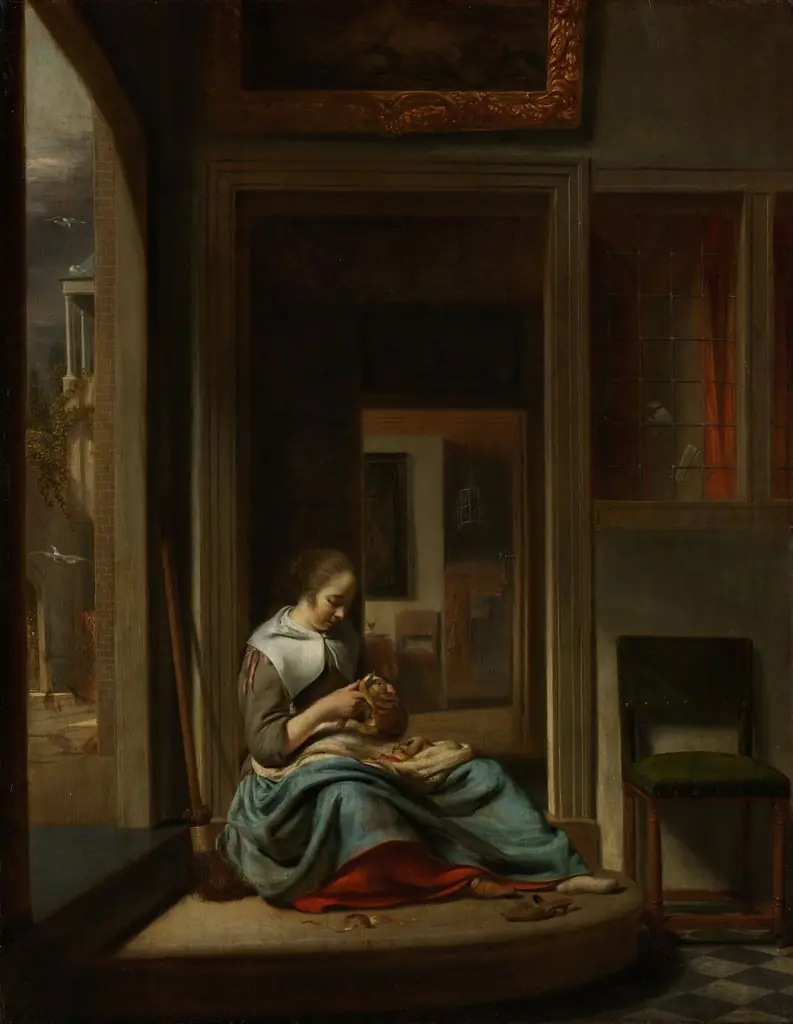
Cornelis Bisschop's 1660 oil painting depicts the biblical figure Bathsheba during her ritual bath, a scene traditionally identified as Bathsheba at her bath. The composition presents the woman seated with her back to the viewer, emphasizing her nudity and brown hair while she engages in the act of washing. Iconographic elements include a fountain, a tree, and architectural features suggesting a palace setting under a cloudy sky.
Unusually for this religious subject, the figure is shown reading, combining the genre of nude portraiture with narrative detail. The work functions as both a religious depiction and a study of the female form within an outdoor courtyard environment.
Technique & Style
Executed in 1660, Cornelis Bisschop's Bathsheba is an oil painting created on a panel support. The work depicts the biblical figure seated with her back to the viewer, engaged in washing near a fountain within a palace setting. Stylistically, the composition focuses on the nude form, highlighting specific anatomical details such as the buttocks and intergluteal cleft against a backdrop featuring trees, clouds, and sky.
The subject's brown hair is visible as she reads, combining elements of religious narrative with genre art characteristics.
History & Provenance
Bathsheba is an oil painting by Cornelis Bisschop dated 1660, executed on panel and depicting Bathsheba at her bath. The work is held in the collection of the Norton Simon Museum, where it remains located. The available sources confirm only the inception date, medium, and current institutional ownership; no information is provided regarding an original commission, prior owners, intermediate provenance, or circumstances of creation prior to its accession by the museum.
The painting is held at the Norton Simon Museum, Pasadena, as part of its permanent collection.
It is inventoried as accession number P.1976.07.
The work has been exhibited at the Norton Simon Museum, most recently in 2016 as part of the display "Masters of Seventeenth‑Century Dutch Genre Painting."
Context
Bathsheba (1660) by Cornelis Bisschop is a religious painting depicting the biblical heroine mid-bath, observed through an intergluteal cleft as she reads scripture by a fountain. The work reflects 17th-century Dutch engagement with narrative nuance in biblical scenes and demonstrates Bisschop's specialization in intimate religious genre paintings. Its composition, balancing sensuality with moral contemplation, aligns with contemporary Dutch approaches to biblical storytelling, situating it within the artist's broader exploration of domestic sacred moments.
The painting's presence in the Norton Simon Museum collection preserves its significance as an example of Dutch Golden Age biblical interpretation through genre-inflected realism.
Overview
Cornelis Bisschop’s oil painting titled Bathsheba, executed in 1660, is part of the collection at the Norton Simon Museum. The work presents a solitary female figure in a quiet, interior‑exterior setting, rendered with the chiaroscuro typical of mid‑seventeenth‑century Dutch painting.
Own this work as a print
Artist & collection
Artist
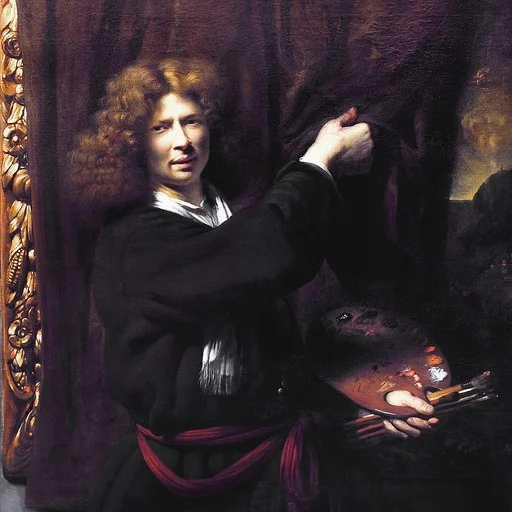
Cornelis Bisschop (1630–1674) was a Dutch Golden Age artist, born in Dordrecht.